
At Untitled Art in Houston, New York’s Sapar Contemporary brings together seven artistic perspectives. Across water lilies, torn paper, woven surfaces and sculptures made from cable ties, the presentation explores the many ways art can give form to the living world.
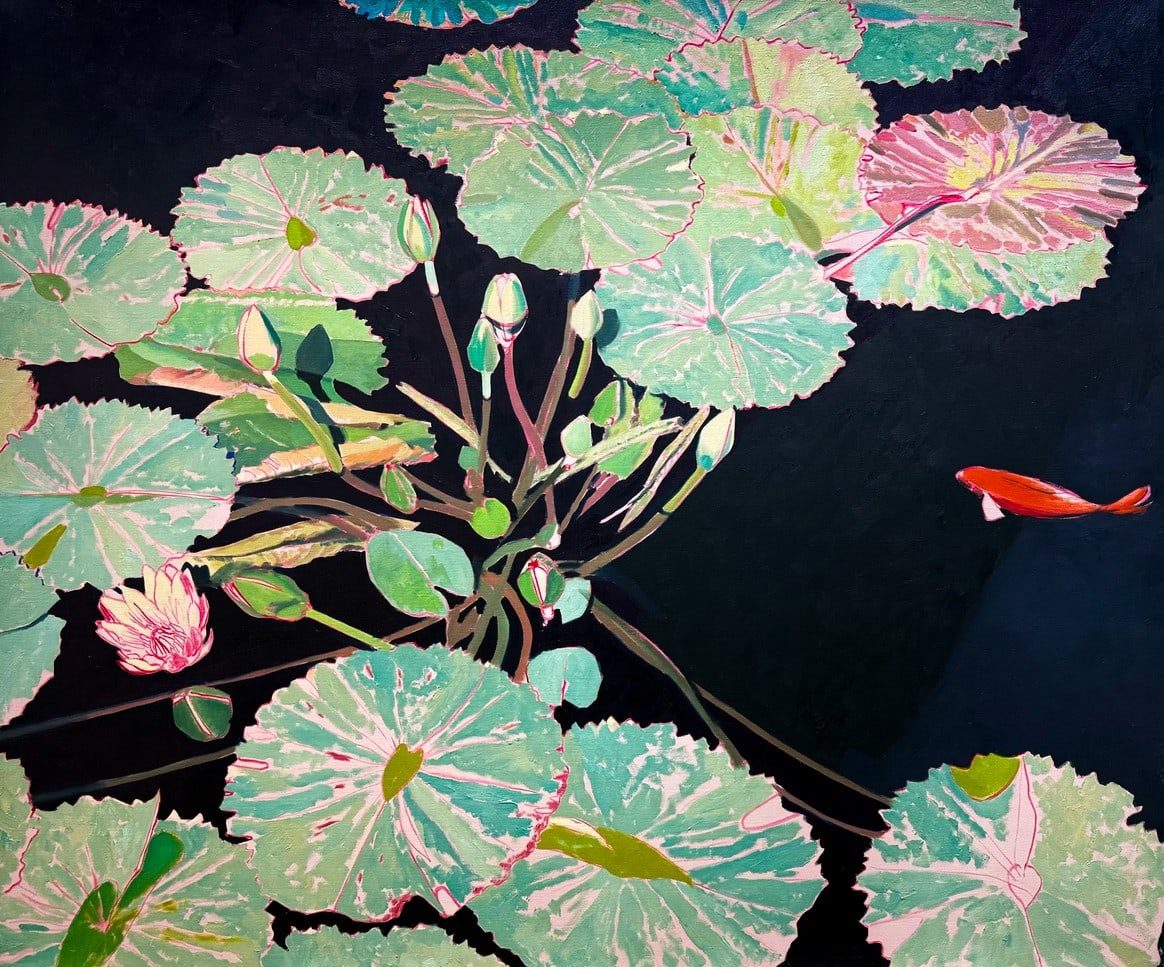
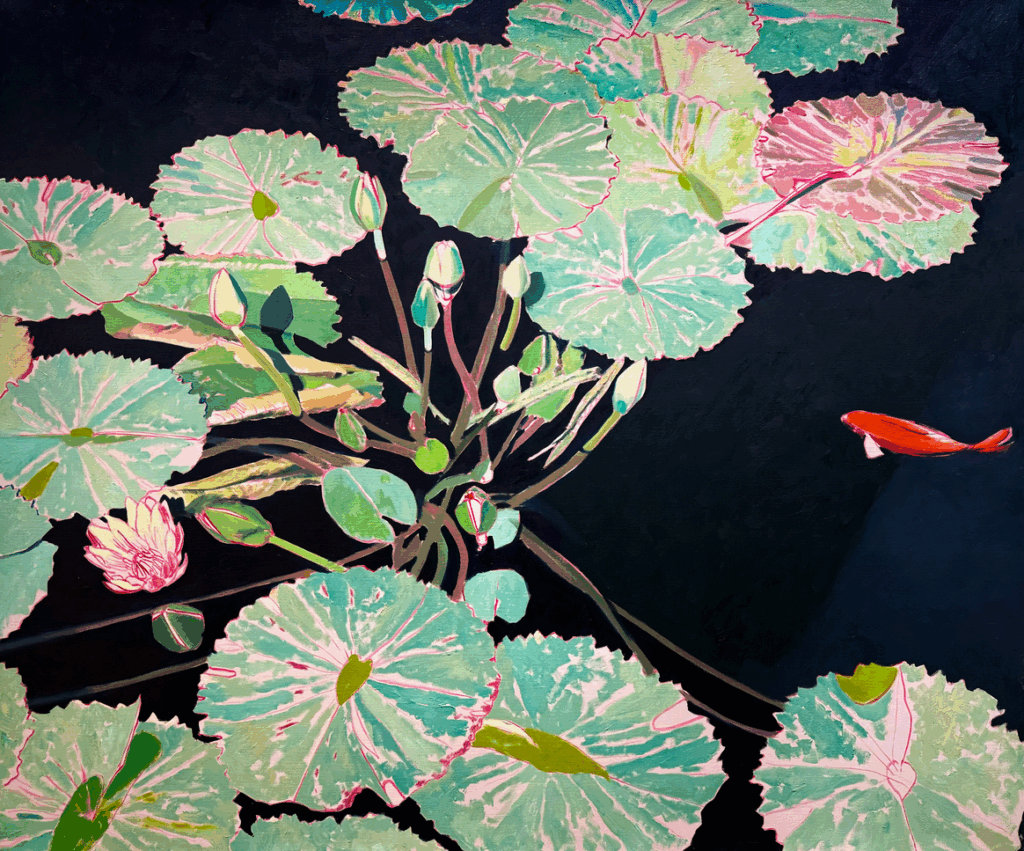
A red fish moves through dark water. Around it, leaves and flowers unfold, their edges traced in pink. Mizue Sawano’s “Goldfish” offers a compelling starting point: a painting that catches the eye, then lets it wander through the small movements across its surface.
From October 2–4, 2026, Untitled Art returns to the George R. Brown Convention Center for its second Houston edition, with a VIP and press preview on October 1. The current gallery list includes 99 participants. At booth E4, Sapar Contemporary presents a selection that brings generations, countries and artistic approaches into conversation.
From Water to Line
Japanese American painter Mizue Sawano developed her practice across Tokyo, Paris and New York. Natural motifs recur throughout her work, while her training draws on both Japanese and Western artistic traditions. The Houston selection includes “White Water lily” from 1991, several small water lily paintings from 1993 and “Freedom” from 2010.
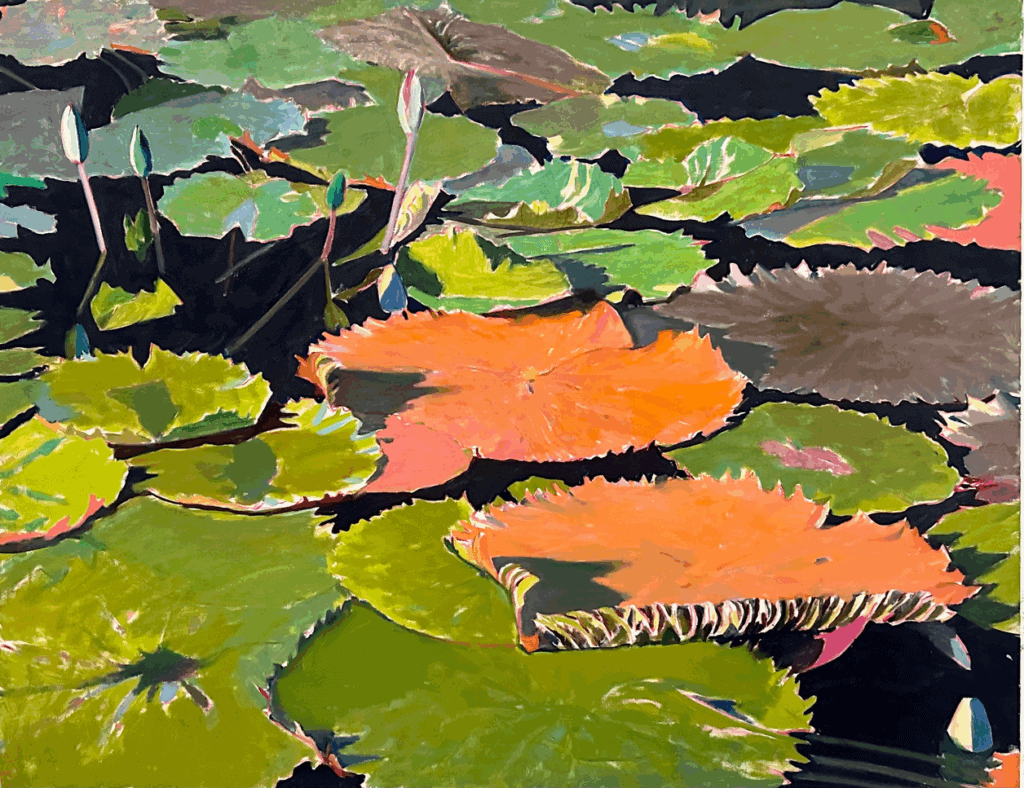
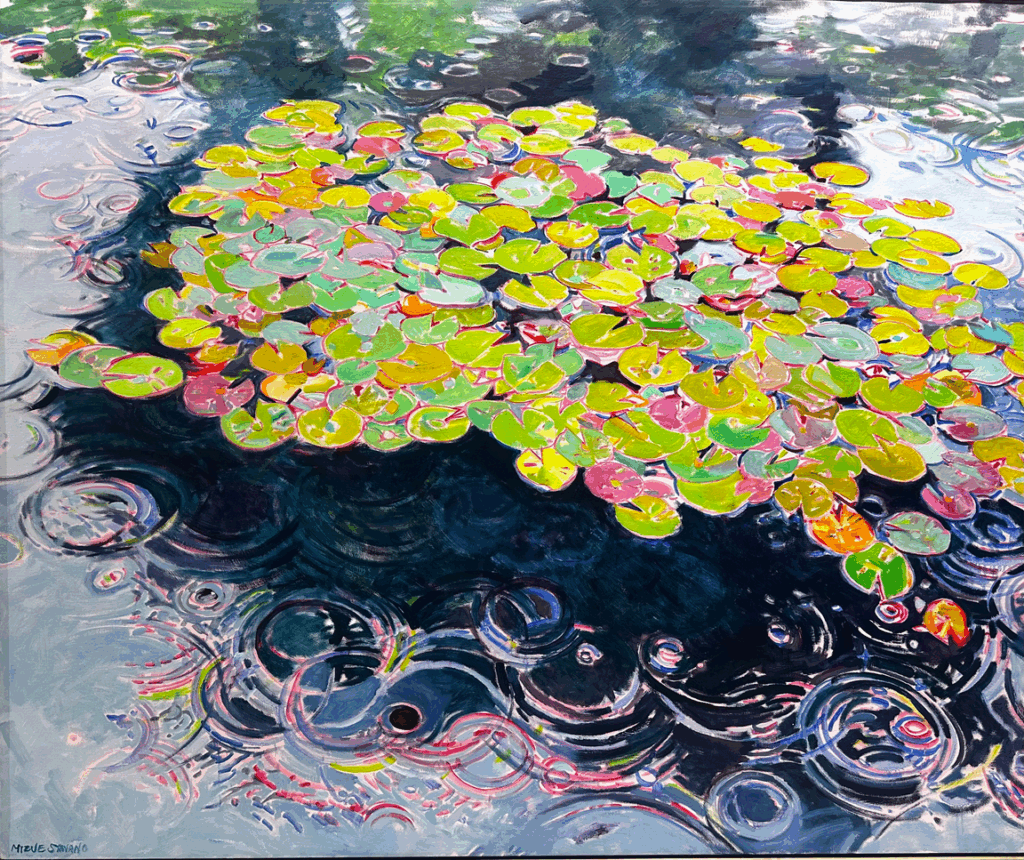
That span of time is intriguing in itself. Nature emerges as a subject an artist can return to across decades. In “Goldfish” from 2001, broad leaves meet the dark depth of water. The fish introduces a vivid accent between them. The eye follows it, only to pause at a flower.
For Bilgé, the Turkish American artist Bilge Civelekoğlu Friedlaender, the encounter with nature becomes more abstract. Her interest in horizons, water and spatial expansiveness finds expression in a spare language of lines, paper and intervals.
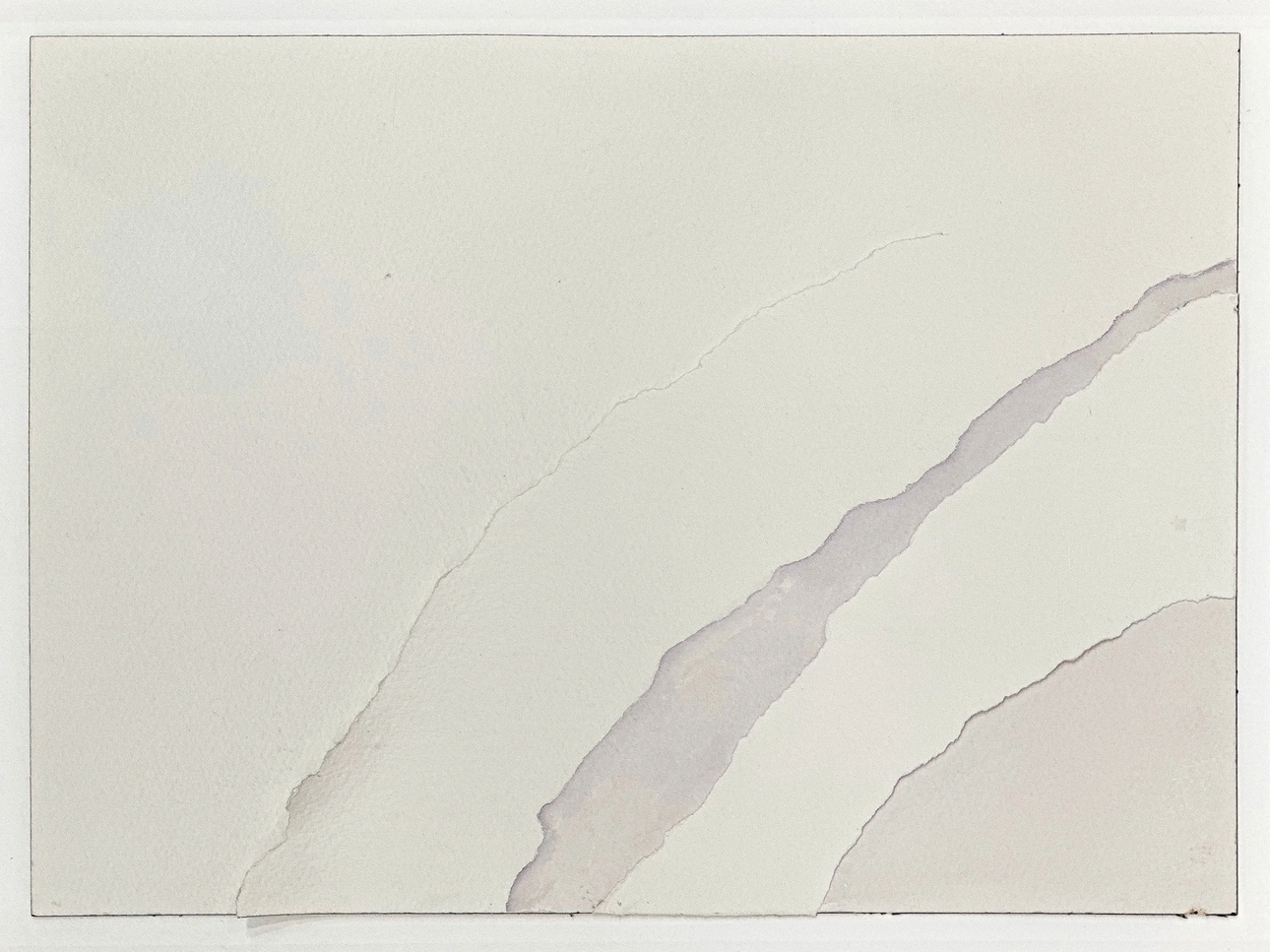
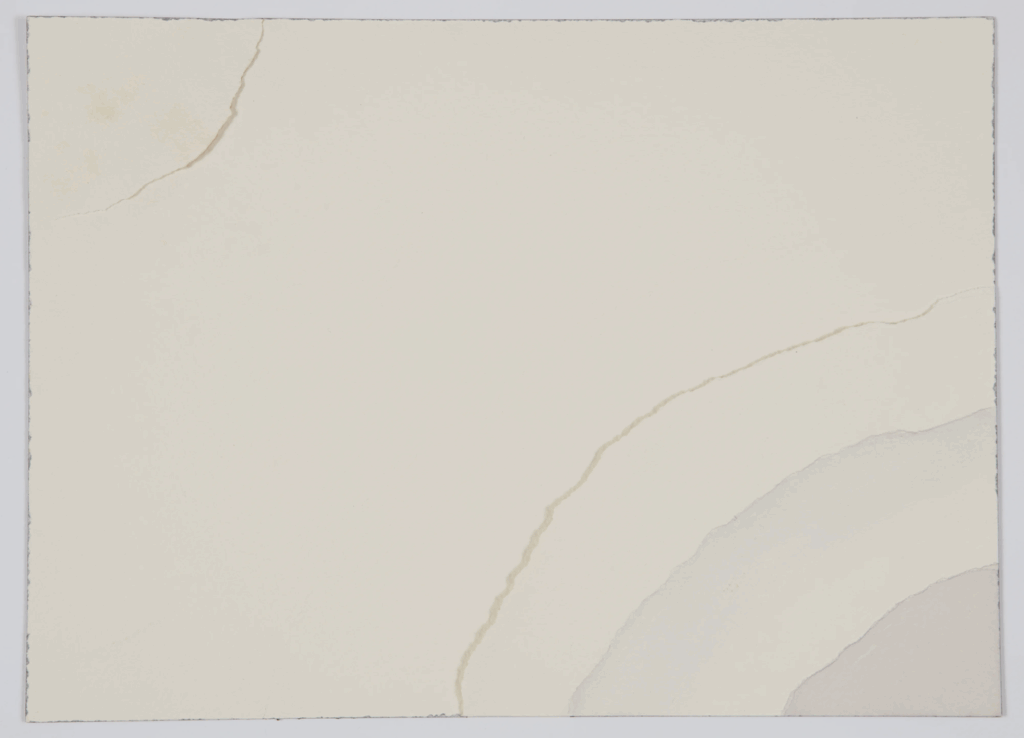
Sapar brings together several works from 1975, including “Poem On a Depressed Day”, “Tide’s in #4” and a work from the “Horizontal Line Life Span Series”. Paper becomes an active material: torn, layered and combined with pastel, pencil or watercolour. A line may be drawn, or emerge where a sheet is torn apart. The proximity of a deliberate mark to an unpredictable material edge gives these works their particular appeal.
The Possibilities of a Surface
With Ethel Stein and Benigna Chilla, the construction of the surface comes into focus. Stein’s “Rust Abstract” from 2005 is woven in mercerised cotton using a lampas structure and an ikat weft. The loom incorporates a drawloom attachment fabricated by the artist. Behind the image lies the development of a tool.
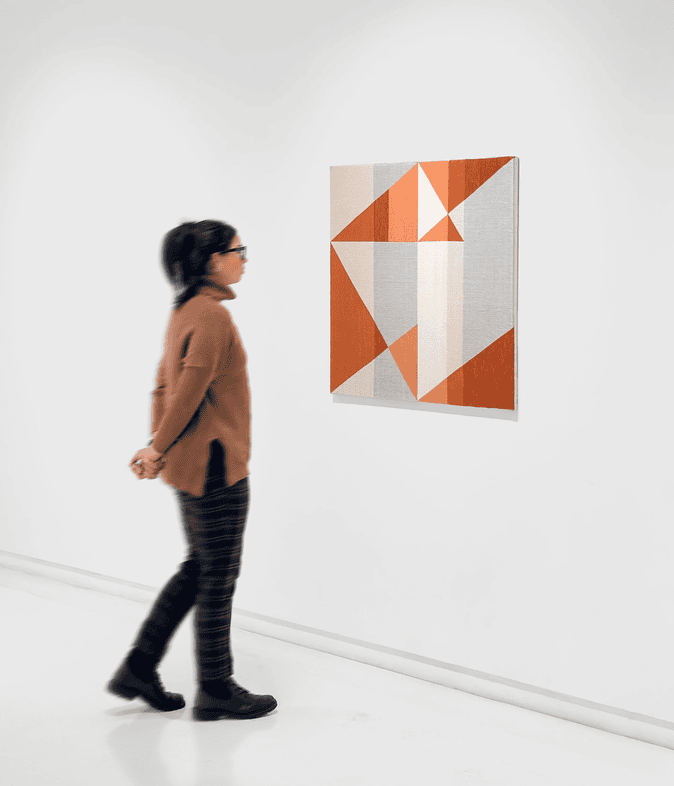
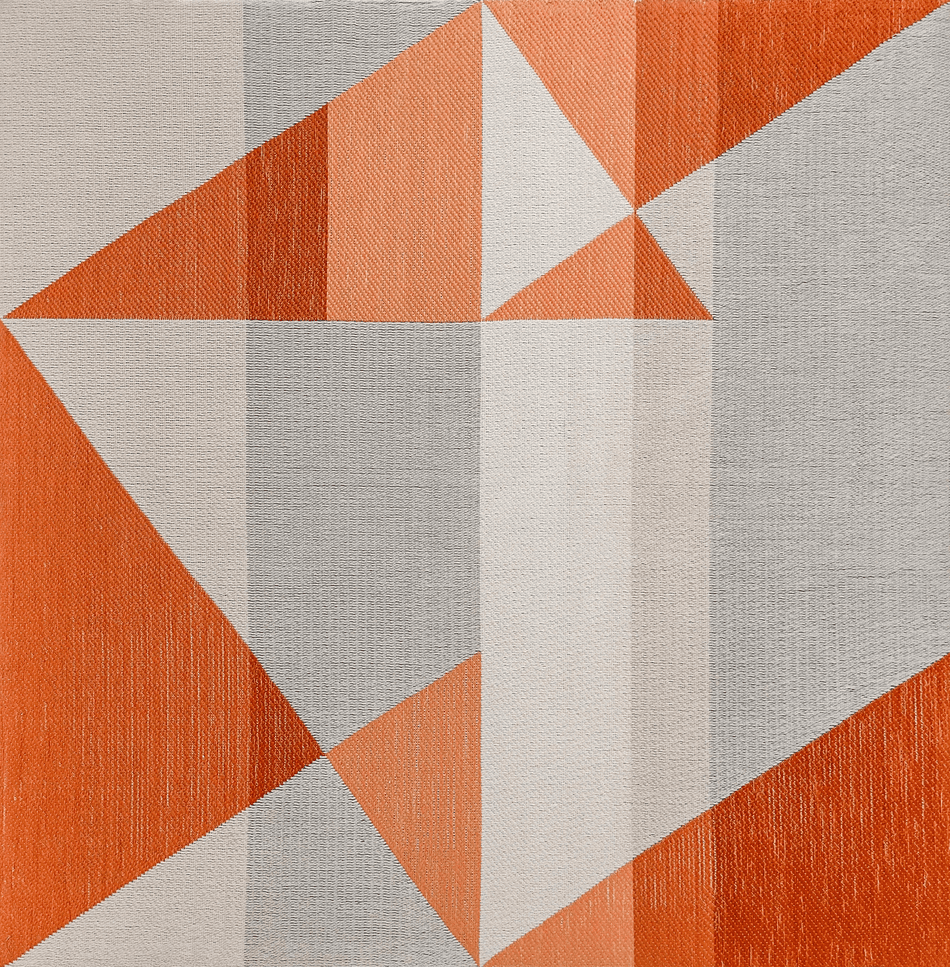
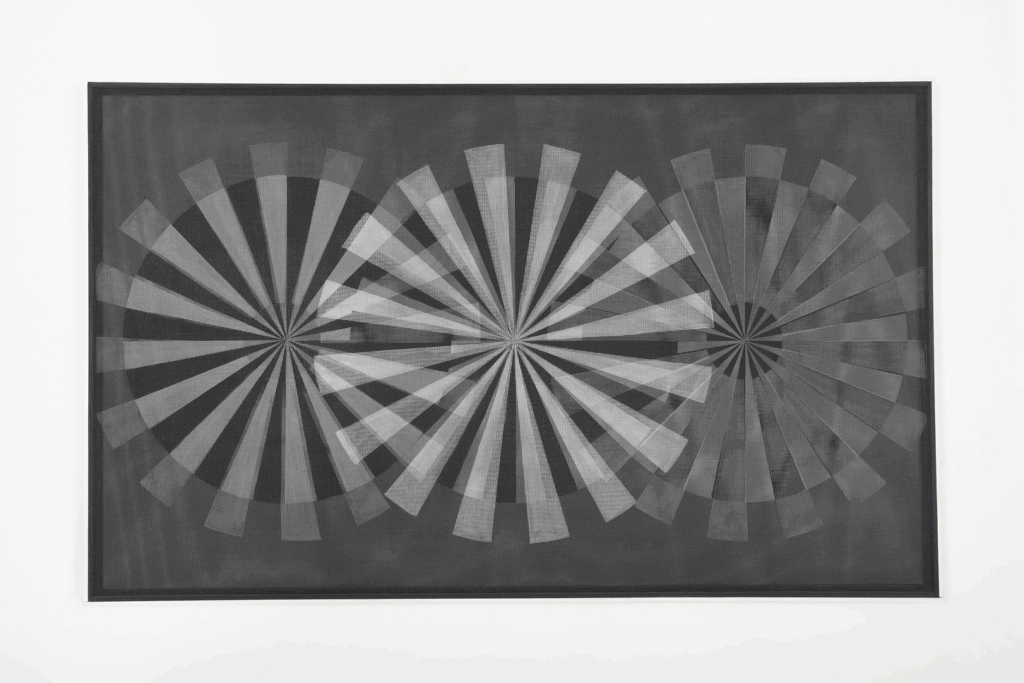
Chilla’s “In Motion” from 1996 combines painted canvas with two layers of painted screen. In “Pavage en Diagonale II” from 2000, printed and painted raw linen meets another layer of printed screen. The image acquires physical depth. Space opens between its layers, offering another way to experience colour and structure.

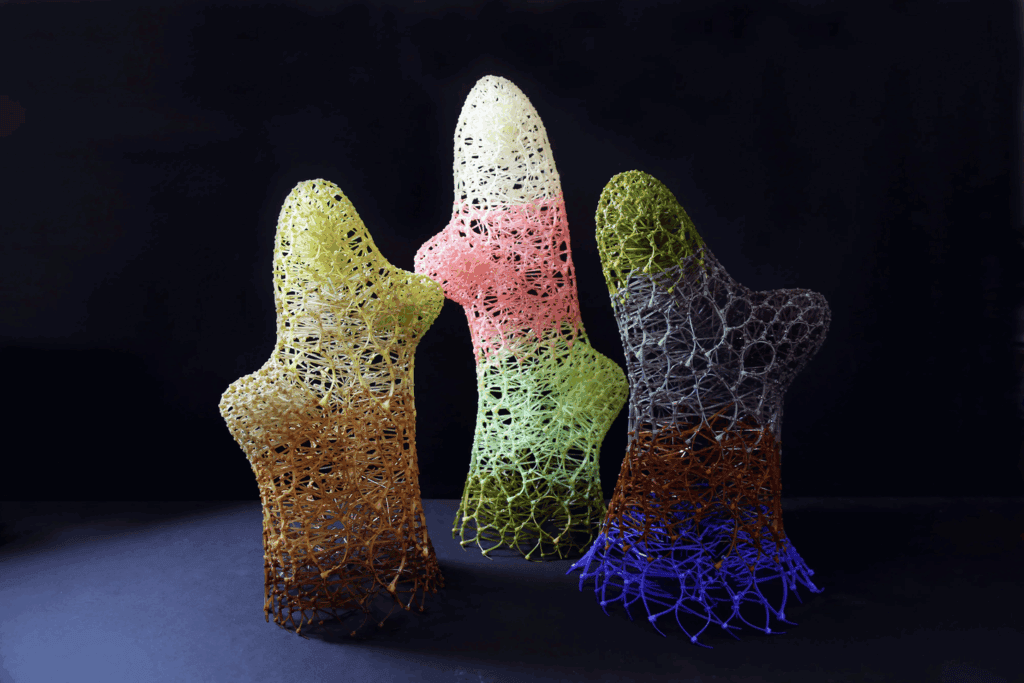
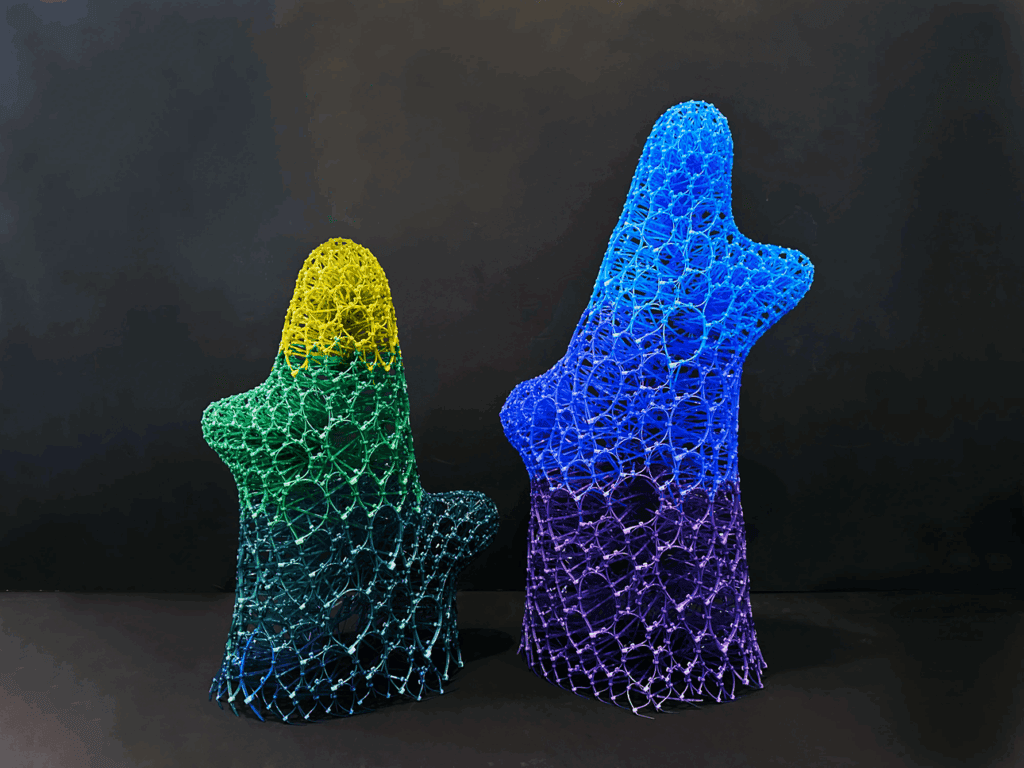
Sui Park takes this exploration of material in a different direction. “Flow Blue” from 2025 and “Microcosm Blue-Green Gradient” from 2026 are made from hand-dyed cable ties. An everyday industrial product becomes sculptural forms that recall organic structures. Their variable dimensions allow different spatial arrangements, while the titles suggest a world between flowing movement and miniature environments.
A Gesture, an Entire World
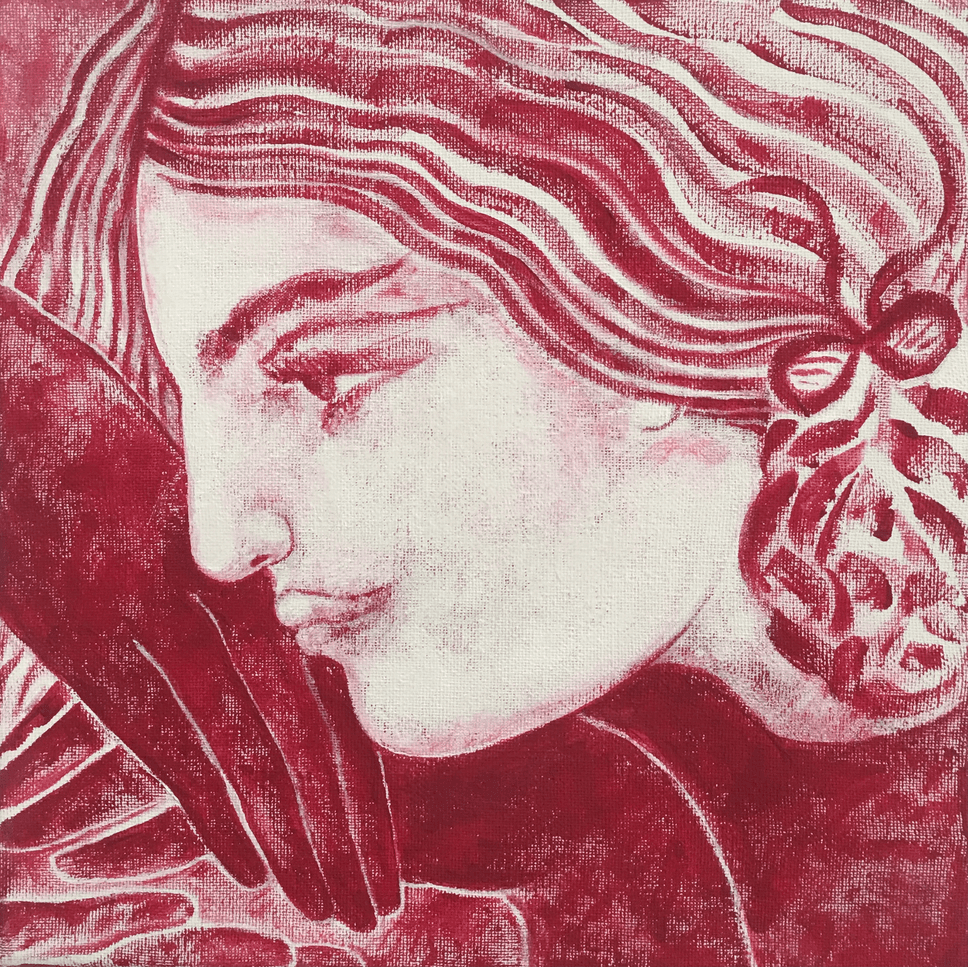
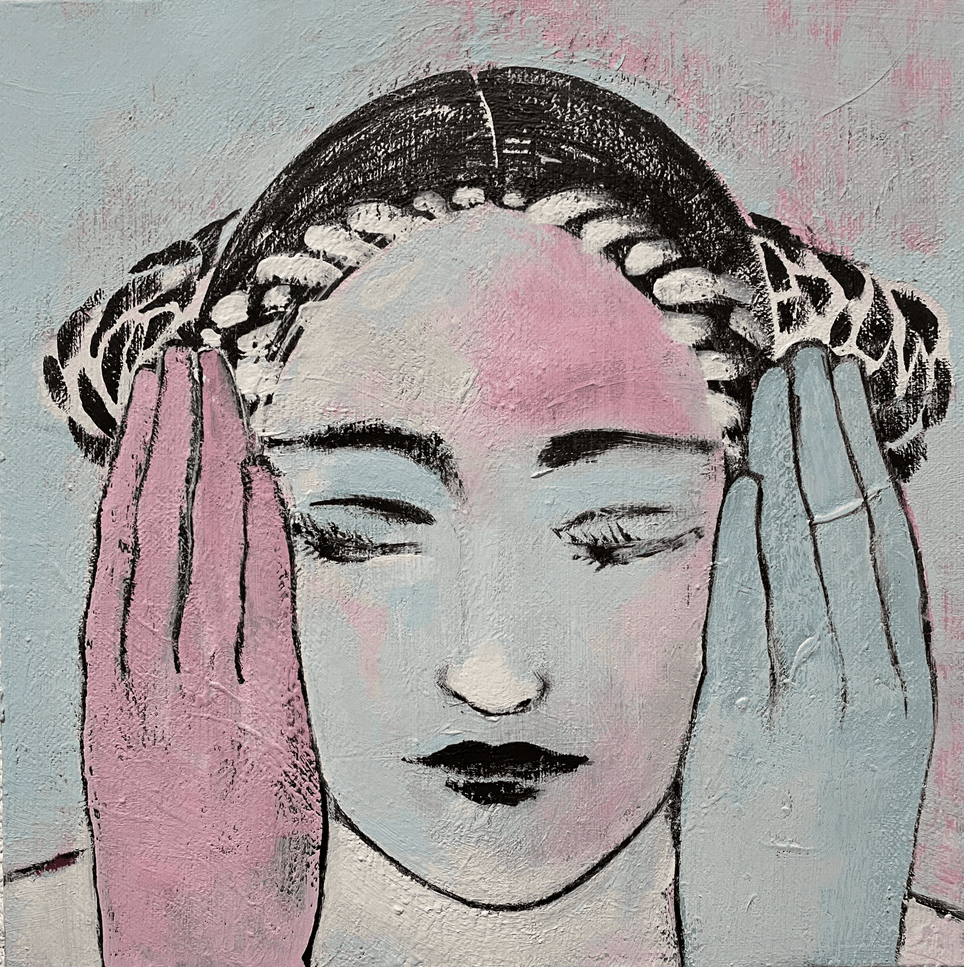
The selection also includes Sofia Cacciapaglia and Uuriintuya Dagvasambuu. Cacciapaglia’s small oil paintings bear titles such as “Gaze + Hands”, “Gaze: Red Profile” and “Gestures: Three hands”. A look or a movement of the hand becomes the starting point for paintings focused on fragments of human presence.
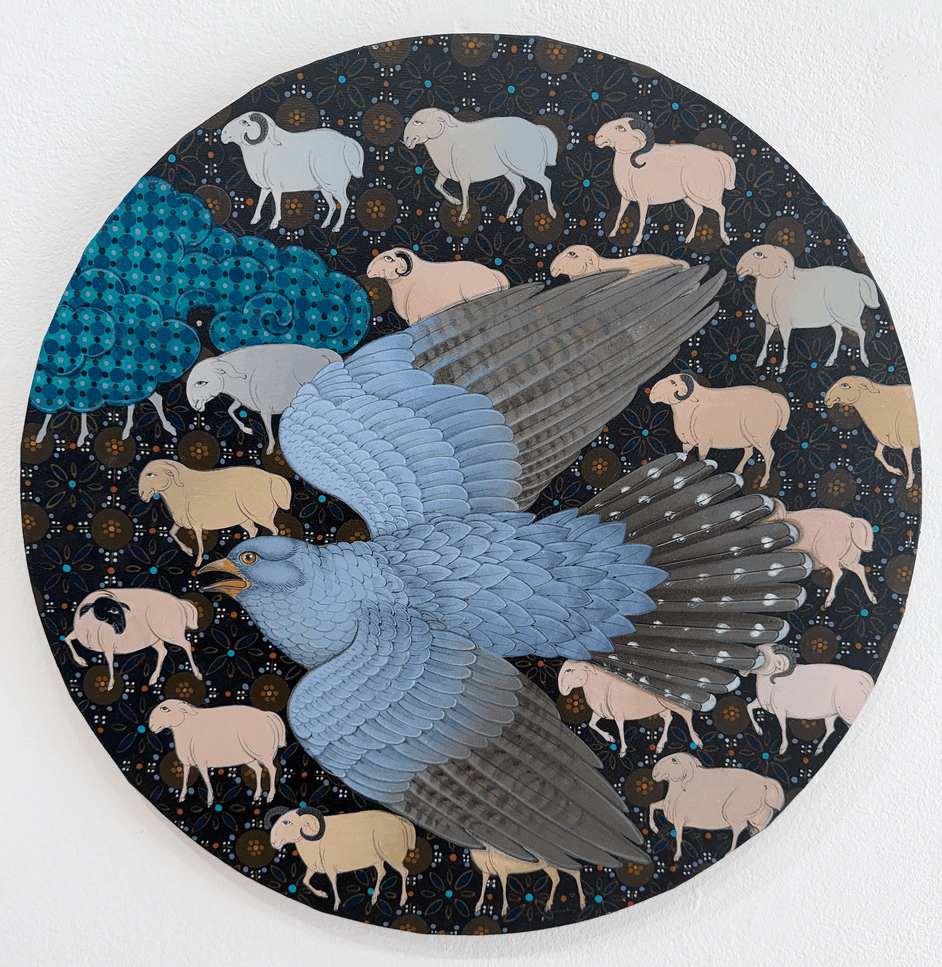
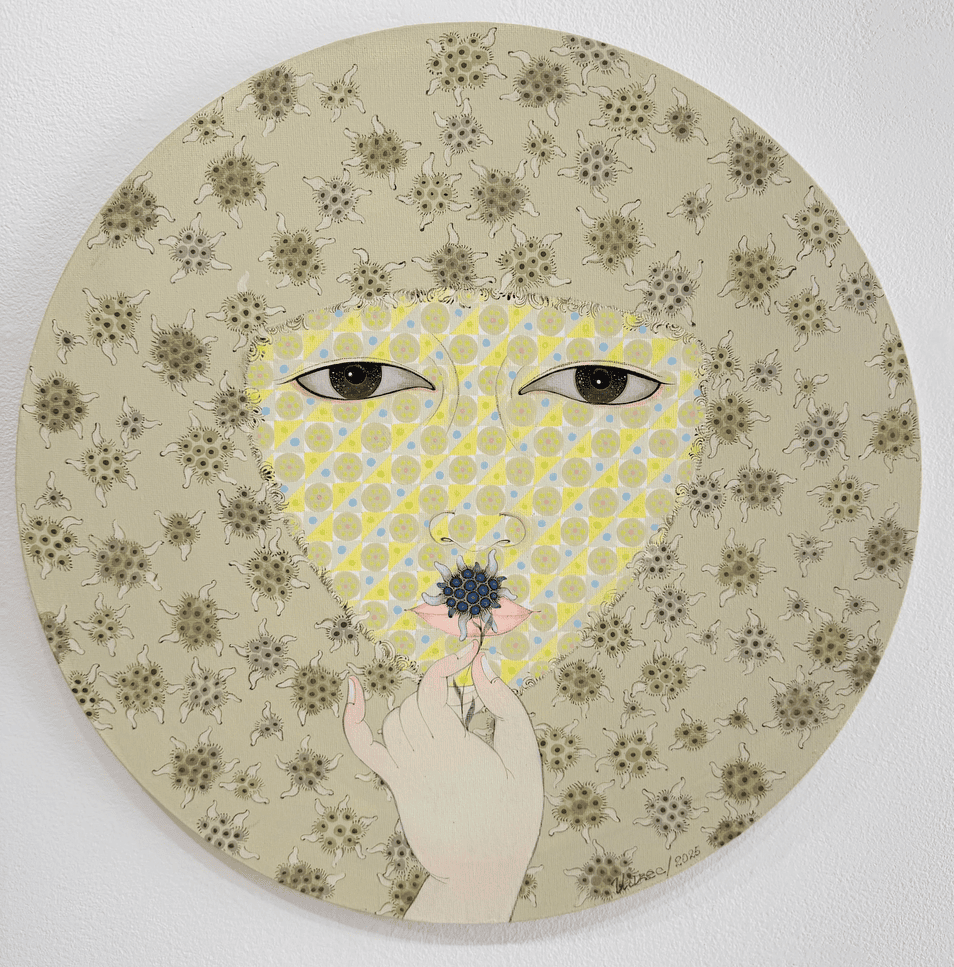
Dagvasambuu develops the Mongolian painting tradition of Mongol Zurag, combining traditional Mongolian and Buddhist motifs with contemporary themes and women’s everyday lives in her homeland. The fair selection includes the acrylic paintings “Vignette: The Scent” from 2025 and “Vignette: Bird’s eye view”. Their titles invite us to consider what an image can convey indirectly: a scent, a changed perspective, the memory of a moment.
Sapar’s presentation can be read as a succession of encounters. Water and paper, thread and plastic, gaze and gesture: material continually changes how we experience form. It is a compelling reason to spend a little longer with an individual work at an art fair. Perhaps it really does begin with a goldfish.