
The New York exhibition “Shringara: The Second Skin” traces forms of personal adornment, from earrings and textiles to tattoos, through furniture and lighting that carry their stories into the home.
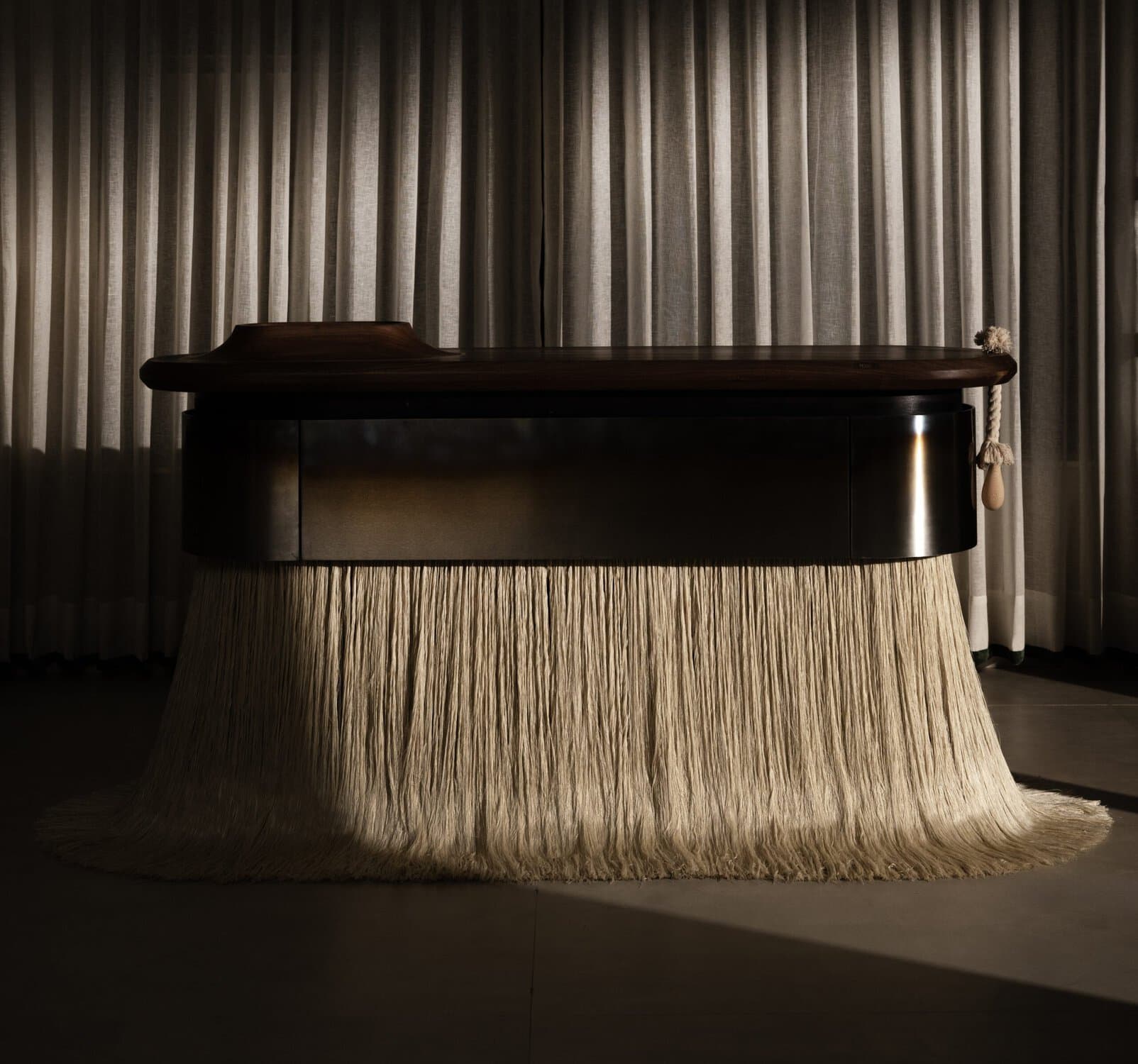
A console wears fringes, a bar cabinet recalls traditional earrings, and abstracted tattoo motifs appear on table legs. In House of Santal’s forthcoming exhibition, forms associated with the body move into interiors. This change in scale raises an intriguing question: how much of ourselves resides in the objects we choose for our rooms?
“Shringara: The Second Skin” is scheduled to open with a Diwali celebration on November 10, 2026. For its third exhibition, the New York gallery brings together designers from India and Pakistan who translate personal and cultural expressions into contemporary collectible design. Jewellery, garments and ritual markings provide the starting points for works exploring memory, protection and belonging.
The Fringes of a Personality
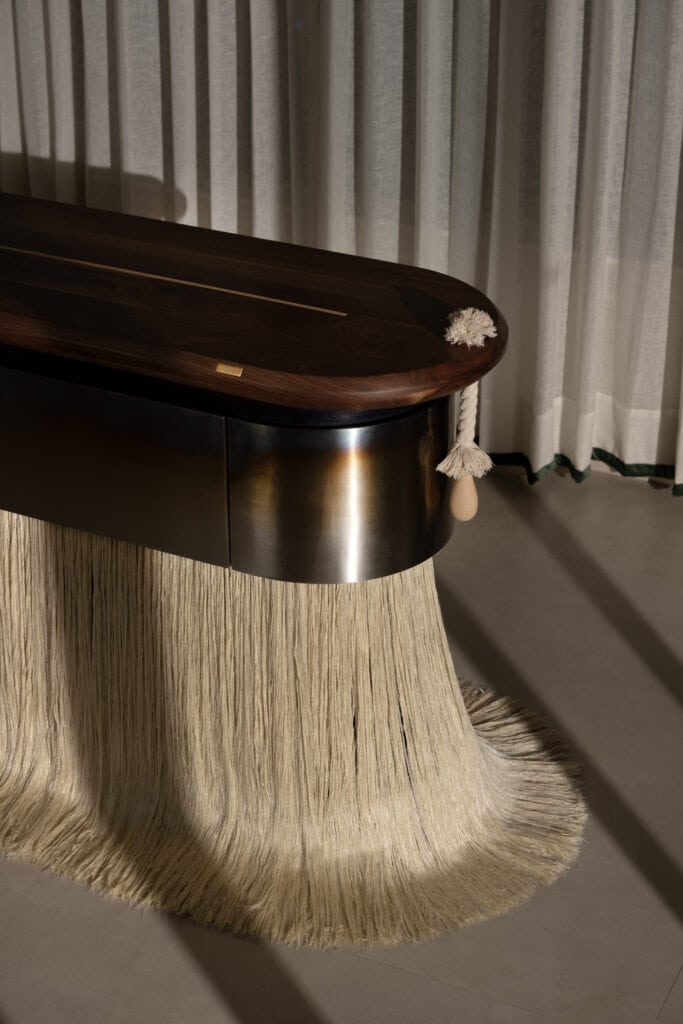
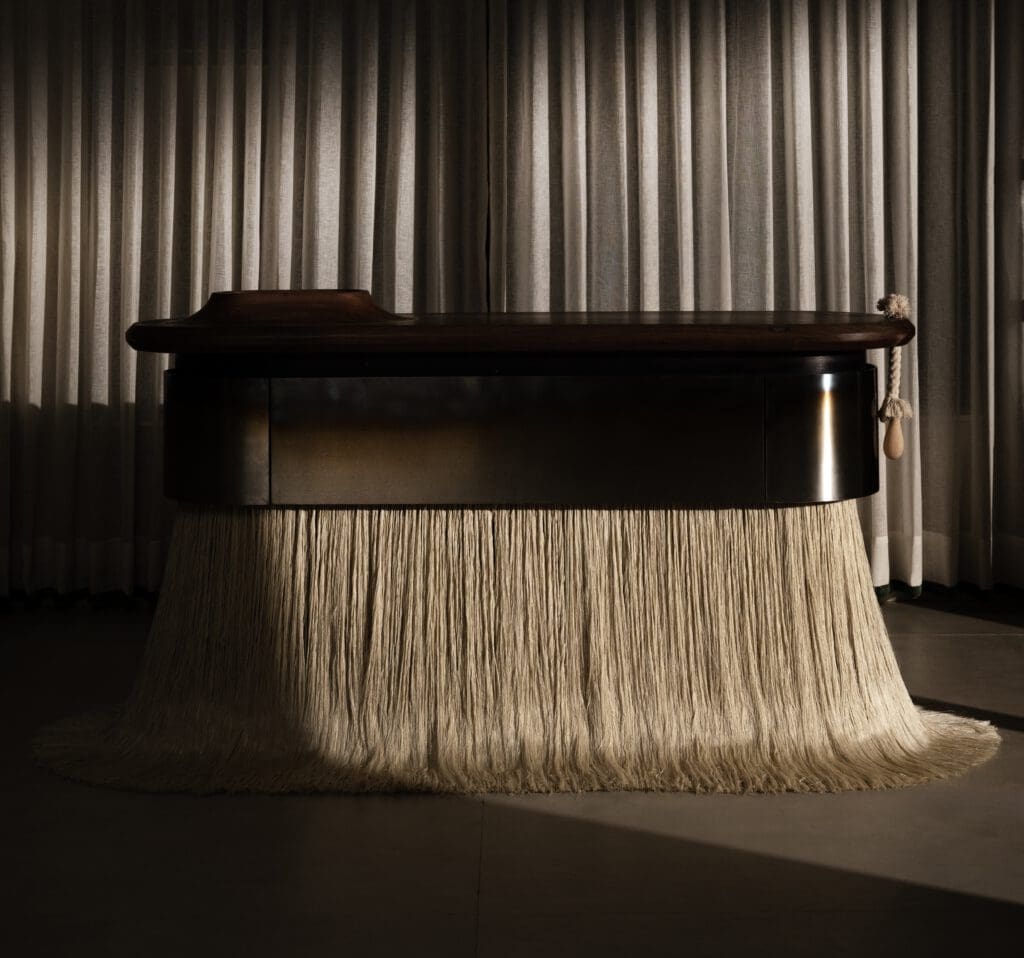
The idea takes a particularly tangible form in Maya, a console by Gandhinagar-based Aaj and Khushi Patel. Walnut and heat-coloured steel meet a generous cascade of silk-blend fringe. The piece is dressed. Its textile layer reflects the aspects of a personality we choose to reveal and those we keep to ourselves.
Abin Chaudhuri, based in Kolkata, also explores such layers. His Vastra Cabinet is wrapped in a layered, patchworked surface. For the Alankaara Coffee Table, he draws on the Rabari tradition of trajva tattoos, translating its markings into abstract patterns across the table’s legs. Forms originally worn on the skin become part of an everyday object.
From Earrings to a Bar Cabinet
For their Kolam bar cabinet from the ANI Collection, Avani and Akshay Khurana draw on two distinct visual languages: the traditional Thandatti ear ornament of Tamil Nadu and the geometry of kolam patterns. Working in teak and aged aluminium, they carry these references into the furniture through its materials and construction.
Gurugram-based Parminder Pal Singh brings techniques from traditional Indian jewellery-making into pendant lighting. His Quilon, Madras and Mysore designs reference a historic gem-trading port in Kerala, handloom checks from the Coromandel Coast and the cusped arches of Mysuru Palace. Influences ranging from small ornaments to architecture find a shared scale in these lighting pieces.
A Chair Within Its Shell
Yousaf Shahbaz and Saira Ahsan, based in Lahore, play with the relationship between a body and its enclosure. For the Shell Chair, they place a hand-carved rosewood chair in the William IV style inside a brushed steel cube. Both forms remain clearly legible: an elaborate historical silhouette within a strict geometric shell.
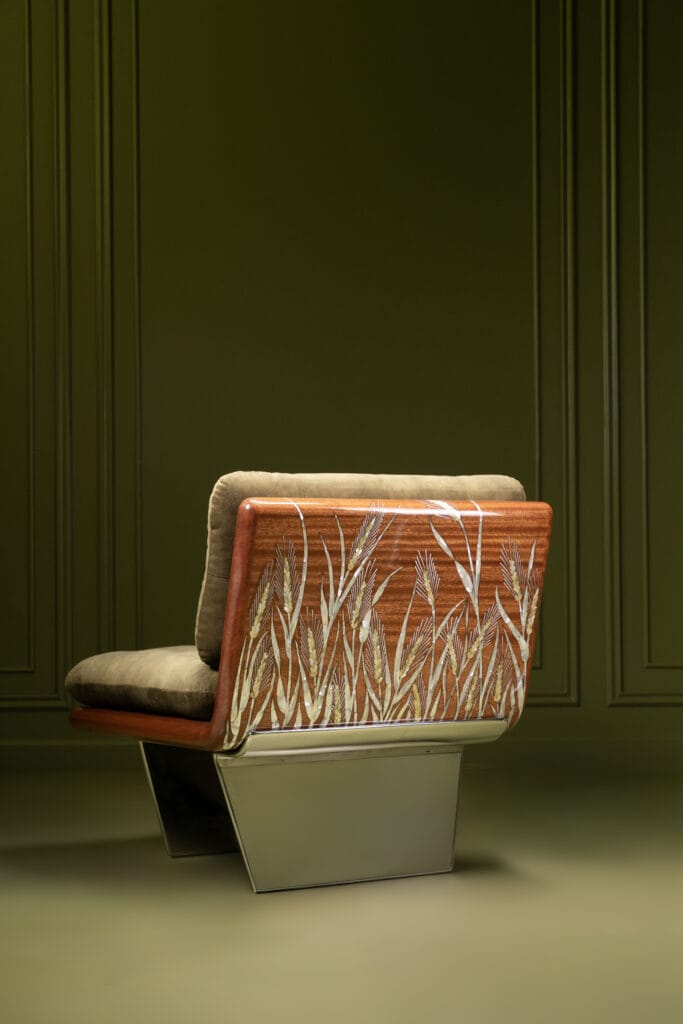
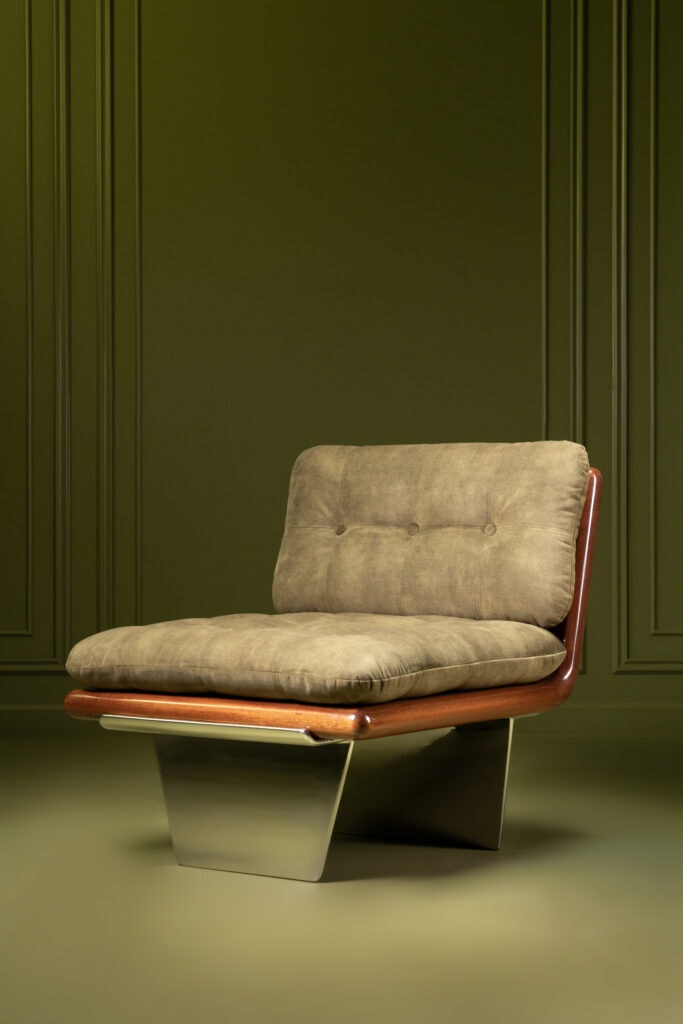
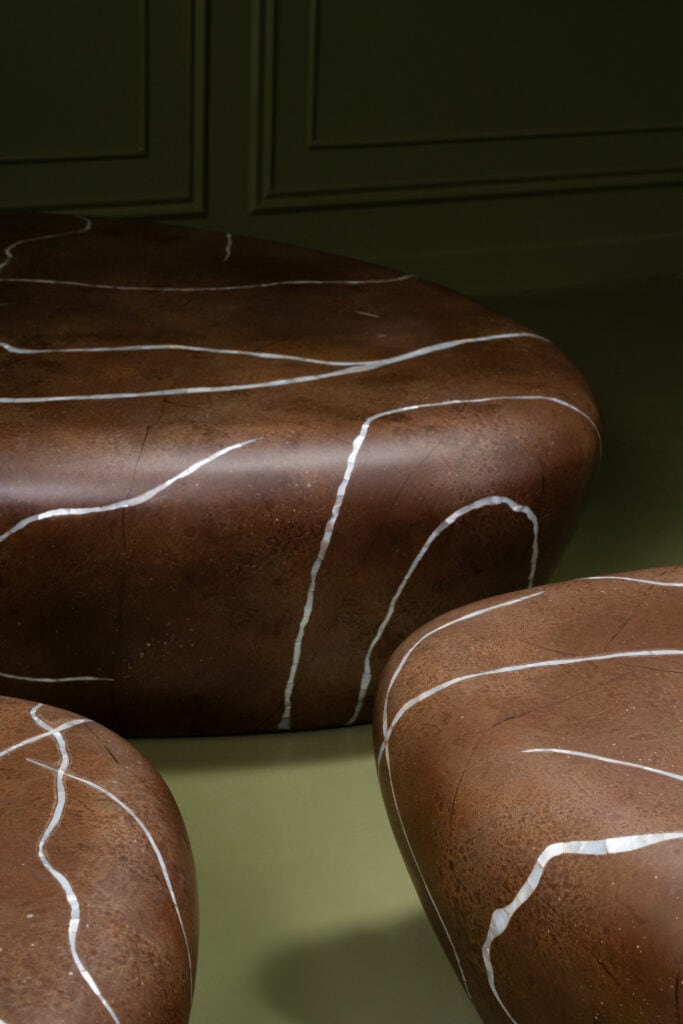
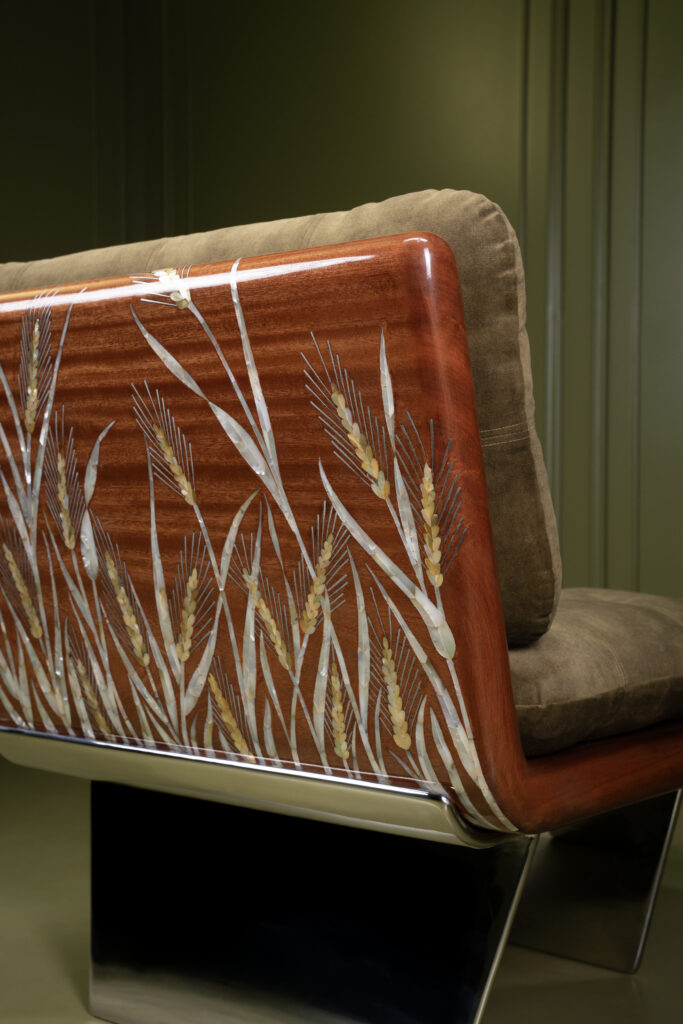
Their Wheat Chair depicts a field of wheat in mother of pearl across mahogany. The hand-painted Pebble Tables recall stones from the Ravi River. Here, the exhibition’s perspective expands from personal adornment towards landscape and memory.
Gunjan Arora and Rahul Jain from New Delhi work across textiles, sculpture and light. Their approximately five-and-a-half-metre-long wall piece Pregnant Mysteries incorporates collected wool, silk, linen and cotton. They also present Aayam, a cast brass sculpture mounted on wood burl, alongside the Medhyaa and Ithika lighting installations.
Founded by designer and curator Raksha Sanikam, House of Santal focuses on contemporary South Asian design. Its selection connects craft knowledge with the individual perspectives of designers working today. In “Shringara”, that connection becomes visible through a simple shift: fringes, jewellery forms and markings leave the body. The stories attached to them move into the room.
Further information: House of Santal