
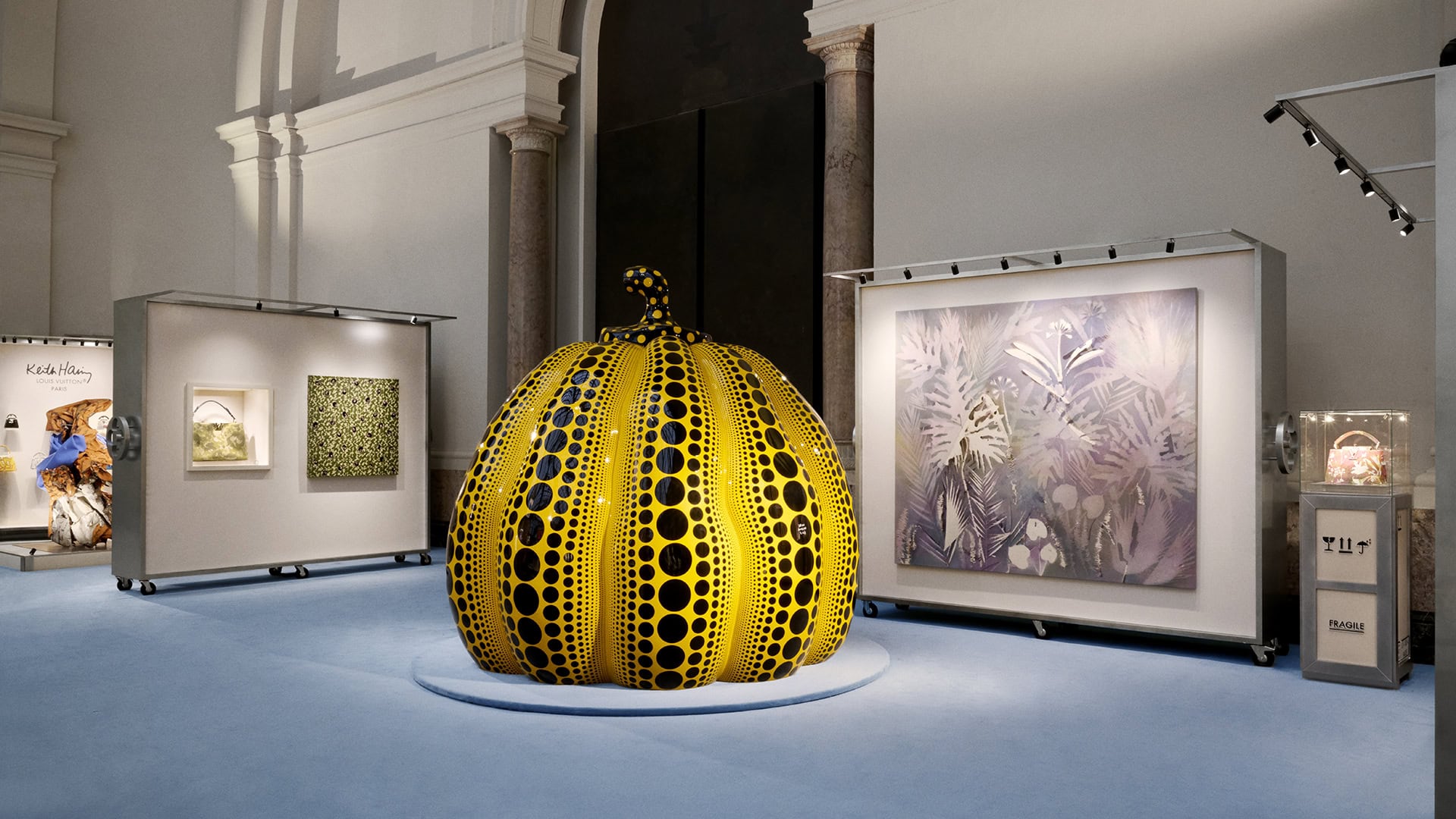
Seven years of Artycapucines: At the Grand Palais, Louis Vuitton places artistic interpretations of its Capucines alongside works by their creators. A new collection is dedicated to Keith Haring.
A banana hangs from a bag. For Urs Fischer, this small disruption belongs to an artistic language in which everyday objects lose their familiarity. At the Grand Palais, his Artycapucines now encounters Fruits, a work from 2026. The pairing brings the central idea of Louis Vuitton’s presentation at this year’s Art Basel Paris into focus: How does an idea travel from one medium to another? And what happens to a bag when artists reconsider its shape, surface and function?
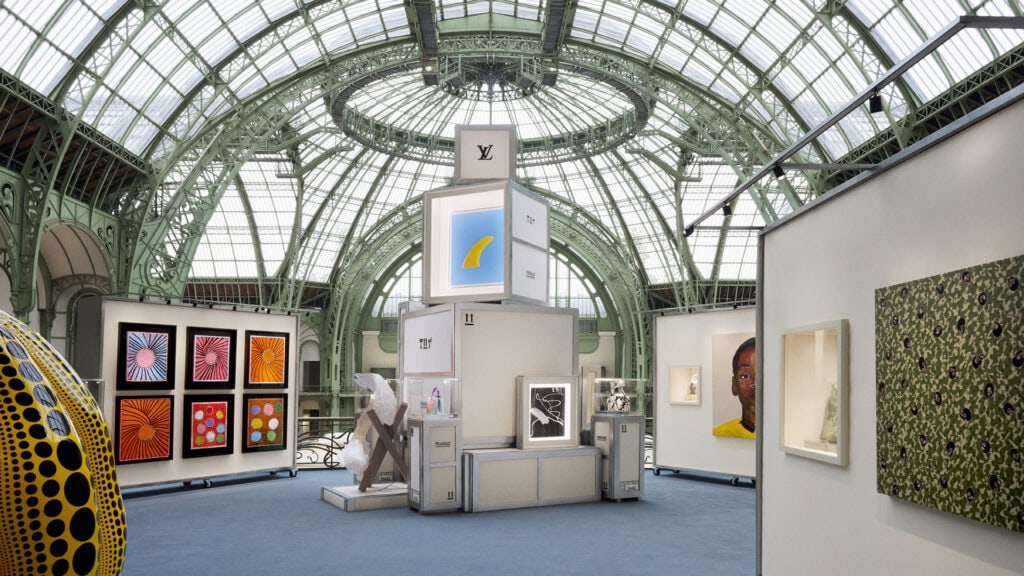
As an Associate Partner of the fair, Louis Vuitton brings together contributions by 14 artists on the Balcon d’Honneur. The retrospective looks back at the Artycapucines project, launched in 2019, presenting the bags alongside selected artworks. These encounters reveal the creative decisions behind the individual designs.
Leather as an Artistic Material
The Capucines provides a recognisable starting point. The results, however, vary considerably. Working with Louis Vuitton’s artisans, the artists translate their practices into an object with its own technical requirements: leather must be shaped, a structure must hold, and a surface must accommodate the work.
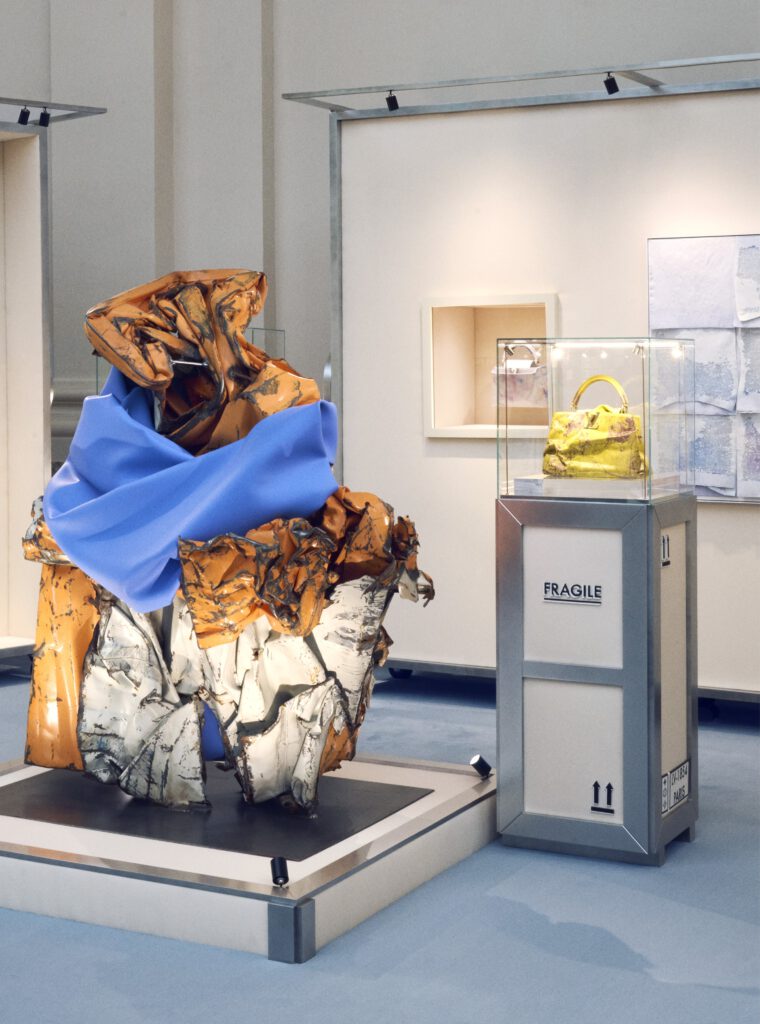
The exchange becomes particularly engaging where material and artistic identity are closely connected. Kennedy Yanko’s 2025 sculpture Because of its blues combines metal and paint skin. Her scrunched, painted Artycapucines from 2022 explores a related understanding of volume. For Liza Lou, the connection lies in the surface: the painted glass beads of Lost Blue from 2022 find a counterpart in the intricate beadwork of her 2023 bag.
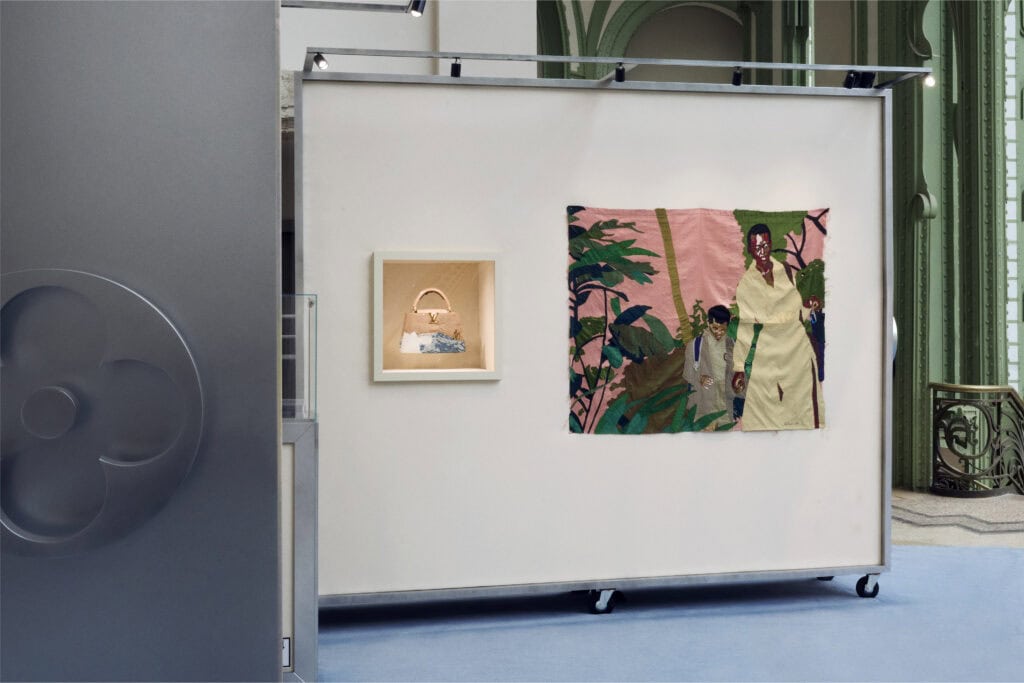
Billie Zangewa brings her figurative world into the presentation through embroidered silk. Her 2020 work Soldier of Love appears alongside her contribution, also made with embroidered silk. The pairing traces how a textile narrative continues on a different object.
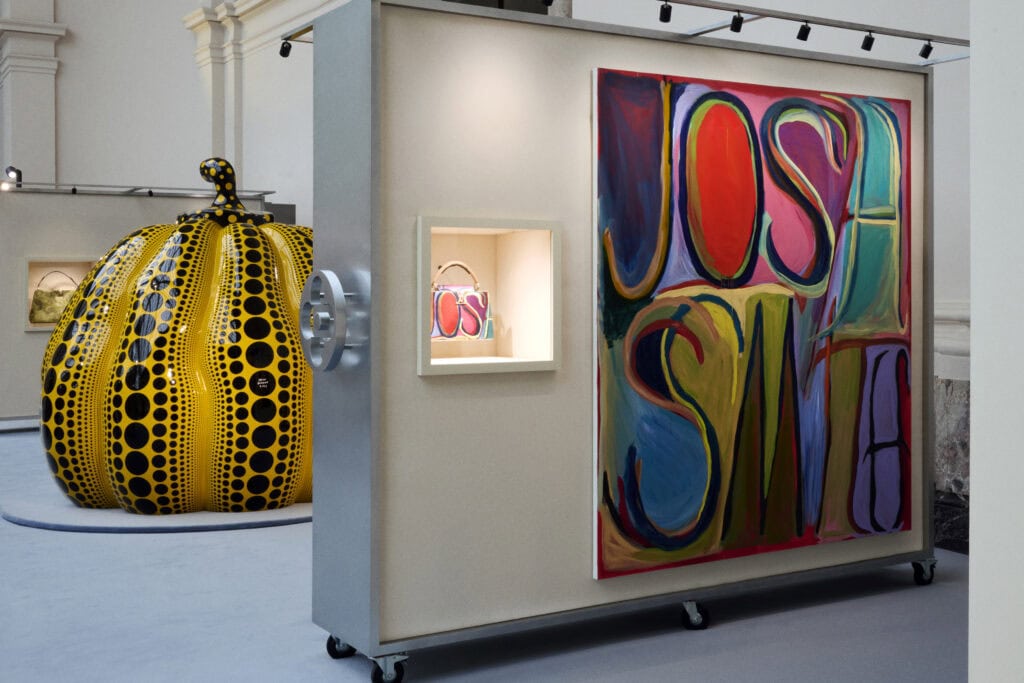
Painting also changes character under these conditions. Henry Taylor’s A Young Master from 2017 accompanies his exploration of portraiture on a bag. Josh Smith’s Untitled from 2019 brings lettering and saturated colour into a spatial relationship with his design. The bag becomes a counterpart to the painting, with edges, depth and a form that moves.
Between Packing Crate and Exhibition
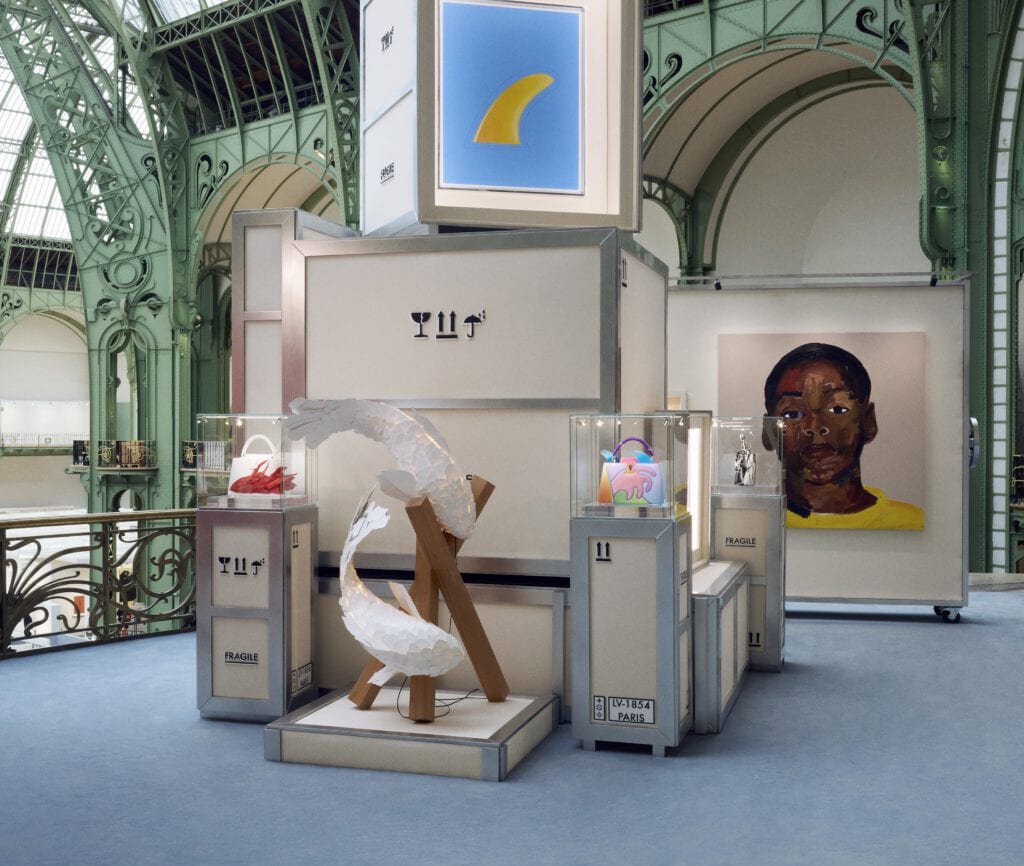
The scenography draws on an aspect of exhibition making that usually remains behind the scenes: packing, storing and transporting art. Open crates, plinths and trunk-like structures in brushed aluminium and cotton canvas frame the works. Pale carpeting complements the Grand Palais’ characteristic green steel.
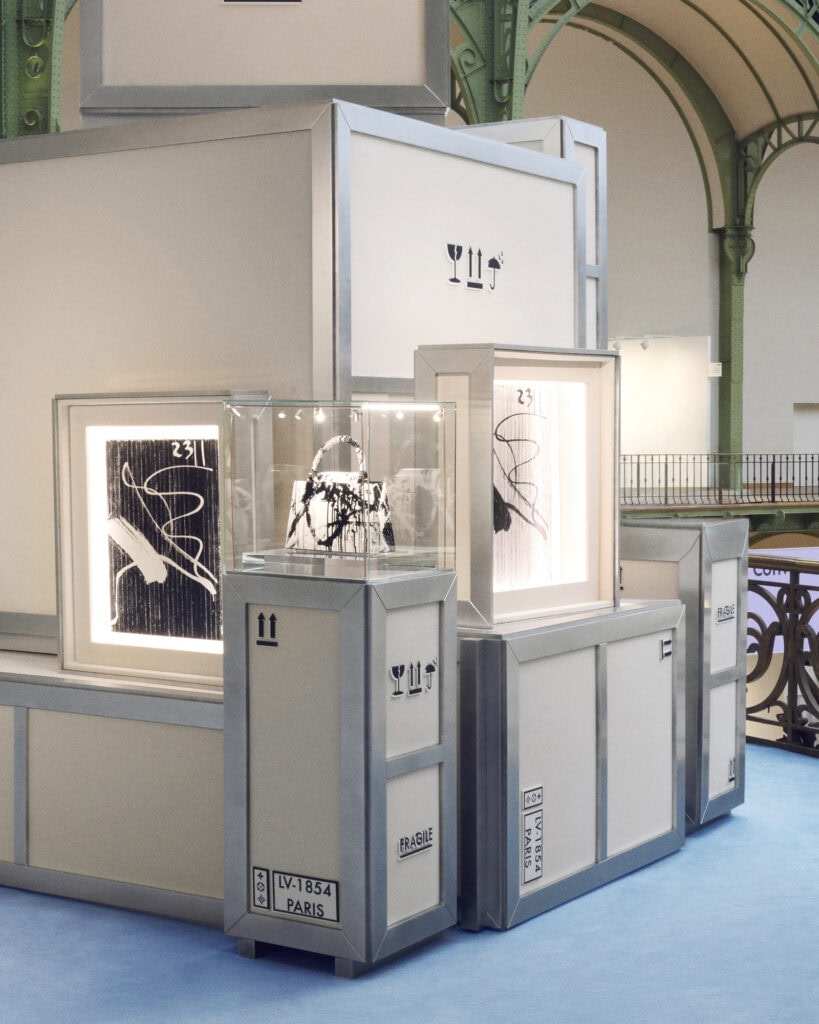
The approach connects with the history of a house that began with packing and trunk making. It also gives the presentation a sense of transition. The objects appear to have just arrived, or to be preparing to leave again. This directs attention towards their physical qualities: their surfaces, weight and the craft involved in making them.
Works by longstanding collaborators are also included. Takashi Murakami’s Monogramouflage Skull (Black) from 2008 accompanies his camouflage interpretation from the 2025 Artycapucines collection. Yayoi Kusama is represented by works including Great Gigantic Pumpkin and Every Day I Pray for Love, both from 2023. Frank Gehry’s fish-shaped lamps, Untitled (Paris II) from 2012, connect his animated forms with his leather goods designs for Louis Vuitton.

Keith Haring and the Movement of Signs
The Artycapucines collection dedicated to Keith Haring opens a new chapter. Small figures, dancers, a running heart and chains of graphic symbols extend across the bags. Haring’s visual language brings its own rhythm: the signs suggest movement even when the surface remains still.
Alongside the collection is a Louis Vuitton suitcase from the 1930s, which Haring signed in the 1980s. This historical object gives the new designs a tangible point of reference. Decades separate the old suitcase from the new bags; they are connected by the encounter between a distinctive artistic hand and an object made for travel.
It is these pairings that give the retrospective its interest. They allow an idea to be followed across different materials: from glass beads to leather, from a painted figure to a form that can be carried. How much of the original work survives the process? And which possibilities emerge through the act of translation?
The presentation is open to the public at the Grand Palais from October 23 to 25, 2026, as part of Art Basel Paris. The fair’s ticket conditions apply.