
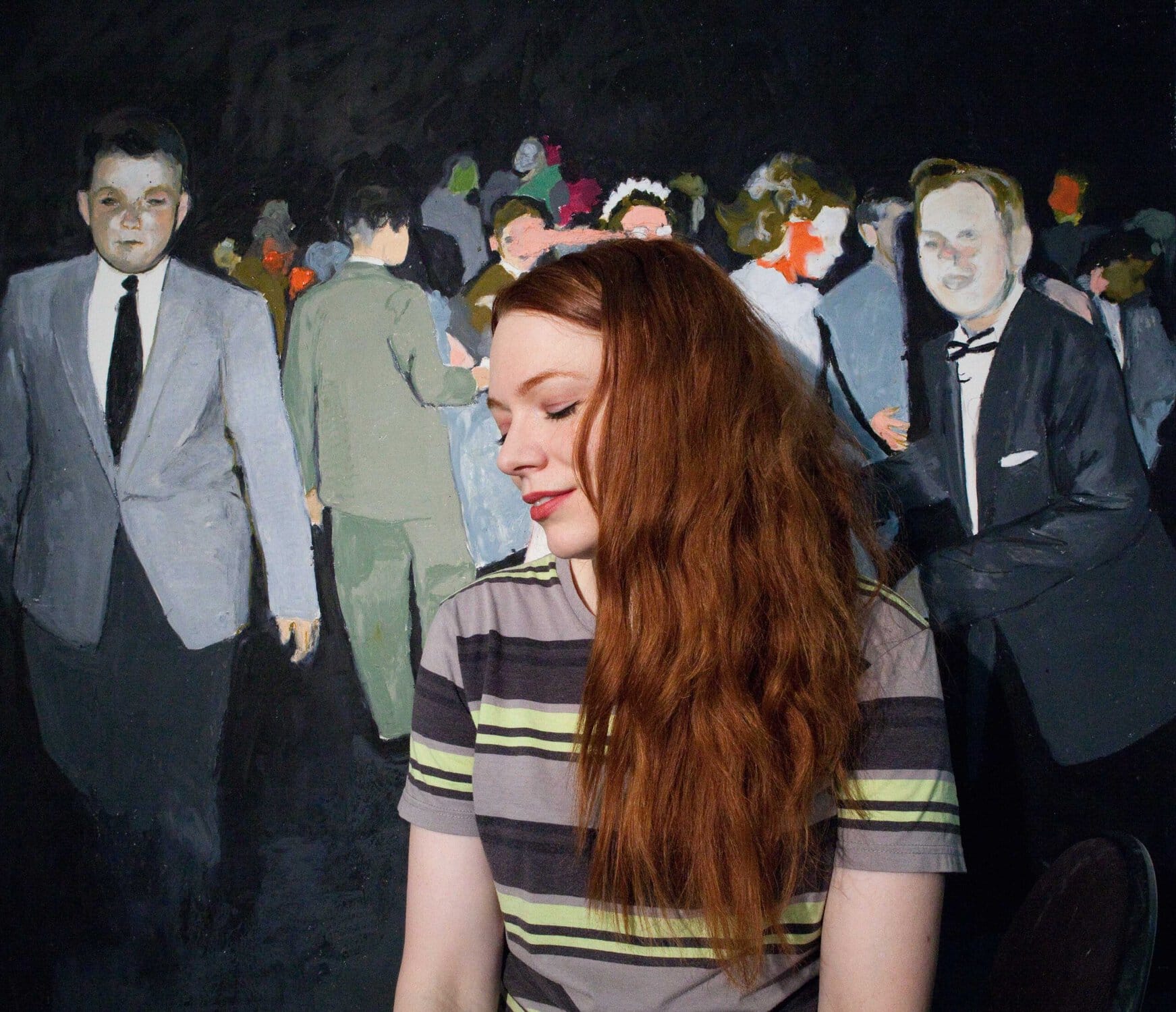
I WANT THE VIEWER TO BECOME AN ACCOMPLICE TO MY PAINTINGS
M E R C E D E S H E L N W E I N
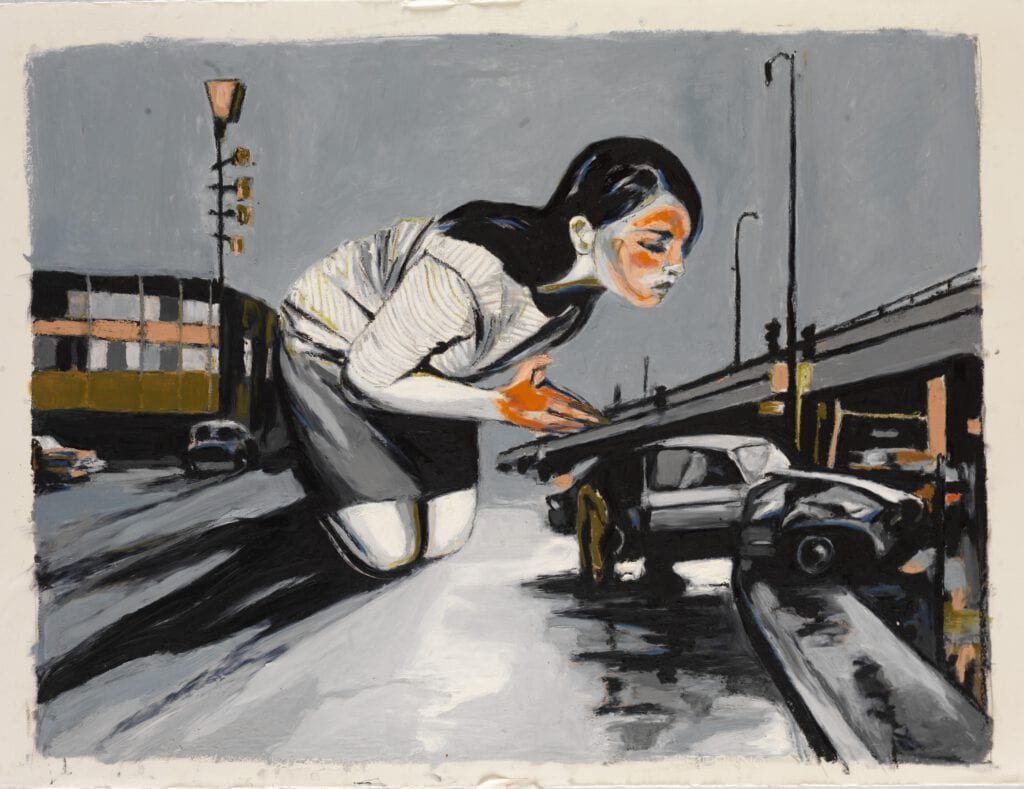
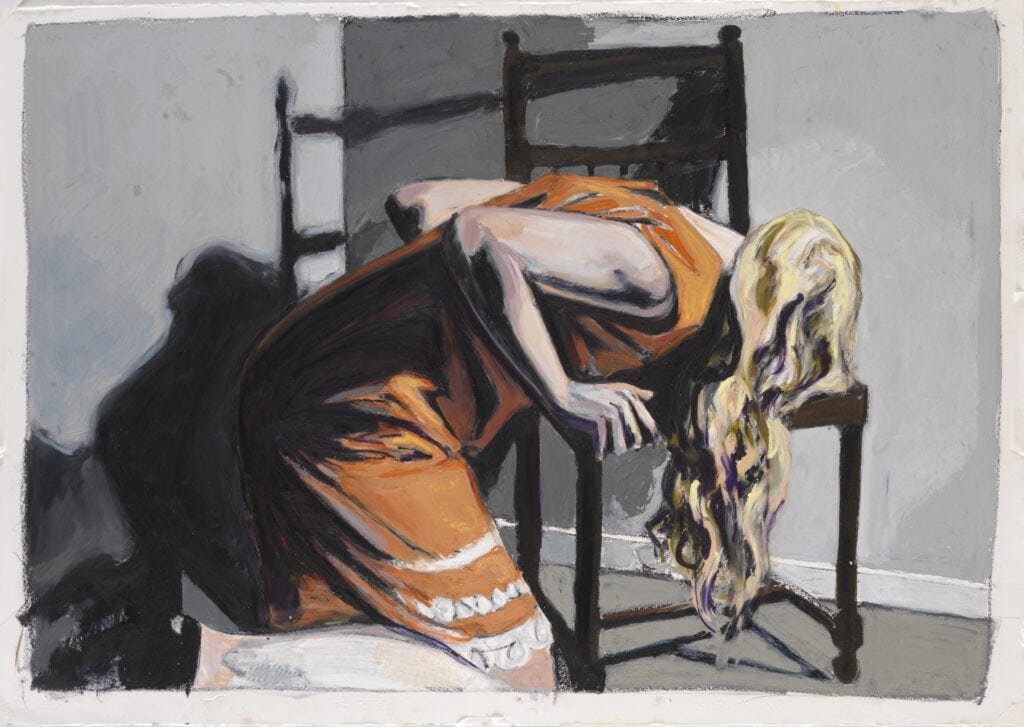
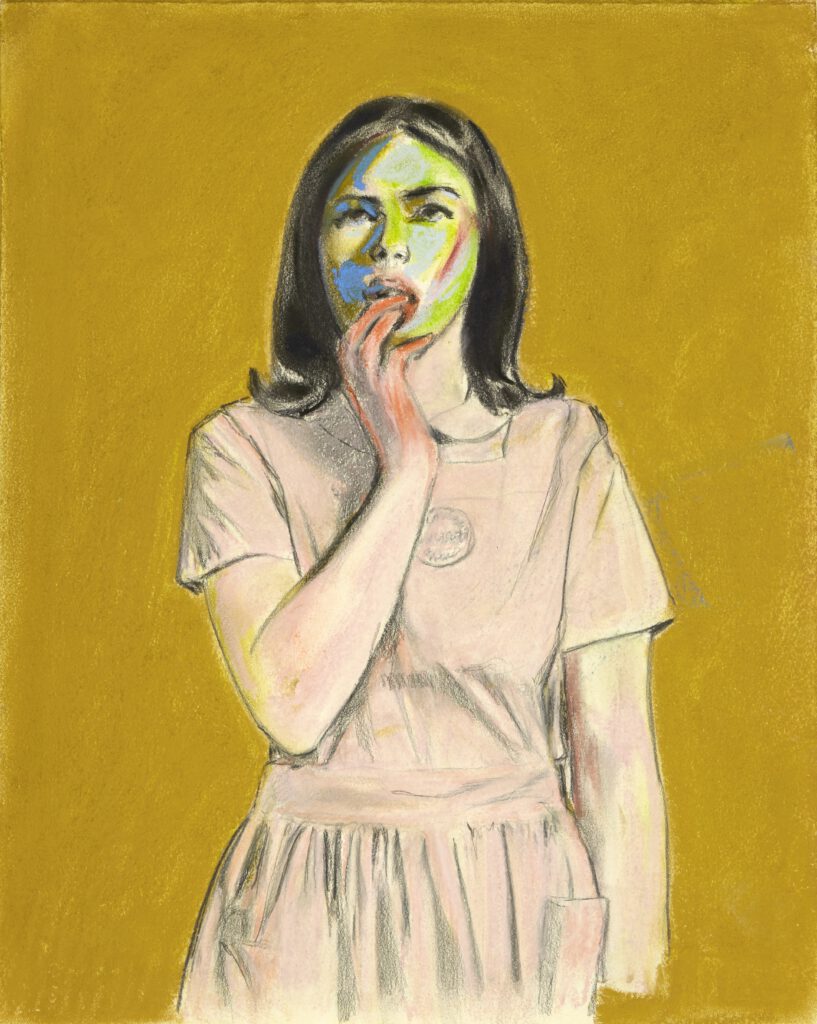
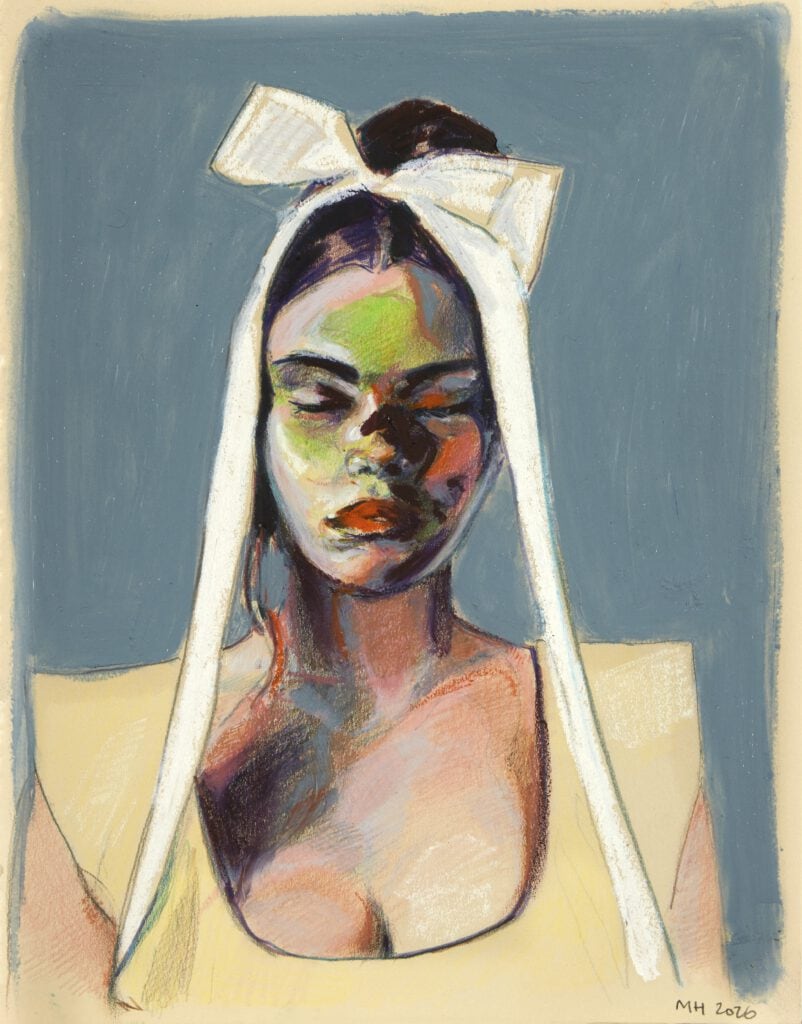
MERCEDES HELNWEIN’S PAINTINGS TELL STORIES THAT RESIST A SINGLE INTERPRETATION. YOUNG WOMEN STARE INTO SPACE OR LOOK DIRECTLY OUT OF THE PICTURE; BODIES APPEAR FROZEN IN TIME, GESTURES REVEALING MORE THAN THE FIGURES THEMSELVES ARE WILLING TO DISCLOSE. EVERYTHING SEEMS FAMILIAR, AND YET SOMETHING IS NOT QUITE RIGHT. IT IS THIS SUBTLE SHIFT BETWEEN THE EVERYDAY AND THE UNSETTLING, BETWEEN WHAT WE SEE AND WHAT WE IMAGINE, THAT GIVES THE AUSTRIAN-AMERICAN ARTIST’S WORK ITS DISTINCTIVE TENSION. NOTHING IS FULLY EXPLAINED, NOTHING DEFINITIVELY RESOLVED. THE REAL STORY OFTEN BEGINS IN THE VIEWER’S MIND.
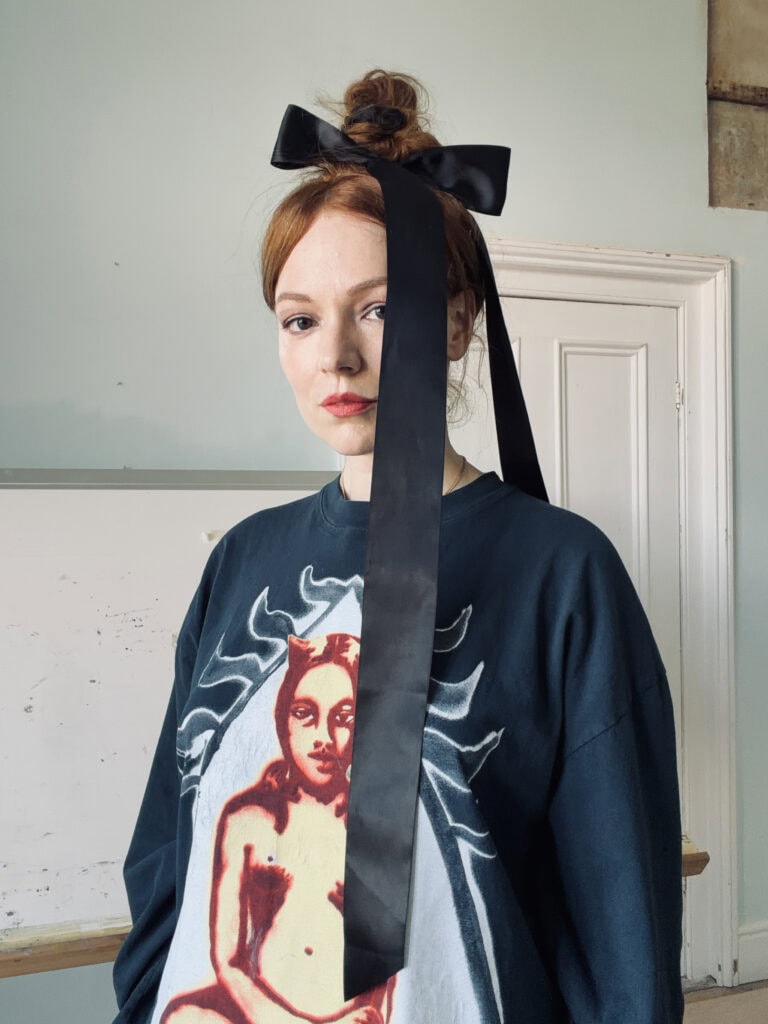
The daughter of Austrian artist Gottfried Helnwein, Mercedes Helnwein grew up surrounded by art. Her father’s studio, exhibitions, theatre productions and print shops were part of her world from an early age. Yet she has developed an artistic universe entirely her own: a form of painting that draws its sense of unease not from the spectacular, but from subtle distortions of the ordinary. A head tilted at a slight angle, an enigmatic gaze, a posture that raises questions. In this conversation, she talks about why she often has no idea what happened before or after the moment she depicts, why what remains unspoken interests her more than any explanation, and why she now places fewer restrictions on her choice of mediums and methods than she once did. Her works are on view and available for purchase at Galerie Kovacek & Zetter, which will present her new exhibition, Ground Zero, in 2026.
YOUR PAINTINGS OFTEN FEEL LIKE FRAGMENTS OF A STORY THAT IS NEVER FULLY TOLD. DO YOU ALWAYS KNOW WHAT HAPPENED BEFORE AND AFTER THE MOMENT YOU DEPICT?
No, I never know the entire story behind a painting. Often, I don’t even know exactly what is happening in the frozen moment I’m capturing. All I can do is speculate, just like anyone else looking at the picture. That state of affairs is precisely what interests me: something becomes visible without necessarily forming a coherent narrative. The painting captures a moment, but it doesn’t come with an instruction manual explaining how to interpret it.
Growing up in an artistic environment was, of course, an incredible privilege.
YOU OFTEN FOCUS ON YOUNG GIRLS AND WOMEN, ON BODIES, GAZES AND SITUATIONS THAT SEEM BOTH FAMILIAR AND STRANGELY DETACHED FROM REALITY. WHAT INTERESTS YOU ABOUT THIS IN-BETWEEN STATE?
I’m interested in the figure caught in that state, and in everything she doesn’t say. What remains unspoken is often more revealing than what is actually said. There is a tension between what a person presents to the outside world and what might be going on inside them. That is precisely the space I want to explore.
YOUR FIGURES OFTEN LOOK AT US WITHOUT REALLY MAKING CONTACT. WHAT MAKES A GAZE INTERESTING TO YOU?
The possibilities it opens up. All the drama being suppressed, the backstory that remains untold, the potential for the next scene. There is also the tension a gaze can contain, and, of course, the girl’s posture. A look can set a story in motion without offering a single clue as to what that story might actually be about. I like it when many possibilities remain open.
HOW MUCH OF MERCEDES HELNWEIN IS THERE IN YOUR FIGURES? AND ARE THERE MOMENTS WHILE PAINTING WHEN YOU DISCOVER SOMETHING ABOUT YOURSELF THAT YOU WEREN’T PREVIOUSLY AWARE OF?
My work is highly fictional, and that is precisely what I like about it. When I’m working on a painting, I can enter a world that isn’t real, yet one I’m allowed to inhabit. It’s an escape into my own private arena. In that sense, the work has a great deal to do with me, but not in an autobiographical way. I don’t have to depict my own experiences to bring something personal into a painting. Fiction, rather, gives me the freedom to move through a world of my own making.
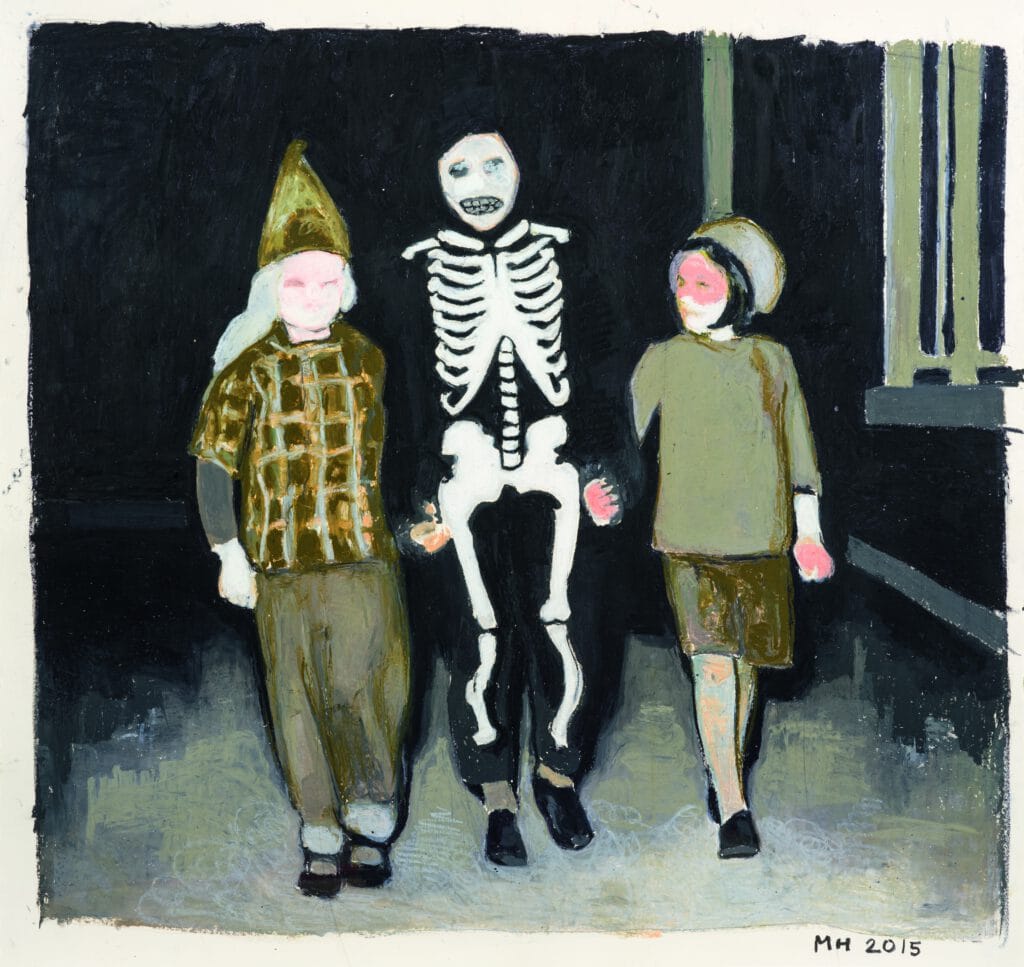
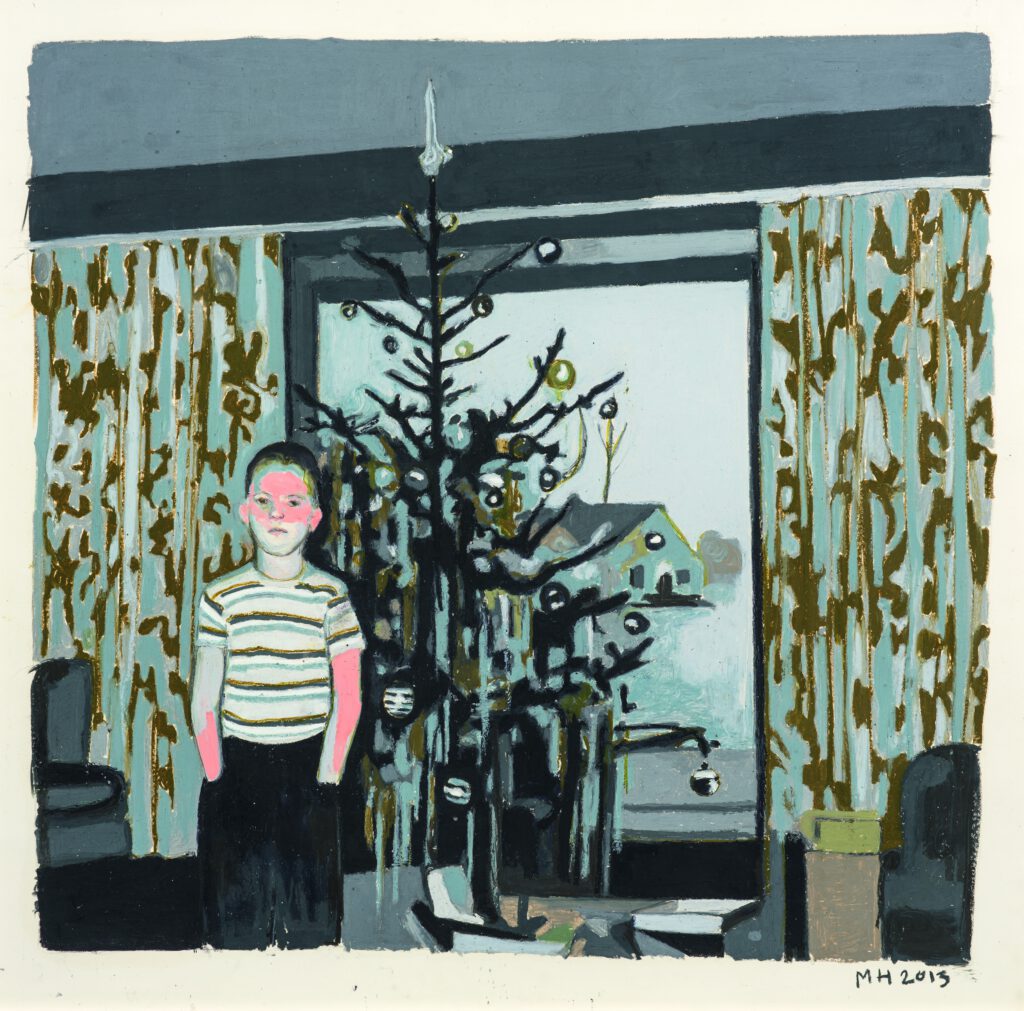
YOU GREW UP SURROUNDED BY ART, AND YOUR FATHER IS AN INTERNATIONALLY RENOWNED ARTIST. DID ART THEREFORE ALWAYS FEEL LIKE A NATURAL PART OF YOUR LIFE, OR DID YOU HAVE TO CONSCIOUSLY FIND YOUR OWN PATH AT SOME POINT?
I think art was a completely natural part of me from the very beginning. I was constantly drawing, long before I could write. There was never a conscious moment when I decided, “Now I’m going to become an artist.” It was far more instinctive than that. Growing up in an artistic environment was, of course, an incredible privilege. Being able to visit my father’s studio every day and accompany my parents to exhibitions, theatre productions, print shops and other places where art was being made inspired me enormously. It meant that I experienced art as something necessary and entirely natural, something that should always occupy a central place in life. That undoubtedly shaped me.
YOUR PAINTINGS ARE OFTEN EXTRAORDINARILY PRECISE, YET EMOTIONALLY ELUSIVE. WHAT COMES FIRST WHEN YOU BEGIN A WORK: A FEELING, AN IMAGE IN YOUR MIND OR A PARTICULAR PERSON?
While working on a painting, I can move through a world that isn’t real, yet one I’m allowed to be part of.

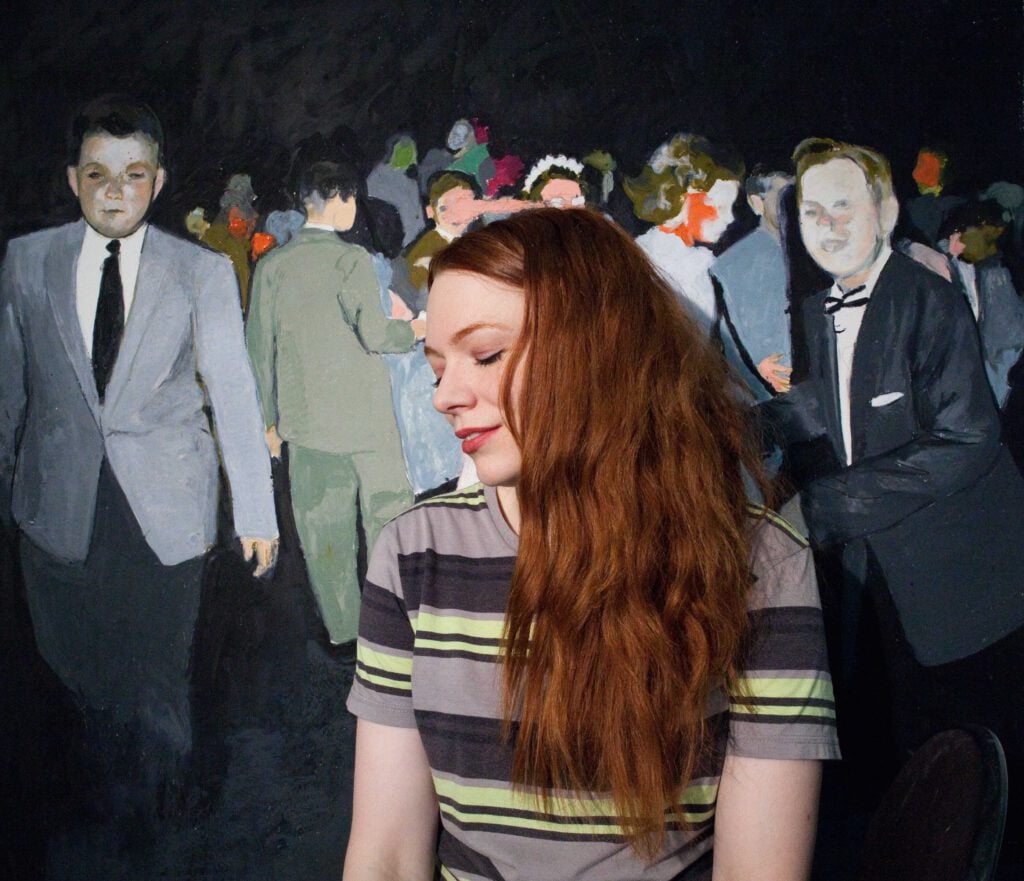
It can begin in different ways. Sometimes I work with a model without having any concrete idea of where the work is going. The ideas then begin to take shape while we’re taking photographs. It’s a good way of getting an idea off the ground in the first place: you schedule a shoot and simply get started. In other cases, I already have a particular scene in mind. I know what the figures should look like, what they should be doing and what they should be wearing. But when I try to realise that scene during the shoot, it usually develops in a different direction. And once I start working with the material on paper or canvas, it changes again. Sometimes I also work with old photographs I’ve found. I play with the existing image, alter individual elements and run it through my own filter until it begins to make sense to me. At the outset, I can never predict where a piece of work will lead. That is an essential part of the process for me.
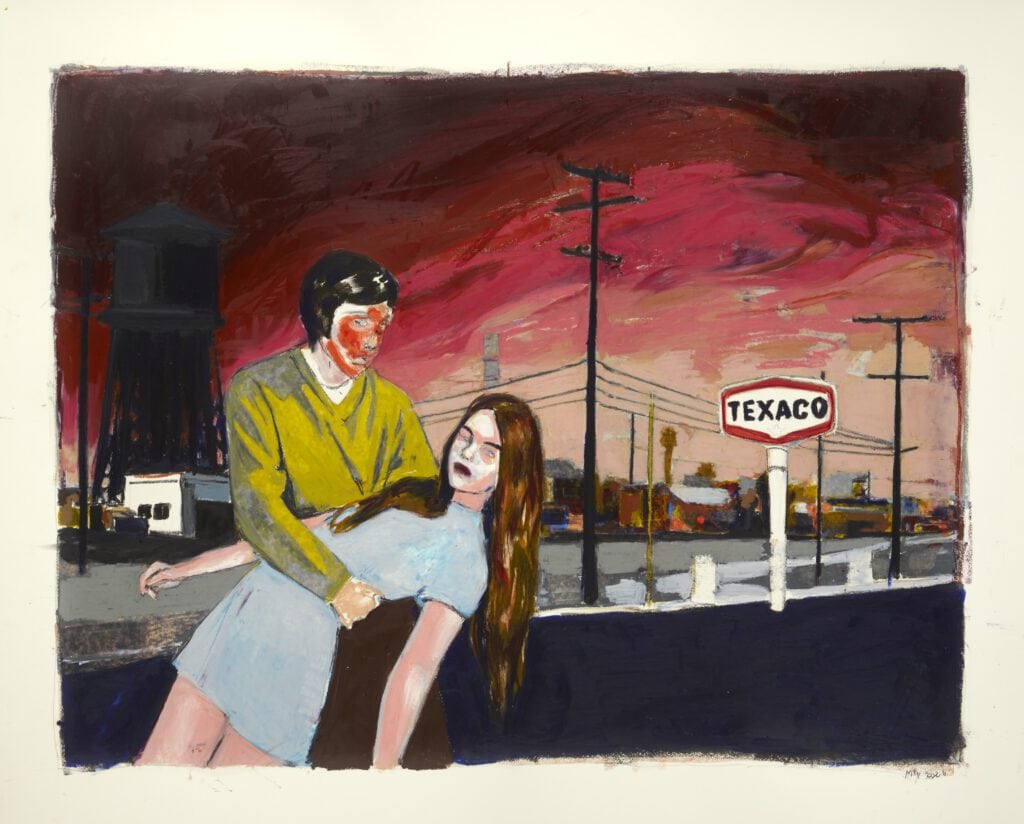
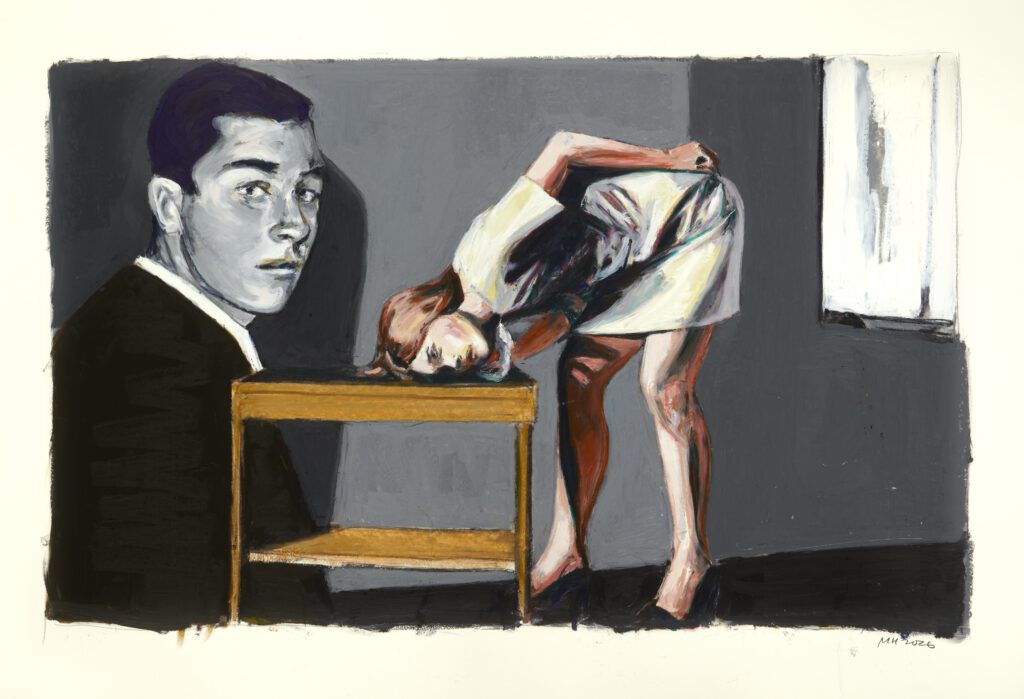
WHAT FASCINATES YOU ABOUT DARKNESS, THE UNCANNY AND THE FAINTLY DISTURBING? IS THERE ALSO A SENSE OF FREEDOM IN THESE TERRITORIES, BECAUSE LESS NEEDS TO BE EXPLAINED?
? I think that when a work of art explains itself too much, it destroys some of its power. The uncanny, the dark and the faintly disturbing are all elements from which good stories can emerge. That said, my work is not necessarily as explicitly disturbing or dark as one might assume. The situations I start with are usually quite ordinary. Often, it takes only a few small details to shift an image towards darkness or psychological thriller territory: a facial expression, a posture, the tilt of a head. How dark a work actually feels therefore depends very much on who is looking at it. When I paint, I’m less concerned with darkness itself than with the strange, the bizarre. I’m interested in the moment when something slips beyond the boundaries of the ordinary, without it being possible to say exactly why.
HOW HAS YOUR WORK CHANGED NOW THAT YOU ARE NO LONGER AT THE BEGINNING OF YOUR CAREER? DO YOU SEE THINGS DIFFERENTLY, OR DO YOU ALLOW YOURSELF MORE FREEDOM THAN YOU ONCE DID?
A great deal has changed. On a technical level, my way of working has naturally evolved. But I’ve also imposed fewer rules on myself. It’s interesting how much of a purist you can become when you’re young. Today, I allow myself considerably more freedom in developing an idea. The themes and subjects I explore still inhabit much the same territory as they did in the past. But I’m increasingly interested in the possibilities of how they can be realised. As far as the medium, the approach or the ideas themselves are concerned, nothing is fundamentally off limits anymore. That makes the work a much more exciting place for me to be. I no longer have to adhere to particular notions of how a painting should come into being. I can choose whatever means seem necessary for an idea and discover where they take me. I find that openness immensely enriching.
IF SOMEONE UNFAMILIAR WITH YOUR WORK WERE TO SPEND A LONG TIME LOOKING AT ONE OF YOUR PAINTINGS, WHAT WOULD YOU HOPE THEY TAKE AWAY FROM IT? A FEELING, A QUESTION, PERHAPS A LITTLE UNEASE?
Whatever someone takes away from a painting is valid as far as I’m concerned, and I’m happy about it. I hope viewers develop their own story or explanation and, in doing so, become accomplices in the creation of the work. The moment someone starts trying to make sense of the image in their own way, something emerges that goes beyond what I originally put into it. That is what I find exciting.