


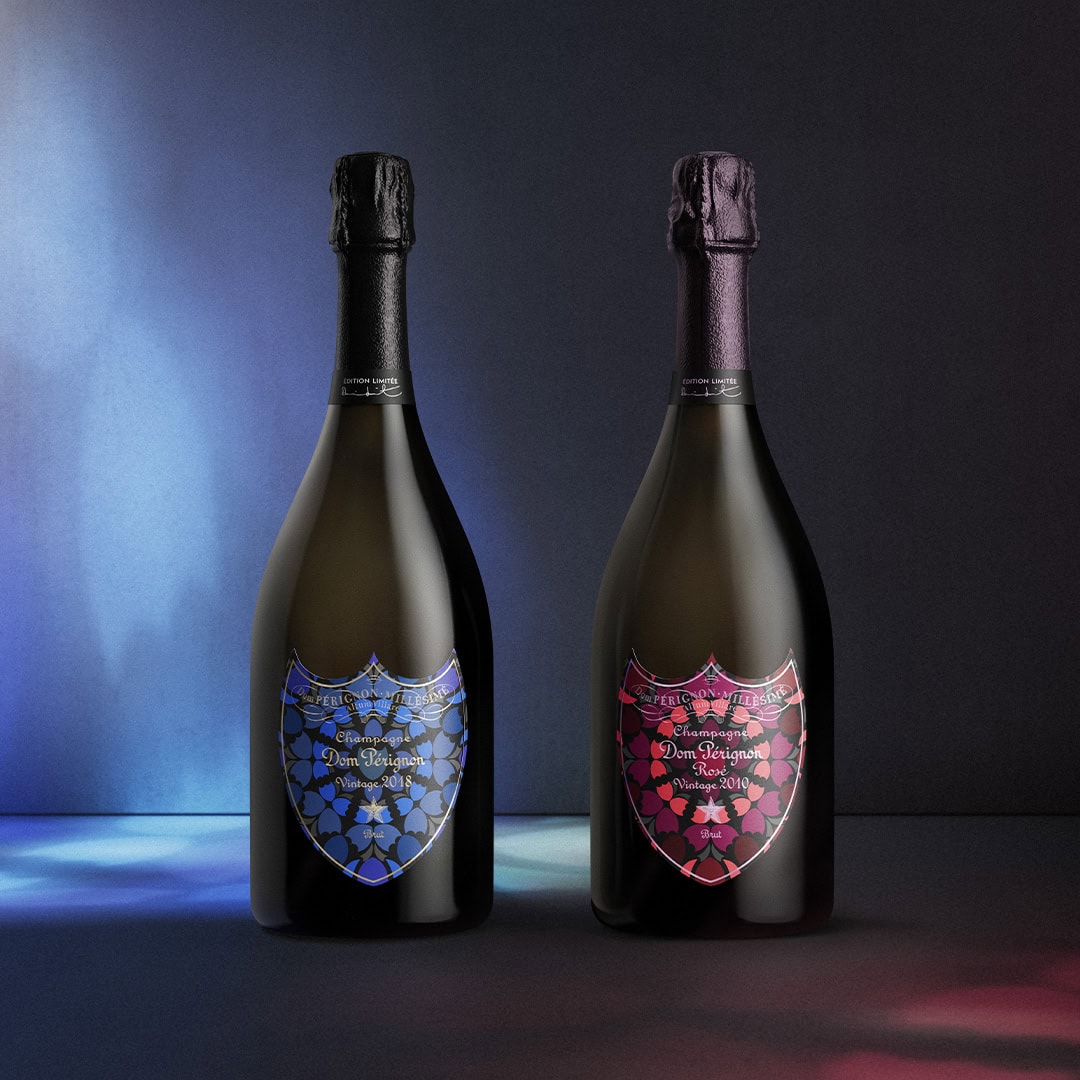
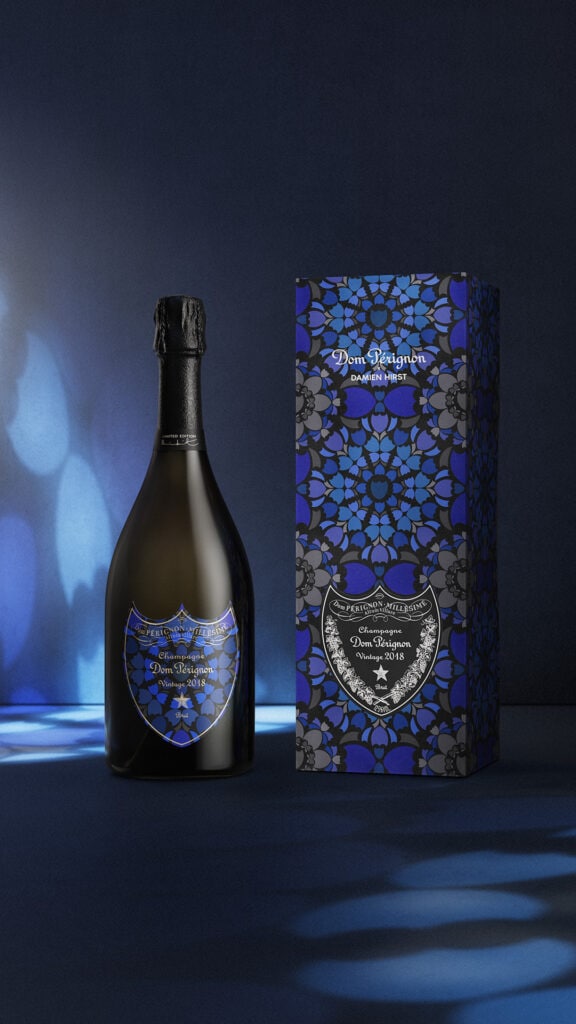
For the Limited Edition 2026, Damien Hirst transforms Dom Pérignon`s shield into a kaleidoscopic pattern. Behind the design lies a connection that extends beyond appearances: the art of bringing individual elements together to create a whole.
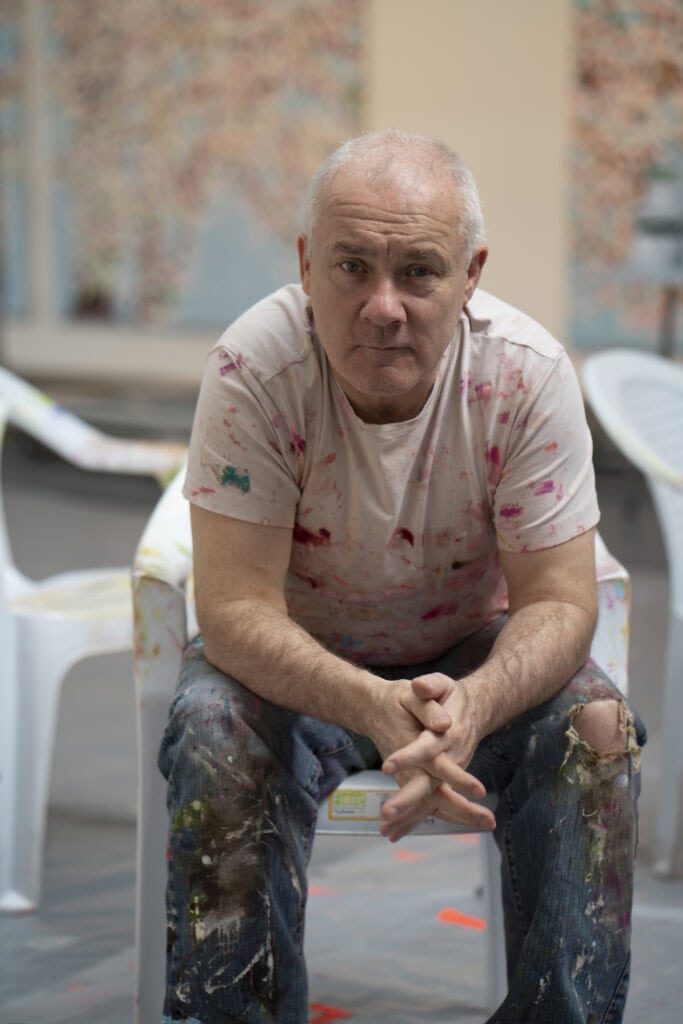
A kaleidoscope needs surprisingly little to change the way we see. A few fragments, mirrors, a slight movement. What appeared to have a clear order a moment ago rearranges itself. Damien Hirst takes this principle as the starting point for his collaboration with Dom Pérignon. The champagne house’s familiar shield remains recognisable – while beginning to multiply.
The shield begins to move
For the edition announced for the end of 2026, Hirst draws on the visual language of his Kaleidoscope series. Repetition and symmetry produce compositions whose order holds the eye: we follow a detail, discover its counterpart, briefly lose ourselves in the pattern.
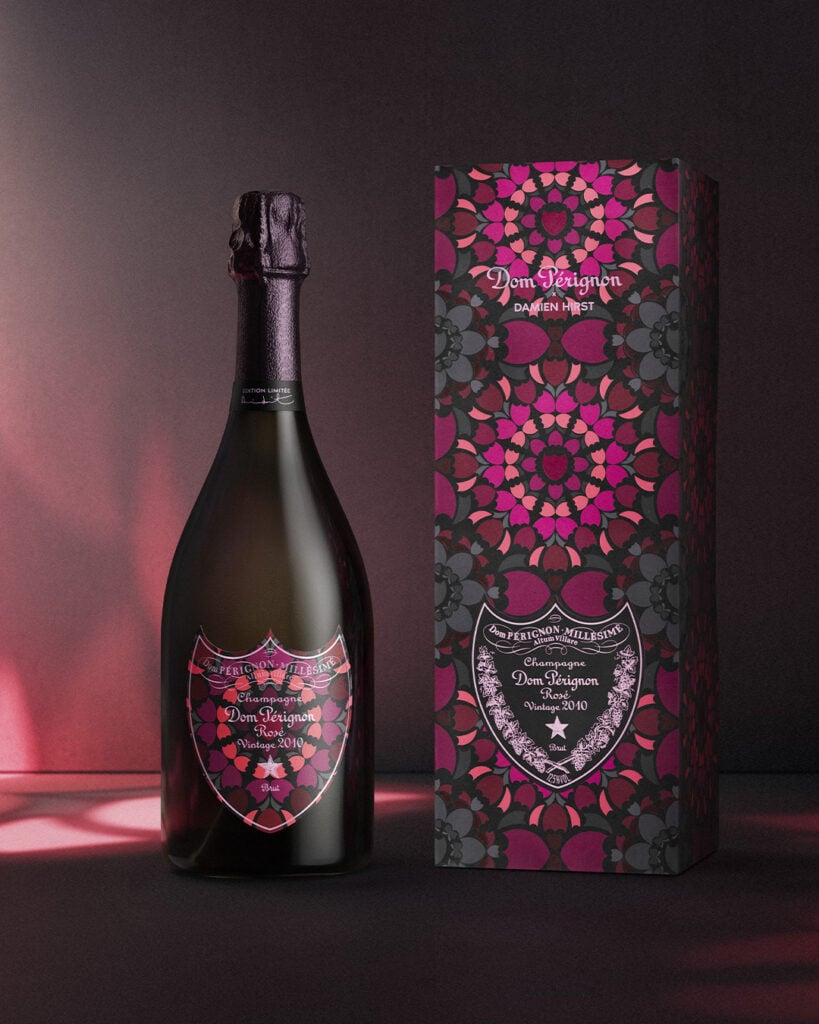
The historic Dom Pérignon shield becomes part of a similar arrangement. Its shape recurs throughout the composition. An emblem that usually establishes a distinct centre acquires a rhythm.
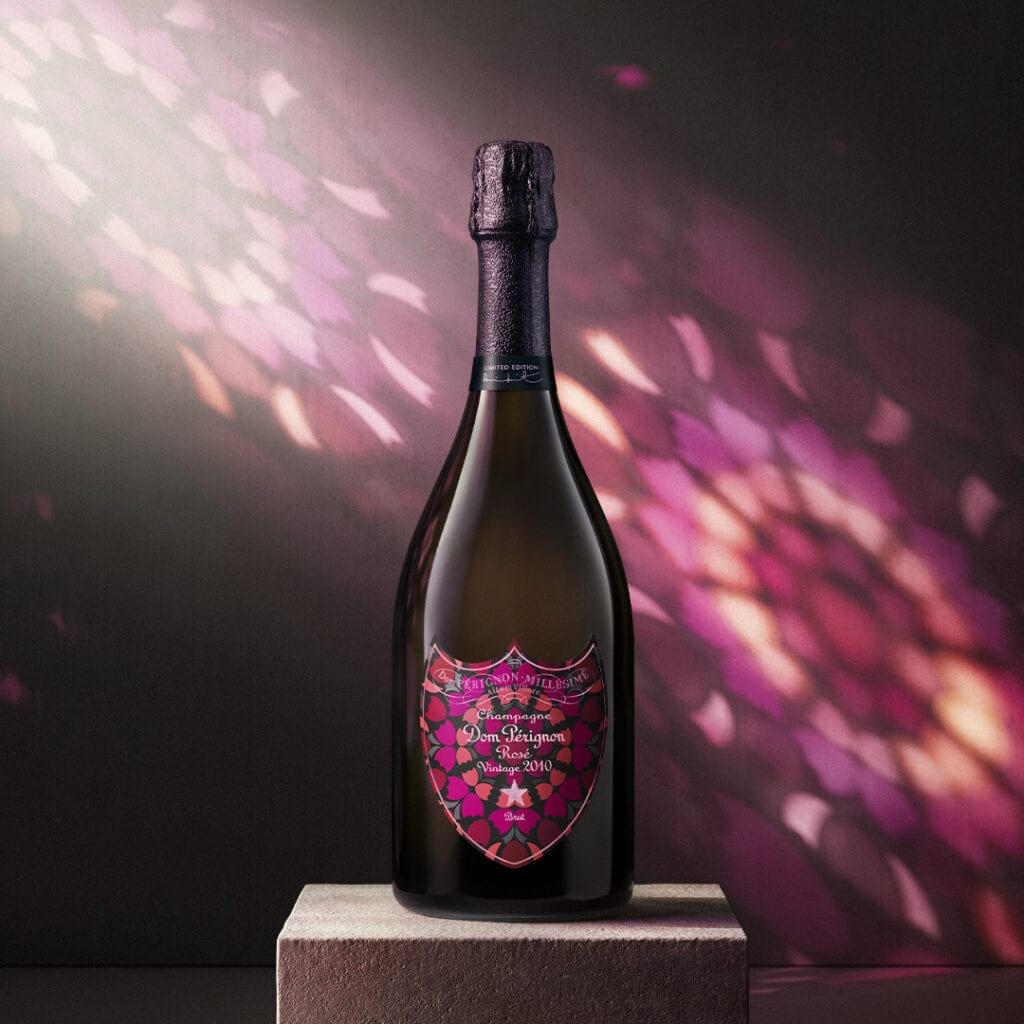
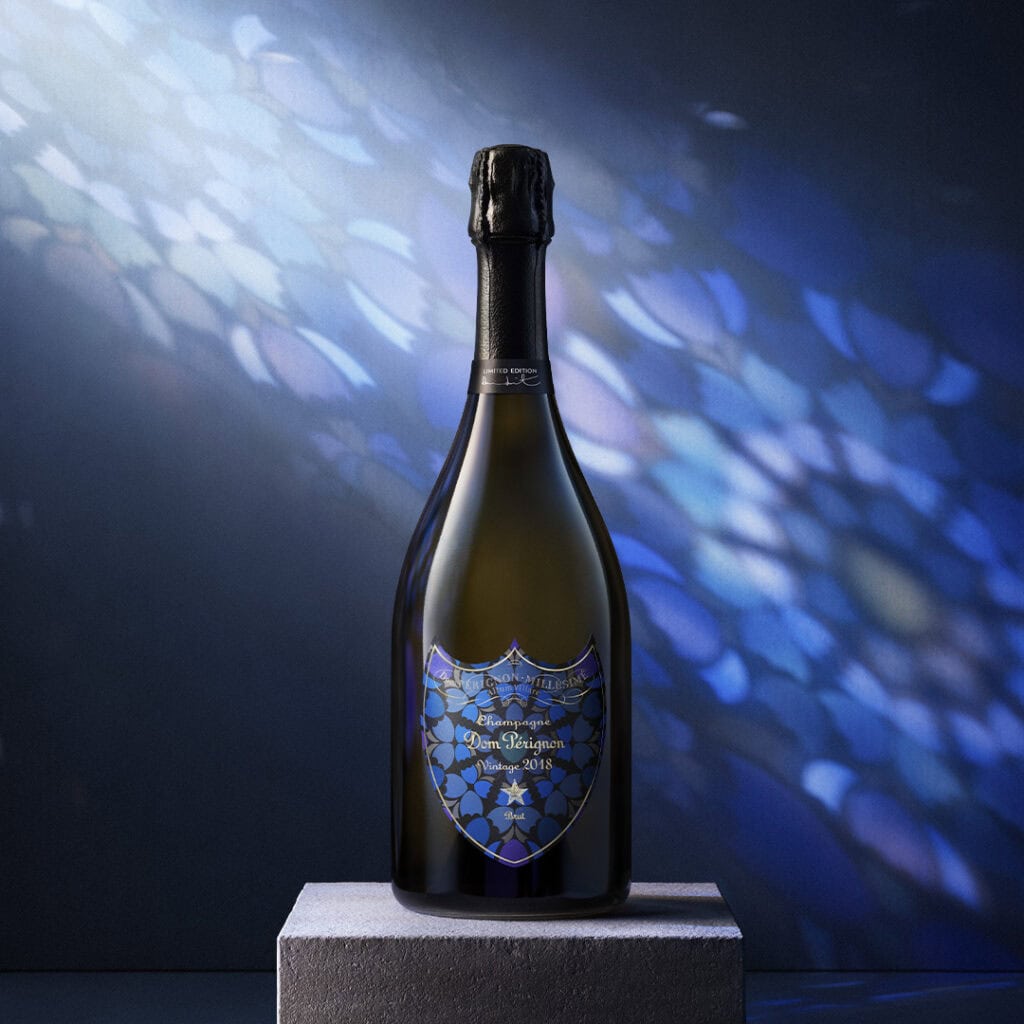
Two colour palettes define the edition: deep blue for Dom Pérignon Vintage 2018, and warm, soft pink for Dom Pérignon Rosé Vintage 2010. They give each vintage its own visual expression, connecting the two through a shared design idea.
What holds the pieces together
The connection between Hirst and Dom Pérignon can be traced through one word: assemblage.
In art, it refers to bringing existing elements together. Hirst selects fragments, arranges them and develops a new composition through repetition. In champagne production, assemblage describes the blending of different wines. Their relationships are crucial: what does each element contribute? How does it change when combined with the others?
Dom Pérignon works with the harvest of a single year. This constraint is part of the house’s identity. A vintage cannot simply be repeated or separated from the conditions that shaped it. If the harvest does not meet the required standard, no vintage is declared. Ageing on the lees adds another dimension, allowing the champagne to develop over years.
This is where the collaboration becomes interesting. Composition begins with close attention to the material at hand. Freedom emerges in the act of combining it, within a form that has rules of its own.
Beauty and its passing
In Damien Hirst’s work, beauty often carries another layer. His art explores life and death, science, religion and our desire to hold on to something that resists being held. The precise order of his patterns can also be read in this light: as an attempt to give fleeting things a form.

A champagne edition brings a tension of its own. The designed bottle can be kept. Its contents are intended for the moment it is opened. Between collecting and enjoying lies a small decision about how we use time.
The two selected vintages introduce different expressions. Dom Pérignon describes Vintage 2018, shaped by generous sunshine and early ripening, through fruit, minerality and salinity. Rosé Vintage 2010 centres on the dense, intense expression of Pinot Noir.
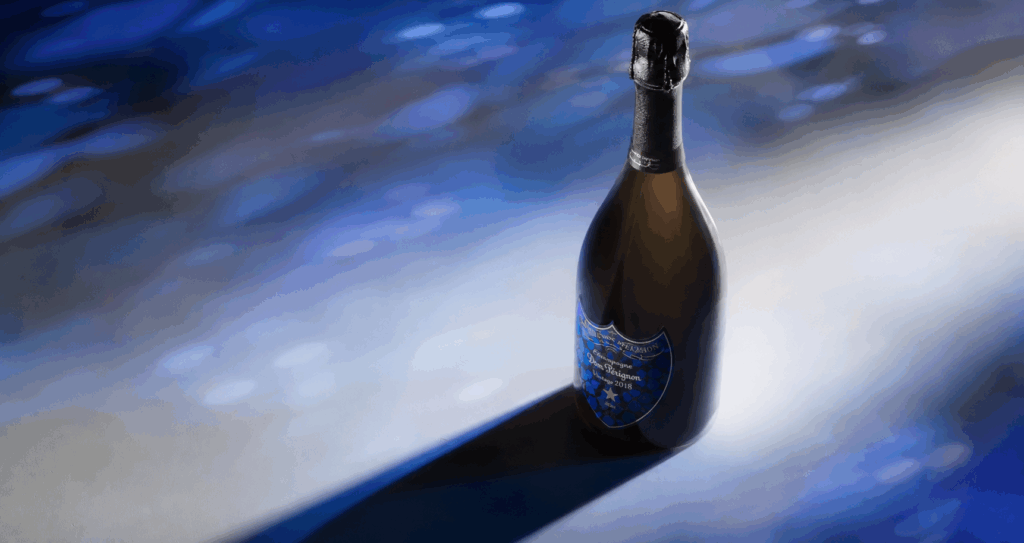
With Hirst the house continues a series of collaborations that has included Karl Lagerfeld, Lenny Kravitz and Lady Gaga. This time, its own emblem offers a fresh perspective. The contours remain familiar. Through repetition, the movement within a fixed form becomes visible.