How the French artist translates memories of coastlines, dunes and the body into sculptures and lighting.
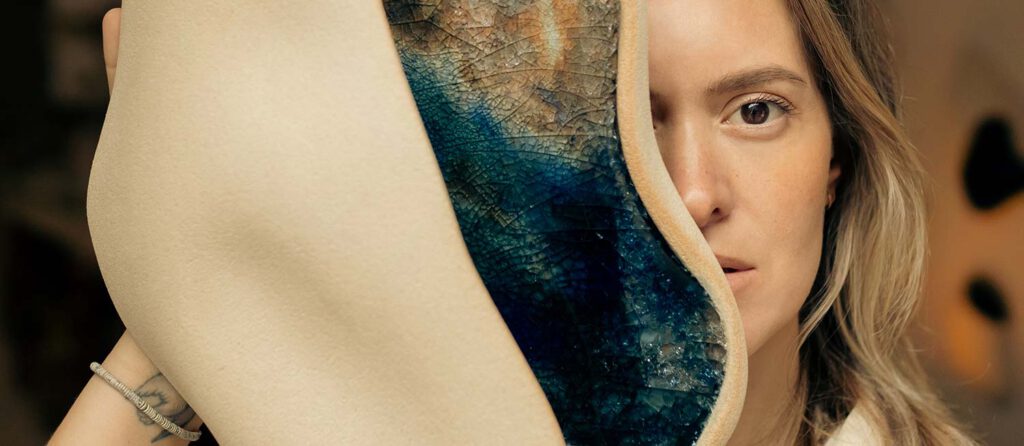
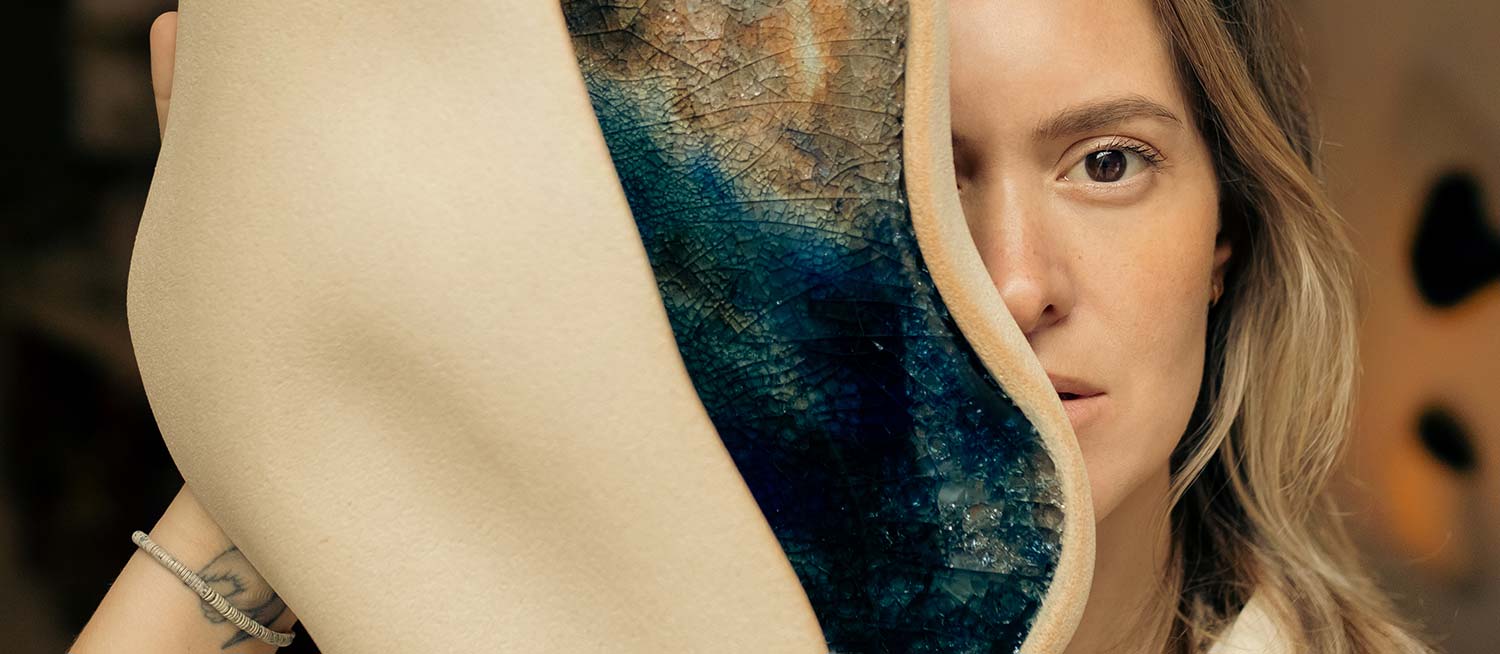
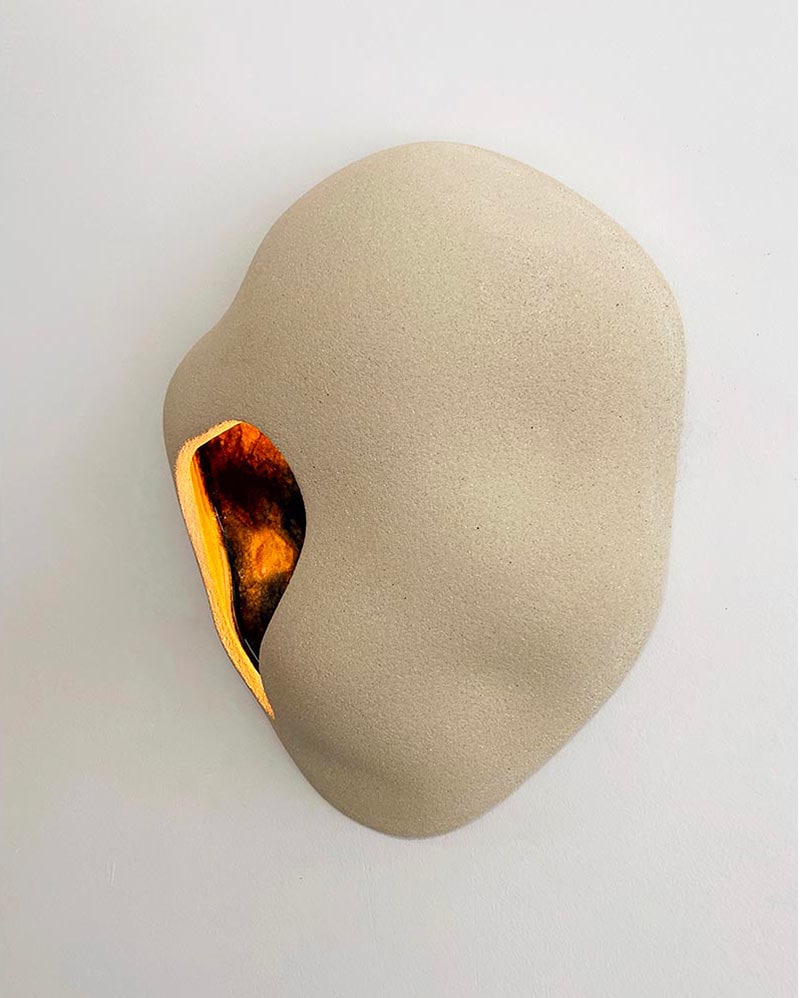
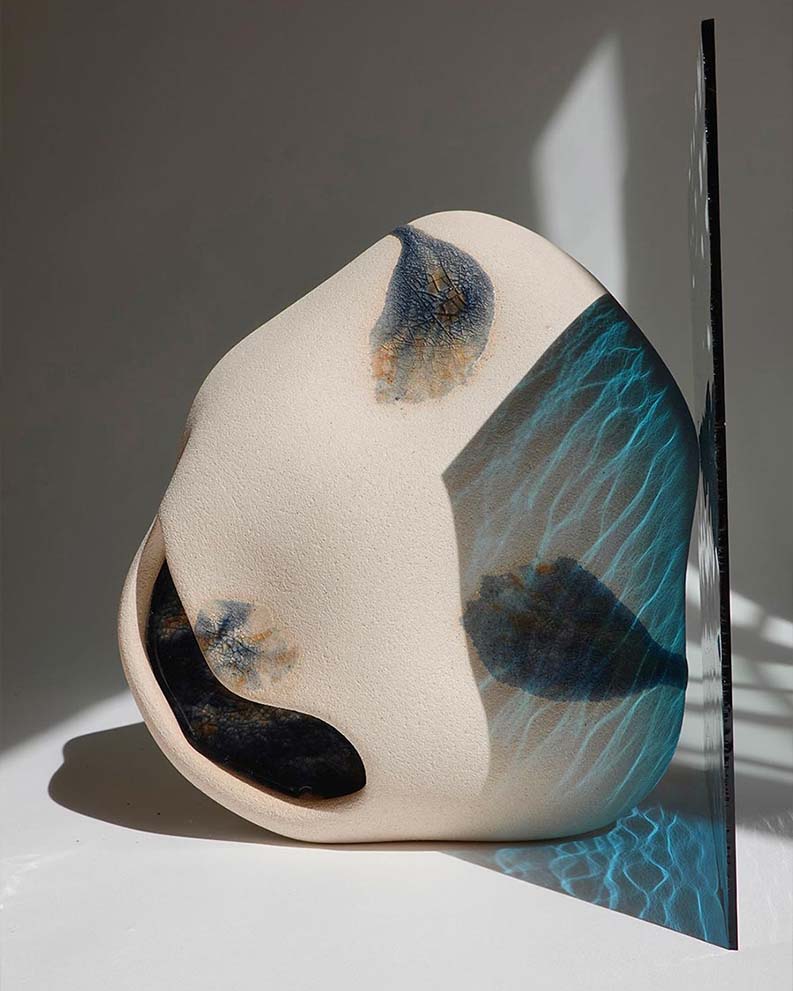
Turquoise glass that shifts to a delicate celadon green when illuminated. Bubbles formed during firing that give a surface an unexpected texture. In Amande Haeghen’s work, the transformation of materials remains visible. At her Lisbon studio, the French artist combines ceramics and molten glass to create objects whose appearance changes with the light.
Clay can be worked by hand, its thickness determined, its contours refined. With glass, something remains unresolved even after many experiments. Temperature, the underlying clay and combinations of colour influence its behaviour in the kiln: it may become transparent, crystallise or flow across the ceramic surface. Some results are lost; others open up an entirely unplanned direction.
Haeghen has learned to make this uncertainty part of her practice. Achieving the colours she wanted on black clay took almost two years of experimentation. Bubbles that appeared by chance, meanwhile, became the starting point for further investigations. Experience sharpens her understanding of the material. The surprises continue.
The memory of a coastline
Part of her visual language can be traced to the Bay of Arcachon, where Haeghen spent much of her childhood. To the Dune du Pilat, expanses of sand and a coastline whose outlines shift with the tides. She still photographs details that are easily overlooked: moss, rock surfaces, the traces of wind in sand.
These observations pass through memory before taking shape. A landscape may become a curve, a feeling may become a colour. In the Mãe collection – Portuguese for mother – dunes and lagoons merge with the curves of the female body. The forms suggest their origins without preserving a particular view.
A future working with clay was not immediately apparent. Haeghen grew up surrounded by art; her grandfather painted, and her mother is also a painter. After studying fine art and art history, however, she moved into audiovisual production. She worked with young directors, producing commercials and music videos and helping others develop their visual language.
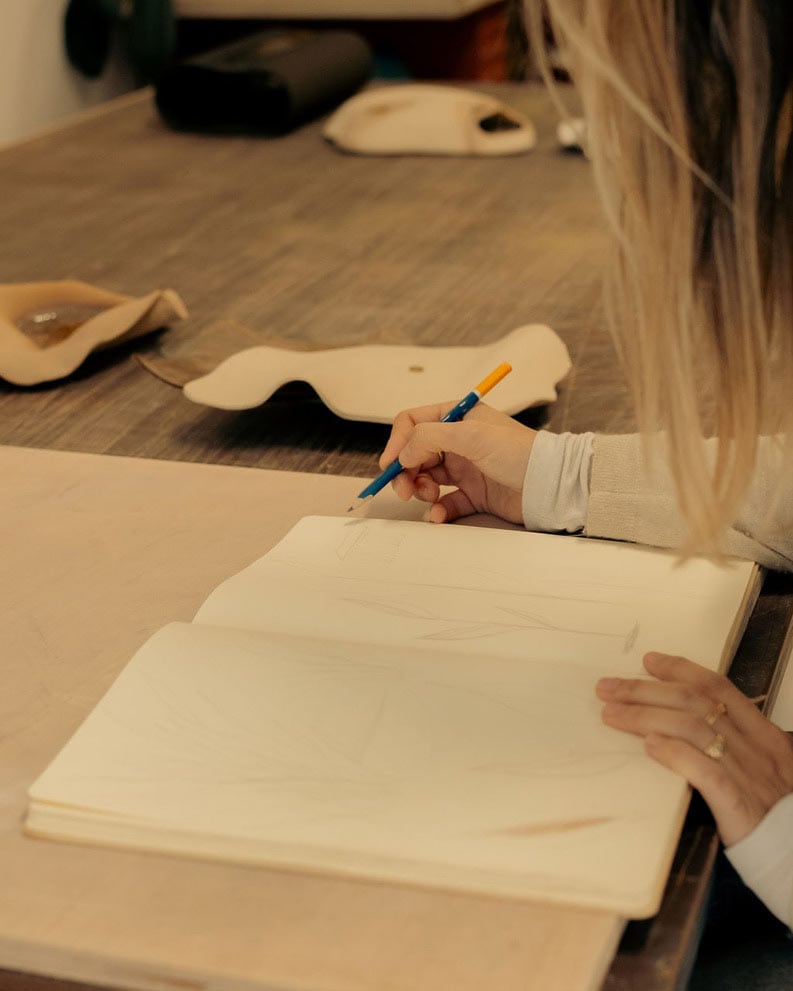
The birth of her first child shifted her attention towards projects of her own. At a shared studio in Saint-Denis, outside Paris, she began teaching herself ceramics. Books and experiments, successful firings and mistakes became her teachers. Her own Paris studio followed, along with early wall pieces and lights. Chiara Colombini was among the first supporters of her work.
Glass as colour, light as part of the form
Her connection with glass began with a discovery at a materials supplier. Haeghen found sheets of glass in different colours and textures, took some home and incorporated them into her work. She kept the offcuts. In 2020, she began melting these fragments directly onto ceramics.
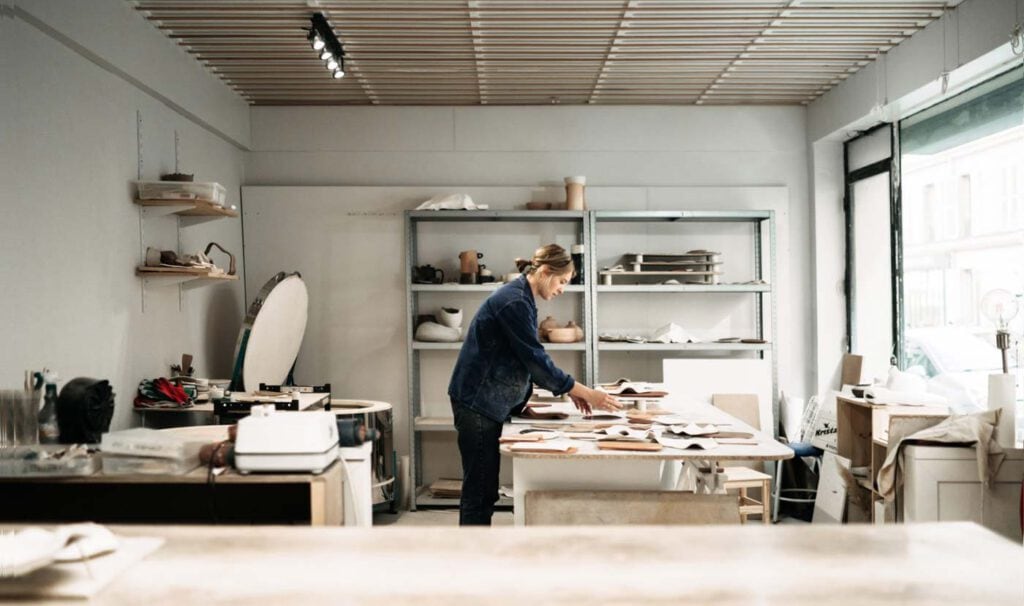
This changed the possibilities available to her. Glass could now travel across a surface, gather and create transitions of colour. Increasingly, Haeghen uses the molten material like paint: a way of introducing movement to a ceramic surface.
In her lighting, light is considered from the outset. How translucent should the glass be? How brightly should the piece shine, and what shadows should it cast on the wall? These questions already inform the design. By day, contour and surface come forward; illuminated, the same objects develop a different palette and presence within a room. A cool turquoise may take on a softer, greenish hue.

From Lisbon to Iceland – and onto the wall
Haeghen has lived in Lisbon since 2021. The wide Atlantic beaches reconnect her with childhood memories, while ochre earth, cliffs and vegetation introduce new tones into her work. There she founded The House of Haeg, a studio that also gives other artists space to work and exchange ideas.
A trip to Iceland expanded her palette towards stronger contrasts. Bright green mountains, turquoise glaciers and black volcanic beaches displaced her expectation of an almost monochrome landscape. She was particularly struck by the patterns of frozen water on dark sand. Their pale edges and translucent surfaces resembled textures she had already produced in the kiln.
These impressions informed, among other works, a wall piece composed of 24 elements, measuring 2.4 metres wide by 1.5 metres high. Working at a larger scale also brought architecture further into focus: how a piece appears from a distance, how it relates to a room and which details emerge only on closer inspection.
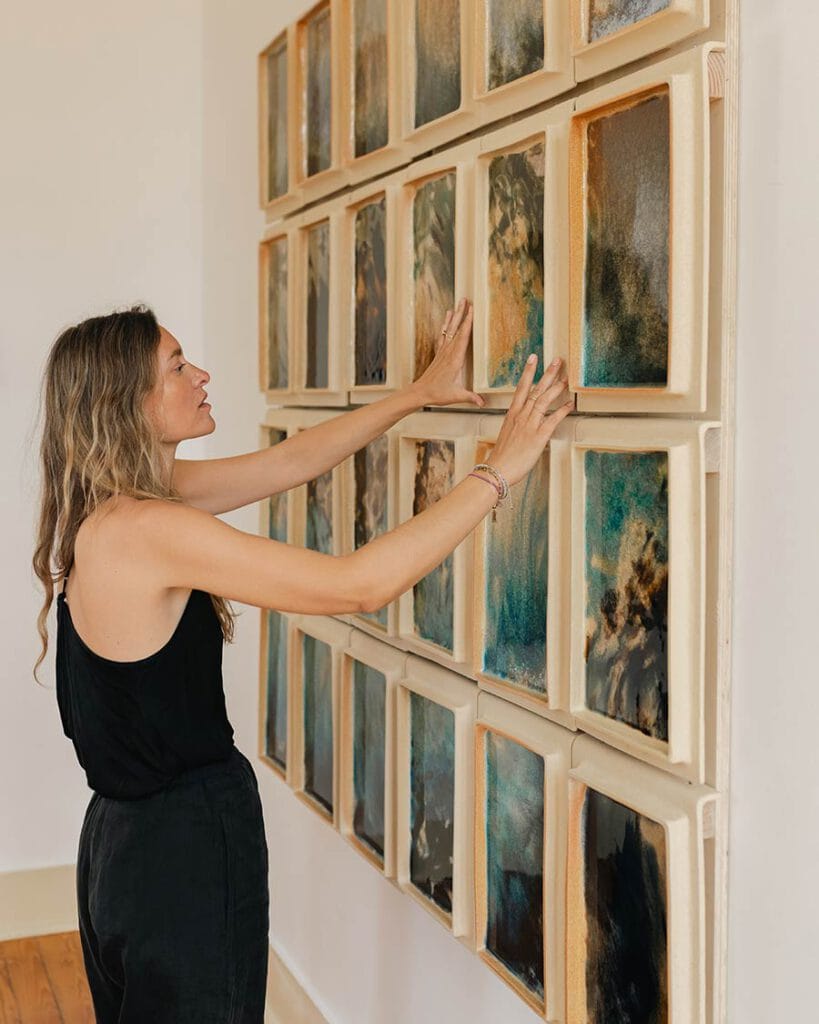
A ceramic picture measuring three by two metres is among her ideas for the future. For now, her existing kilns limit the size of its individual elements. Yet the thought takes her practice further: from the hand-shaped surface to the wall, from a small fragment of glass to a colour that helps define a room.
Haeghen leaves the resulting feelings open. Her pieces give the eye something to follow – a hollow in the clay, a trapped bubble, a shift of colour in the glass. With the next change of light, the image may already have moved on.