

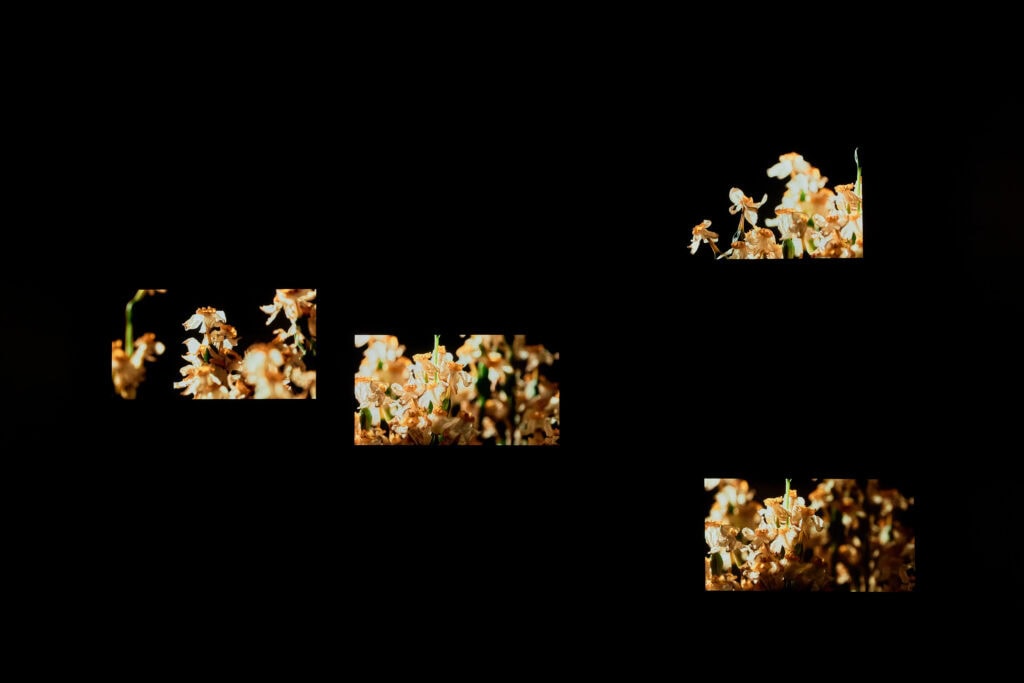
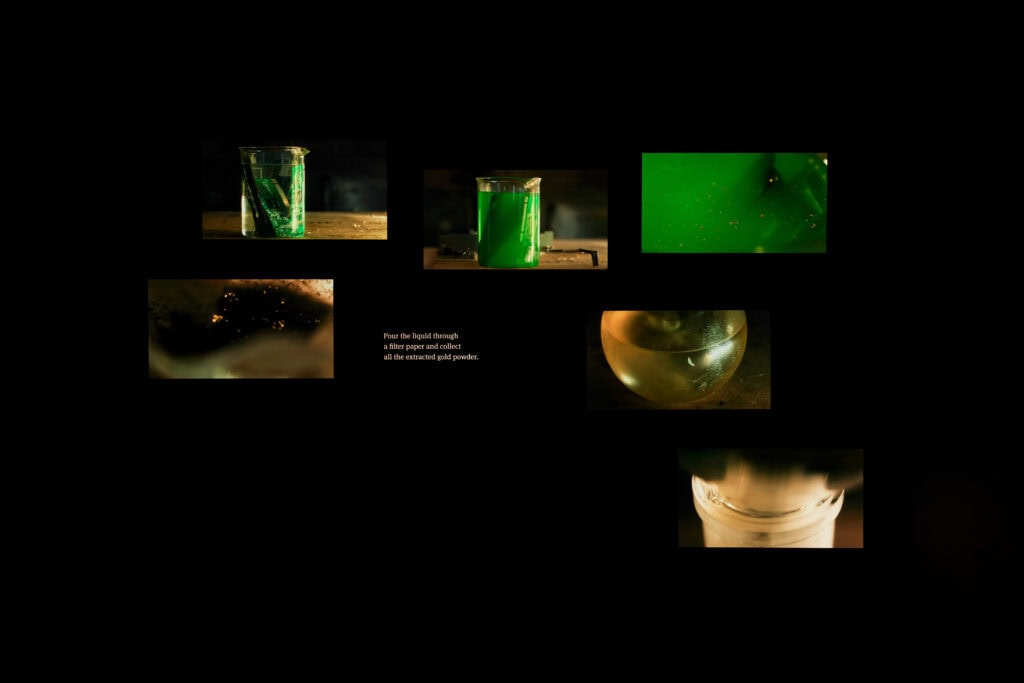
Through films, voices and multilayered narratives, Amar Kanwar transforms Serpentine North in London into a meditative space for reflection. At the centre of the major solo exhibition is the new seven-channel installation The Charcoal Man.
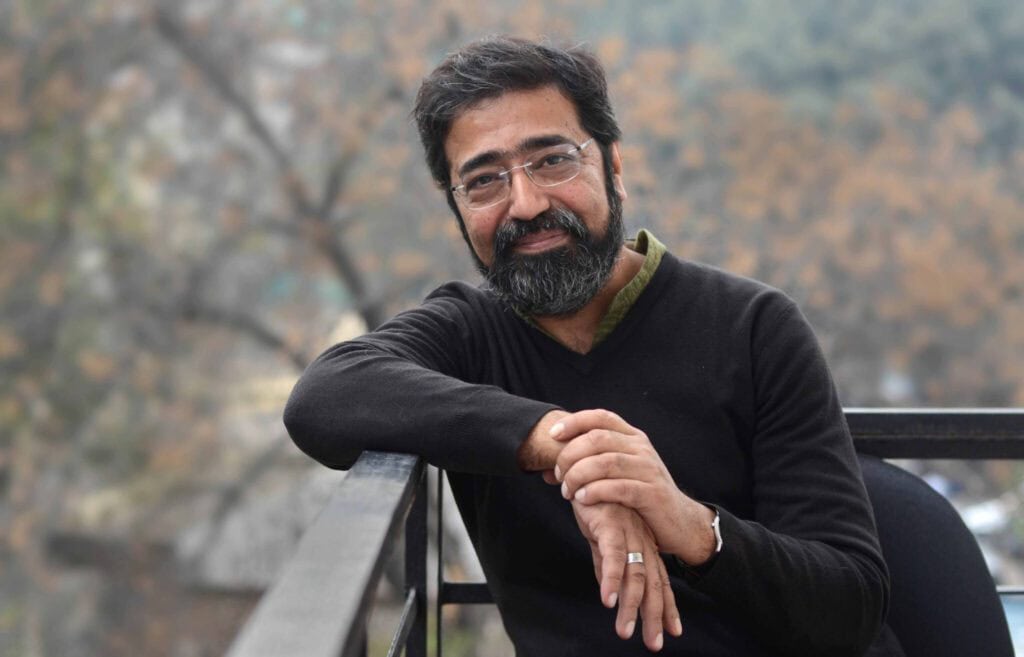
In Amar Kanwar’s work, darkness is never simply the absence of light. It is a space of perception, memory and insight – a state in which certainties begin to dissolve and different images become visible. For his major solo exhibition at Serpentine, the Indian artist and filmmaker transforms the galleries of Serpentine North into an immersive visual and sonic environment.
Running from 23 September 2026 to 31 January 2027, the exhibition brings together three pivotal works: the feature-length film Such a Morning from 2017, the seven-channel installation The Peacock’s Graveyard from 2023 and the new work The Charcoal Man, receiving its world premiere in London.
A Cinema of Attention
For more than two decades, Amar Kanwar has moved between documentary film, poetic essay and visual storytelling. His work is deeply connected to the history of the Indian subcontinent – to colonialism, the Partition of India and Pakistan, displacement, violence and the mechanisms of political power.
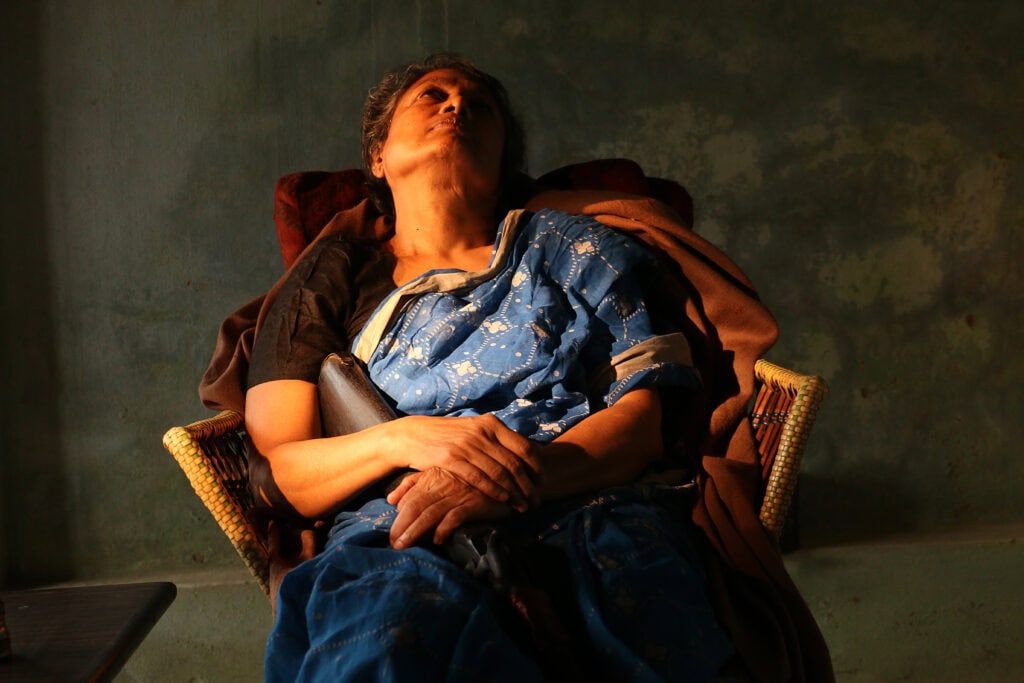
Yet Kanwar does not attempt to explain the world. He slows it down. Instead of offering definitive answers, he creates open visual spaces in which facts, personal memories, fables, music and archival material coexist. The political is not delivered as a message but encountered as an experience: quiet, layered and often unsettlingly intimate.
This approach also defines the exhibition at Serpentine. Within its darkened galleries, visitors become more than spectators. They are invited to enter a different rhythm – one shaped by images that demand time and stories whose meanings emerge gradually.
From the Peacock’s Graveyard to the Charcoal Man
The exhibition opens with The Peacock’s Graveyard, originally commissioned for Sharjah Biennial 15 and presented in London for the first time. Across seven screens, Kanwar combines his own writing with contemporary and ancient fables, oral histories and personal experience.
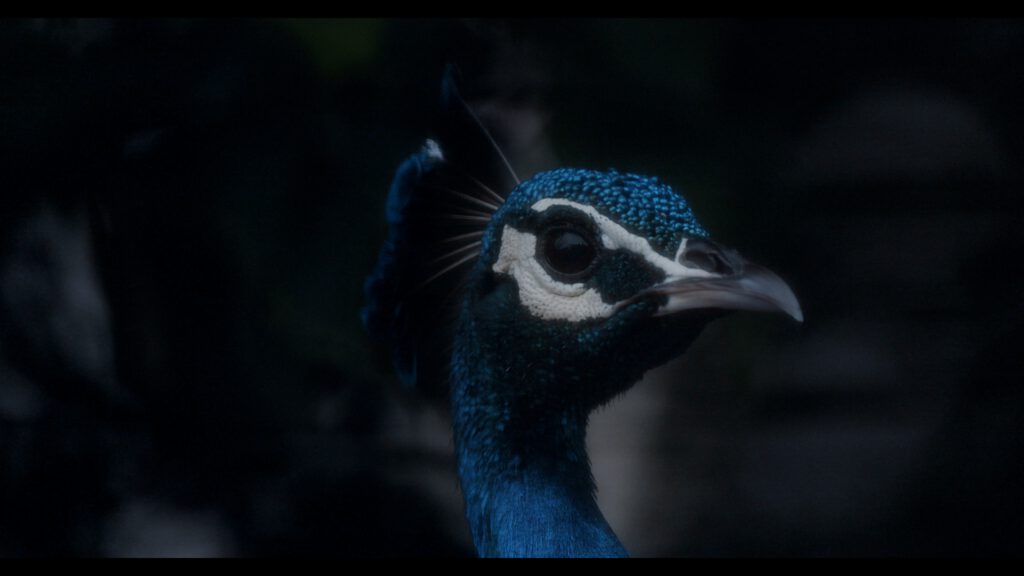
The installation considers the fleeting nature of human existence, violence and arrogance, while also opening pathways towards reconciliation, resistance and transformation. Kanwar describes the work less as a lament than as a collection of stories to carry through life – a fragile counterweight to a reality repeatedly marked by destruction.
The Charcoal Man extends these ideas. Commissioned by the Kiran Nadar Museum of Art in Delhi, the new seven-channel installation was developed over three years and emerges from Kanwar’s continuing engagement with the 1947 Partition of the Indian subcontinent.
Images and texts form an intricate narrative of betrayal, vengeance, passion, jealousy and rage. Rather than constructing a linear account of history, Kanwar searches for coherence within disintegration and allows stories to generate further stories. Reality, fantasy and fiction become equally valid forms of remembrance.
Forty-Nine Kinds of Darkness
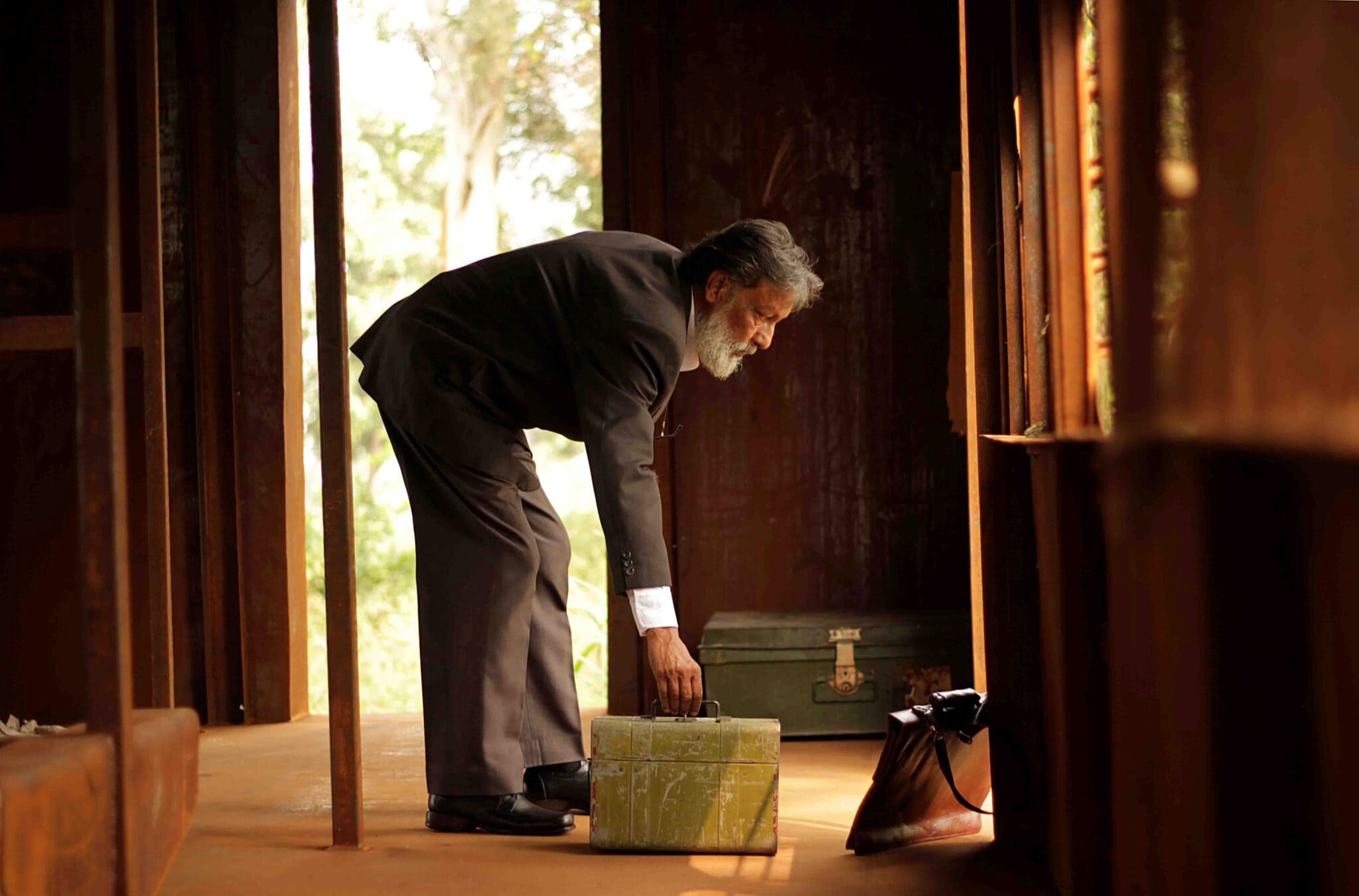
One of Serpentine North’s characteristic brick-vaulted Powder Rooms houses Such a Morning. The 85-minute film follows a respected professor of mathematics who suddenly withdraws from public life and seeks refuge in an abandoned railway carriage in a forest.
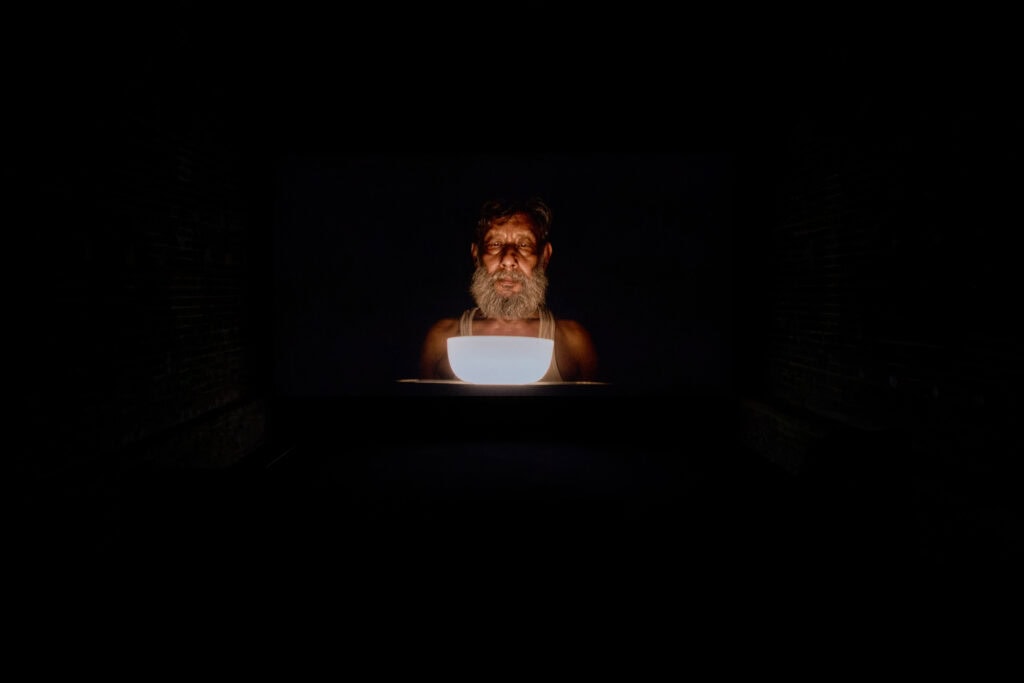
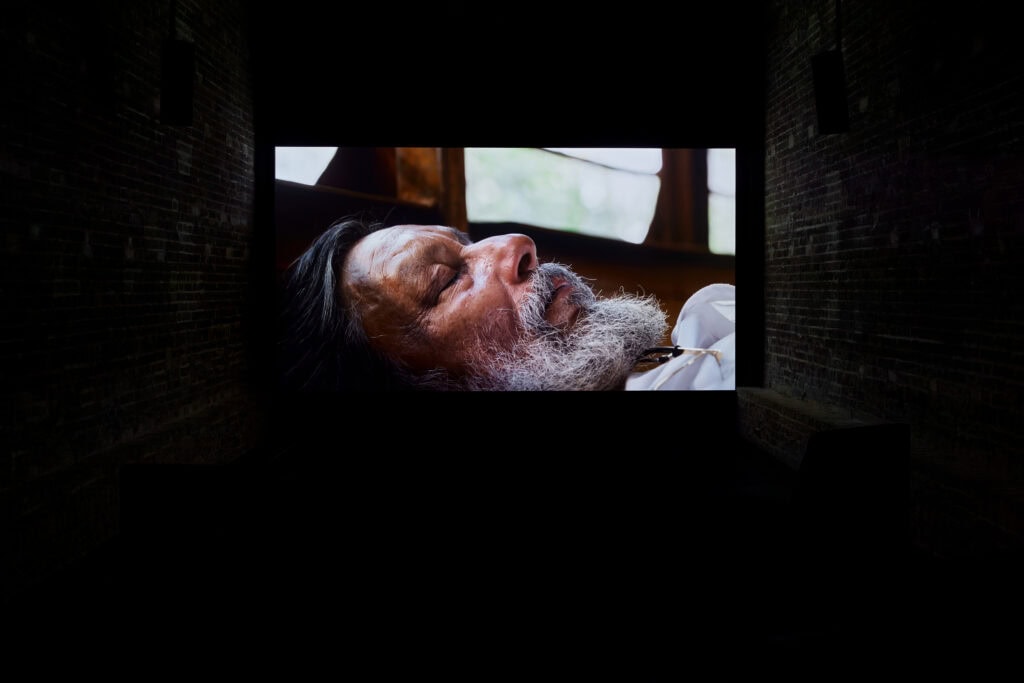
He blacks out the windows and begins to acclimatise himself – physically and mentally – to darkness. Visions, hallucinations and moments of revelation become a series of letters examining 49 forms of darkness, collected in an imaginary Almanac of the Dark. A parallel narrative centred on a woman unfolds alongside his story, resisting any singular interpretation.
The letters extend beyond the film itself. Projections, videos and texts presented on handmade ramie and cotton-fibre paper occupy the surrounding galleries, lending an almost physical presence to Kanwar’s elusive cinematic world.

Seeing as an Ethical Act
Serpentine’s dialogue with Amar Kanwar stretches back to 2008, when his work appeared in the group exhibition Indian Highway. He later contributed to the Map Marathon and to the film programme On Earth, Structure and Sadness. This exhibition brings that long relationship into sharper focus.
What makes Kanwar’s practice particularly resonant today is its refusal to submit to the speed of the present. His works ask for attention without demanding it. They confront violence without turning it into spectacle. And they suggest that remembrance is not a passive act of looking backwards, but an ethical position.
In a world saturated with images, Amar Kanwar creates spaces in which seeing regains its meaning. Perhaps the possibility of transformation begins precisely there: in stillness, in uncertainty and in the willingness to keep looking, even in the dark.
Amar Kanwar
Serpentine North, London
23 September 2026–31 January 2027
Free admission