


Based in Mexico City, Patricio Campillo creates clothes that carry family history forward and set familiar ideas of masculinity in motion.
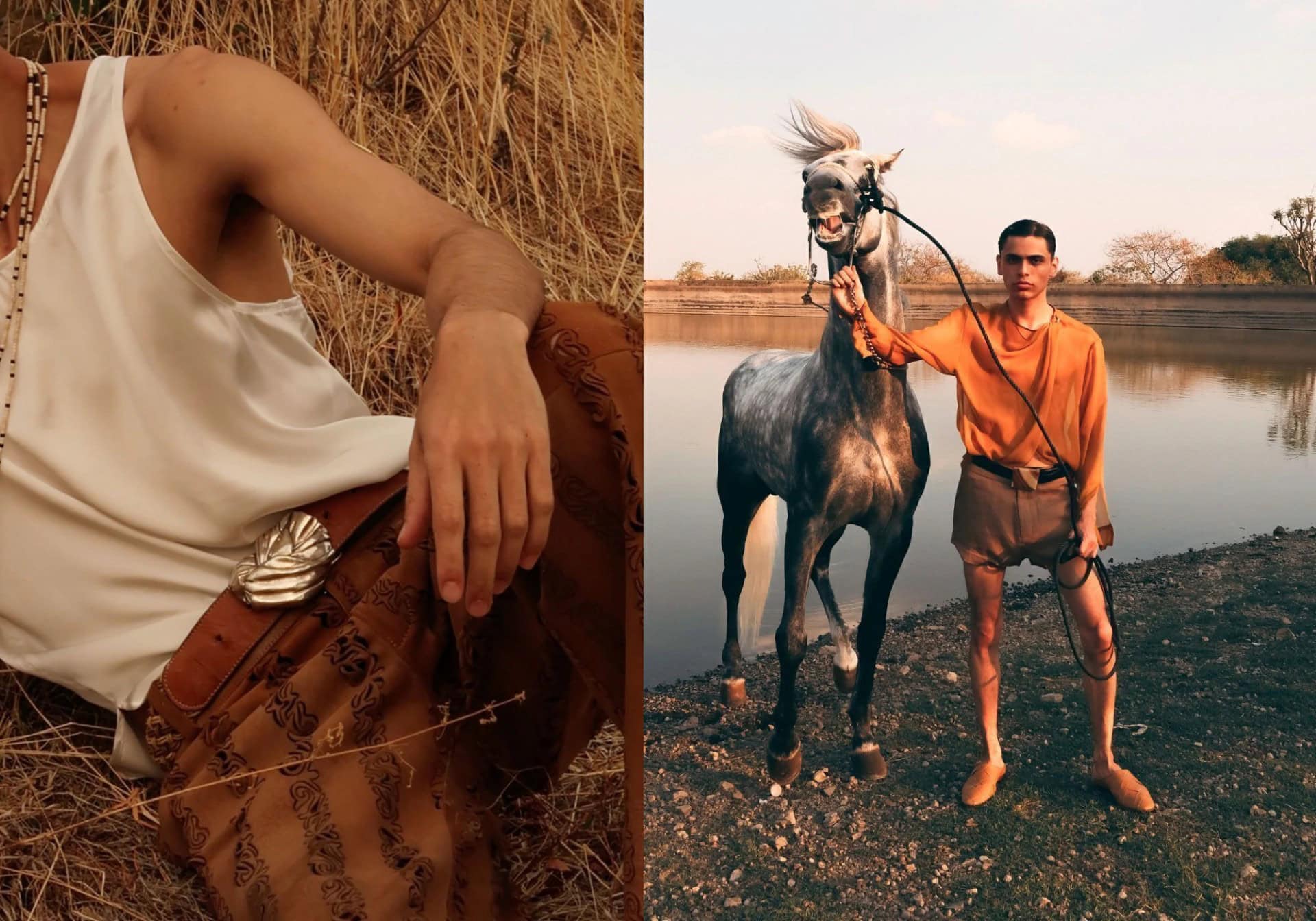
A suit can wait a long time for its next appearance. The one belonging to Patricio Campillo’s father became the starting point for an entire design language. Mexican charro culture lives on in his jackets and trousers, with a sensuality that discovers other possibilities within familiar forms.
A Family History You Can Wear
In 2020, Campillo discovered a charro suit that his grandfather had given his father for his eighteenth birthday. Its cut became the foundation for many of his designs. His clothes carry a deeply personal inheritance: from grandfather to father to son.
The connection reaches back to childhood. Campillo grew up in Mexico City with horses and charro culture. Before designing clothes himself, he worked in fashion journalism, styling and art direction. A period in Paris with fashion editor Tiffany Godoy encouraged him to teach himself design. His first collection appeared in 2015; he founded his label in 2017. In 2024, he was a semi-finalist for the LVMH Prize.
Perhaps this path also explains his eye. Campillo understands the images through which fashion acquires meaning. He also understands the memories a garment can hold. In his work, the two meet.
How Much Freedom Can a Form Hold?
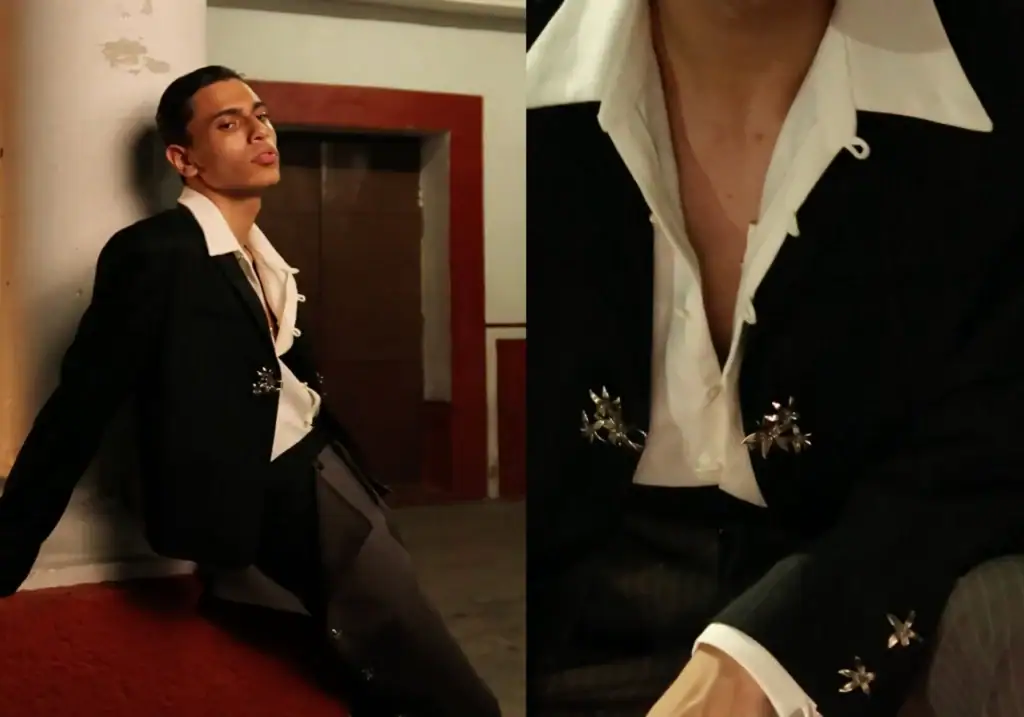
The charro suit establishes a silhouette. Campillo explores what can change within it. For autumn/winter 2026, he considered restriction, corsetry and the sensual possibilities of traditional menswear. Horsehair and flowing silk introduced different physical experiences.
For us, this is where the clothes become compelling. A form that expresses belonging can also make room for a deeply individual appearance. Its origins remain legible; its meaning is allowed to shift.
Craft is part of that movement, too. For spring/summer 2026, woven silk panels and leather strips became shorts, jackets and shirts. Techniques associated with everyday objects found a new purpose on the body. Here, luxury can be understood as attention: to materials, to labour, to the possibilities of construction.

A Sunset Travels to New York
For spring/summer 2027, a hike with his mother in Chiapas brought Campillo back to memories of joy and freedom. Red, pink and golden-yellow tones appeared on the New York runway. Oxidising metal plates gave a silk surface a rust patina.
It feels fitting for a designer who keeps translating memories into materials. Something is preserved while its shape changes. A family suit finds a new body. A hike becomes a colour.
CAMPILLO makes us want to look at clothing this way: as something that already has a story and can begin another one with us.