

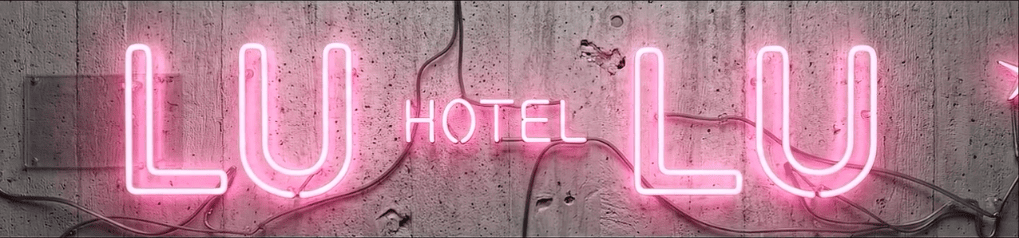
At the new Hôtel LULU, the intellectual elegance of the Left Bank meets raw concrete, vintage design and Mediterranean colour. Vanessa Scoffier has created more than another beautiful boutique hotel: she has given Paris an intriguing new personality.
Paris does not necessarily need another hotel. What the city needs are new places with conviction—houses that do not try to please everyone, but develop their own idea of how we might stay, arrive and spend time together today. The newly opened Hôtel LULU on Boulevard du Montparnasse is precisely such a place.
Just a few steps from the Jardin du Luxembourg, raw materials encounter soft textures, design classics meet discovered objects, and Parisian seriousness is interrupted by a generous dose of humour. LULU is modernist without feeling like a museum. Intellectual, yet never aloof. And just idiosyncratic enough to make us curious.
A new character on the Left Bank
The name feels familiar, almost like the nickname of someone we have known for years. In fact, LULU is an affectionate abbreviation invented for the nearby Jardin du Luxembourg. At the same time, its sound evokes the free, creative and occasionally eccentric spirit of the Rive Gauche.
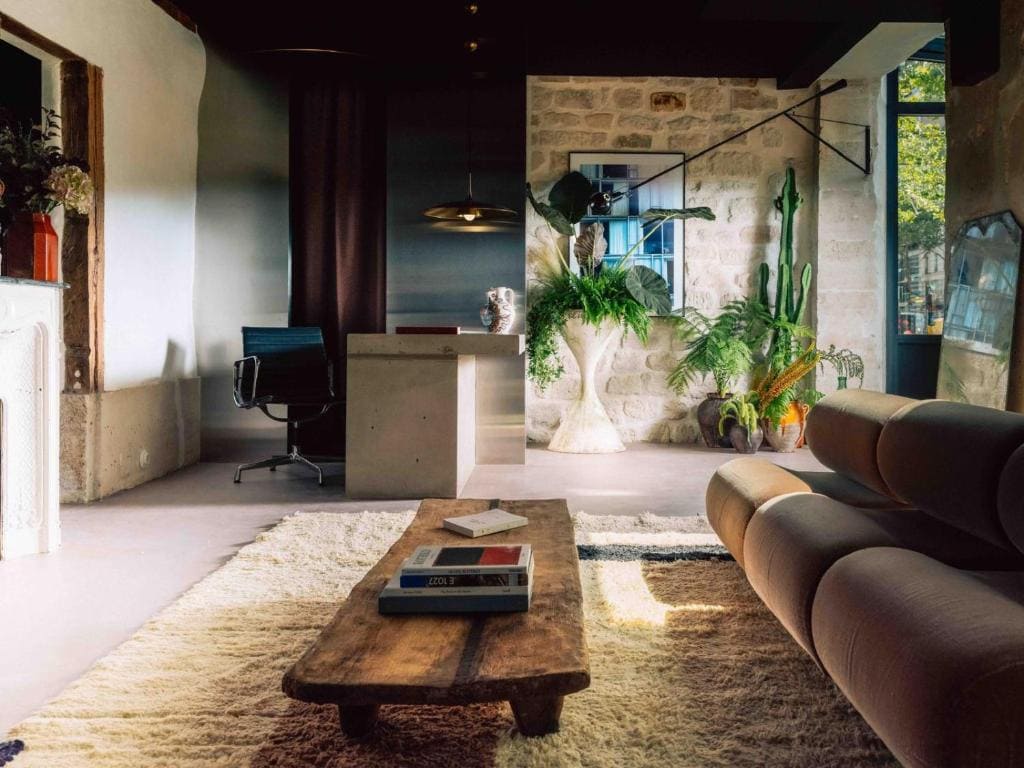
Here, between Montparnasse, the Latin Quarter and Saint-Germain-des-Prés, Vanessa Scoffier has opened her second hotel project. The former fashion journalist, stylist, decorator and hotelier first became known for Hôtel Henriette, her charming bohemian address near Rue Mouffetard. At LULU, she adopts a considerably more radical language. Instead of decorative nostalgia, the aesthetic is shaped by raw concrete, brushed stainless steel, timber, recycled glass and emphatic lines.
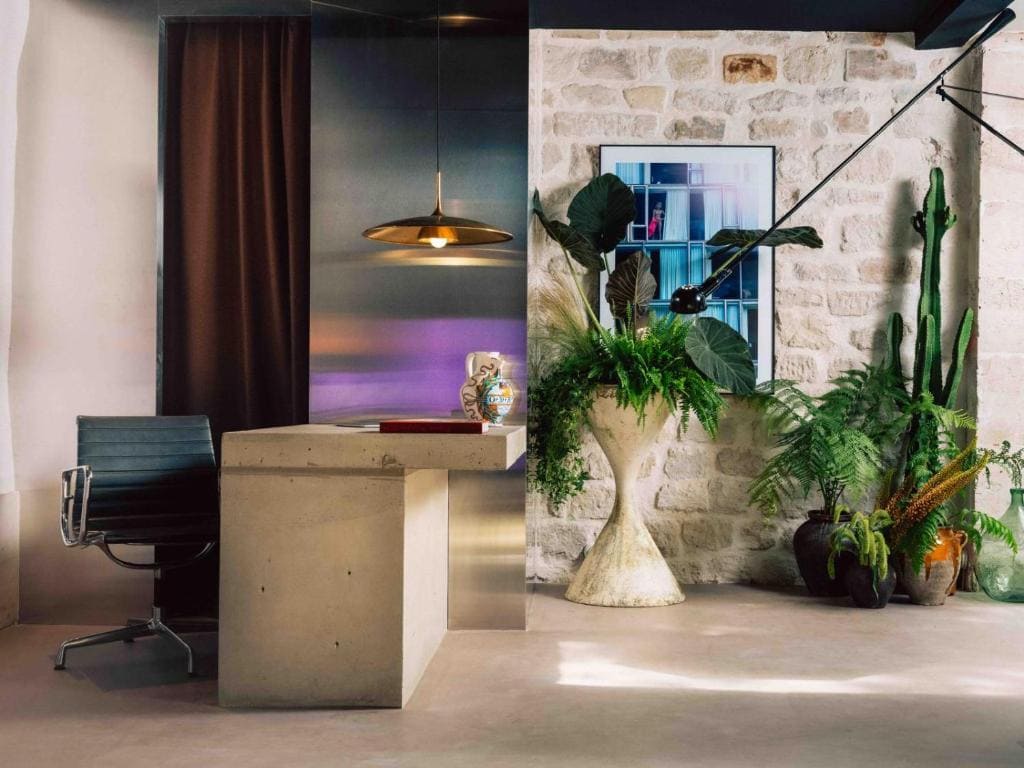
The result is not a calculated design concept that can be explained in three keywords. It is a collage of personal memories, architecture, fashion, art and found objects. That is exactly what makes it compelling.
Important names, personal discoveries
LULU has only 27 rooms—small enough to avoid becoming trapped in routines and large enough to be more than a private guesthouse. In its shared spaces, designs by Verner Panton, Tommaso Barbi, Florian Schulz, Curtis Jeré, and Noomi Backhausen and Paul Brandborg for Søholm appear throughout. A Corbi sofa by Klaus Uredat from the 1970s sits beside time-worn mirrors, terracotta vases, old books and doors that once belonged to a château.
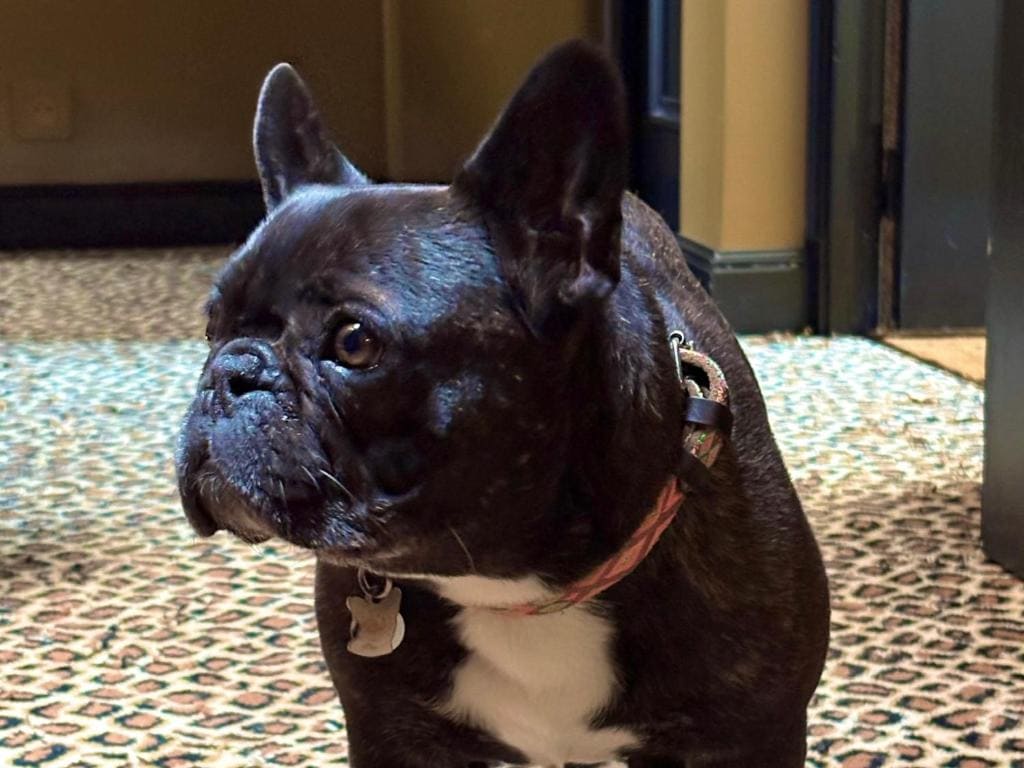
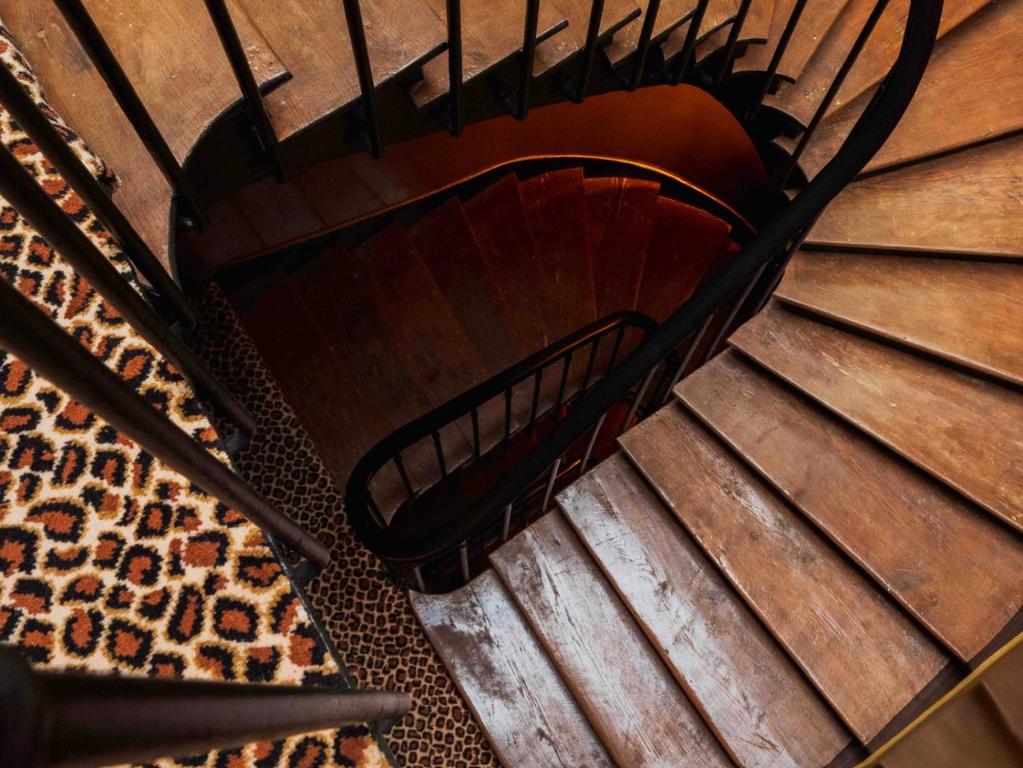
Among them is a photograph created by Manolo Campion for Vogue. In the corridors, leopard-print carpet disrupts the controlled restraint of the building. These are the moments that prevent LULU from becoming an overly well-behaved design hotel.
Here, design is not approached as an exercise in perfection. Objects are allowed to tell different stories. They do not have to come from the same era, and they do not always need to match. It is enough that they begin a conversation with one another.
The history of the building remains visible, too. During the renovation, an old Hôtel de Nice sign was discovered in the attic. It has been left in place—a quiet reminder that a hotel never begins entirely from scratch.
From concrete to the Mediterranean
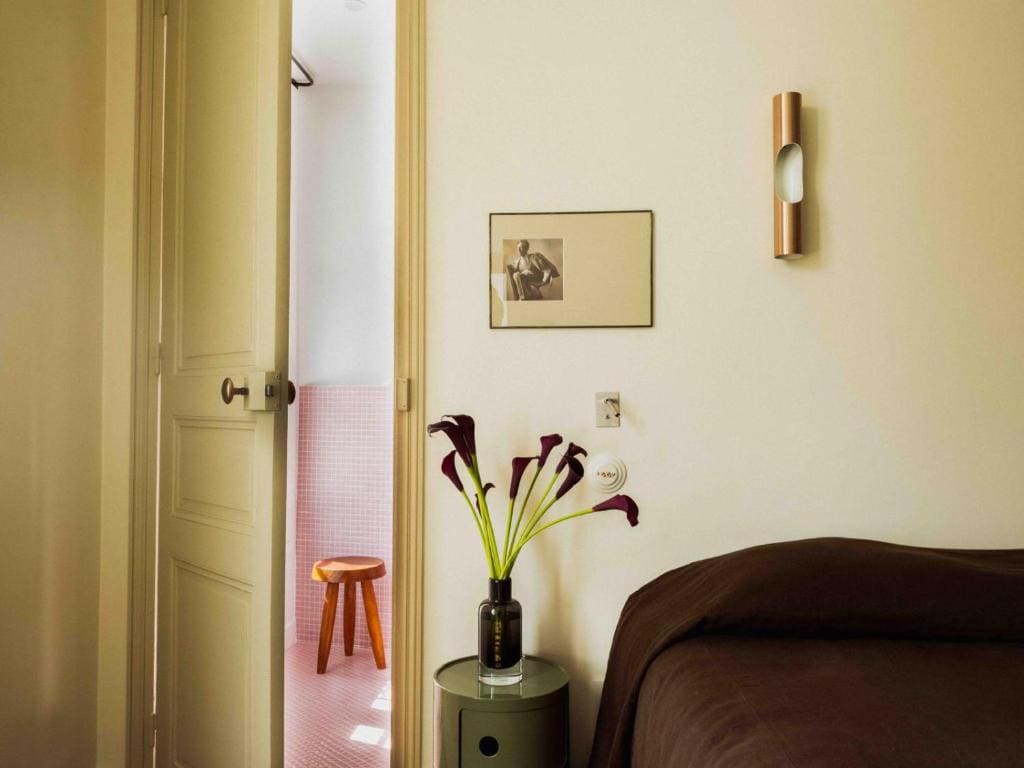
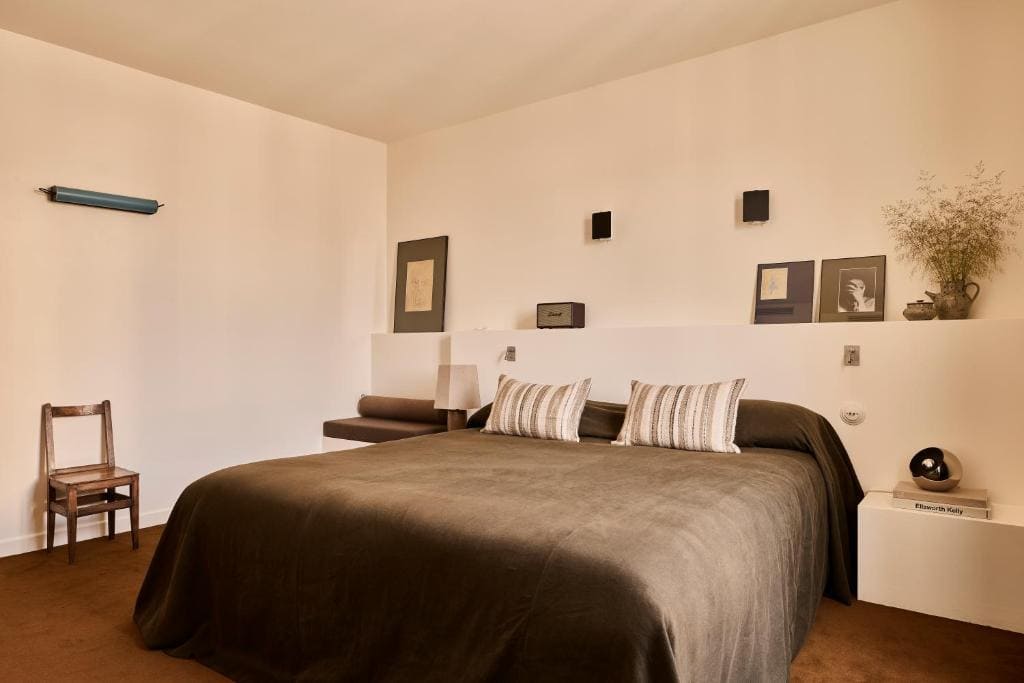
The mood becomes softer inside the rooms. Thick carpets, neutral walls, linen curtains and natural materials create an atmosphere closer to a beautifully considered Parisian apartment than a conventional hotel room. Light enters through the windows, opening the interiors towards the city’s rooftops.
Then comes the surprise: bathrooms glowing in pink, green or blue. Mosaics covering the floors and walls recall swimming pools and the South of France, introducing sunlight, colour and an almost cinematic mood into the hotel’s restrained world.
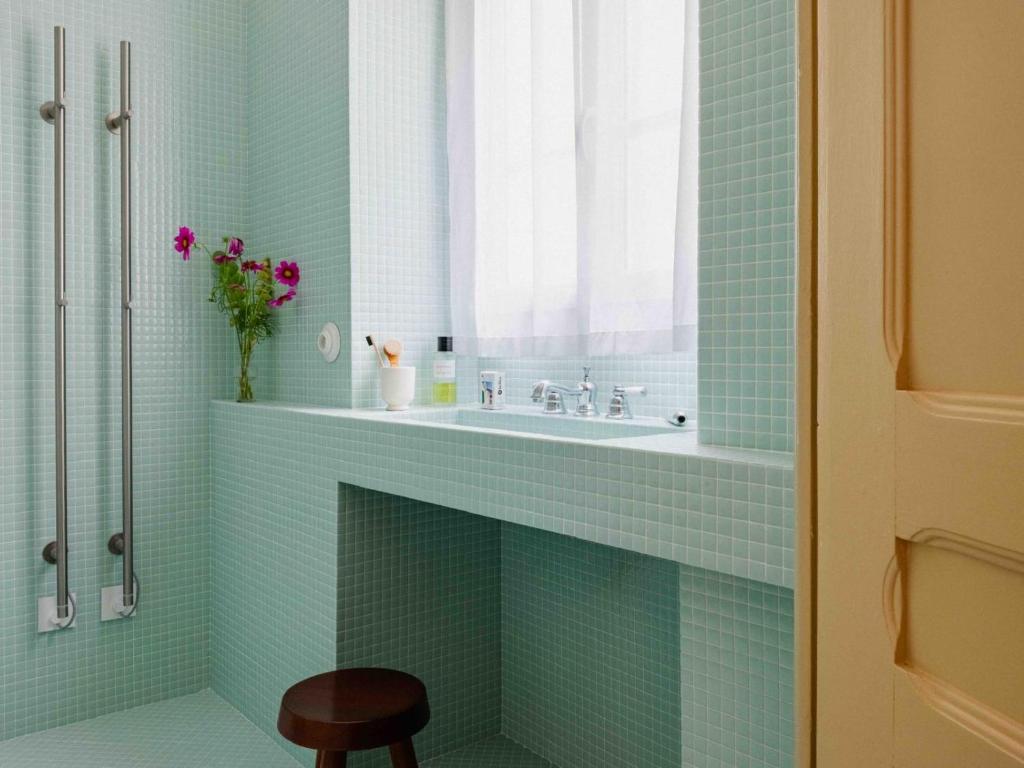
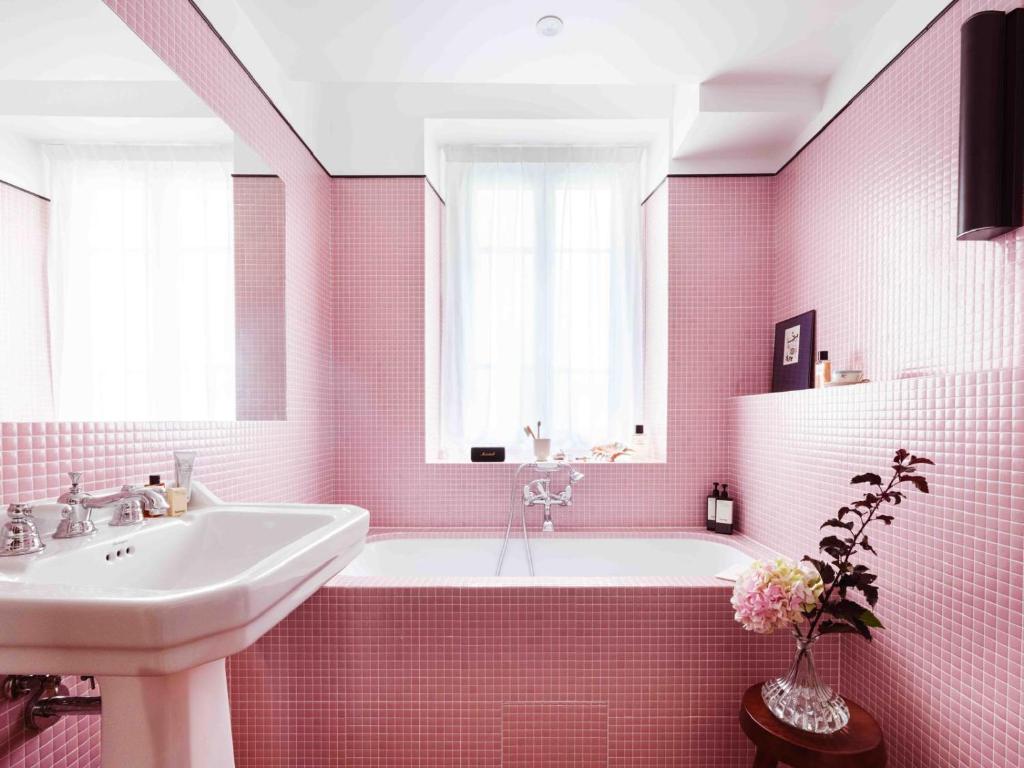
The contrast is carefully composed. Concrete and stainless steel evoke the city, while the colourful mosaics suggest an imaginary journey towards the Mediterranean. Between them emerges an elegance defined not by preciousness, but by a deeply personal act of selection.
A hotel that changes its rhythm
LULU becomes particularly interesting where it stops being exclusively a hotel. On the ground floor, the building opens itself to the neighbourhood. Breakfast is served in the morning, the space becomes a coffee shop during the day, and in the evening, the piano takes over.
Beneath the glass roof of the winter garden, travellers meet neighbours, creatives encounter flâneurs, and hotel guests share the room with people who have simply dropped in for coffee. A fireplace, books, open volumes and a piano create something other than a conventional lobby: a small stage for everyday Parisian life.

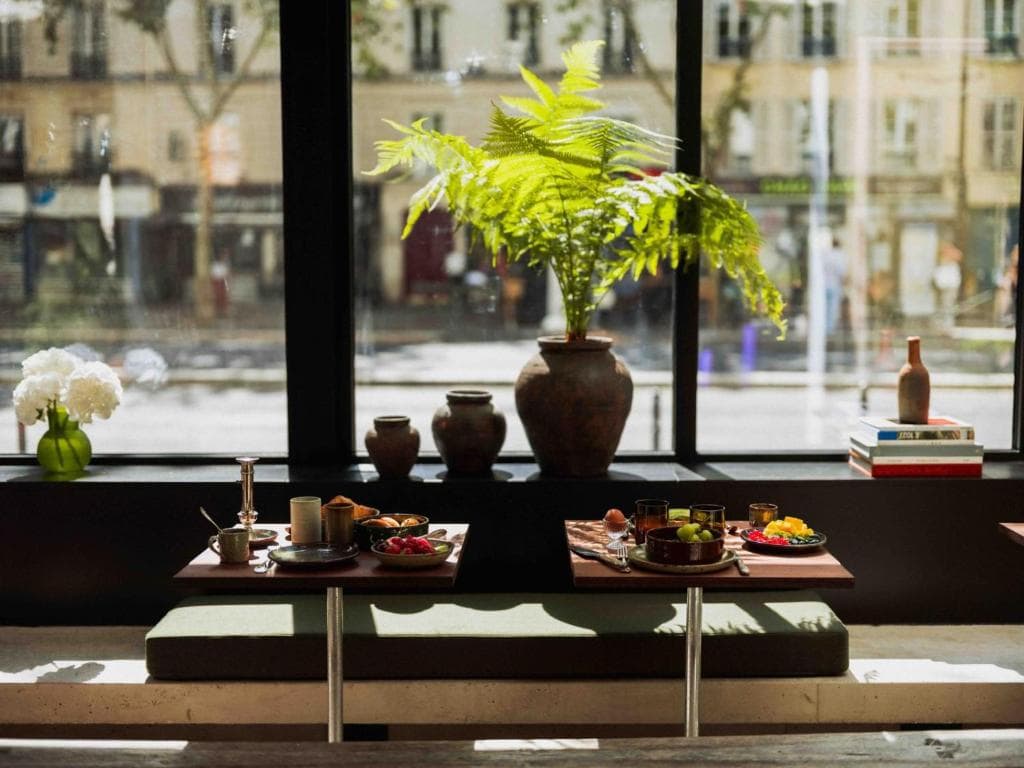
LULU therefore reflects an idea that has become essential to contemporary hospitality. A relevant hotel can no longer define itself through its guestrooms alone. It needs to form relationships with its surroundings. It must become part of a neighbourhood rather than merely occupy an address within it.
At LULU, this does not feel like a strategy added at the end of the project. It appears to have been the starting point for the entire house.
The beauty of imperfection
LULU has the rare ability to feel both highly considered and instinctive. Nothing seems accidental, yet nothing has been polished until every trace of character has disappeared. The hotel allows contradictions to remain: raw and gentle materials, modernist clarity and leopard print, Parisian intellect and Mediterranean joie de vivre.
Perhaps this is a more contemporary idea of luxury—not abundance or conspicuous perfection, but the freedom to shape a place consistently according to one’s own vision.
It seems Paris did need another hotel after all. Not just any hotel, but one like LULU.
Hôtel LULU
155 Boulevard du Montparnasse
75006 Paris, Frankreich
27 Zimmer · Coffee-Shop · Wintergarten · Piano-Bar
hotelluluparis.com