


Eighty years of fashion history – and no reason to look backwards. For Fall/Winter 2026/27, Gattinoni translates the grand heritage of the Roman maison into a new, wearable present. Italian sculpture, 1950s silhouettes and contemporary femininity come together in prêt-à-porter with attitude.
Audrey Hepburn, Anita Ekberg, Rome in the 1950s and 1960s: celebrating its 80th anniversary, Gattinoni could easily lose itself in its own archives. After all, the maison belongs to the generation of Italian fashion houses that helped shape the international image of Made in Italy.
Yet nostalgia seems to interest Creative Director Luigi Filippo Morelli far less than transformation. Rather than reproducing the house’s historical heritage, he dismantles, reduces and reassembles it. The result is the Fall/Winter 2026/27 collection – and a clearer positioning of Gattinoni as a contemporary prêt-à-porter brand.
From Couture to Contemporary
The new Gattinoni woman no longer inhabits the world of grand film studios. She moves between work, travel and culture; she is international, independent and active. Her clothes can be elegant – but they need to move.
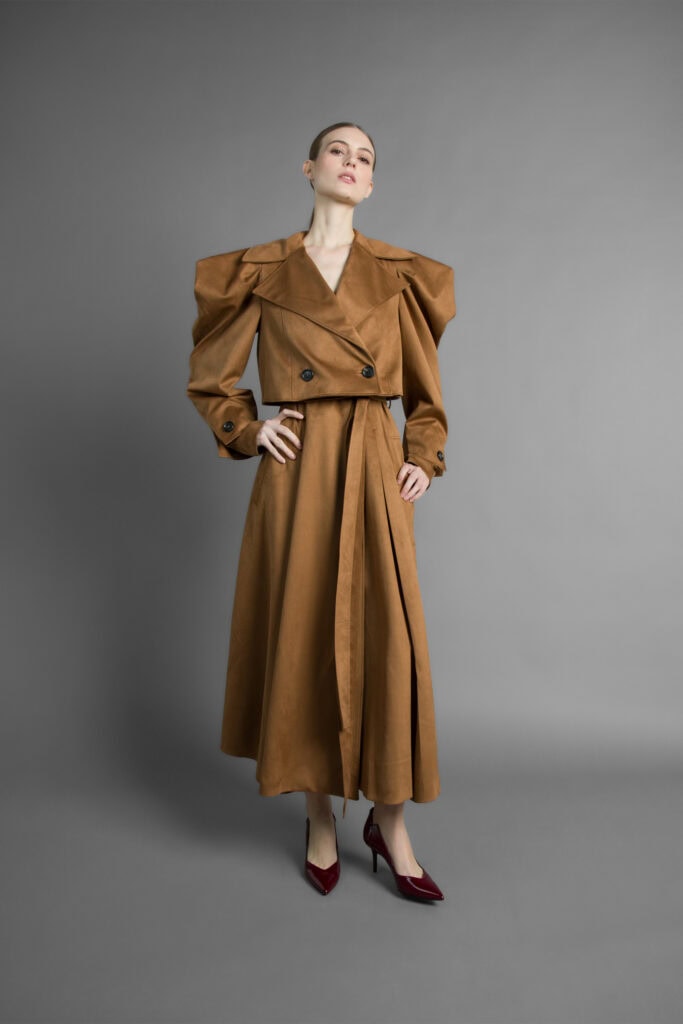
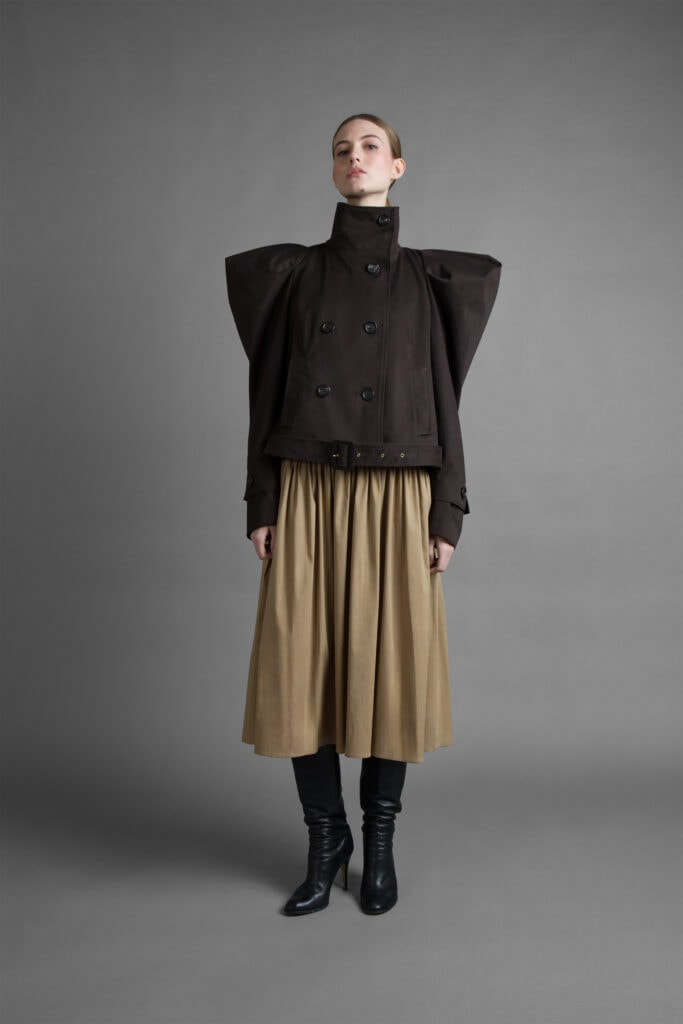
This is where the collection’s most interesting shift begins. Couture remains part of the house’s DNA, yet it appears less through grand gestures than through construction and detail.
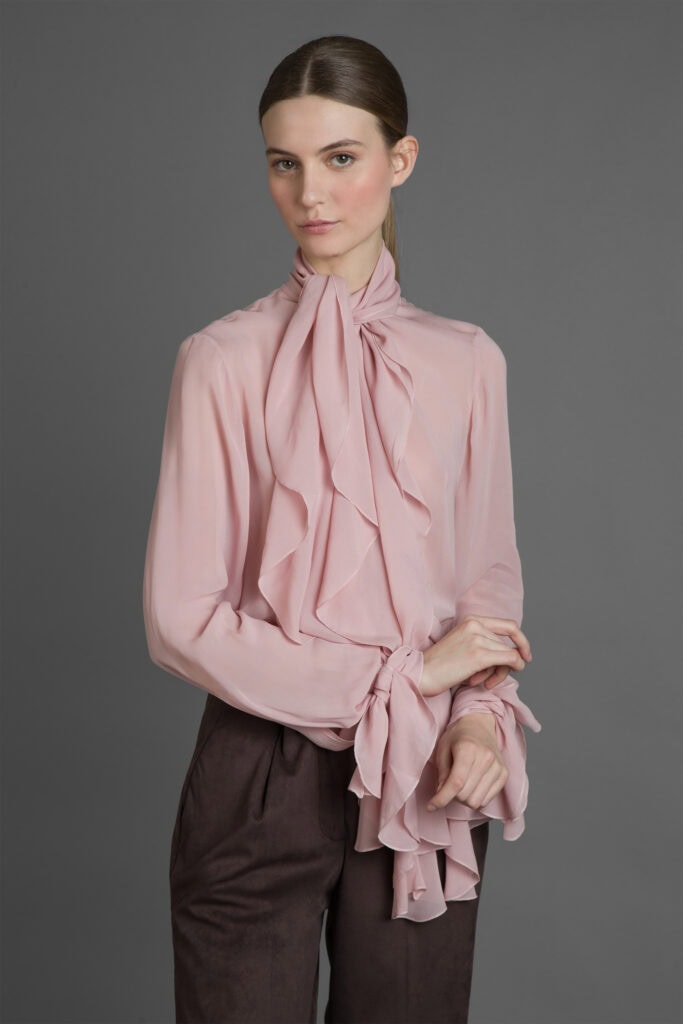
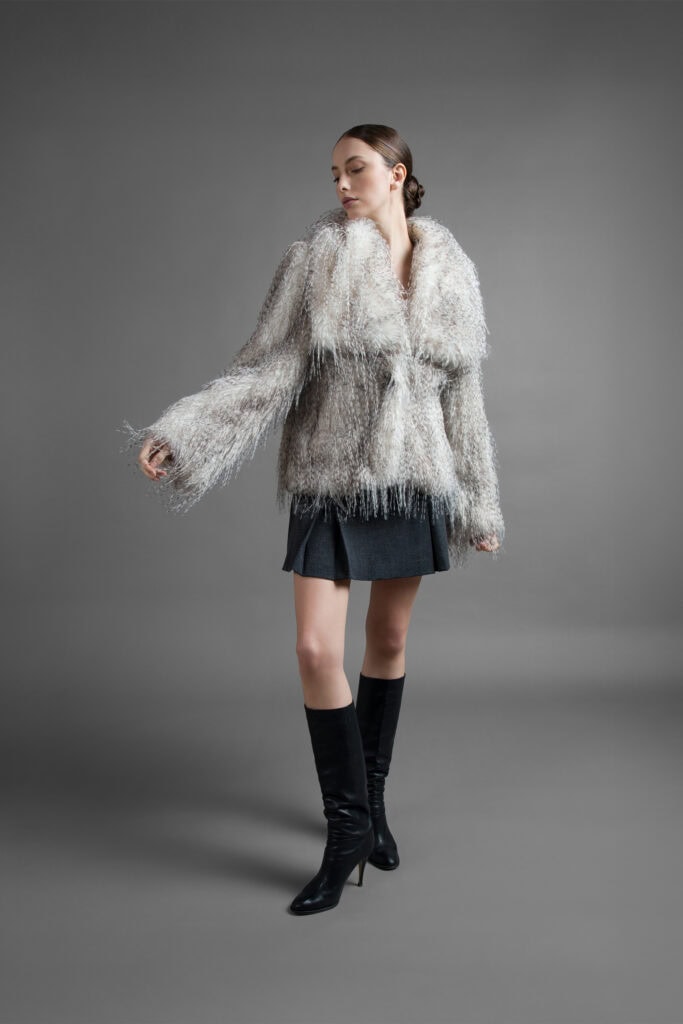
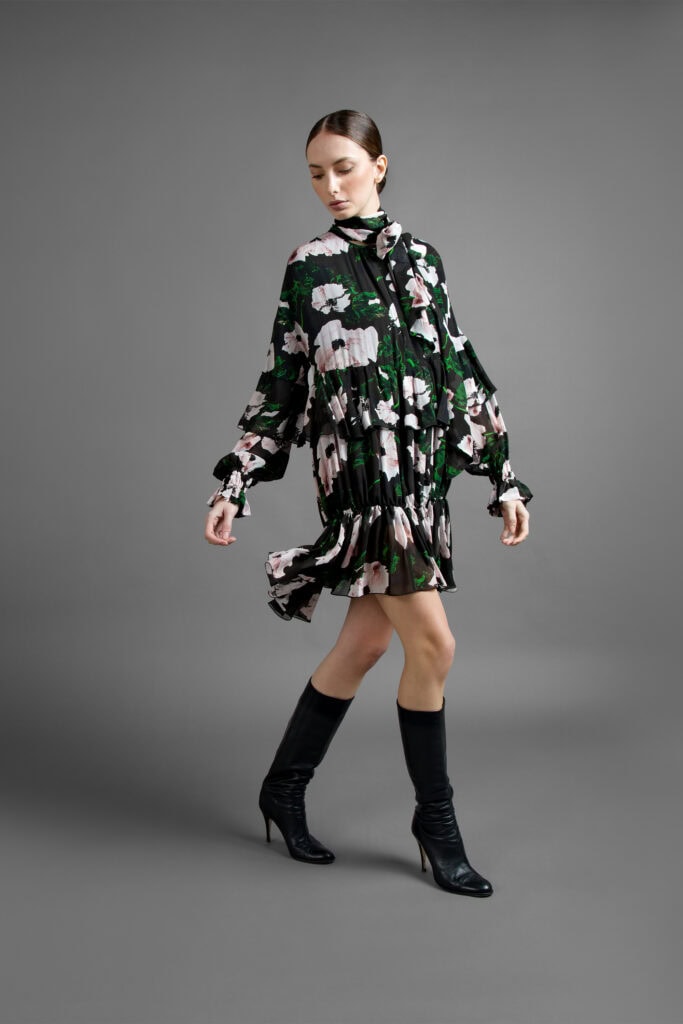
Morelli turns to Italian sculpture for inspiration. Draping evokes fabric carved into stone, sleeves develop sculptural volumes and ruffles become almost architectural. Shirts feature decorative plastrons and cuffs, while knitwear is embellished with rosette embroidery. Even denim plays with cultural history, using laser prints inspired by classical architecture.
Rome, in Stone and Fabric
The colour palette feels like a walk through an Italian cityscape: stone white, grey, beige and brown meet olive green, powder pink, anthracite and black, while denim blue introduces a deliberately more everyday note.
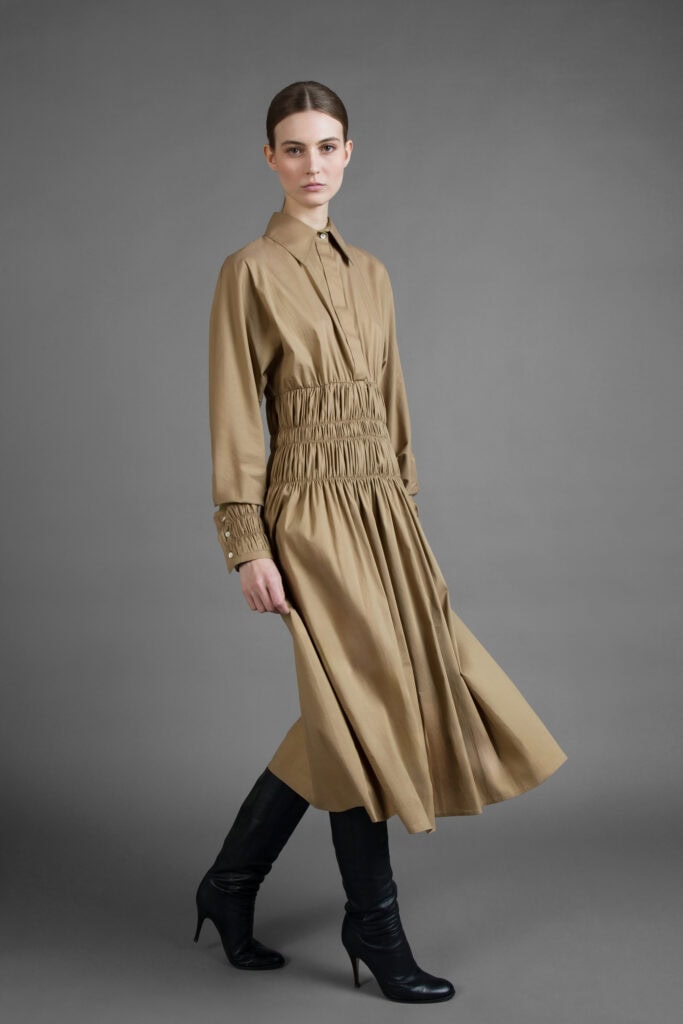
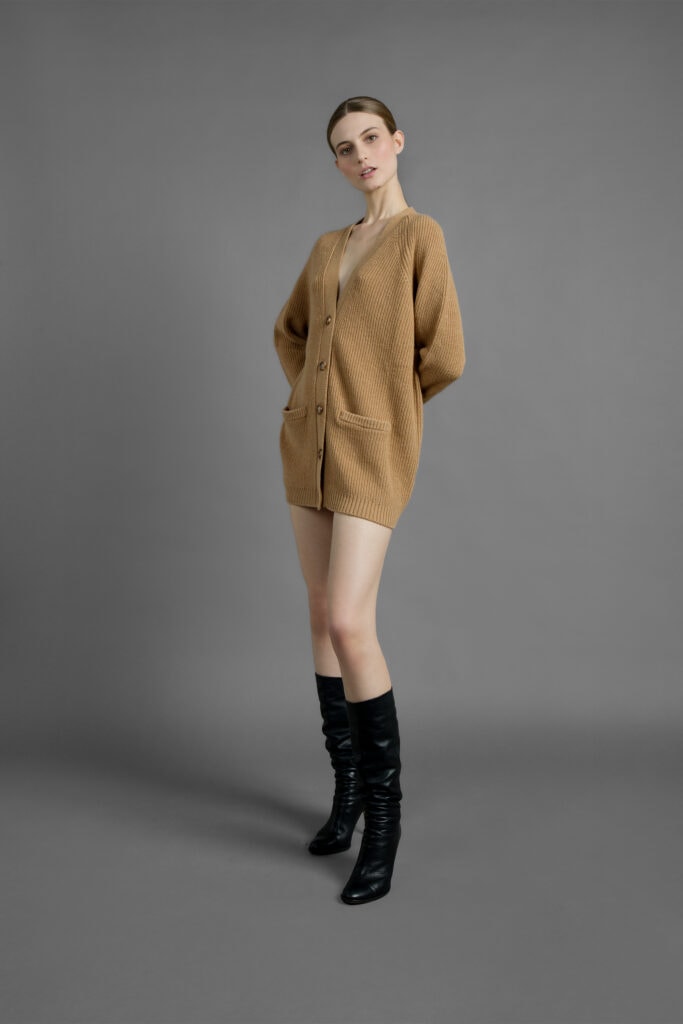
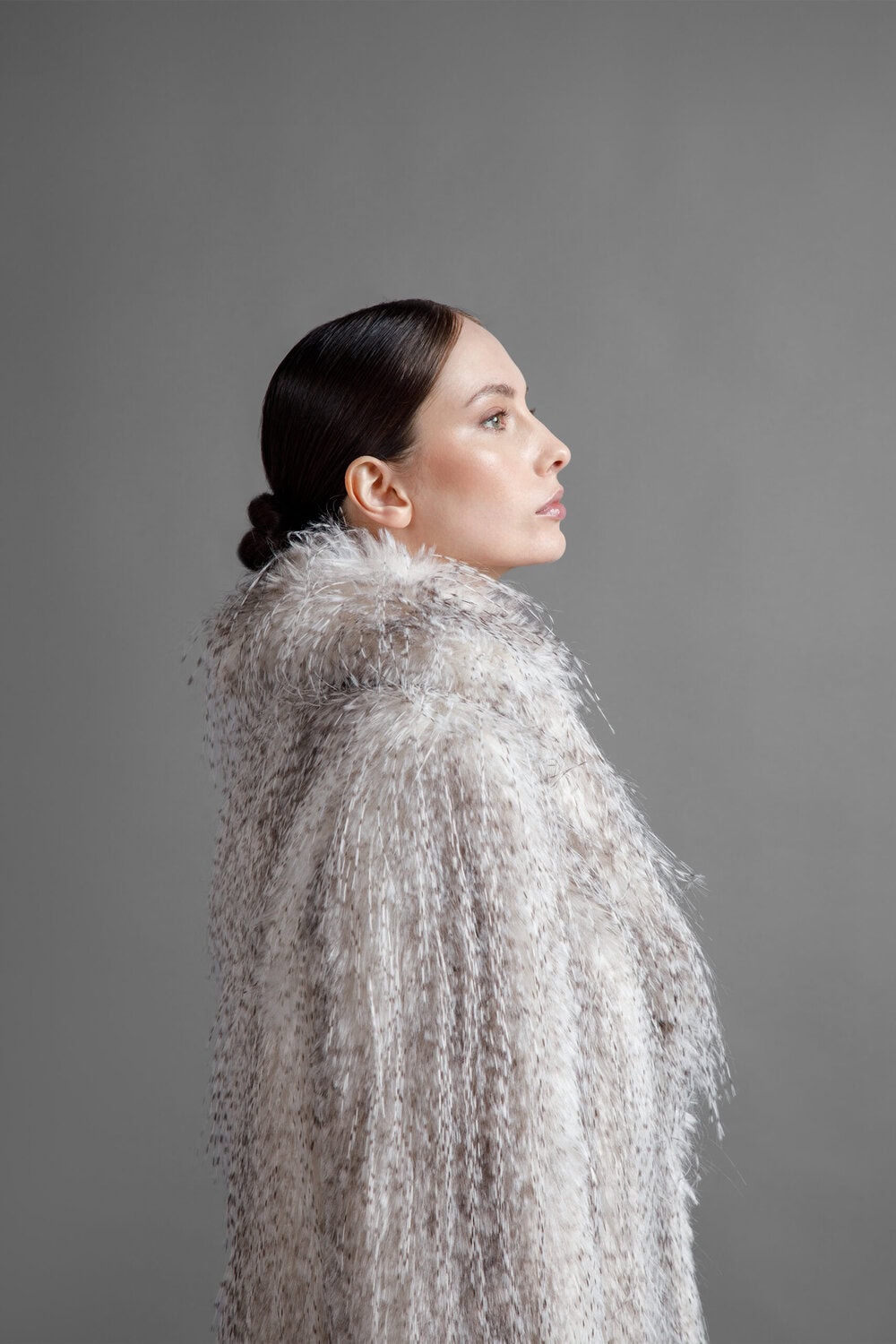
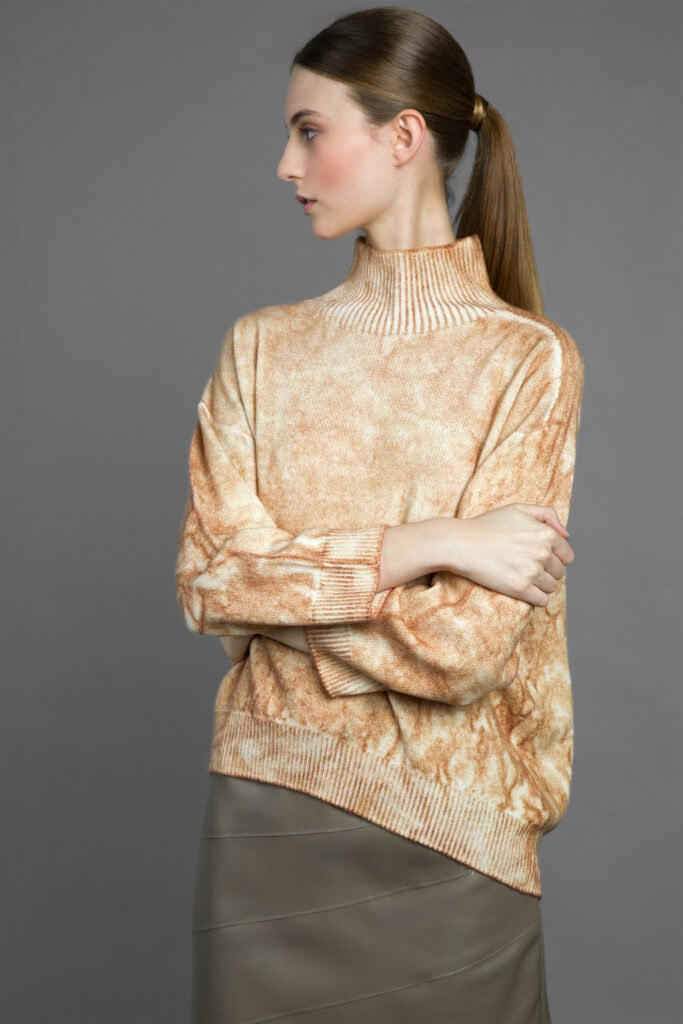
Flannel, cashmere blends, georgette, cotton poplin, eco-fur and eco-suede create contrasting surfaces and volumes. Knitwear in cashmere and virgin wool is particularly expressive, translating architectural forms into pronounced ribbed structures that feel surprisingly physical.
And then there are the 1950s – but without the retro costume. Defined shoulders, flared midi skirts and dresses, voluminous sleeves and sharp-lapelled blazers reference the past, while wide pleated trousers, carrot silhouettes and oversized shirts pull it firmly back into the present.
80 Years – and Moving Forward
It therefore feels entirely appropriate that Gattinoni presents its new collection alongside selected pieces from its archives. The past isn’t hidden. It becomes a counterpart to the present.

Historic film footage and original designs once worn by stars including Anita Ekberg and Audrey Hepburn recall an era in which Italian fashion began to define an international idea of elegance and lifestyle.
Eight decades later, Gattinoni faces perhaps the more difficult challenge: not demonstrating how significant its past was, but showing why the brand can still matter today.
This collection may already contain the answer: tradition only becomes truly interesting when it is allowed to change.