


What happens when a Porsche 911 is approached not simply as a car, but almost like a Louis Vuitton travel trunk? Louis Vuitton and Singer bring together fashion, watchmaking, leather craftsmanship and automotive design – transforming two classics into extraordinary design objects.
It all started surprisingly small: with a clock.
Singer, the Californian atelier renowned for its highly personalised restorations of classic Porsche 911s, approached Louis Vuitton to create a dashboard clock for one of its cars. It was to be developed and produced by La Fabrique du Temps Louis Vuitton in Switzerland.
But the clock became an idea. And the idea eventually became an entire car – or rather, two.
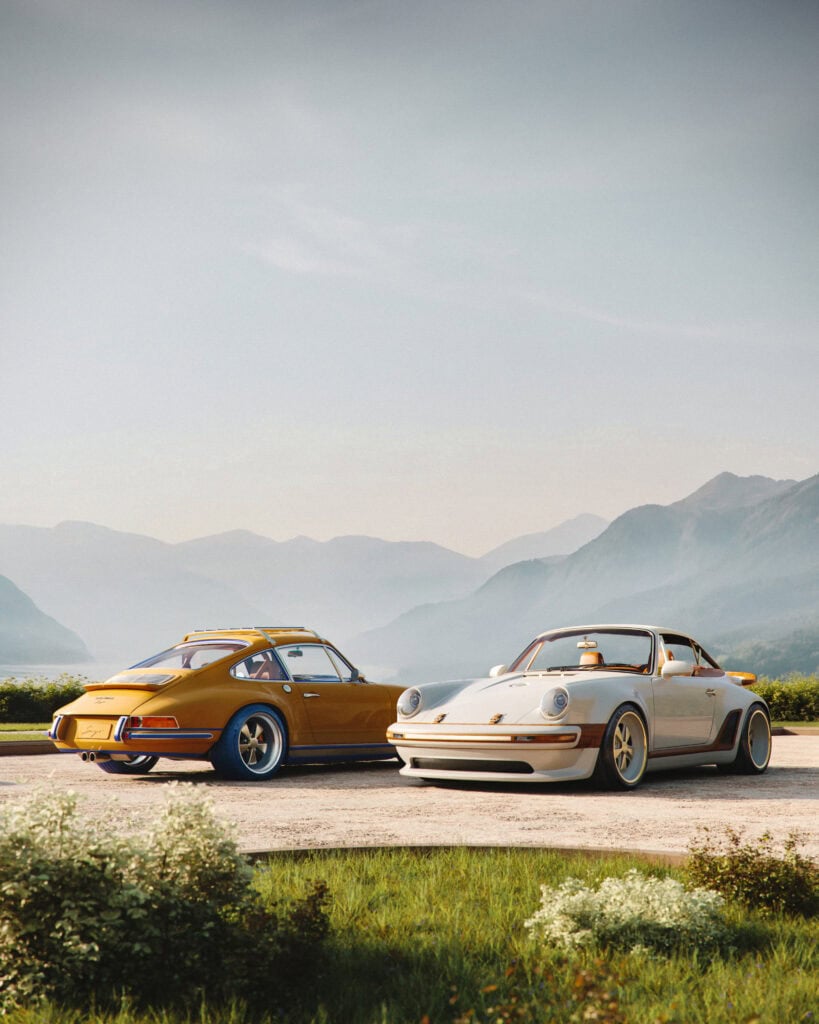
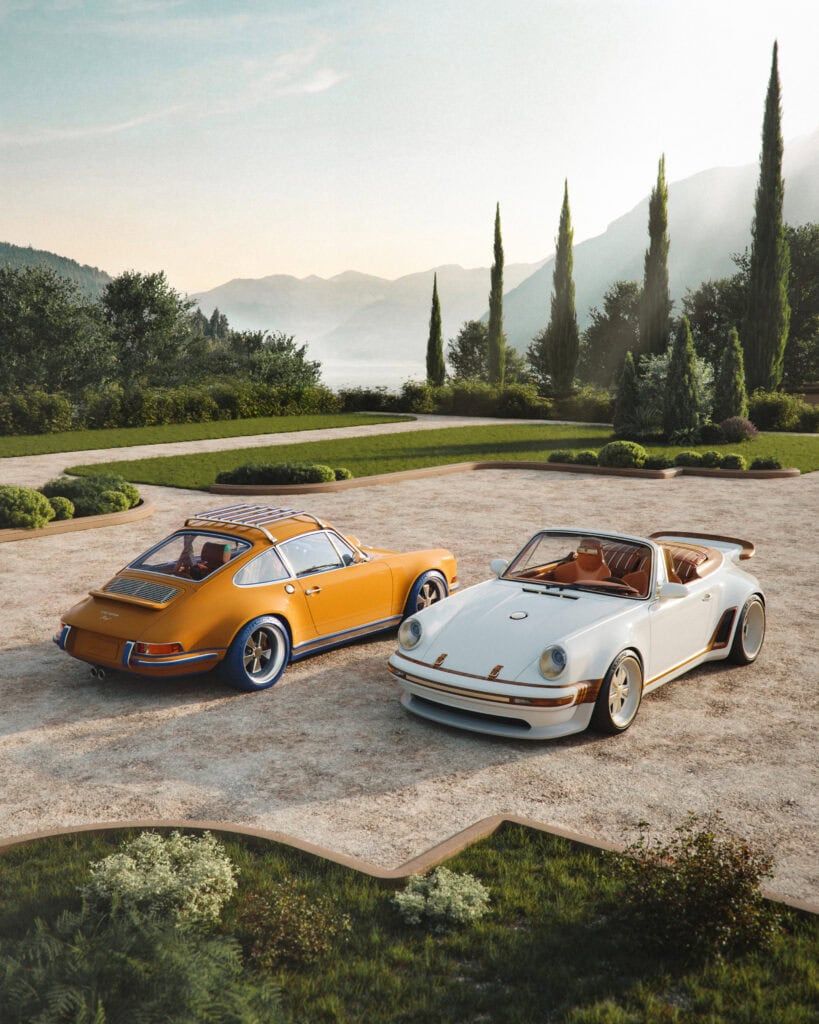
With the Porsche 911 Reimagined by Singer – Classic and the Porsche 911 Reimagined by Singer – Classic Turbo, Louis Vuitton and Singer translate their respective ideas of craftsmanship, precision and individuality into automotive form.
From detail to Gesamtkunstwerk
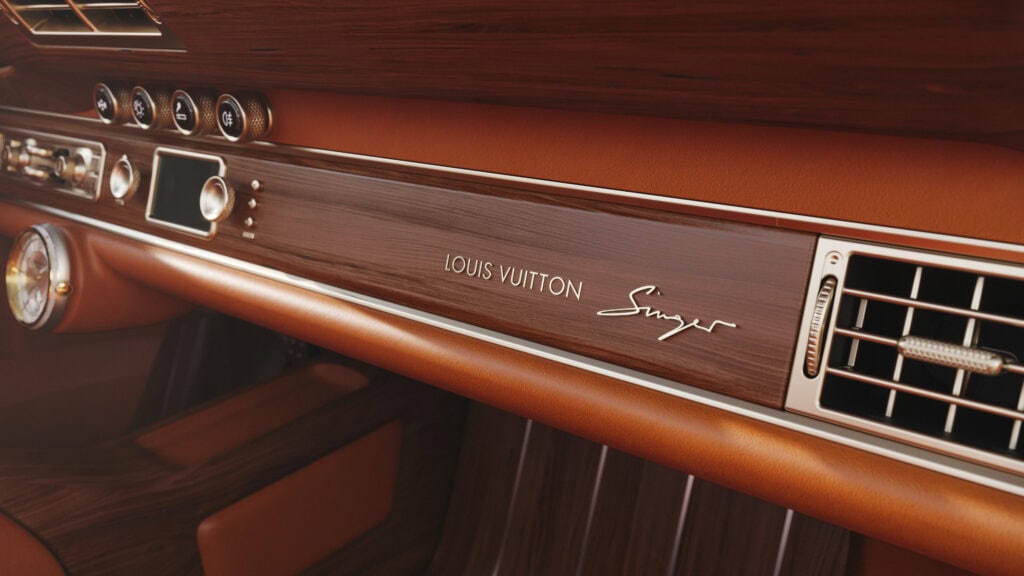
At the heart of the project was initially a detachable mechanical clock inspired by Louis Vuitton’s Tambour. It can be removed from the cockpit and converted into a desk clock.
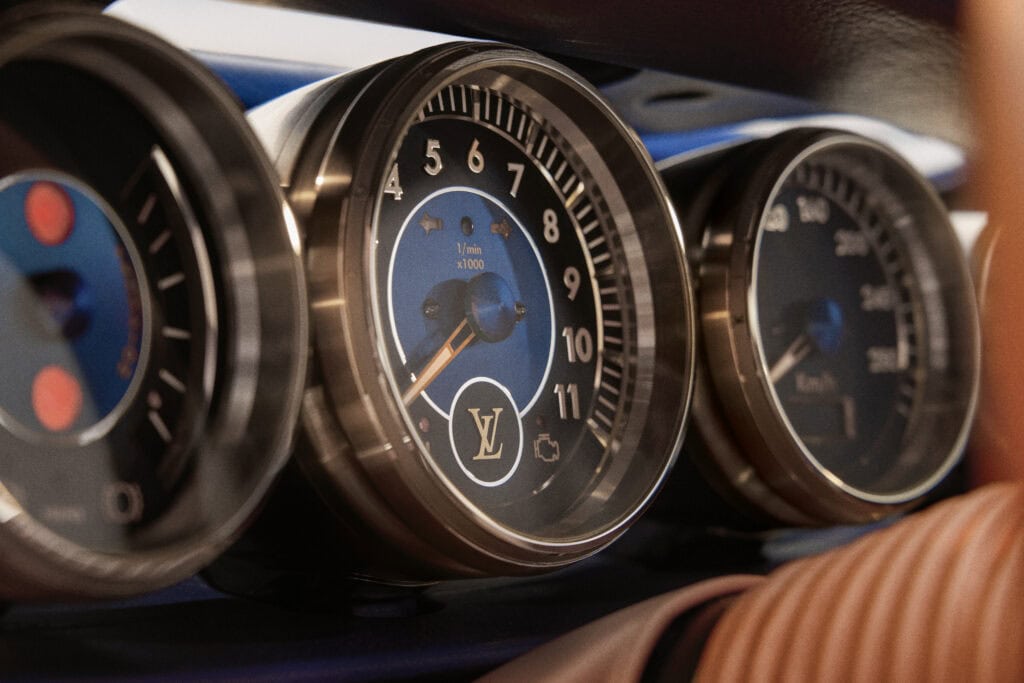
Yet this single detail set something much bigger in motion. For the clock to feel completely at home inside the car, the entire instrument display had to be reconsidered. Speedometer, rev counter, hands, indices and gauges adopted design elements from the Tambour watches.
What might sound like a relatively minor design exercise required an entire year of development.
The direction was set: rather than simply adding individual Louis Vuitton elements to a Singer, the teams wanted to create one coherent design.
Saffron, cobalt blue and the history of travel
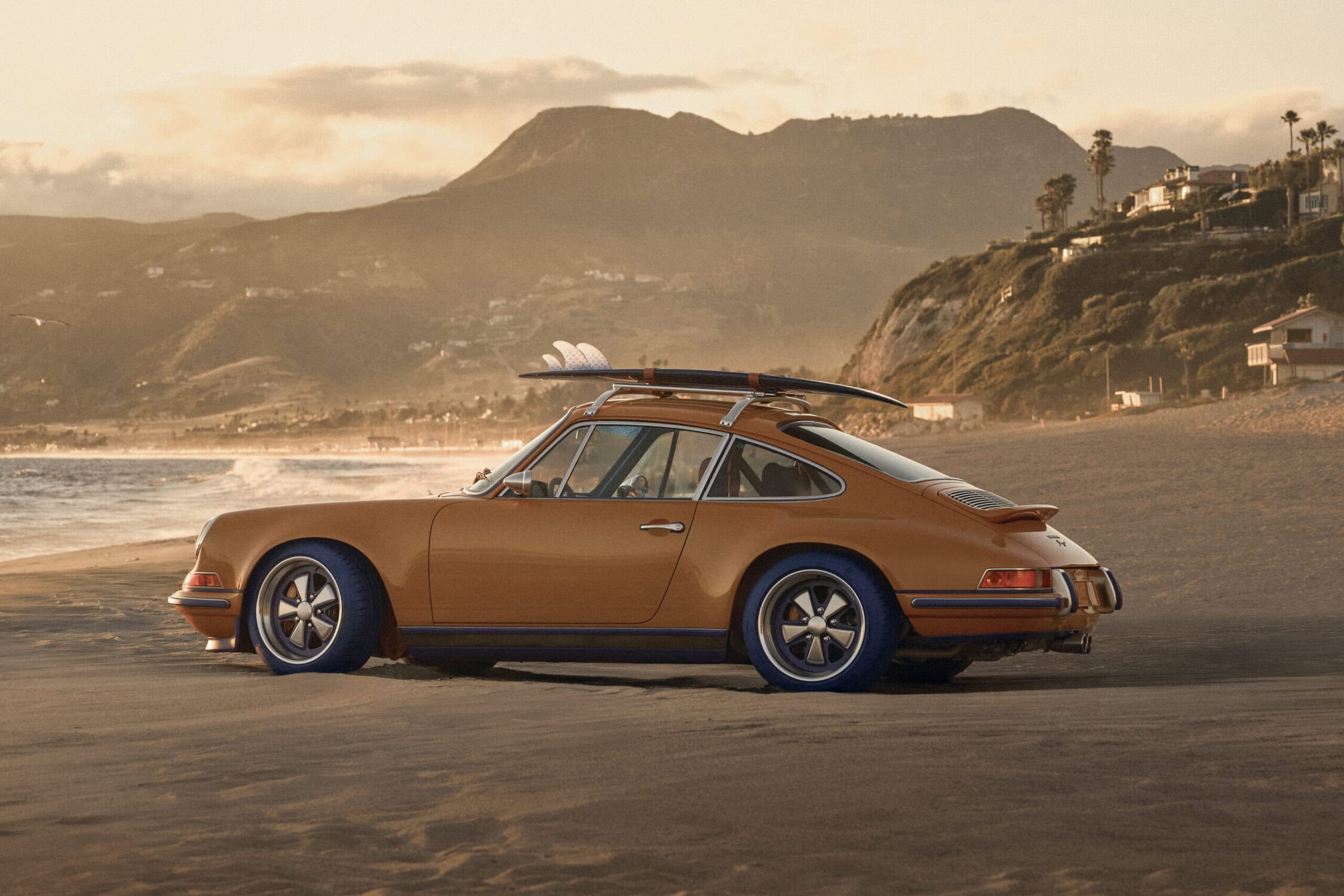
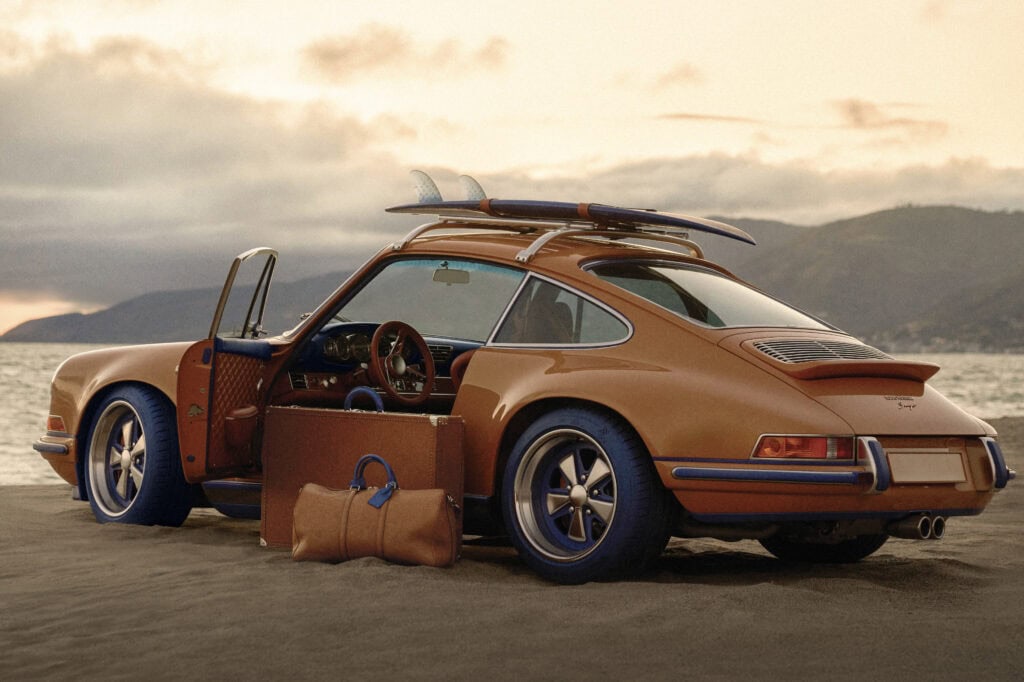
The Porsche 911 Reimagined by Singer – Classic wears a striking combination of saffron and cobalt blue. The choice is anything but random: saffron has appeared in the Louis Vuitton archives for more than 150 years, while also resonating with Bahama Yellow, a colour associated with some of Singer’s earliest commissions.
Cobalt blue, meanwhile, references historical travel trunks Louis Vuitton created for Citroën as early as 1924.
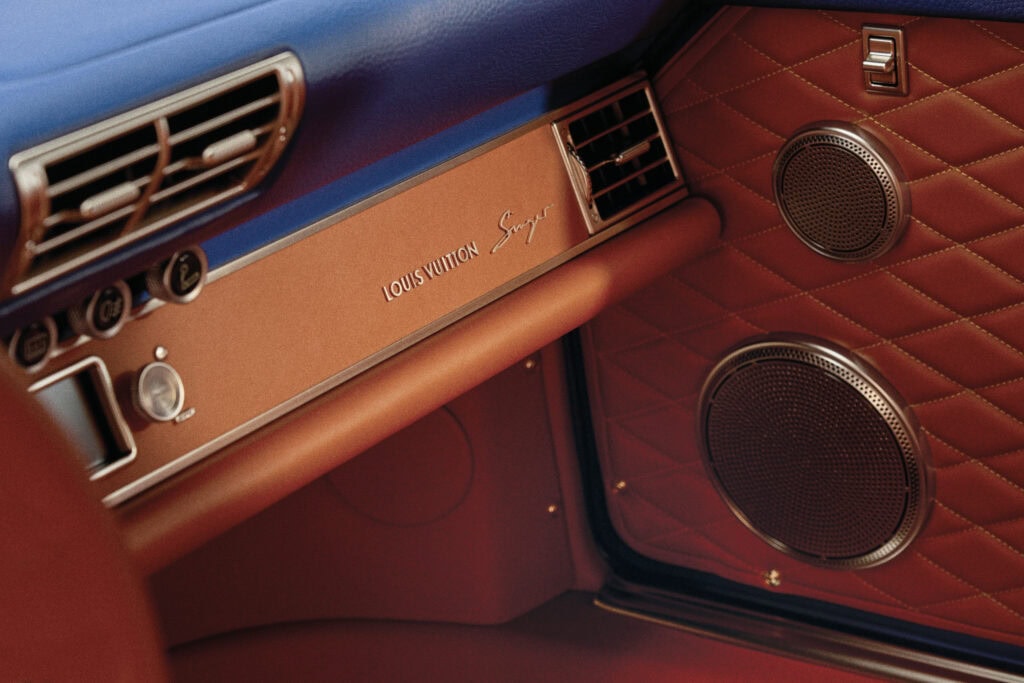
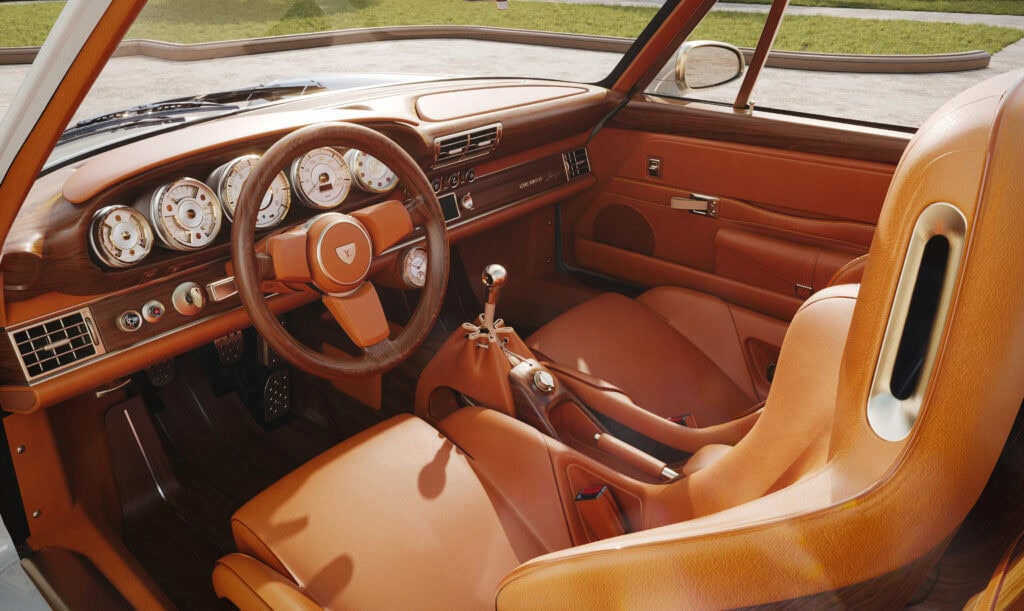
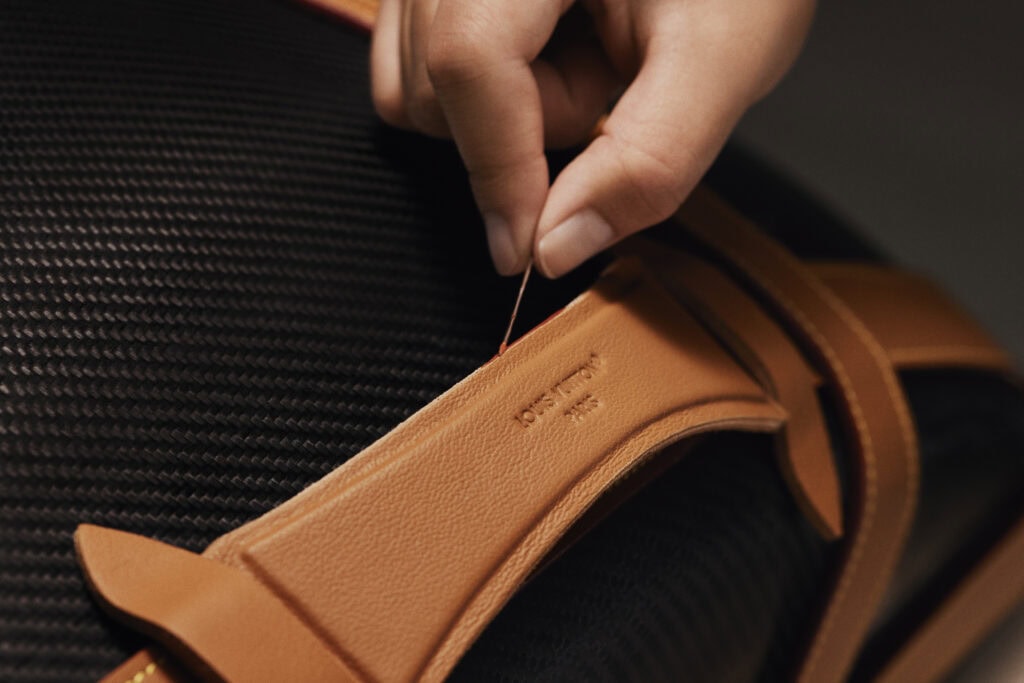
Inside, this dialogue between past and present becomes even more apparent. Natural leather, yellow saddle stitching and embossing inspired by the characteristic “malletage” pattern found inside Vuitton trunks meet metal components finished with a degree of precision more commonly associated with haute horlogerie.
Even the ventilation eyelets in the seats feature individually crafted Monogram flowers.
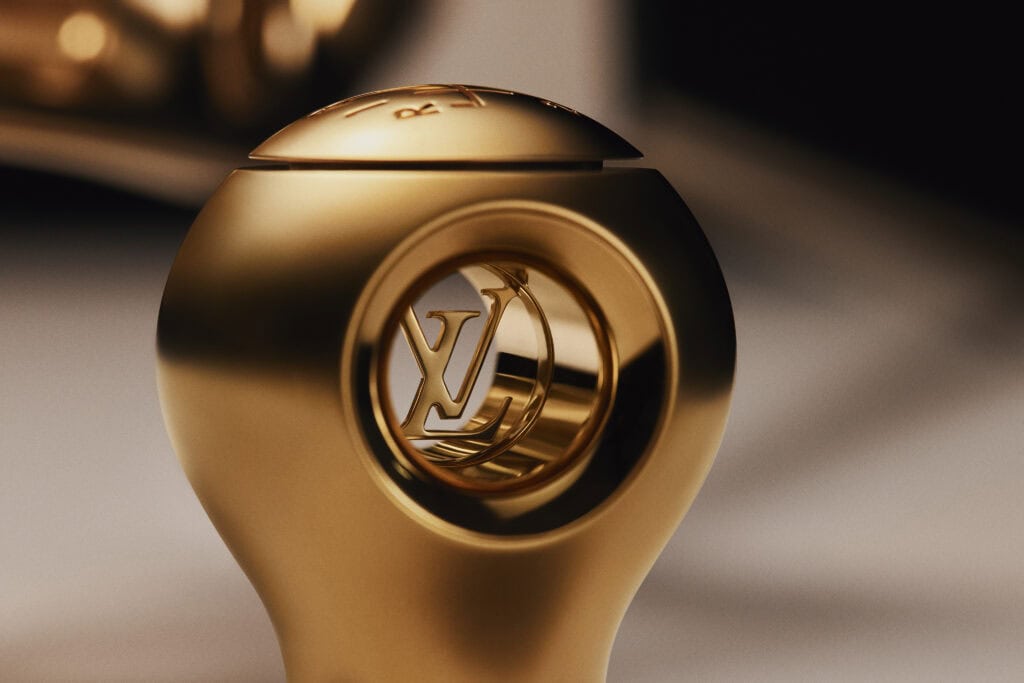
Plastic components commonly found in automotive interiors have largely been replaced with metal and natural materials. Knobs, switches, locks and air vents are individually crafted, polished and satin-finished.
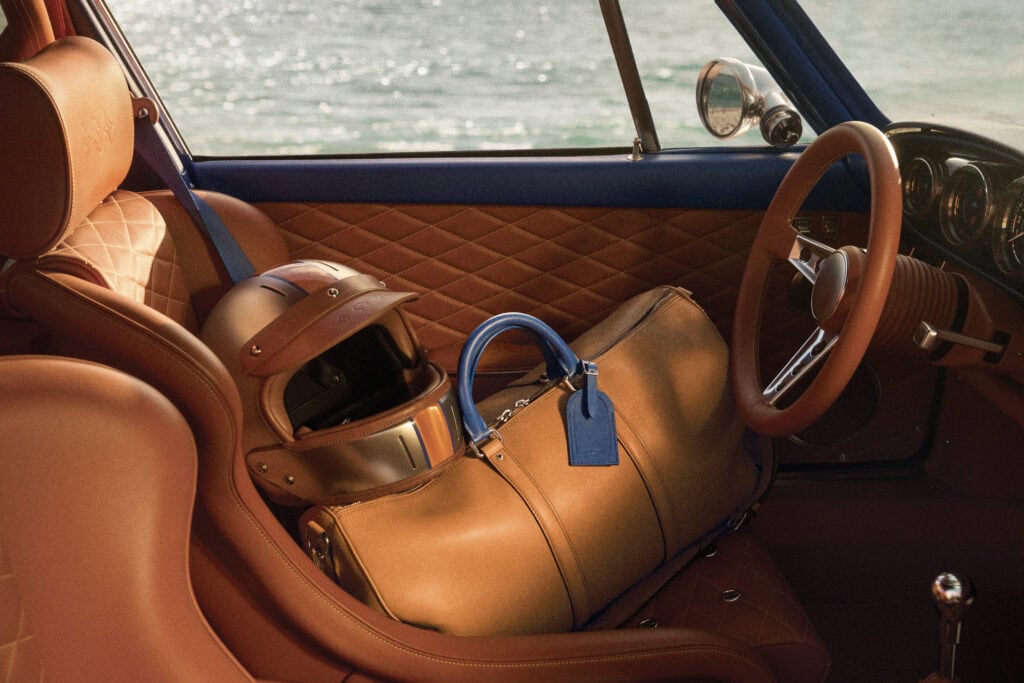
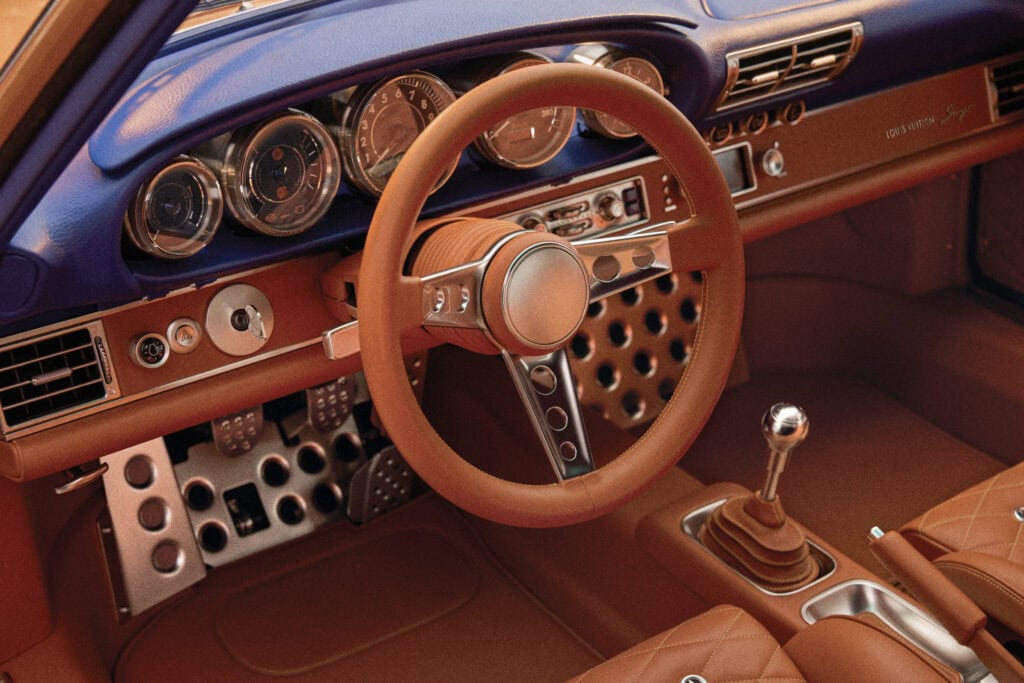
The car almost becomes a piece of product design you can step inside – and drive.
Nicolas Ghesquière reimagines the 911
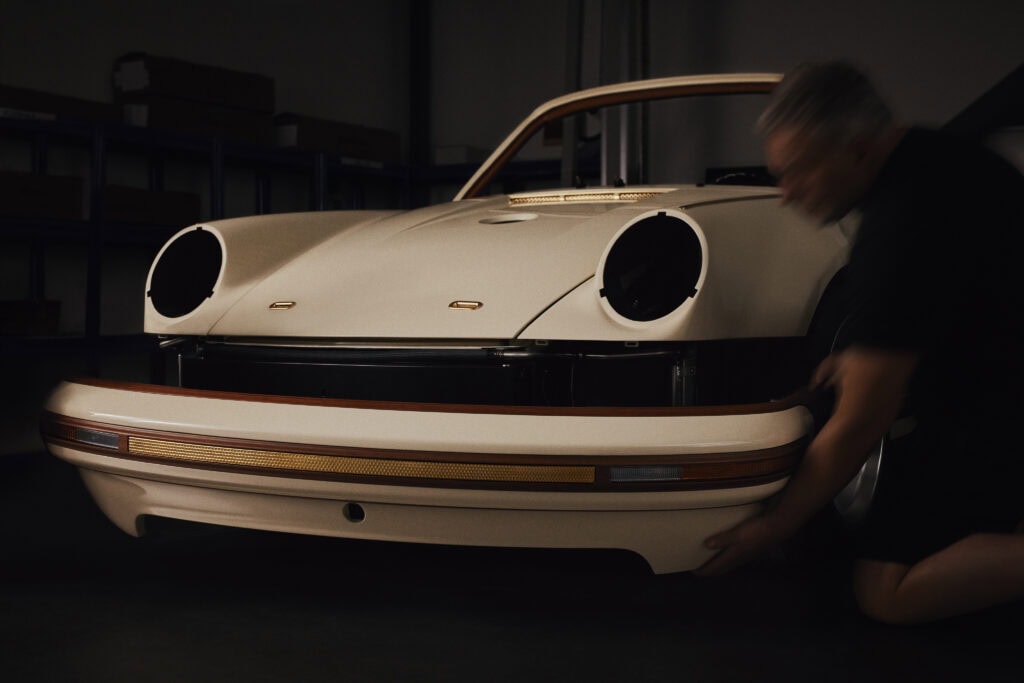
The second interpretation is even more unexpected. The Porsche 911 Reimagined by Singer – Classic Turbo was created under the creative direction of Nicolas Ghesquière, Artistic Director of Women’s Collections at Louis Vuitton.
Ghesquière brings together two worlds that might initially seem far apart: automotive and yacht design.
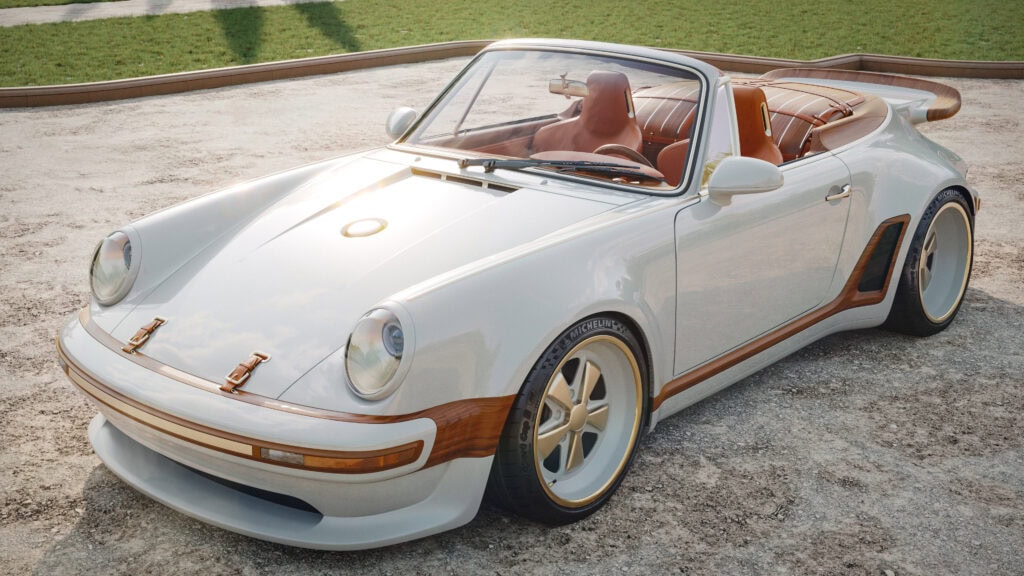
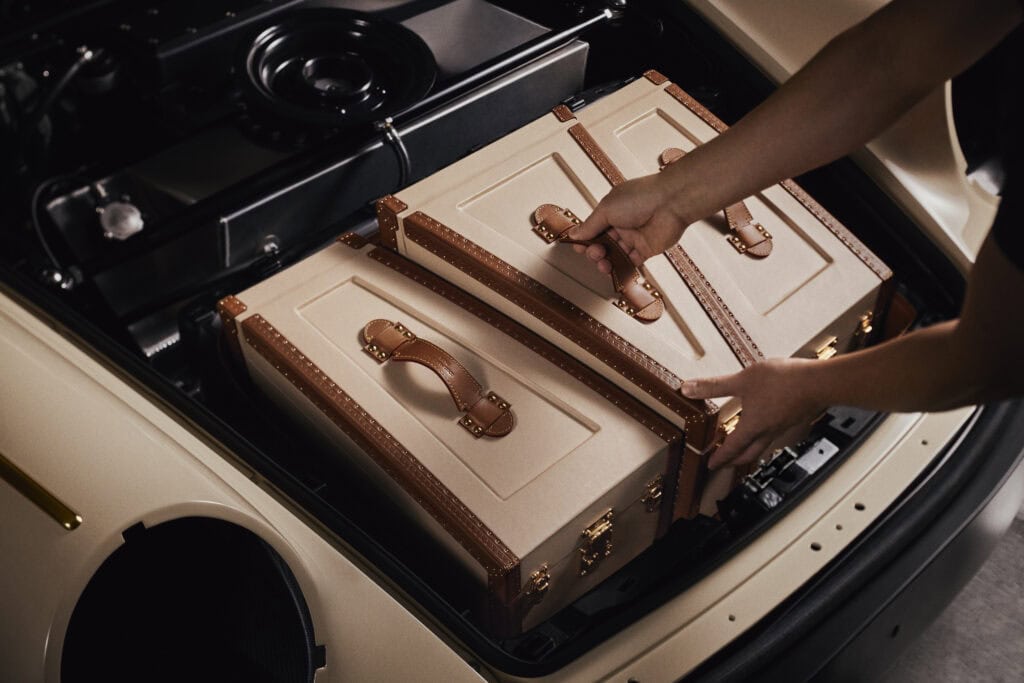
The cabriolet body is finished in Calcaire Lutétien, evoking the pale limestone that defines much of the Parisian cityscape. Gold accents are paired with natural leather and wood. Behind the seats sits a specially developed luggage area crafted from varnished wood using techniques reminiscent of classic runabout decks.
The rear luggage compartment continues the idea: a teak-inspired wooden deck turns the open 911 into something resembling a road-going yacht.
Ghesquière wanted to create a car that opens itself to its surroundings – allowing sunlight, nature, speed and materiality to become part of the experience.
The car as a travel object
Louis Vuitton being Louis Vuitton, the design does not end with the car itself.
Dedicated capsule collections were created for both vehicles. Driver jackets, gloves, shoes, helmets, watches and sunglasses have been conceived alongside bespoke luggage made specifically for each car.
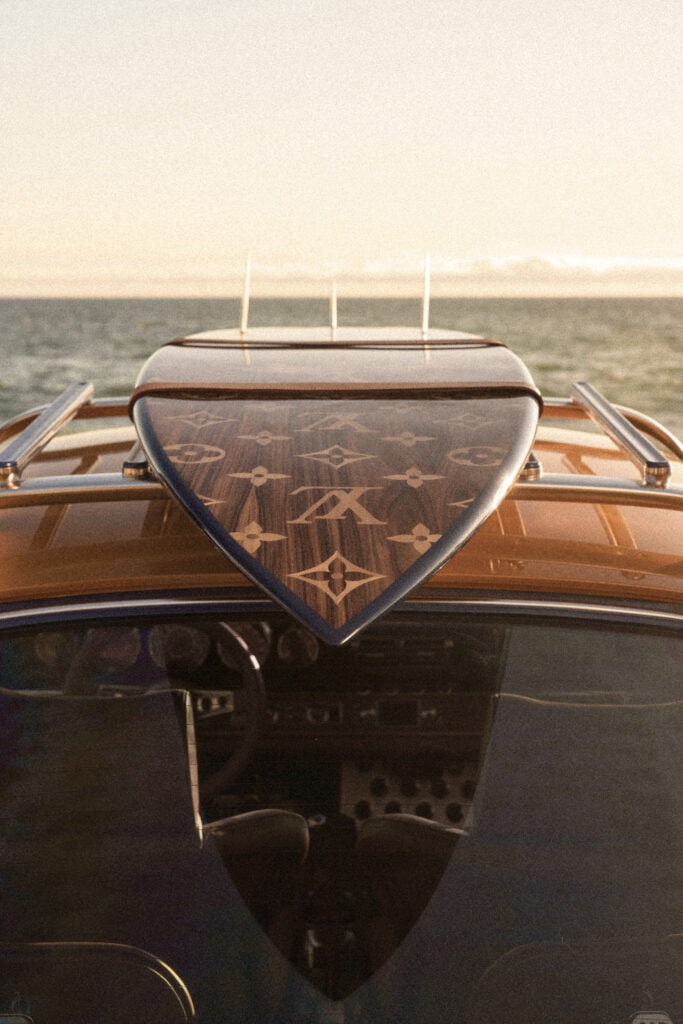
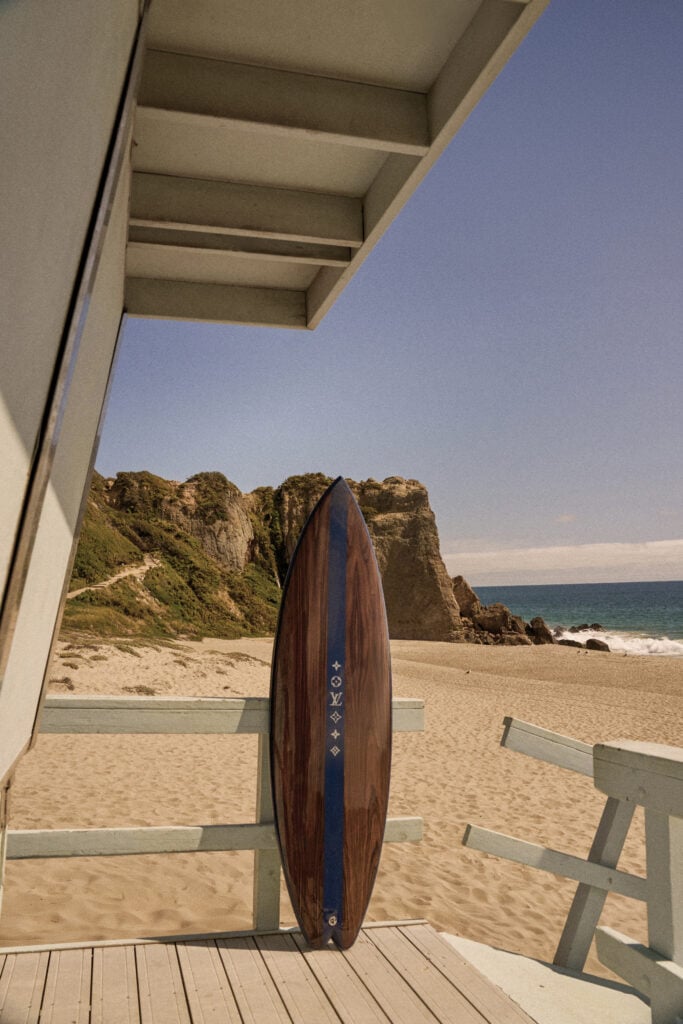
The Classic even comes with a specially designed roof rack capable of carrying luggage, a Louis Vuitton surfboard or skis. The surfboard combines blond oak and walnut, while the skis are made in the French Alps from wood, titanium and steel.
It brings the story full circle. As early as 1897, Georges Vuitton was offering trunks specifically designed for automobiles. As motoring emerged, the House continuously developed new solutions for a society discovering entirely new ways to travel.
In 1909, Pierre and Jean Vuitton went even further, designing their own automobile based on a Stabilia sports chassis.
Luxury you can touch
This is precisely why Louis Vuitton x Singer feels different from a conventional brand collaboration.
What makes the project interesting is not simply the combination of two famous names, but its obsessive attention to detail: How should a switch feel? How should a metal surface reflect light? How does leather transition into wood? How can the graphic language of a watch be translated into a rev counter?
Singer has always treated the classic 911 not as a finished design object, but as a starting point. Louis Vuitton, meanwhile, has spent more than 170 years exploring how design can transform the experience of travel.
These two perspectives meet in the cars.
The result is perhaps less a Porsche with Louis Vuitton details than a rather radical proposition for what an automobile can be: machine, fashion object, travel companion and personal space all at once.