
A meal is quickly dealt with. We cook, eat, clear up and move on. In Plum Village, a Buddhist community in southwest France, more time is given to these everyday activities – out of conviction rather than nostalgia. Cooking is part of daily practice, eating belongs to community, and washing up is as natural a part of the meal as eating itself. A new cookbook tells of a culture concerned with consciously experiencing life as well as organising it.
It is remarkable how much of everyday life we can get through without coming particularly close to it. Breakfast happens alongside the news, lunch between appointments, dinner in front of a screen. We are busy, fed and up to date. The feeling of having actually been present does not always follow. In Plum Village, a Buddhist centre in southwest France, a response to this modern restlessness begins in a thoroughly ordinary place: the kitchen.
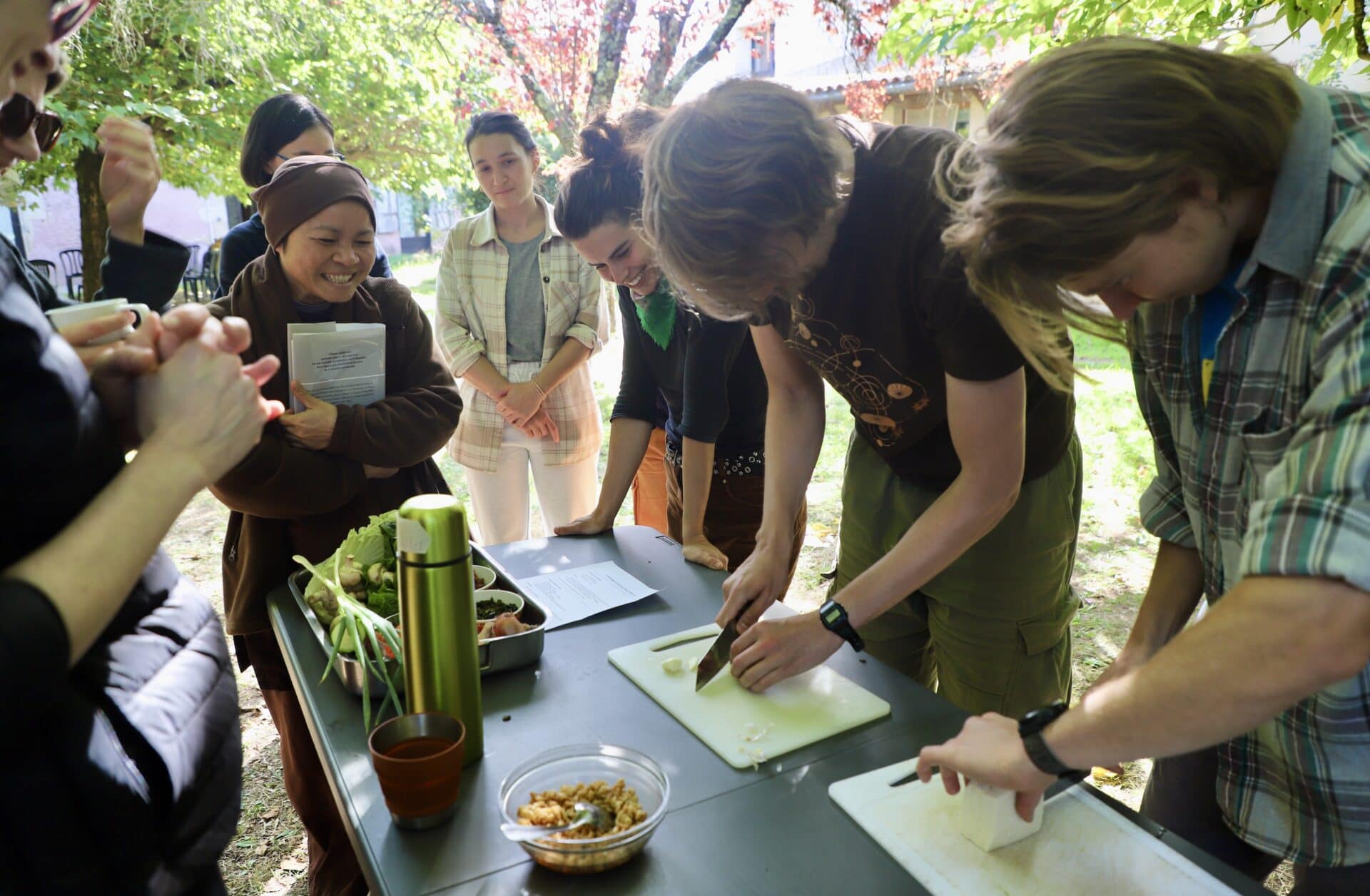
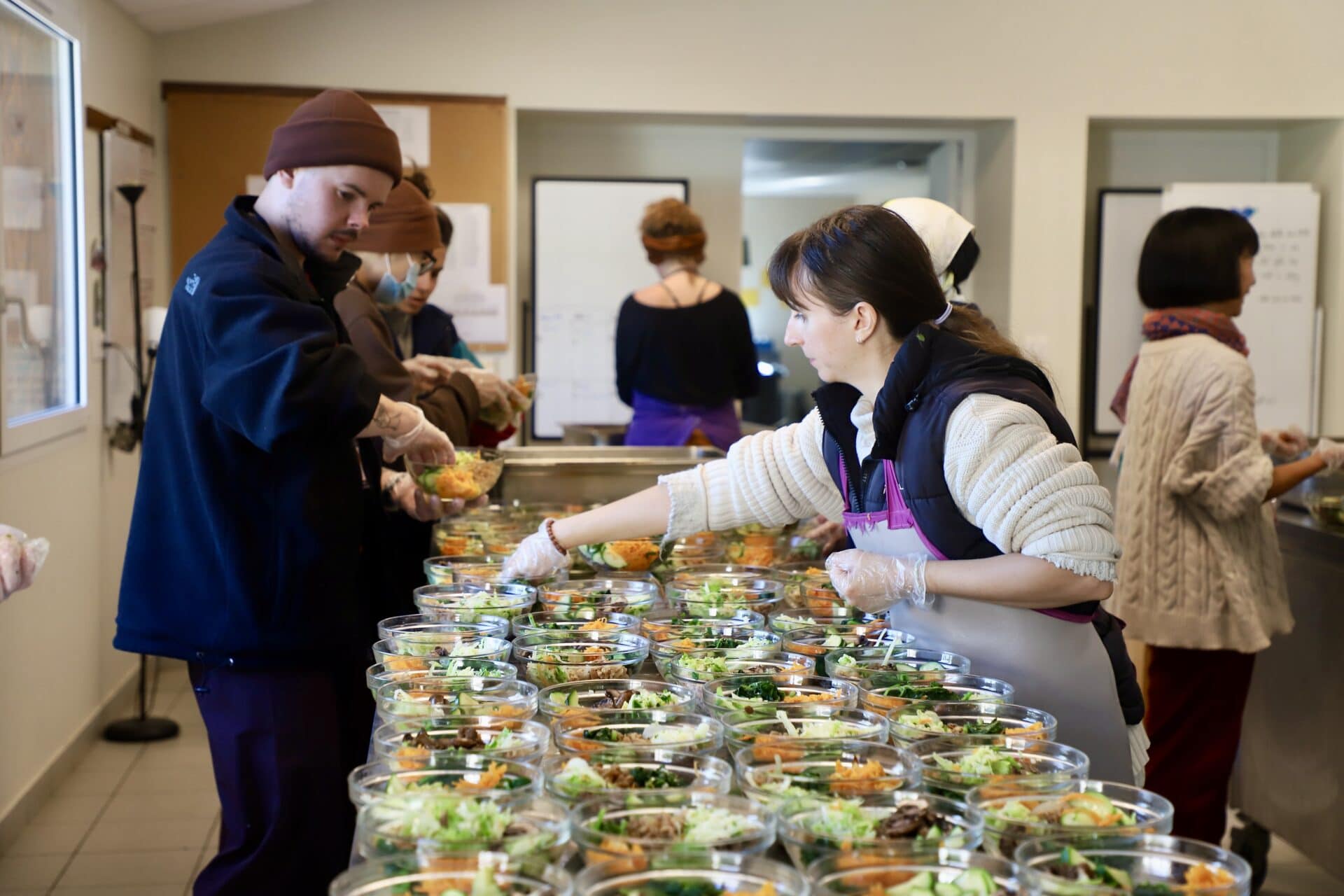
Vegetables are chopped, rice cooked, soup served. People gather around a table. Afterwards, the dishes are washed. None of this is extraordinary. Yet the sequence contains an idea that seems almost radical in an age of constant acceleration: life does not wait until we have finished everything.
The new Plum Village Cookbook, published by Parallax Press, explores this idea. It brings together more than a hundred vegan recipes, from Vietnamese favourites such as pho, summer rolls and bánh xèo to European dishes including buckwheat pancakes, pommes de terre sarladaise and pizza. It comes from the community founded around Vietnamese Zen master Thích Nhất Hạnh, whose teaching directs attention towards moments we tend to overlook. The kitchen is a good place to start. It gives us a simple task: attending to what is right in front of us.
A Different Pace
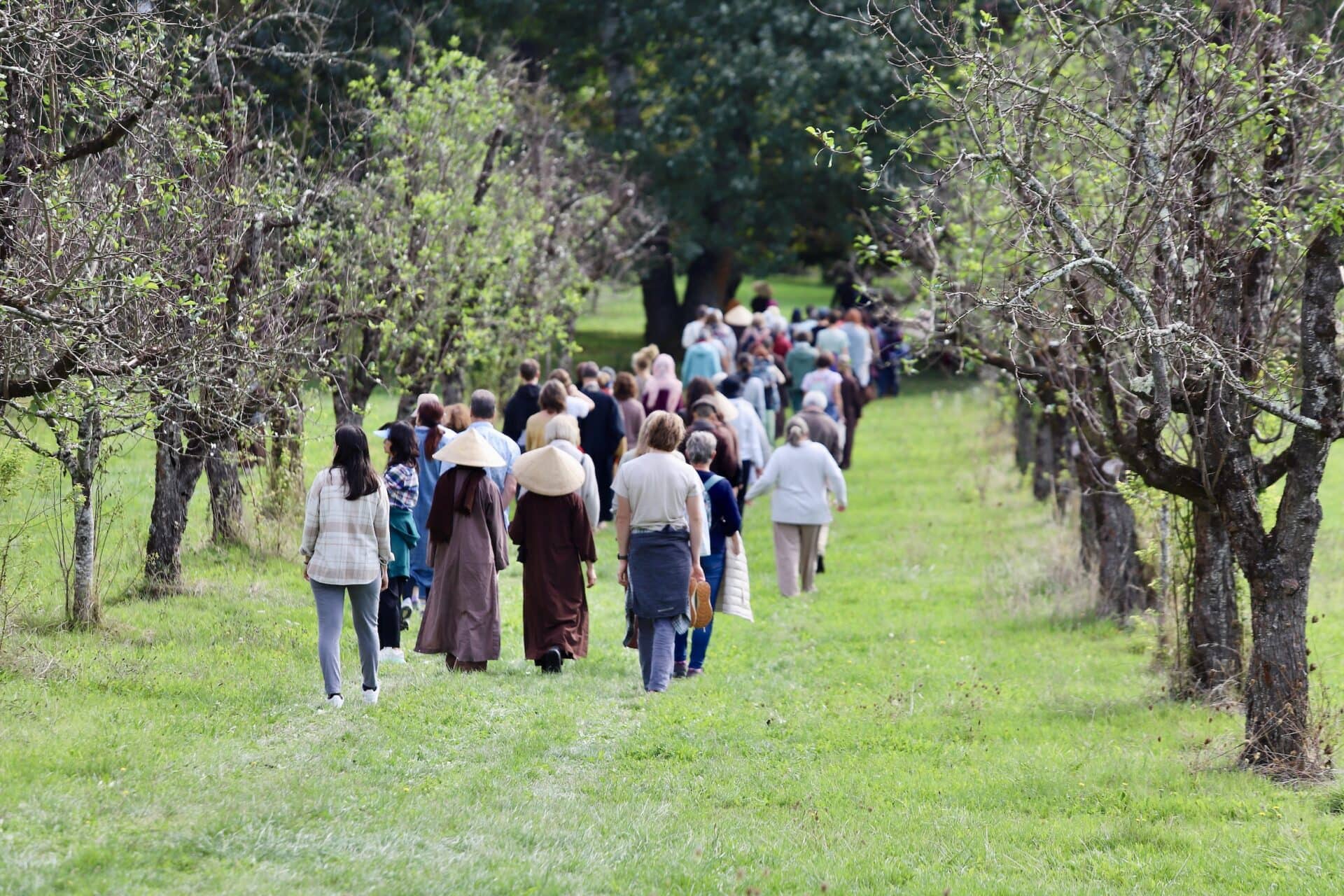
Plum Village was founded in the French Dordogne in 1982. Thích Nhất Hạnh, a Buddhist monk, writer and peace activist, had been forced to leave his native Vietnam. His opposition to the Vietnam War had led to exile. In France, together with his students, he created a place where his vision of more peaceful coexistence could be practised in everyday life. Its name refers to the 1,250 plum trees planted on the land.
Over the decades, the old farmhouse and its agricultural land grew into an international community with several monastic centres. People come from around the world to meditate, work together and discover a practice that continues beyond the meditation hall.
Thích Nhất Hạnh, whom his students called Thầy, did not regard mindfulness as a technique for managing life more efficiently. His concern was with experiencing it at all. A breath, our footsteps, a cup of tea or a meal can offer an opportunity to bring attention back to the present. It sounds simple. In everyday life, which constantly pulls us towards the next item on the list, it is a challenge.
The kitchen makes this approach tangible. When chopping vegetables, we chop vegetables. When cooking, we attend to cooking. This does not mean every thought must disappear or every meal become a silent ritual. It means giving an activity the space it occupies. Not thinking about washing up while eating. Not already leaving in our minds while sitting together. Not treating the moment as a place to pass through.
What Comes to the Table
The recipes also tell of the community’s different cultural roots. Vietnamese dishes recall Thích Nhất Hạnh’s origins, while European favourites reflect the place Plum Village has called home for more than four decades. The cooking is international without needing to turn that into a culinary programme.
The dishes are vegan and deliberately suited to everyday life. They require no special occasion. That is part of their appeal. The book imagines cooking that fits into ordinary life, rather than being reserved for rare celebrations: food that nourishes, tastes good and brings people together.
In the Plum Village tradition, attending to a meal also means recognising everything it contains. A plate of vegetables is never simply a plate of vegetables. It holds the work of those who grew and harvested them, the conditions that allowed them to grow, water, soil and sunlight. Taking time to look more closely reveals a whole world of relationships behind the familiar.
This is no romantic vision of the simple life. The community emerged from a search for a different way of engaging with a troubled present, rather than longing for an unspoilt past. The question of how people can live together more peacefully reaches all the way to the dining table. How we eat, whom we eat with and how we encounter one another are part of our shared life.
Community Begins at Dinner
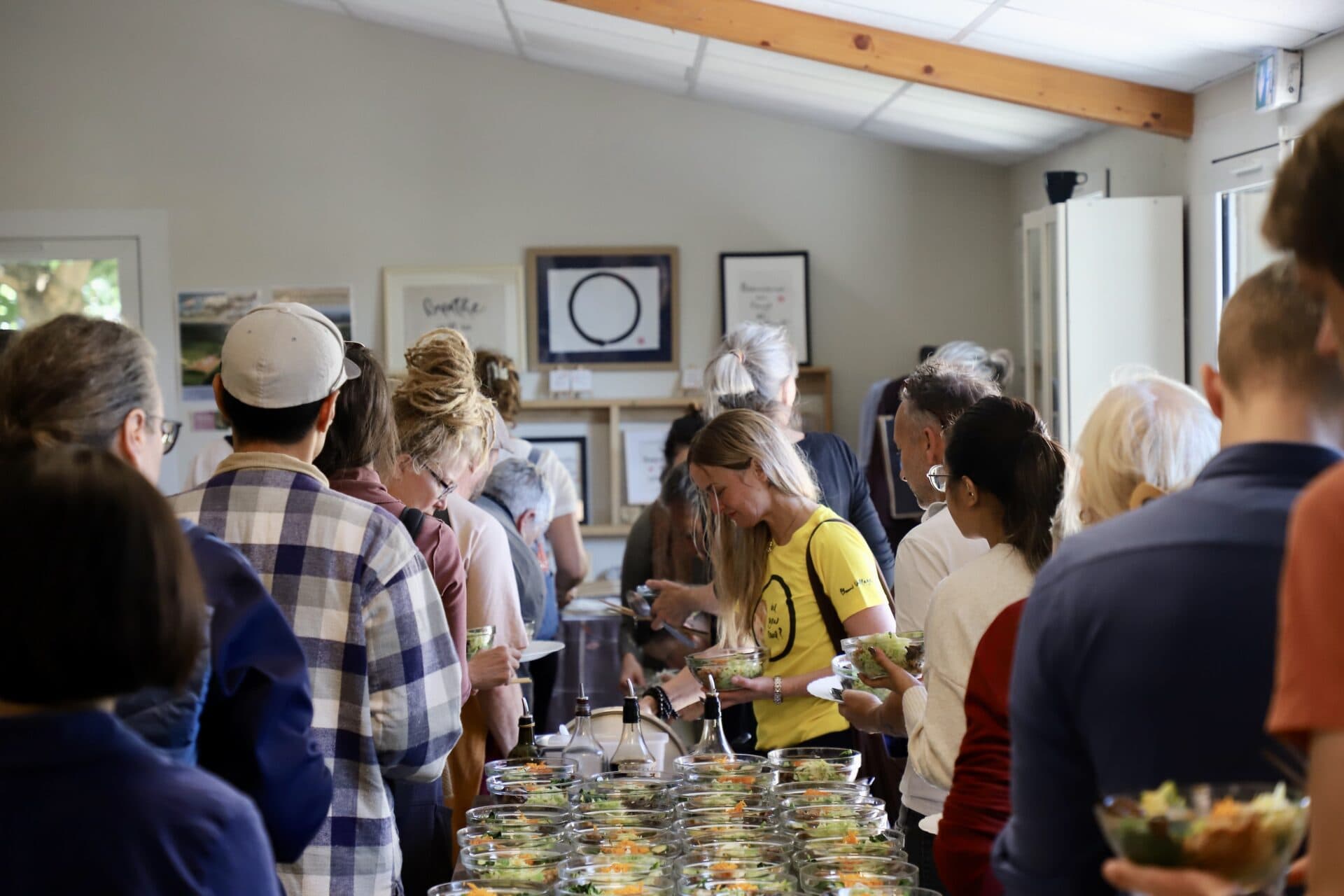
Shared meals have a particular quality. They bring people whose days may have been entirely different to the same table. Food, time and attention are shared. At best, a conversation develops that does not immediately have to serve a purpose. Nobody needs to become a better version of themselves. Being with others for a while is enough.

In Plum Village, clearing up remains part of that sequence. Washing the dishes belongs to a meal just as preparing it does. What many households regard as an unwelcome chore becomes a continuation of the same practice. This is a quiet but significant shift: the enjoyable part of an evening need not end when the plates are empty. There is still something to do, and that too can be part of life together.
The cookbook translates this approach into recipes and suggestions for the kitchen. It offers no instruction to withdraw from the world. Instead, it draws attention to the world already around us: ingredients, people, movements and habits. There is no need for a new morning routine or a perfectly furnished retreat. A kitchen will do.
Perhaps this is the real point: aliveness does not always have to come from outside. It is not found exclusively in travel, great experiences or the rare days when everything is different. It can lie in a meal we would otherwise have rushed through. In a conversation we make time for. In the brief moment when we notice how good something tastes.
In the end, the kitchen is tidy again. The table is empty, the work done. Tomorrow, there will be cooking, eating and washing up once more. The sequence stays the same. What can change is how we experience it.
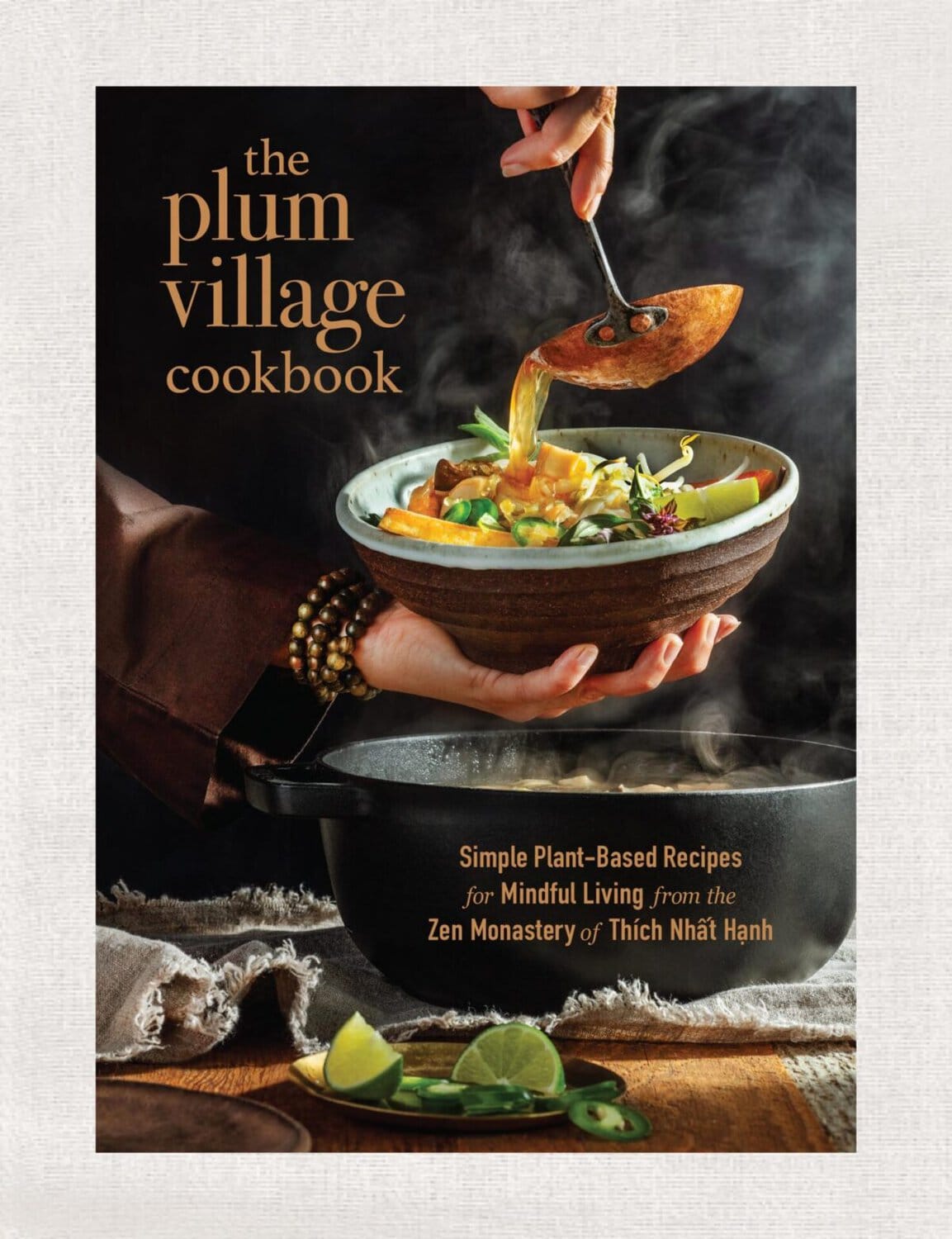
The Plum Village Cookbook
Parallax Press · 240 pages · English edition · ISBN 9780938077374
More about the book