


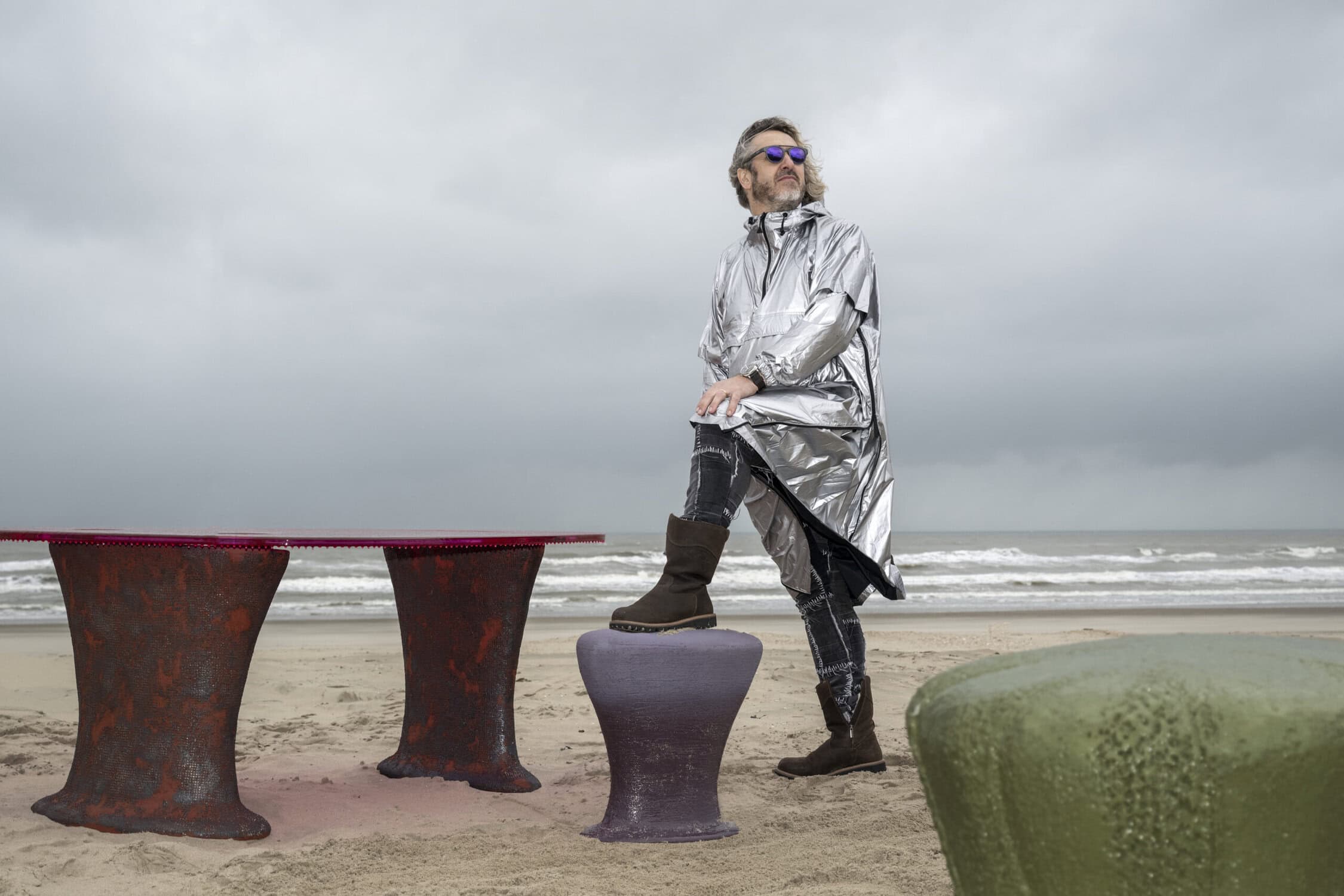
Mirrored steel, rough clay and surfaces that appear almost liquid: the Dutch designer develops furniture through direct engagement with materials.
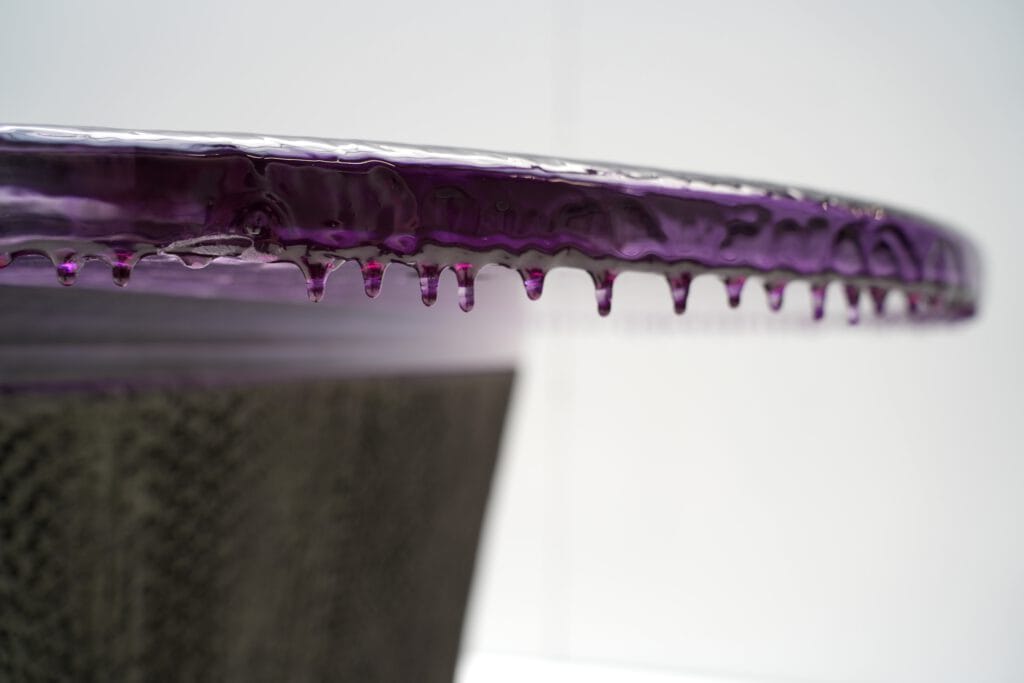
Beneath a glossy tabletop, droplets hang as though the material has solidified in mid-flow. Below them stand substantial oak legs. Osiris Hertman’s furniture can feel solid and surprisingly fluid at the same time. His “Functional Art Collectibles” reveal a pleasure in experimentation – and a designer drawn back towards the workbench after years of large architectural projects.
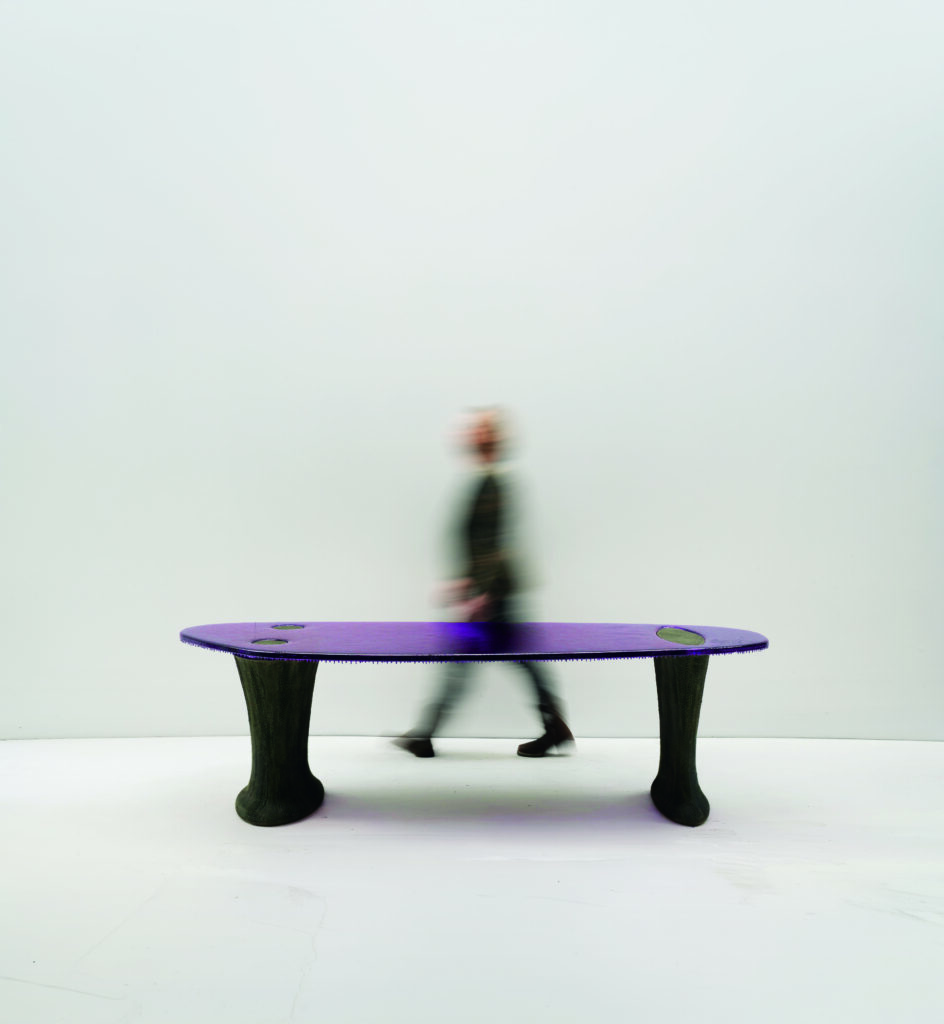
The legs of the Cloudy Coffee Table retain visible traces of their making. Hertman scratches the chamotte clay while it is still soft, exposing its granular structure. Above it rests a highly polished stainless steel top with an irregular, hand-hammered edge. The surface reflects the room; the legs almost convey how they would feel beneath your fingertips.
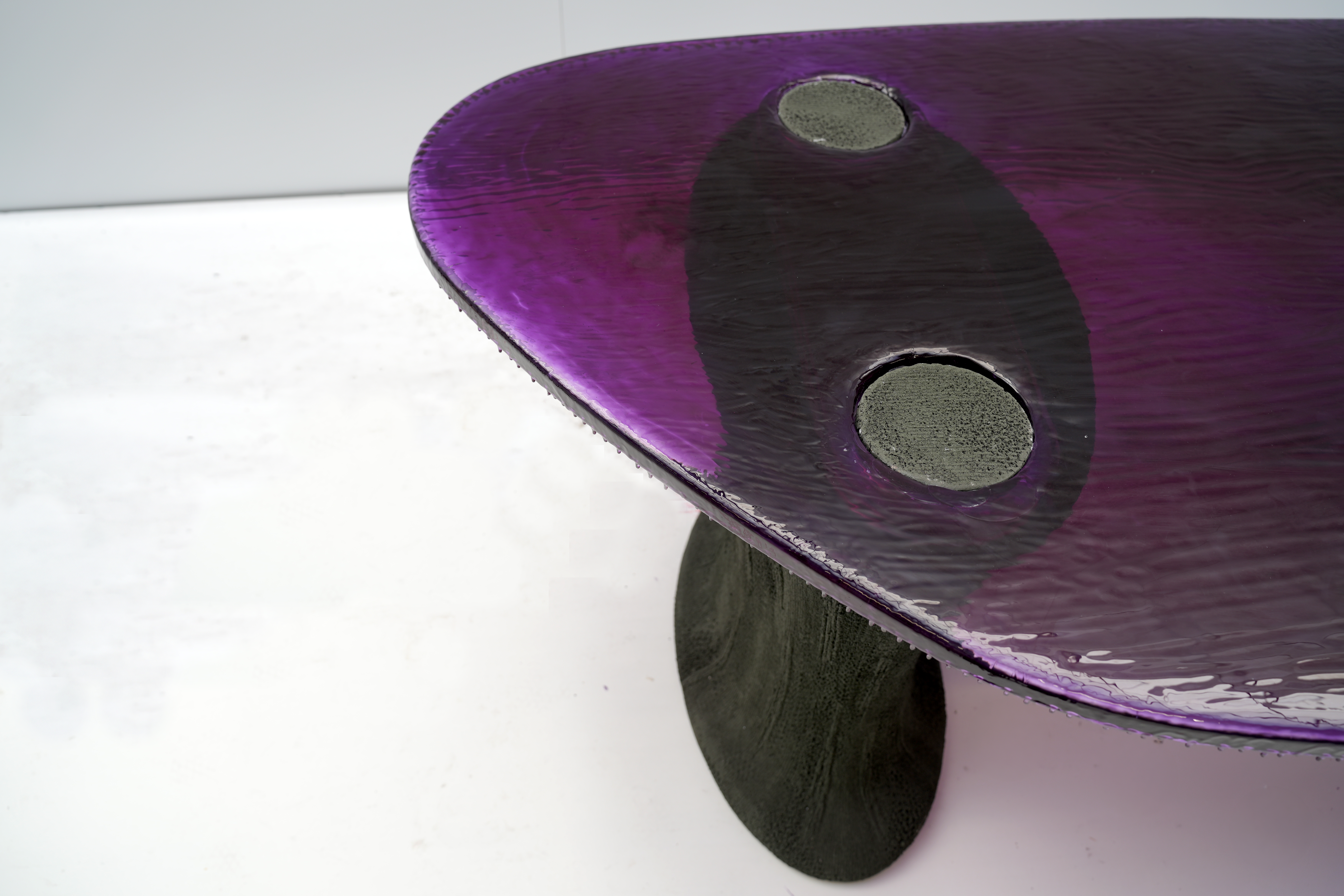
Much of the appeal of his work lies in this encounter. Gloss and roughness, weight and visual lightness sit directly alongside one another. You recognise a table, yet begin to consider it as a sculpture. With the Cloudy Coffee Table, even its use remains open: its elongated shape occupies a space between coffee table, bench and sculptural object.
Back in the Workshop
Born in Tilburg in 1972 and based in Haarlem, Hertman studied at Design Academy Eindhoven. He counts Lidewij Edelkoort, Marcel Wanders and Ulf Moritz among his formative teachers. He describes his earlier Waldorf education as the foundation of an intuitive approach in which ideas develop through working with materials.
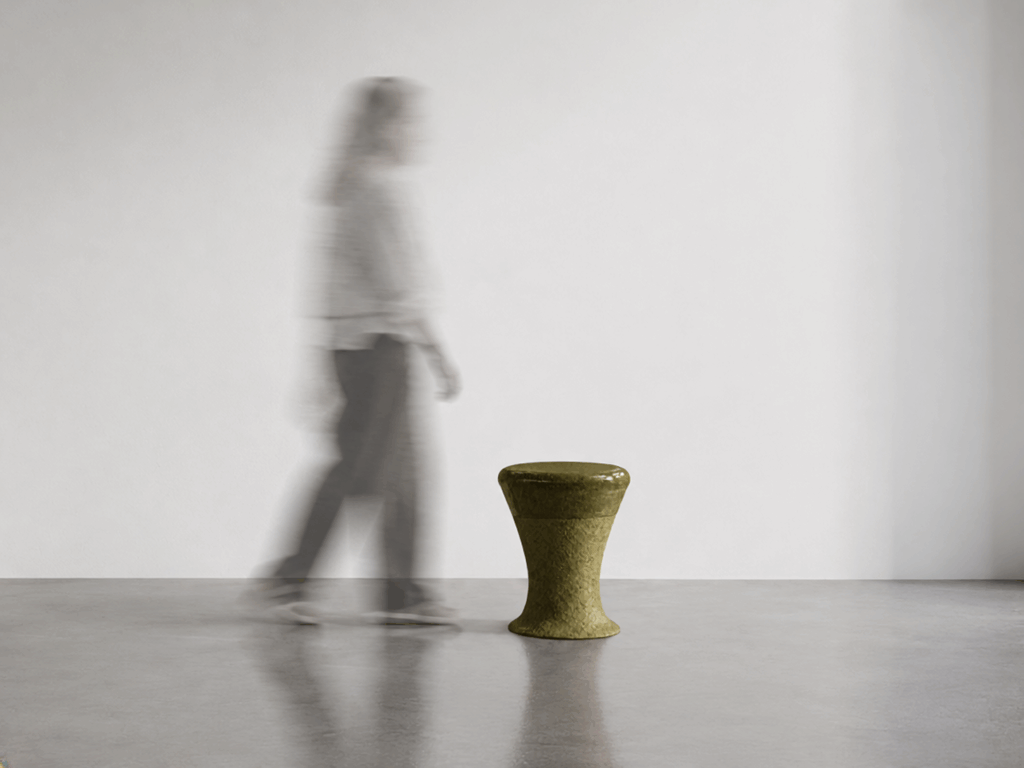
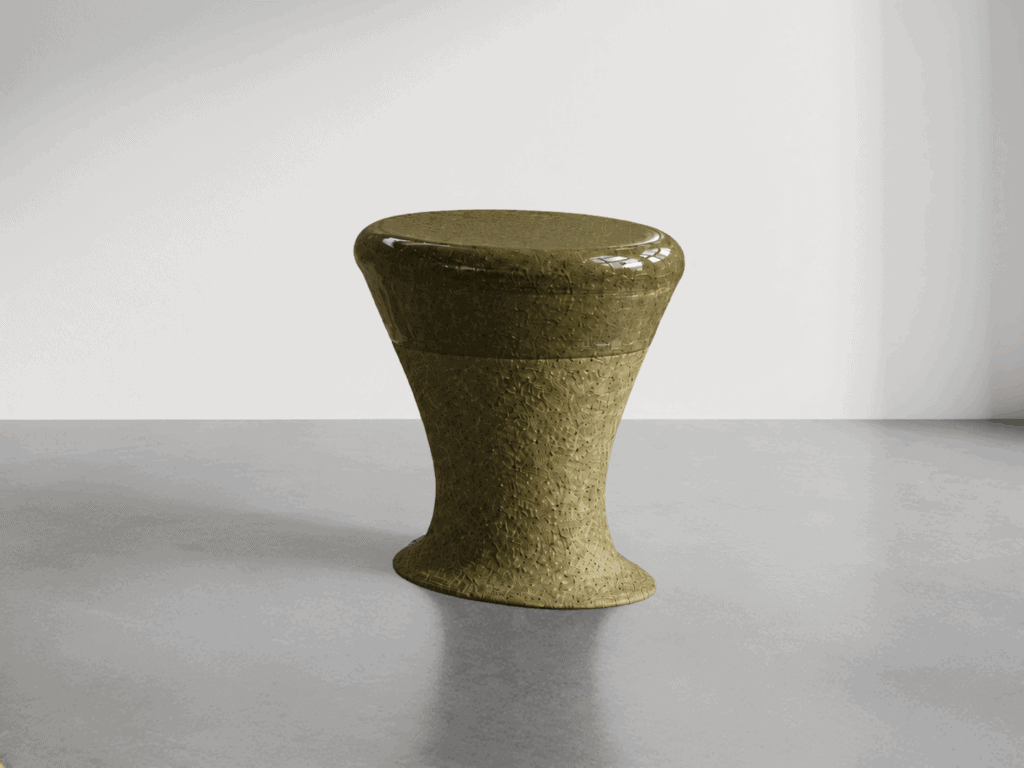
After graduating, Hertman spent evenings in wood workshops, ceramics studios and metal ateliers. He explored techniques and learned through making what each material could offer. International architecture and interior projects later came to occupy much of his attention.
Today, he continues to work on projects in Curaçao, Italy and Portugal. Alongside these, working directly on objects has gained more space again. Spontaneous sketches provide the starting point; he translates them into furniture with experienced craftspeople. The workshop becomes a place where a drawing can be tested and allowed to change.
A Cabinet That Takes in the Room
With the Liquid Drop Cabinet, the surroundings become part of the design. Its mirrored surface takes in light, space and the people standing before it. Every movement changes the furniture’s appearance.
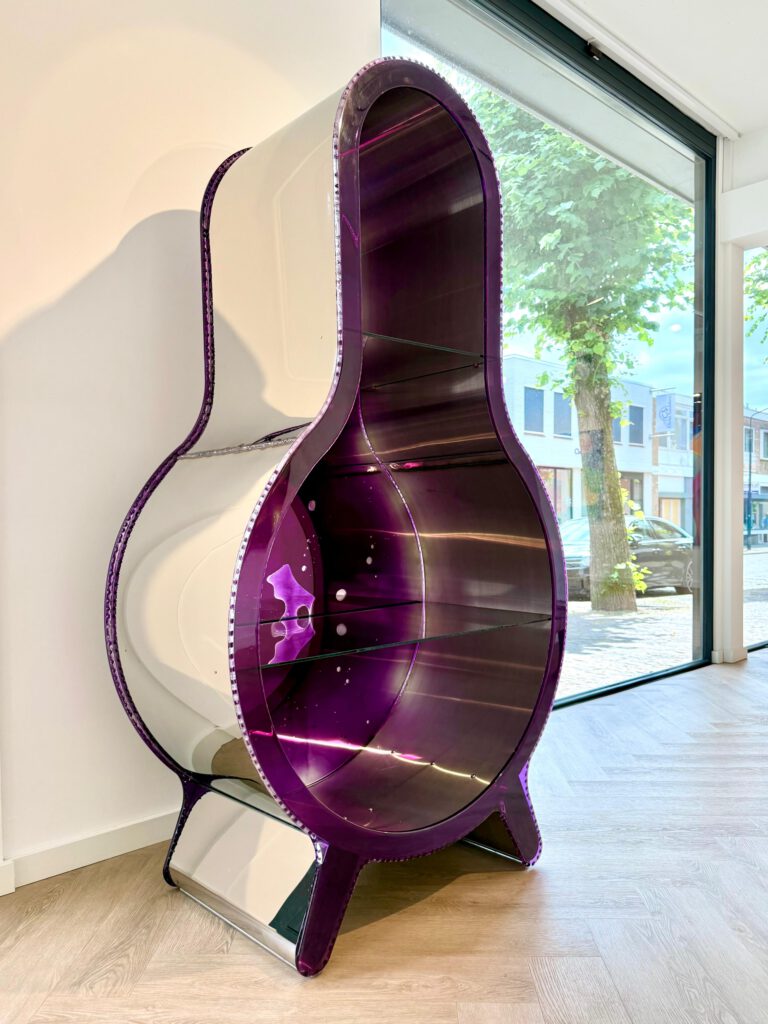
The stainless steel is hammered and shaped by hand, with visible copper welds tracing its construction. Hertman mixes the pigments himself and applies them intuitively to the mirrored surface. Droplet-like forms heighten the impression of a material suspended between liquid and solid.
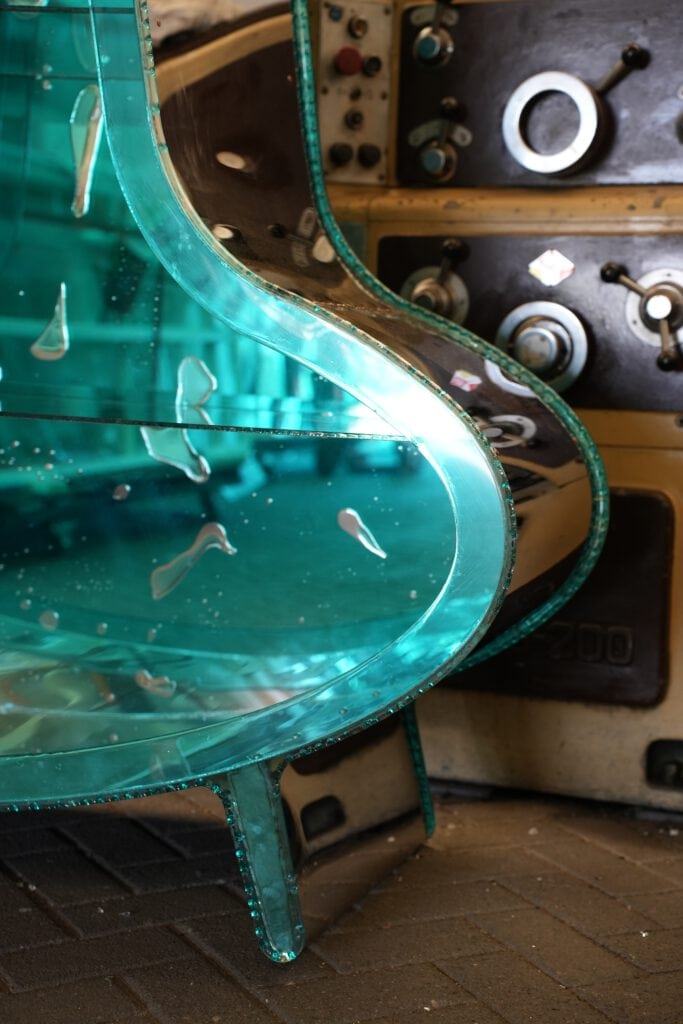
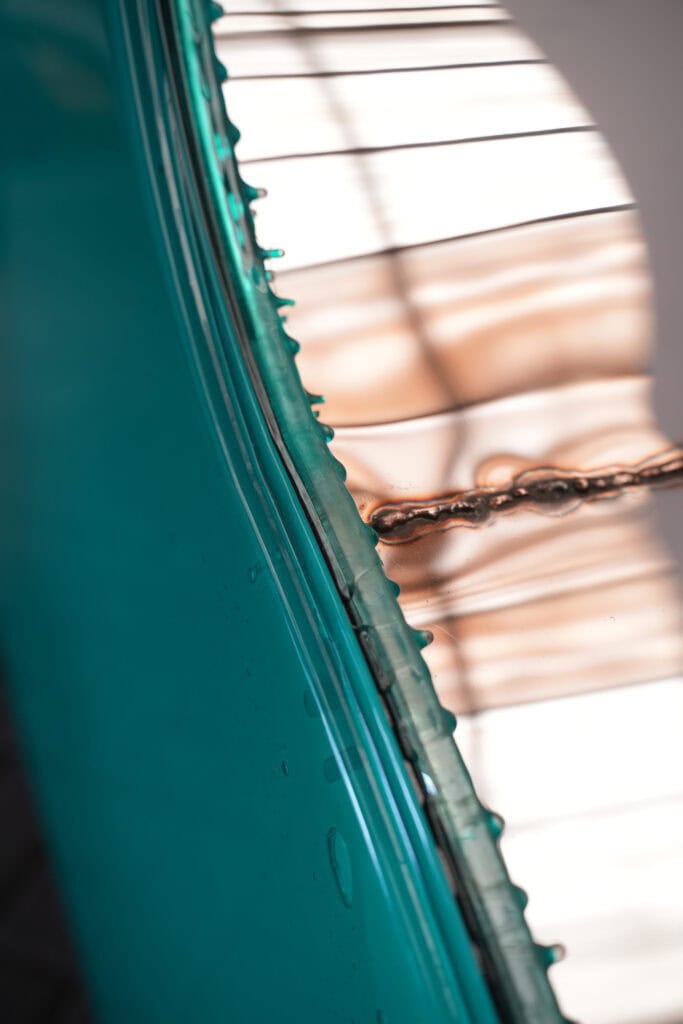
The curved silhouette also has a specific design lineage. Hertman references the organic forms of French Art Deco designer André Groult and Marc Newson’s 1987 “Pod of Drawers”. This exploration results in a cabinet whose full effect emerges through its relationship with its setting. The Liquid Drop Cabinet is limited to ten editions, plus two artist’s proofs and one prototype.

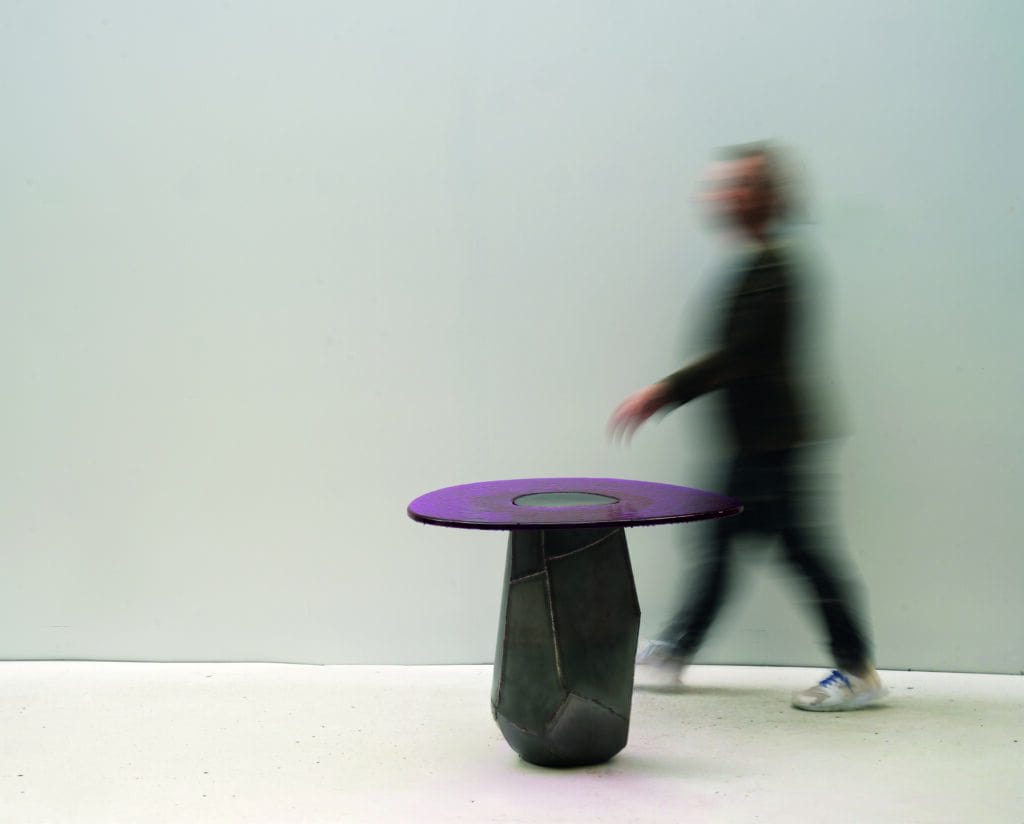
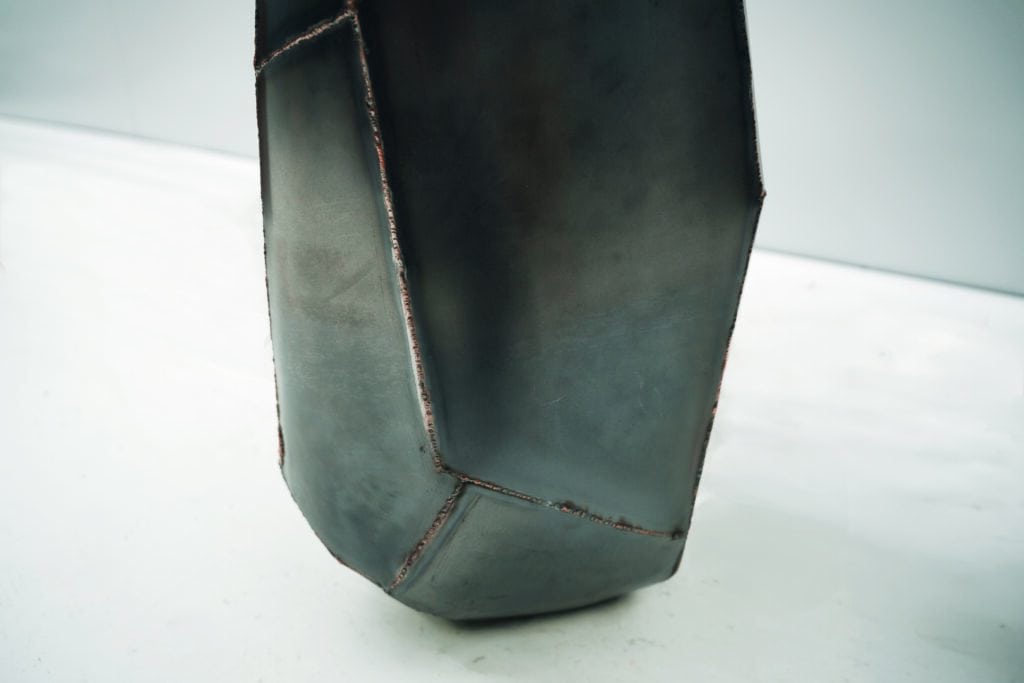
The Liquid Drift tables also play with our perception of materials. In one version, substantial legs made from assembled European oak blocks support a thin, undulating top. Other versions stand on hollow chamotte clay legs fired at high temperatures. The tabletop recalls the surface of water, while its supports give it a visible sense of weight and stability.
Making with Room for Discovery
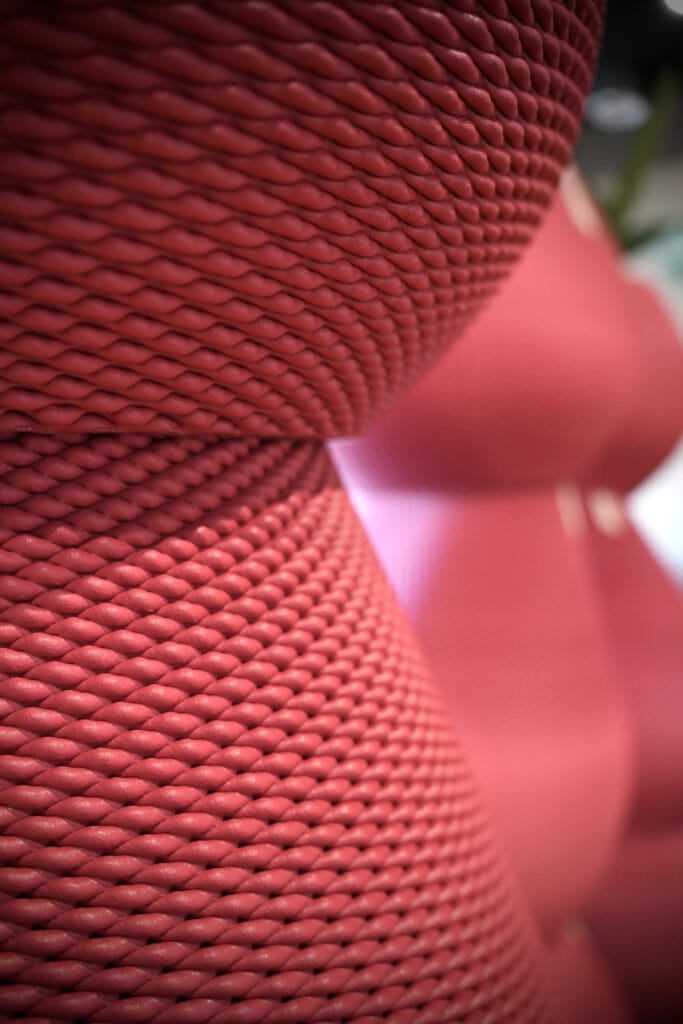
The Balancing Pebbles Totem reveals how broadly Hertman understands the act of making. For this approximately 2.25-metre-high work, he uses large robotic arms to produce pebble-shaped elements with a woven surface. Stacked on top of one another, they recall balancing stones, while their texture evokes traditionally woven baskets.
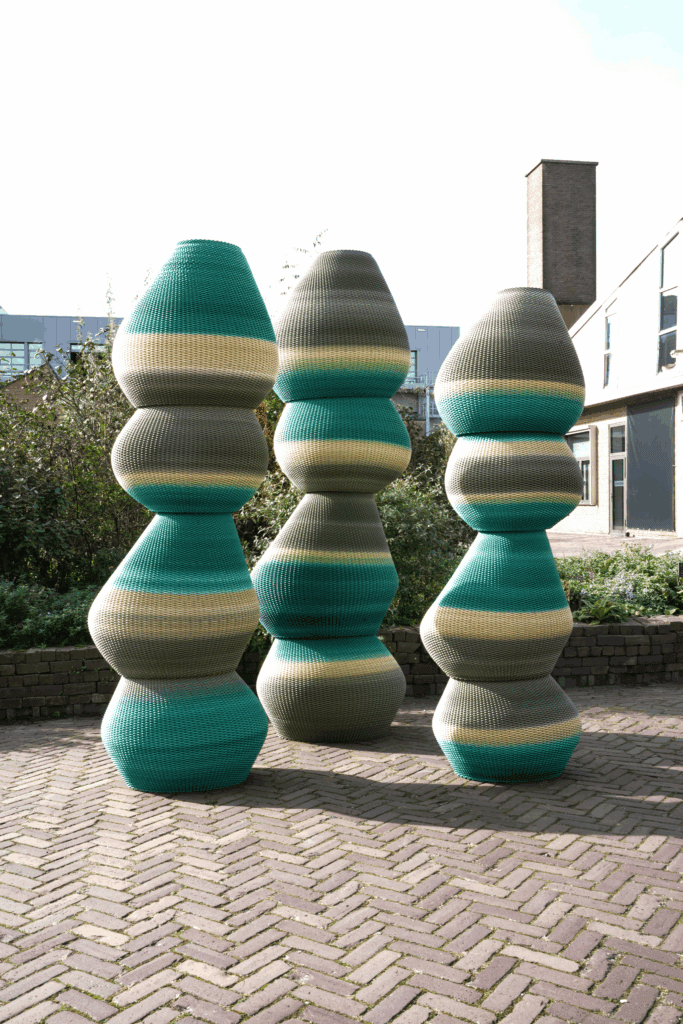
Here, technology expands the workshop’s repertoire. Hertman introduces colour into the process by feel, combining machine production with the intuitive approach that also shapes his furniture.
His objects are intended to be used for many years and passed on. Their surfaces carry this idea in different ways: through a visible weld, a scratch in clay or a reflection that changes with the room. It is often where the material has been worked most visibly that the eye lingers longest.