
A sofa without a front or back
What happens when furniture stops telling us how a room should be used? With Gibson, Cattelan Italia and designer Sergio Bicego turn the sofa into an open system – soft, sculptural and ready to change direction whenever life does.
There was a time when a living room seemed to follow a rather precise choreography. Sofa against the wall. Coffee table in front. Television opposite. Everything had its place – and, quite literally, its direction.
Contemporary life has become less predictable. We work where we relax, meet where we live, retreat where moments earlier we were socialising. Spaces have become fluid, and perhaps the objects within them need to follow.
With Gibson, designer Sergio Bicego has created a modular seating system for Cattelan Italia that takes this idea surprisingly far. Rather than designing another sofa that occupies a predefined position in a room, he has conceived something closer to a landscape.
A landscape that can change.
No front. No back.
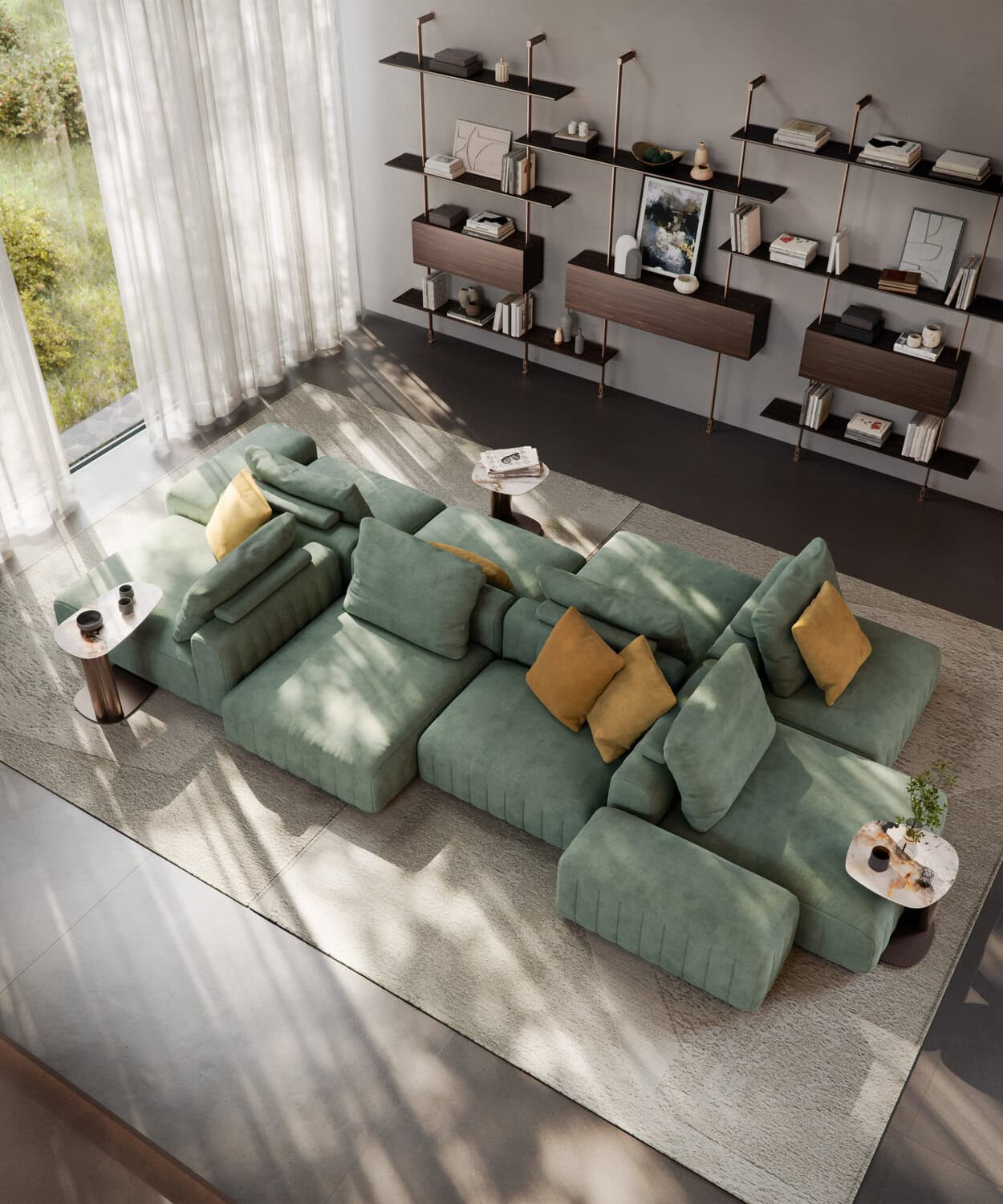
Gibson is composed of independent upholstered volumes: seats, backrests and armrests can be combined and repositioned according to the architecture surrounding them. Even their traditional functions are no longer fixed. An armrest can become a backrest; additional modules can extend a seat into a chaise longue.
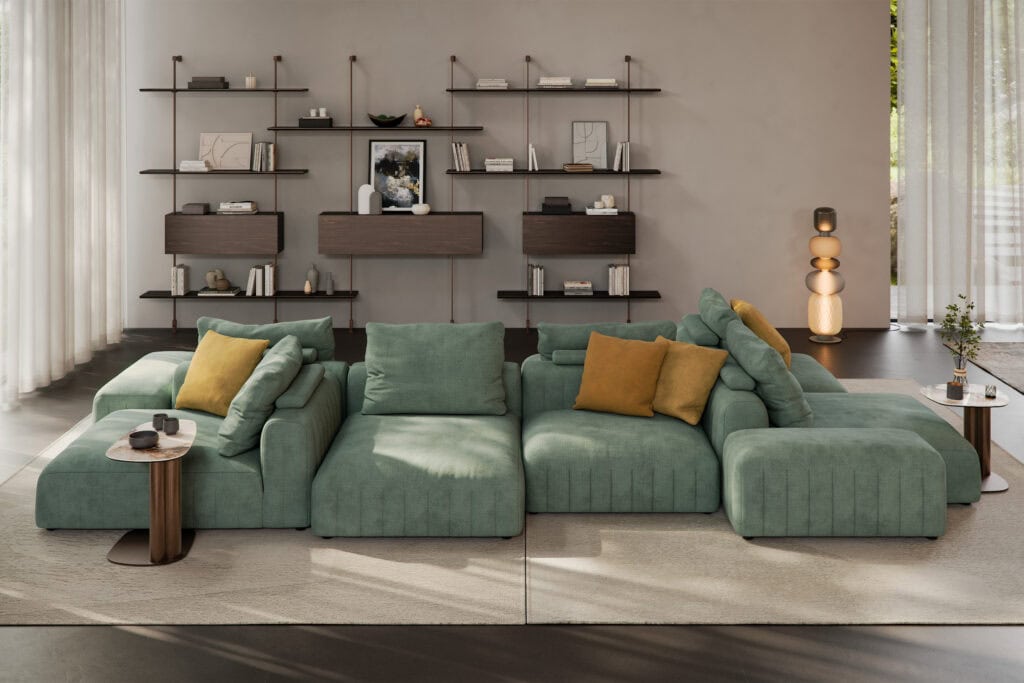
Perhaps its most interesting gesture, however, is the disappearance of the distinction between front and back.
Designed as a double-sided sofa, Gibson can be approached and used from different directions. Instead of facing one predetermined focal point, it begins to connect different areas of a room. Suddenly, a sofa is no longer necessarily a boundary. It can become an intersection.
That small shift says quite a lot about contemporary interiors.
Architecture is increasingly expected to accommodate different states within the same space: conversation and solitude, concentration and relaxation, movement and stillness. Gibson responds not by adding complexity, but by leaving possibilities open.
Furniture becomes architecture
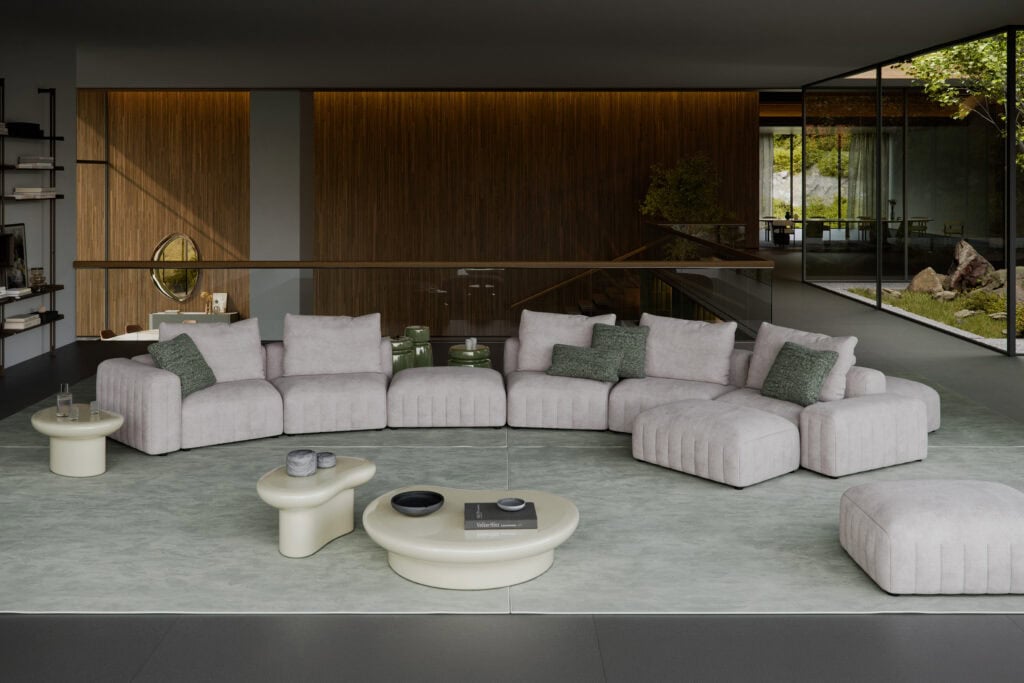
This becomes particularly apparent beyond the private home. Cattelan Italia envisages Gibson in hotel lounges and lobbies, retail environments, hybrid workplaces and shared spaces – places where furniture often has to perform several functions during the course of a day.
Here, the modules can create islands within larger interiors without requiring permanent walls or rigid partitions. They can be combined, rotated and rearranged to encourage conversation, create quieter zones or establish more structured waiting and reception areas.
It is an intriguing point at which furniture design begins to merge with interior architecture.
Rather than merely furnishing space, Gibson helps compose it.
A composition in rhythm
The musical reference is intentional. The name Gibson draws inspiration from music production and its vocabulary of rhythm, modulation and harmony. Individual elements behave almost like notes within a score: their relationship can change while the composition retains its identity.
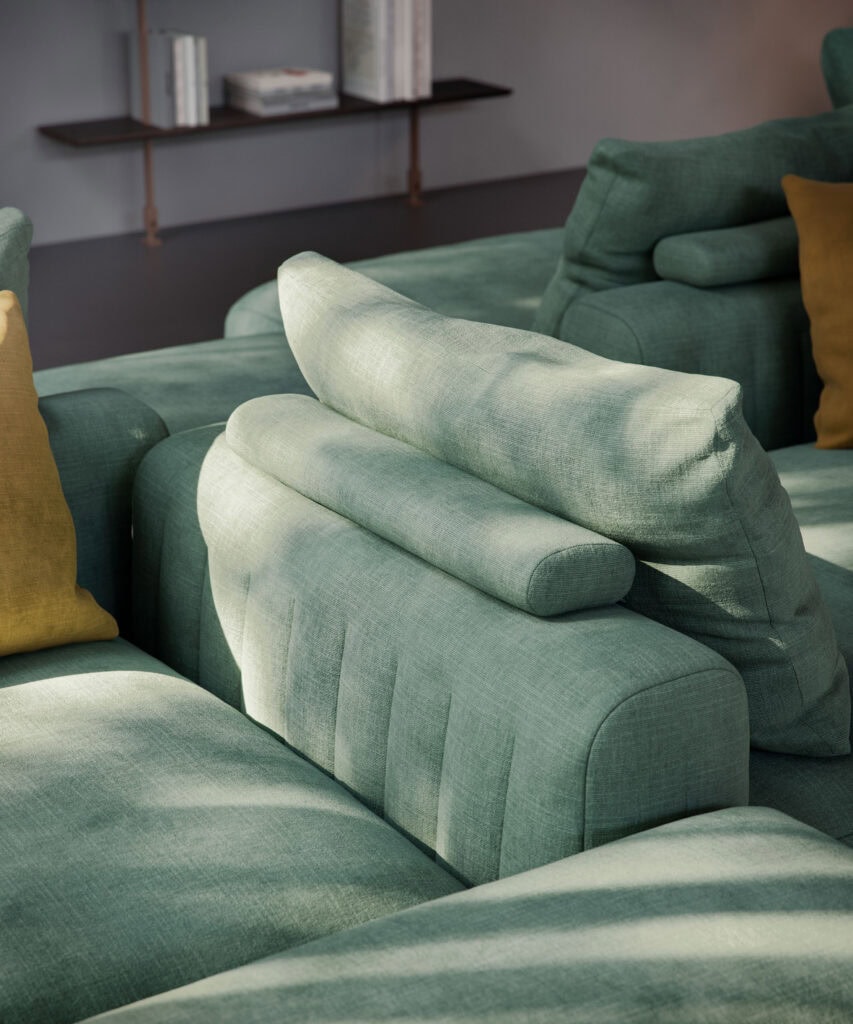
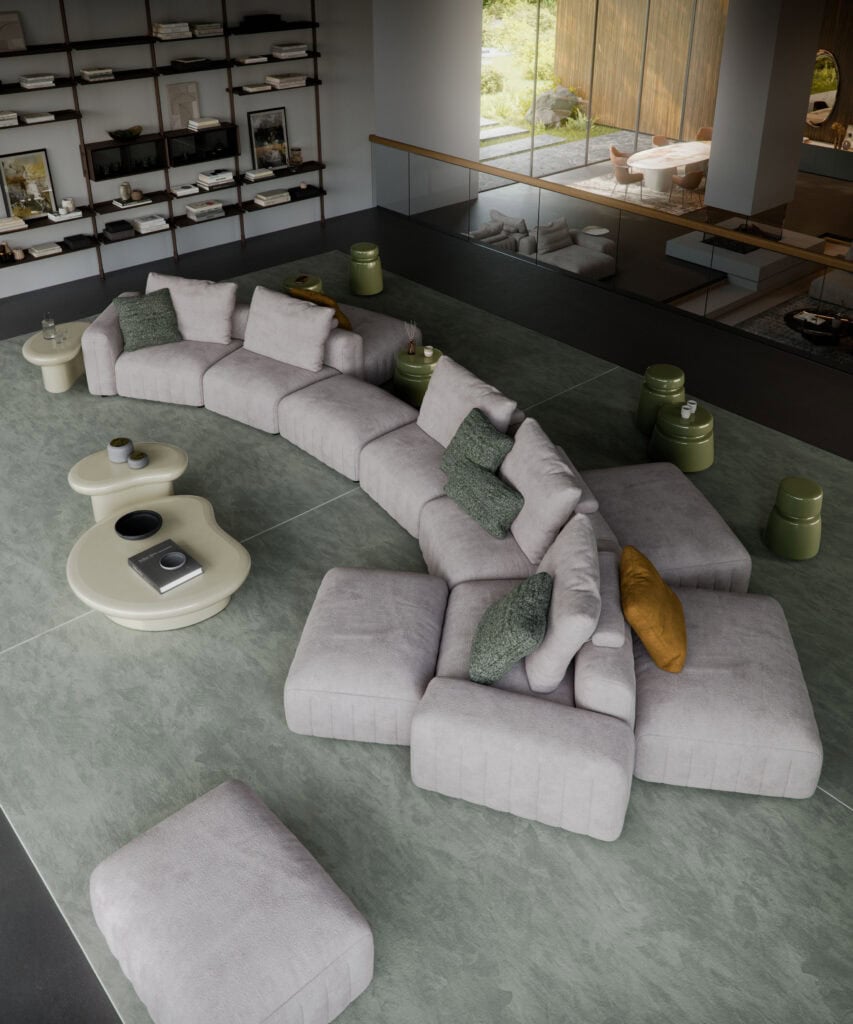
Visually, Bicego balances this conceptual flexibility with softness.
Generously proportioned seats are shaped by rounded edges, while quilted detailing emphasises the volume and softness of the polyurethane padding. Loose cushions can be selected from Cattelan Italia’s fabric collection, either creating deliberate colour contrasts or subtle ton-sur-ton variations. A ceramic coffee-table module can also be integrated into the composition, adding another functional layer to the system.
The result feels inviting rather than technical. Gibson may be modular, but it does not look like a piece of furniture waiting to be configured. Its logic disappears into its softness.
Designed for change
Perhaps that is Gibson’s most contemporary quality.
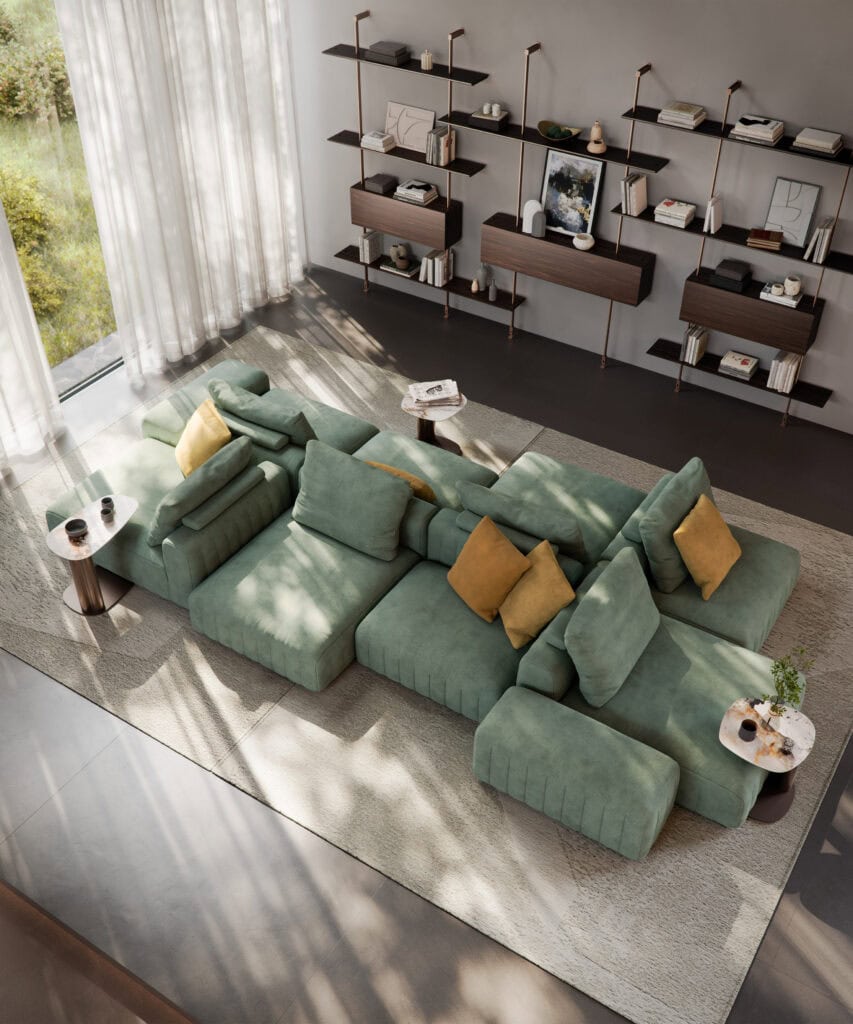
Gibson has been conceived with this evolution in mind. Its individual elements can be repositioned independently, allowing the system to adapt as rooms, functions and habits change over time. Cattelan Italia describes the result through another musical metaphor: an ongoing dialogue between solids and voids, presence and lightness, sound and silence.
And perhaps this is where a sofa becomes more than a sofa.
It becomes an invitation not to decide everything in advance.