

At House of Santal in New York, contemporary South Asian design explores transformation through materials, inherited craft knowledge and the freedom to give familiar forms a new direction.
An armchair with a textile surface constructed without stitching. A table bringing together pyrite, stone and reflective chrome. A console that gives traditional inlay a new design vocabulary. The objects in Roopantara: Matter in Metamorphosis carry their origins within them. They also reveal how much movement exists within inherited knowledge.
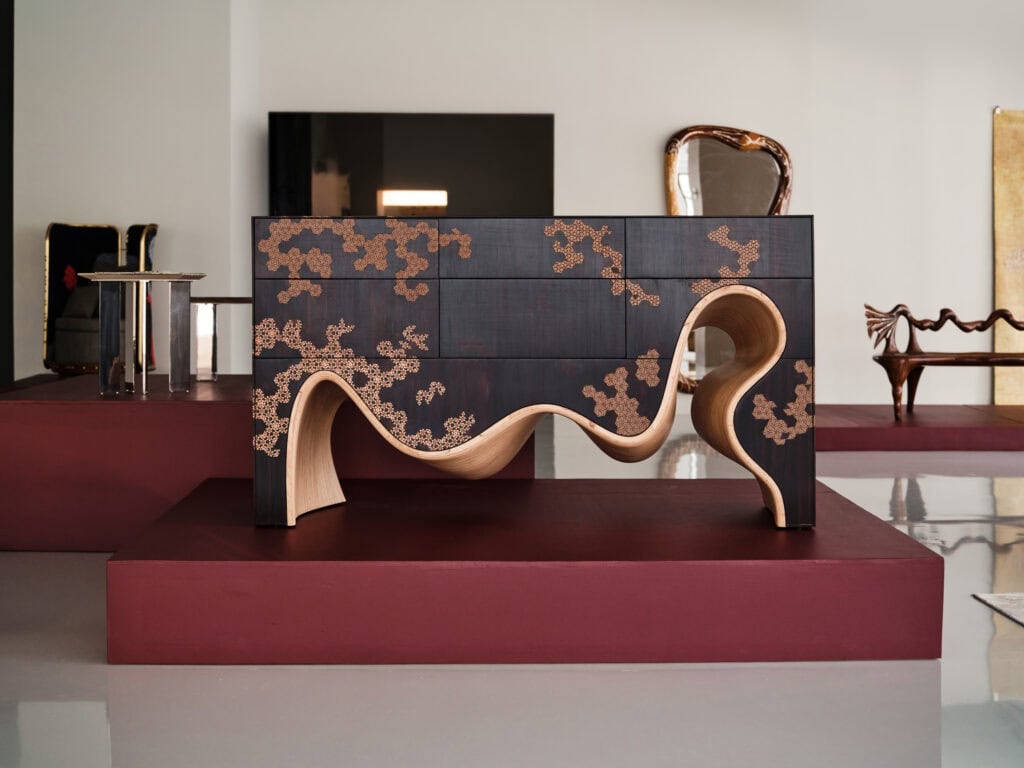
For its second exhibition, New York gallery House of Santal turns its attention to the creative moment of change. Derived from Sanskrit, Roopantara refers to a change of form. Here, that idea becomes tangible through furniture, screens, mirrors and rugs that develop South Asian craft traditions from a contemporary perspective.
What the Hands Know
Craft has a memory. It resides in practised movements, a sensitivity to surfaces and an understanding of how a material can be worked. Each new piece can draw on that knowledge and take it in another direction.
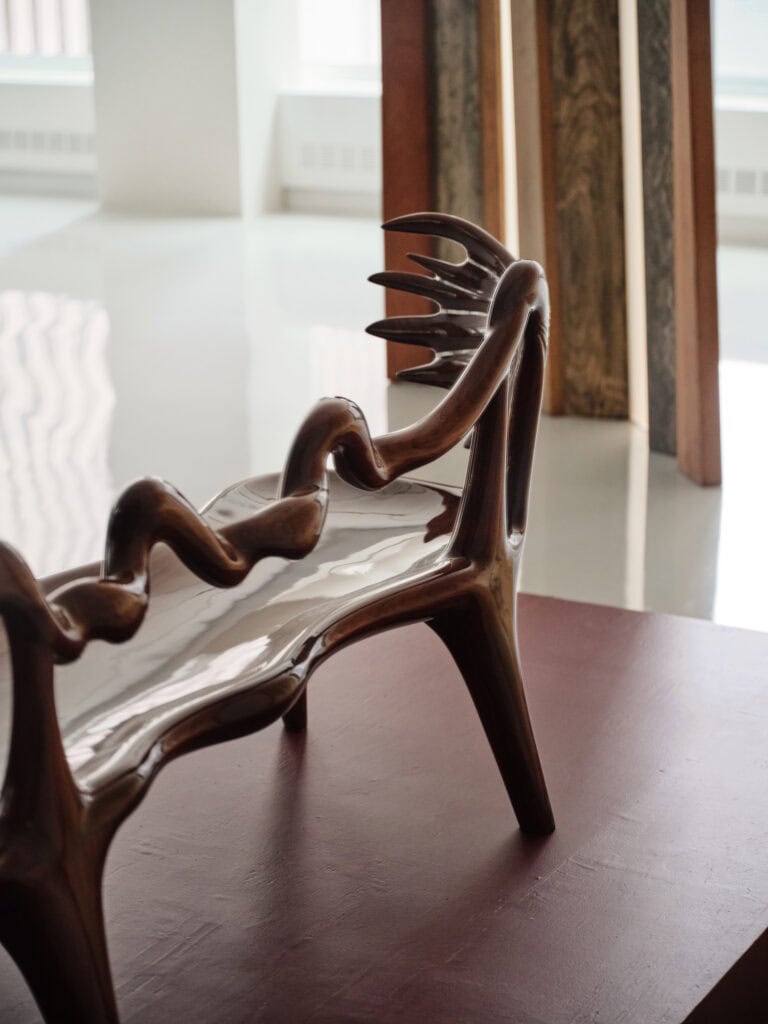
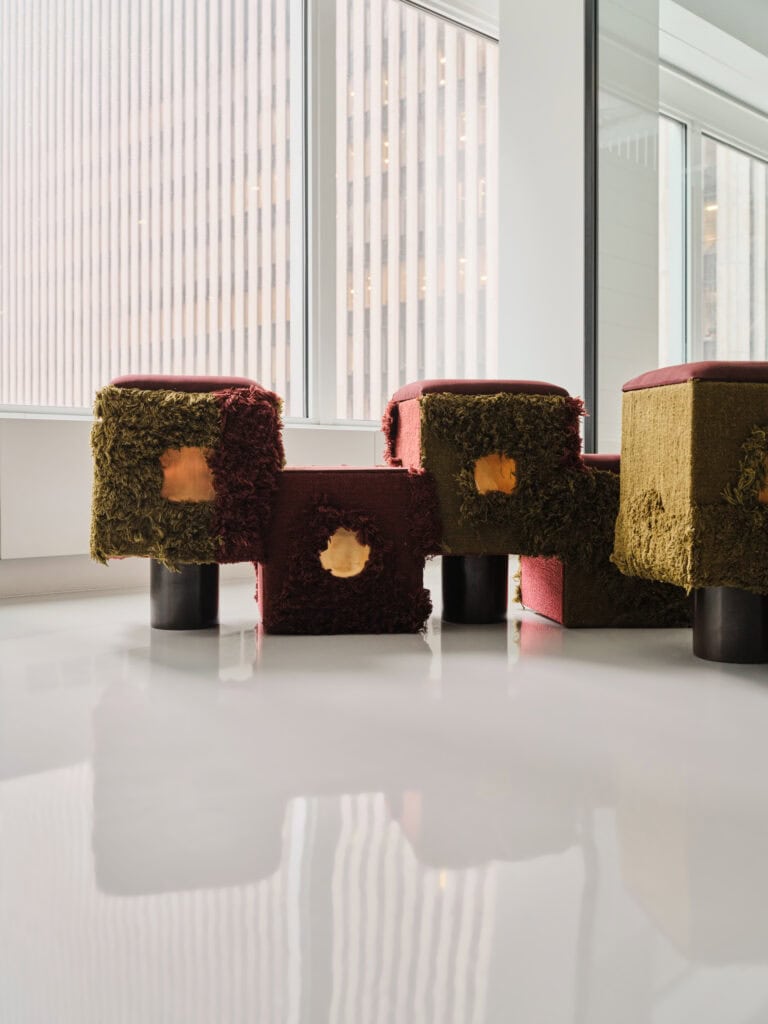
This is where Raksha Sanikam begins. The designer and curator founded House of Santal in New York as a gallery and digital platform for contemporary South Asian design. With Roopantara, she focuses on the process of making: experimentation, reinterpretation and the decisions through which an inherited technique changes.
The exhibition raises a simple, productive question: how does a tradition stay alive? The works suggest that its future also depends on the freedom designers have to work with it.
Ornament in Motion
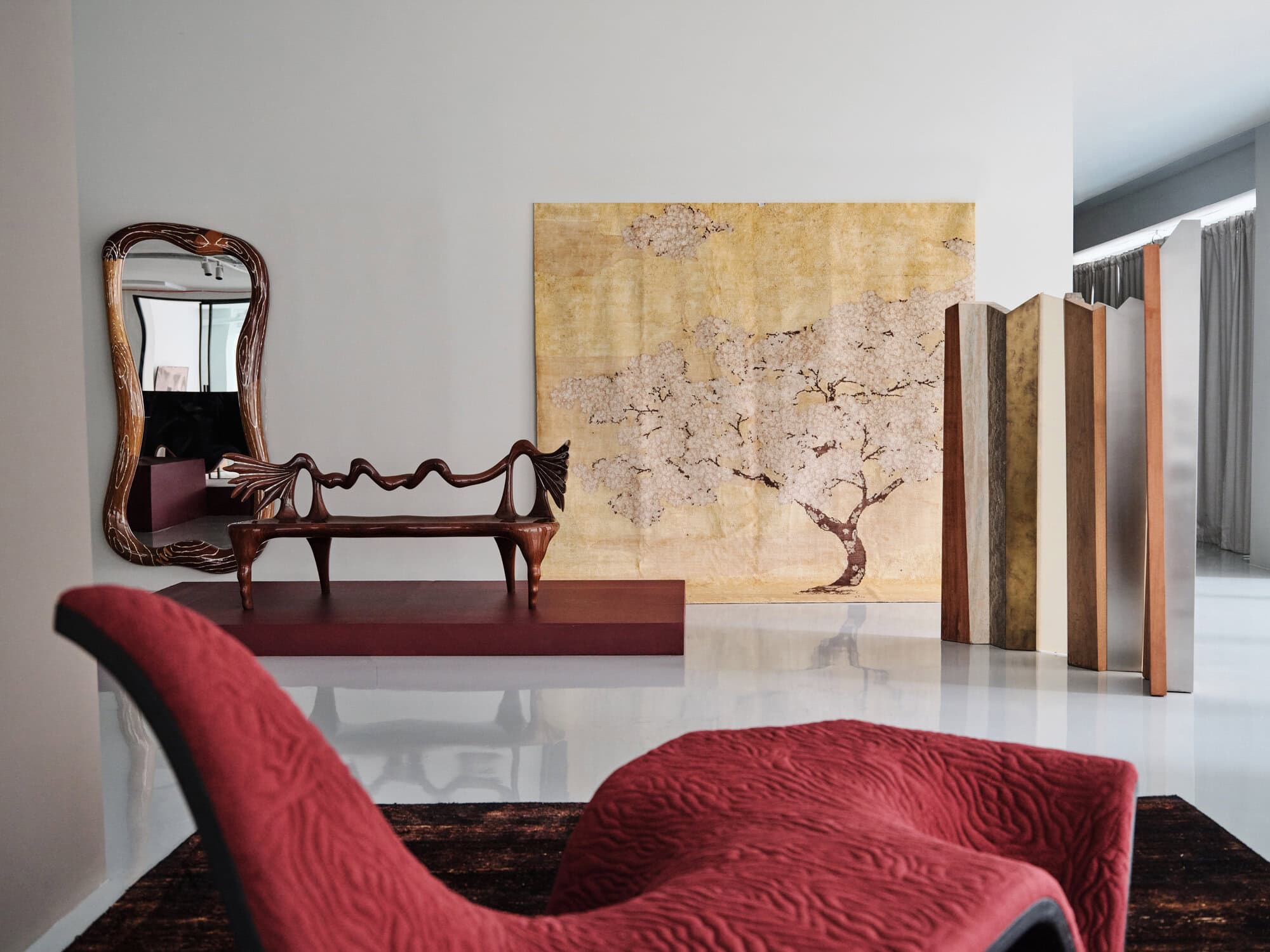
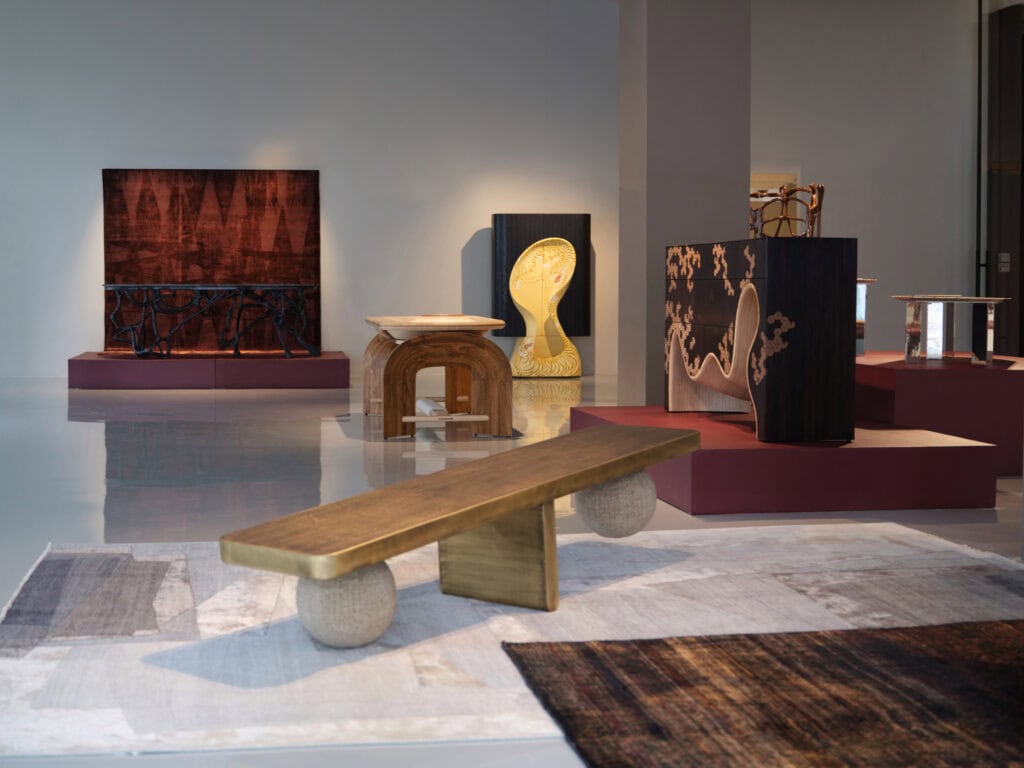
For Saira Yousaf and Shahbaz Lahore, based in Lahore, historical ornament becomes spatial and tactile. Pieces such as the Mountain Screen, Ribbon Console and Undulating Mirror translate decorative vocabularies into contemporary objects. Ornament gains volume and becomes part of a piece’s structure.
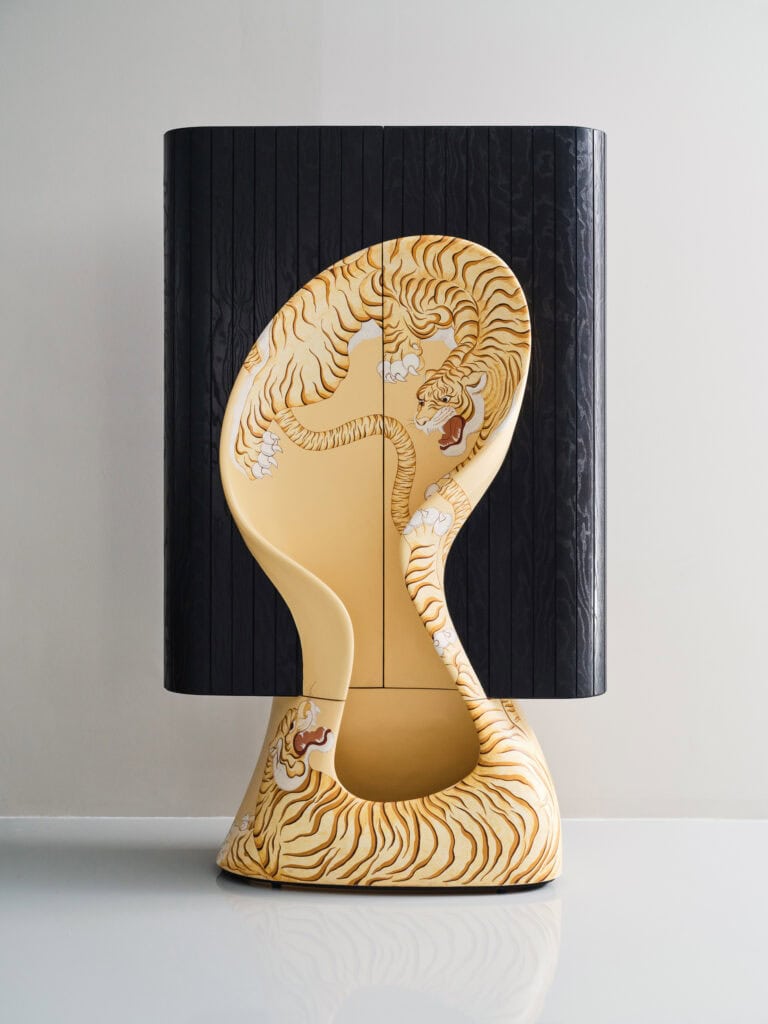
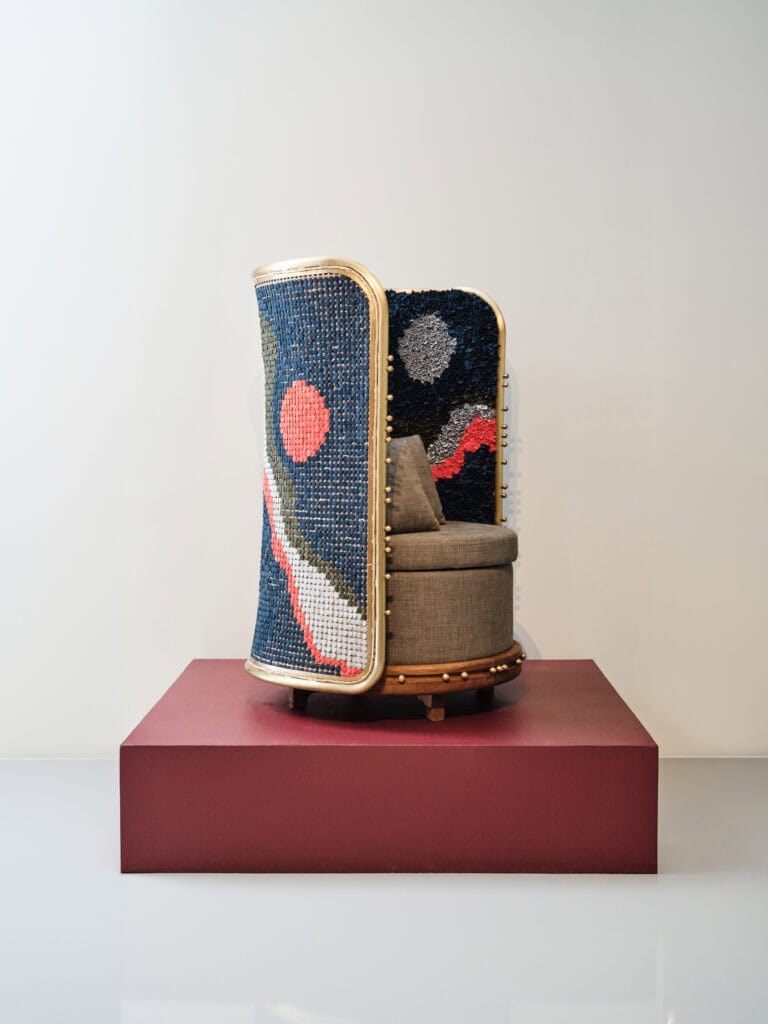
Veeram Shah of Ahmedabad takes a different approach. His Button Masala Armchair uses the Button Masala technique developed by Anuj Sharma. It allows textiles to be joined without stitching, creating adaptable surfaces. Here, craft resides in the principle of construction and in the possibility of changing a form further.
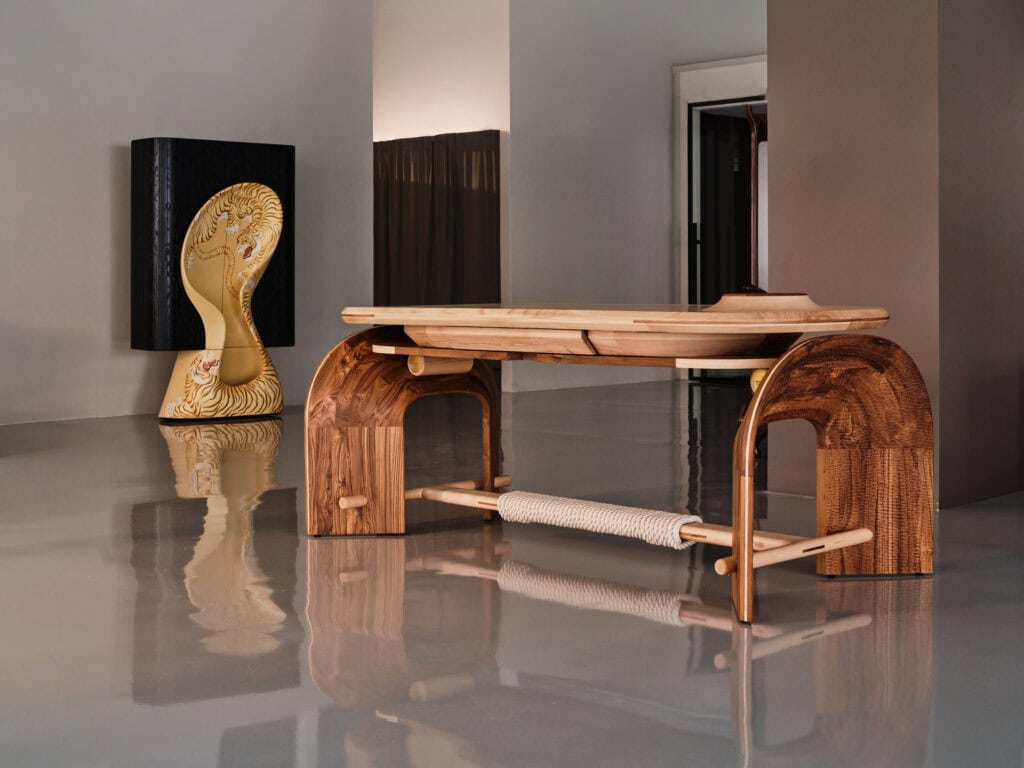
The KODO Table by Aaj and Khushi Patel of Gandhinagar also speaks to the act of becoming. Material and the maker’s hand shape the piece together, making the design process an essential part of what the object expresses.
The Possibilities of Matter
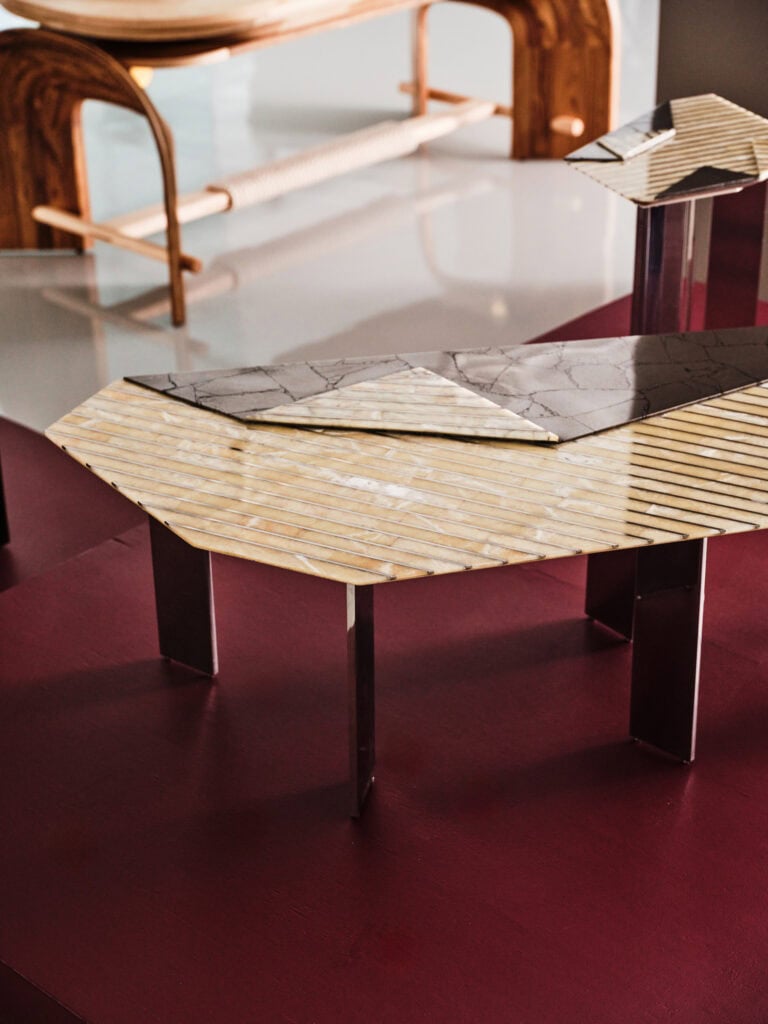
The exhibition develops these ideas across different materials and scales. Hyderabad-based Keerthi Tummala combines pyrite inlay with stone and reflective chrome in the Rock Pyrite Dining Table and Ori Coffee Table. Mineral surfaces enter into a dialogue with metallic sheen.

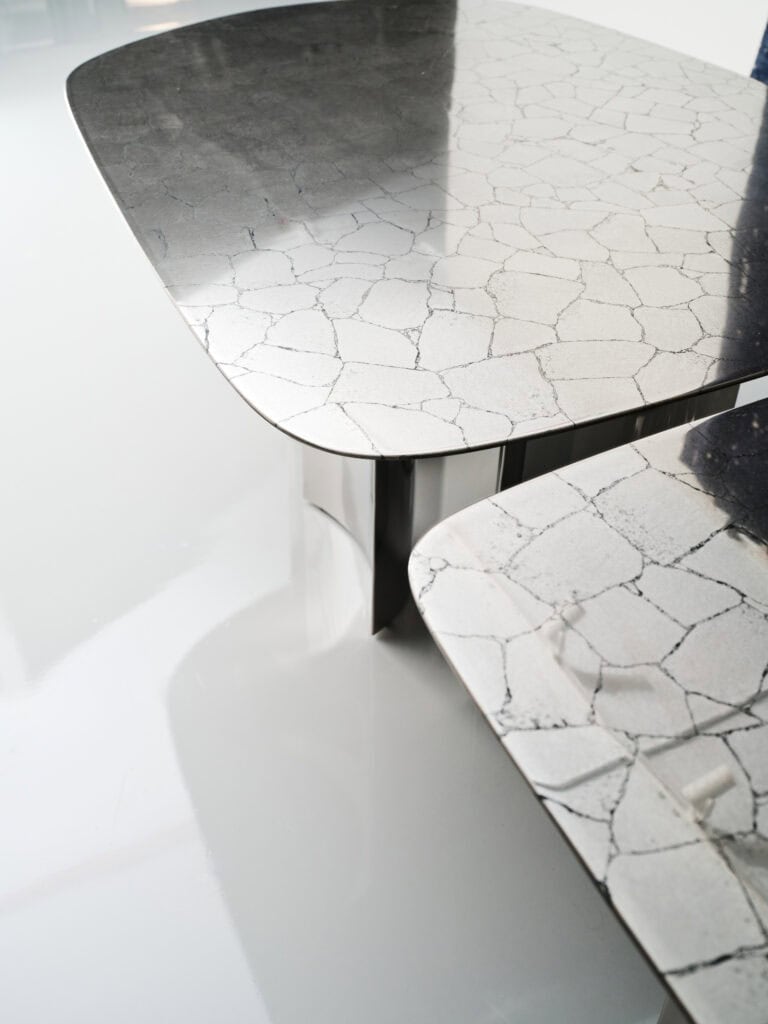
In Urban Gravity and Lehar, Abin Chaudhuri of Kolkata explores how familiar structures can express tension and movement. Nithika and Annanya Agarwal examine the ways material changes over time in Sylvan Echo and the Trace Console. Hand-knotted wool and silk rugs by Rug & Kilim broaden the perspective through motifs whose reinterpretation unfolds across a textile surface.
Together, the works offer a richly varied view of South Asian design. They share an attentiveness to what already exists: techniques, forms and material knowledge. Their individual character emerges through the ways they take those resources forward.
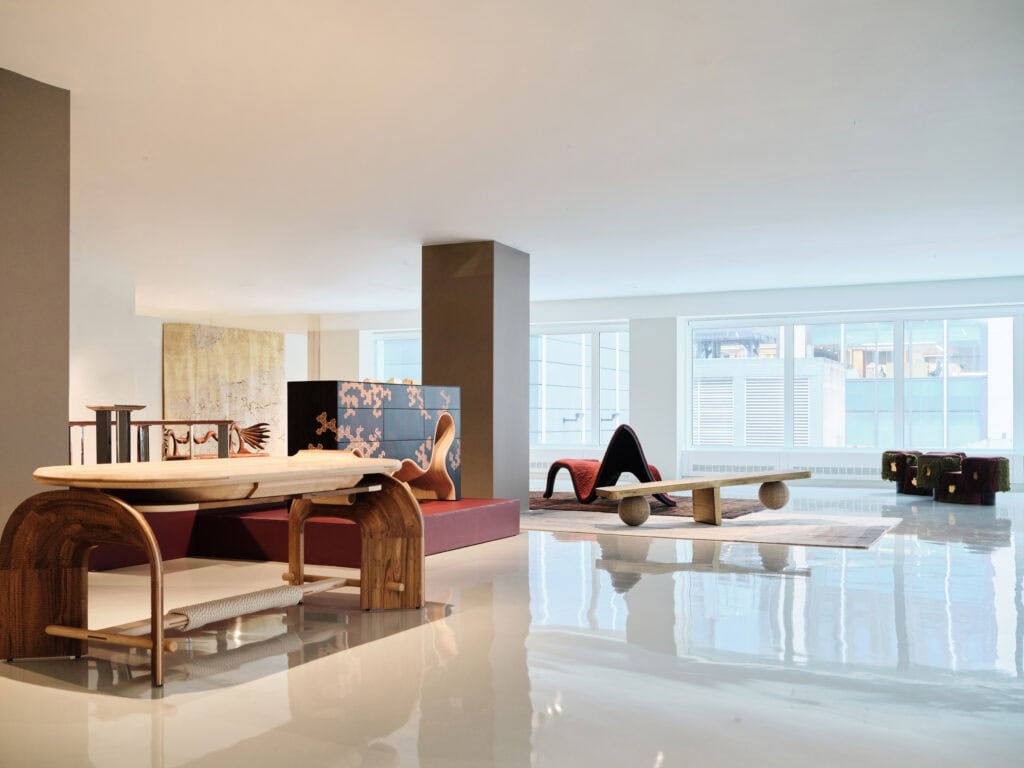
This is the appeal of Roopantara. The exhibition makes transformation legible through specific objects. A connection is reconsidered, an ornament becomes spatial, a material finds a new combination. Tradition takes its next form through the hands working with it today.
Roopantara: Matter in Metamorphosis, House of Santal, New York. September 30–December 15, 2026. Further information: The gallery presents the exhibition as the second edition of its programme.