



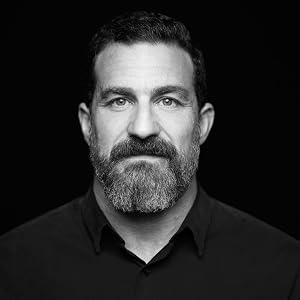
How much influence do we actually have over our energy, sleep, focus and wellbeing? In his new book Protocols, neuroscientist Andrew Huberman attempts to provide an answer – turning scientific insights into practical tools for everyday life.
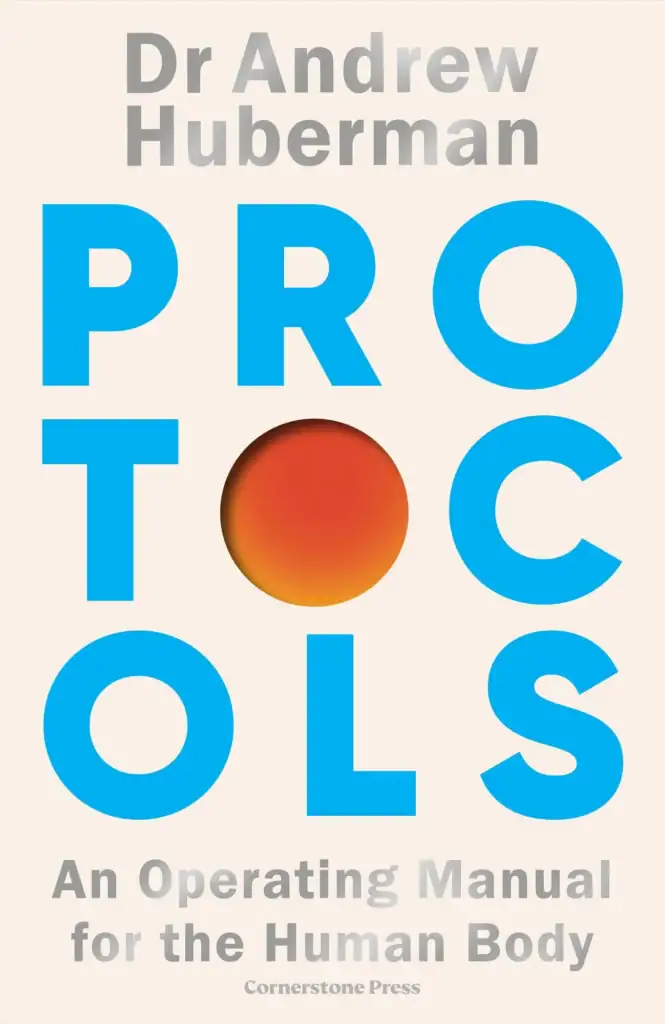
Tomorrow, September 15, 2026, one of those rare books that already has a considerable community before publication will be released: Protocols: An Operating Manual for the Human Body by Andrew Huberman. The neuroscientist and professor at Stanford School of Medicine has turned science into a global media phenomenon with his Huberman Lab podcast. Now, he brings together many of the ideas he has explored over the years in one book.
From knowing to doing
The basic principle behind Protocols is surprisingly simple: knowledge about the human body is only truly useful when we can do something with it.
Huberman therefore distinguishes between foundational behaviours that influence our physical and mental state over time and targeted tools designed for particular situations or goals. The book explores sleep and recovery, exercise, stress regulation, nutrition and light, as well as focus, motivation, learning and personal growth.
At the centre of it all is the nervous system. Huberman’s underlying idea is that our physical and mental states are far less static than we often assume. Light, movement, breathing, sleep, nutrition and different forms of recovery influence our physiology – and therefore how focused, resilient, energetic or balanced we feel.
Health as a daily practice
This is precisely where the appeal of Protocols lies. Rather than treating health primarily as something we address when things stop working, the book approaches it as a daily practice.
Many of its fundamental ideas sound almost surprisingly ordinary: getting daylight after waking, sleeping sufficiently, exercising regularly, recovering deliberately and using specific techniques to regulate stress. Huberman’s strength lies less in discovering entirely new human needs than in explaining the science behind them and translating that science into concrete routines.
This makes Protocols less a conventional health guide than a toolbox. Not everyone needs to adopt every protocol. Instead, the individual methods are designed to be adapted to different lifestyles, needs and personal goals.
Between self-optimization and self-efficacy
The book becomes particularly interesting when it raises a larger cultural question: how much do we actually want to optimize ourselves?

Huberman`s world can certainly be seen as a reflection of an era in which sleep, exercise, nutrition and even recovery have become measurable and optimizable. Living well can quickly turn into a permanent improvement project.
But Protocols can also be read differently: as an argument for self-efficacy. We cannot control everything that happens in our lives – yet there are a surprising number of small factors influencing our physical and mental state that we can affect.
This may ultimately be the book’s greatest strength. Huberman does not promise to create a new human being. Instead, he attempts to show us how to better understand – and work with – the body and brain we already have.
Perhaps that is a more contemporary definition of wellness: not constantly doing more, but understanding more clearly what actually makes us feel well.