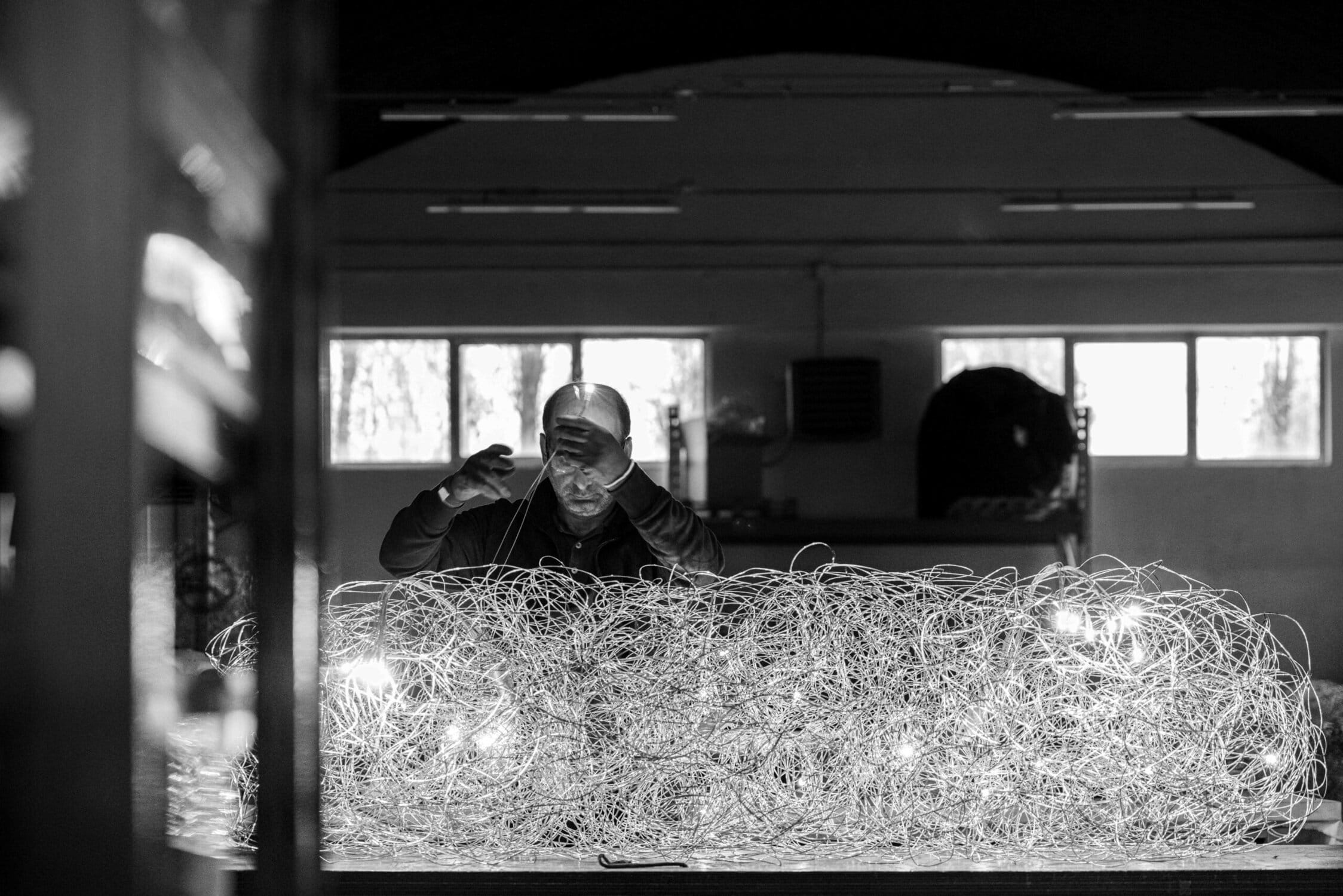
At Catellani & Smith, design does not begin with a flawless surface, but with a gesture. Aluminium is woven, brass is bent and copper is shaped into delicate curls. The resulting lamps derive their character from the dialogue between hand, material and light.
Some materials only begin to speak when they are given time – when their resistance, singularities and possibilities are understood rather than overcome. At Catellani & Smith, this attentiveness forms the basis of the design process. Brass, aluminium, copper and glass are not simply processed. They are explored, shaped and allowed to reveal their individual expressive qualities.
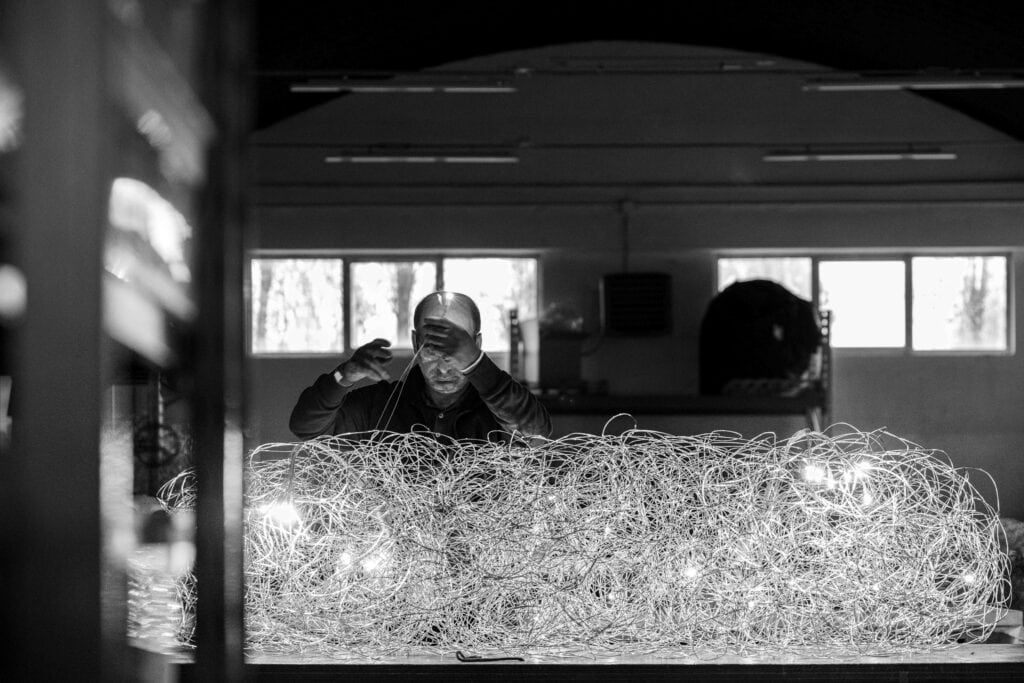
The result is a collection of lighting objects that does not aspire to industrial perfection. Instead, each piece preserves the traces of its creation – and with them the subtle variations that transform a product into something unique.
The thinking hand
Bending, weaving, shaping: every Catellani & Smith lamp is defined by precise gestures, experience and a sensitive understanding of the material. Here, craftsmanship is more than a method of production. It becomes an active part of the creative process.
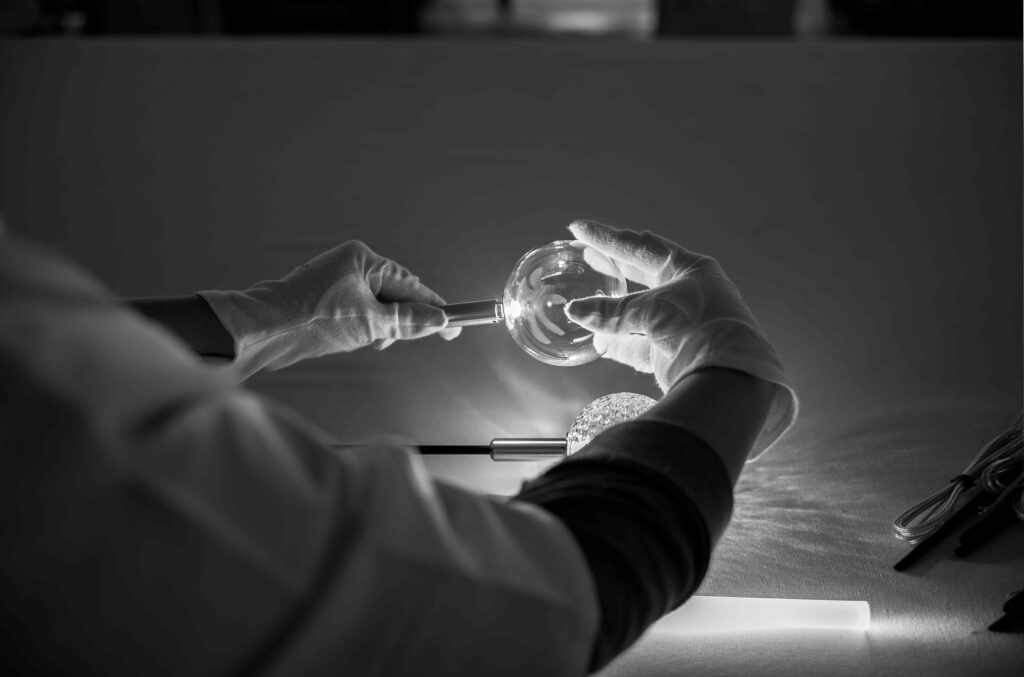
The hand does not merely execute an idea; it allows that idea to evolve. A slight irregularity, an unexpected reflection or an almost imperceptible variation in the surface can fundamentally alter the presence of a design. Small imperfections are therefore not concealed. They speak of the material’s encounter with the human hand and give every lamp an identity of its own.
No two pieces are ever exactly alike. This is precisely where their quality lies: in a form of individuality that requires no artificial staging, but emerges naturally through the act of making.
Material becomes atmosphere
At Catellani & Smith, surfaces are never purely aesthetic. They determine how light is reflected, refracted, diffused or multiplied. Textures, transparencies and deliberately irregular structures influence not only the perception of the object but also the atmosphere of the surrounding space.
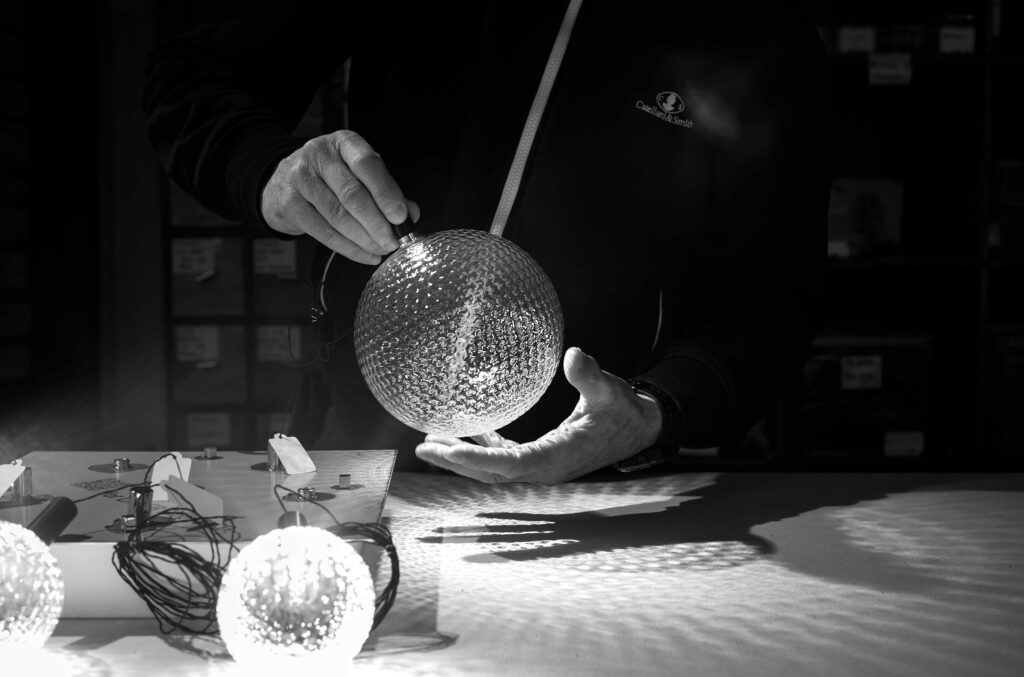
Light reveals the material – and the material, in turn, gives light its form. This interaction allows the objects to appear different according to perspective, time of day and their environment. Reflections shift, depths emerge and contours begin to dissolve. The lamp never feels entirely static, even though its physical form remains unchanged.
Four lights, four gestures
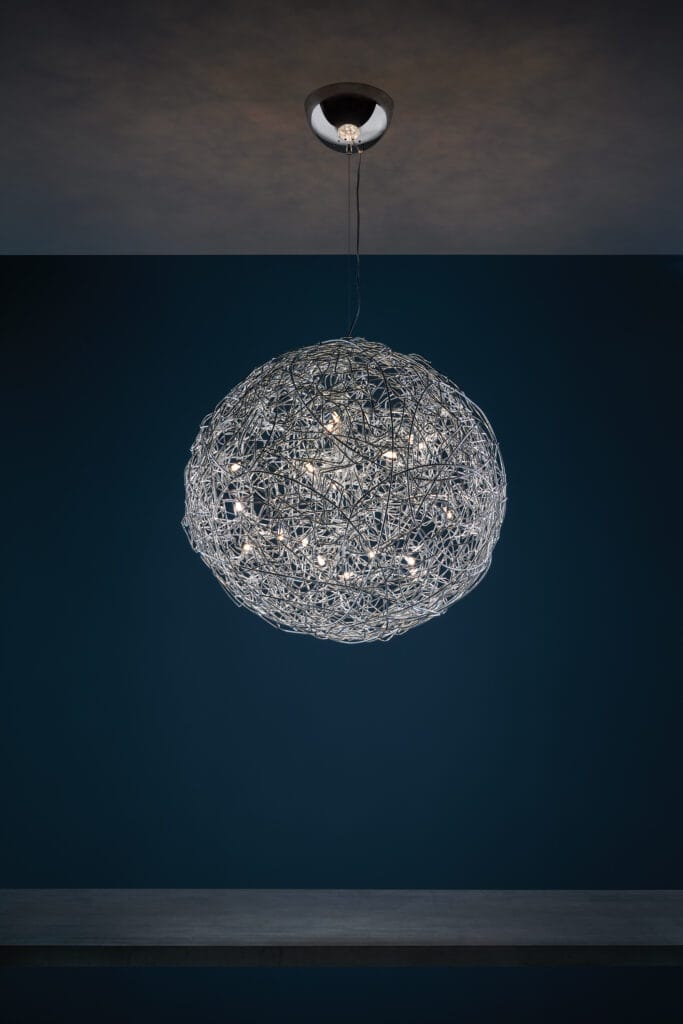
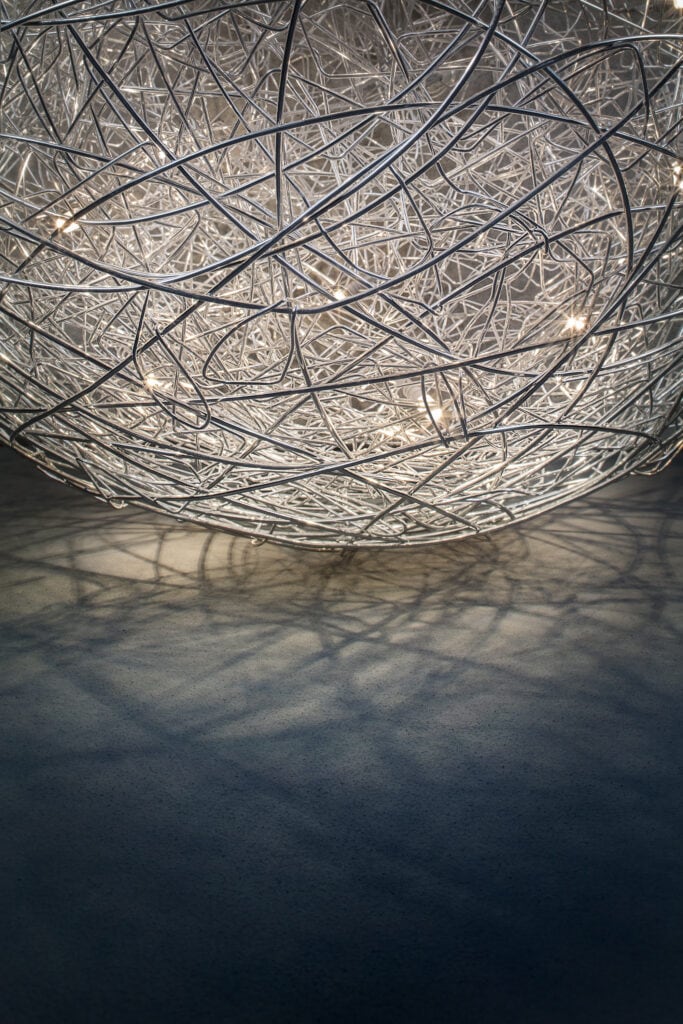
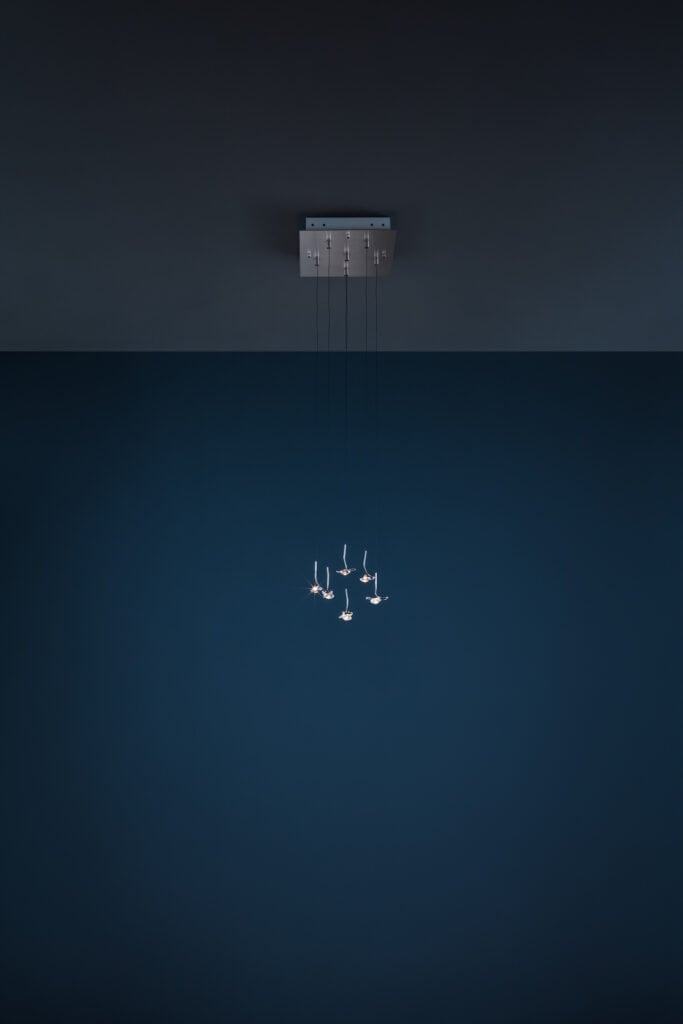
This approach is particularly evident in some of the brand’s best-known designs. The iconic luminous sphere of Fil de Fer is created from aluminium wire, patiently woven by hand. Its open structure seems to hold volume and emptiness at once, while countless points of light transform the metal mesh into a floating constellation.
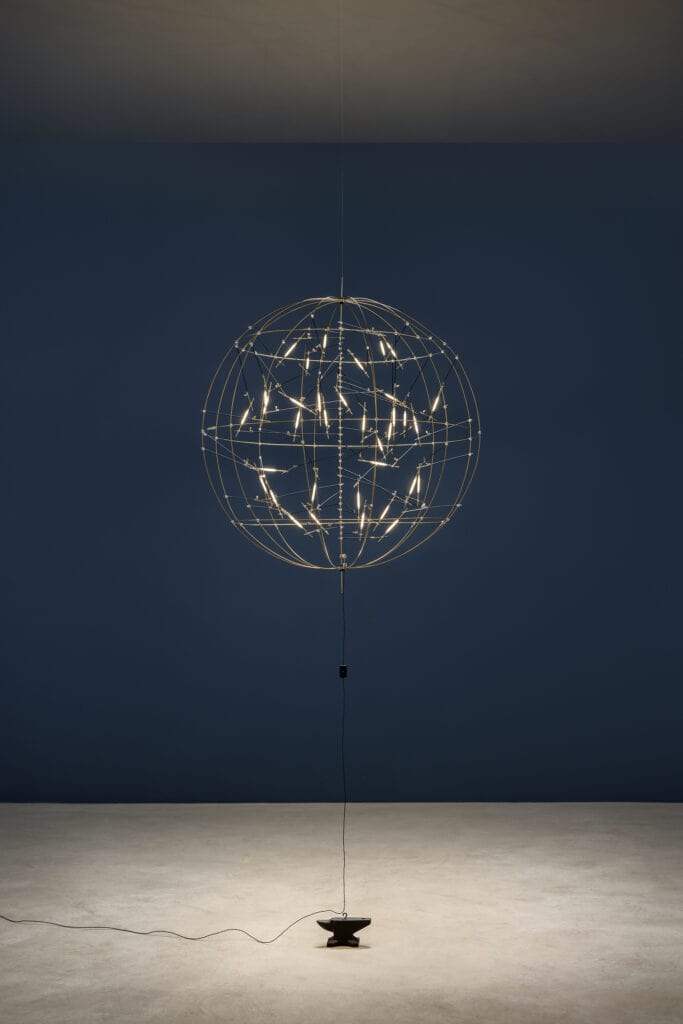
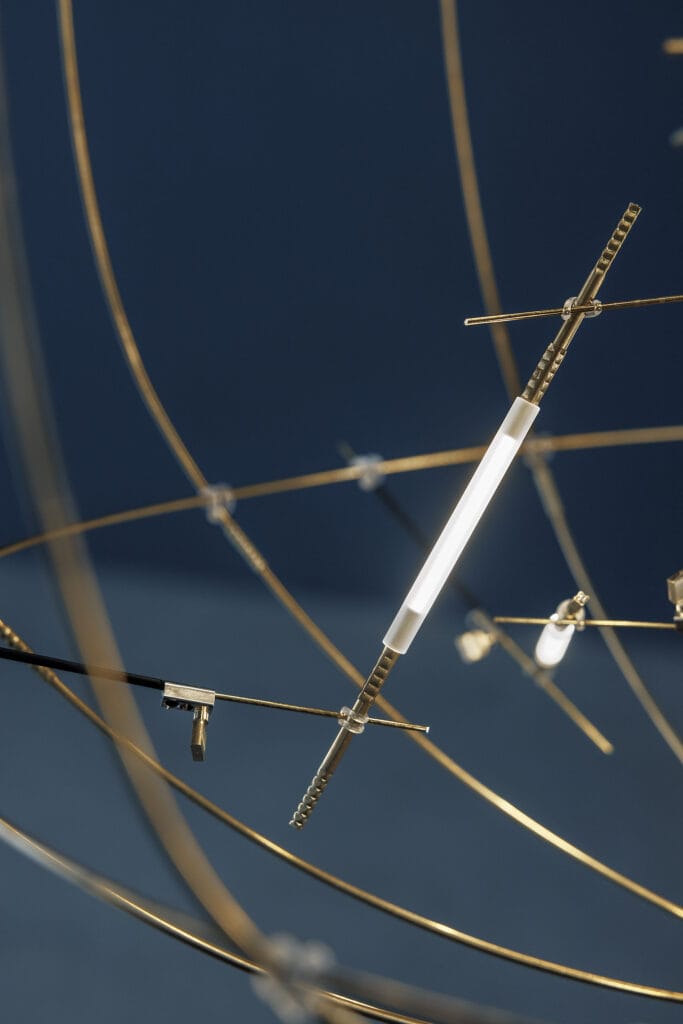
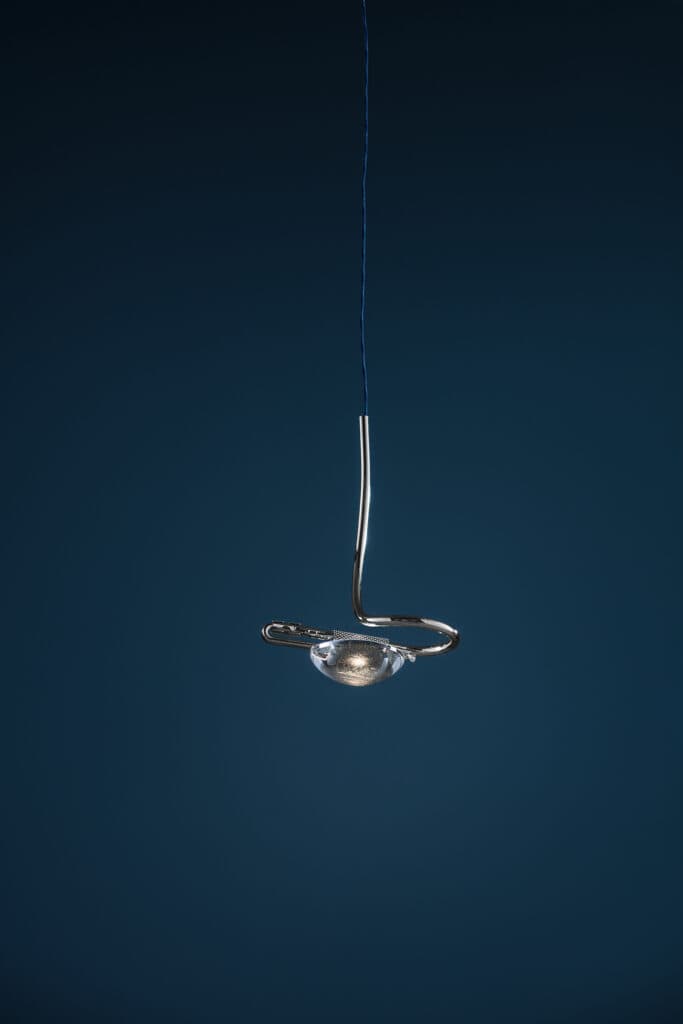
In Pòta!, brass is carefully curved to create a light, almost weightless volume. Presence and transparency meet in a delicate balance. Jackie O, meanwhile, transforms copper into fine, graceful curls, achieving a remarkable elegance through a refined economy of form.
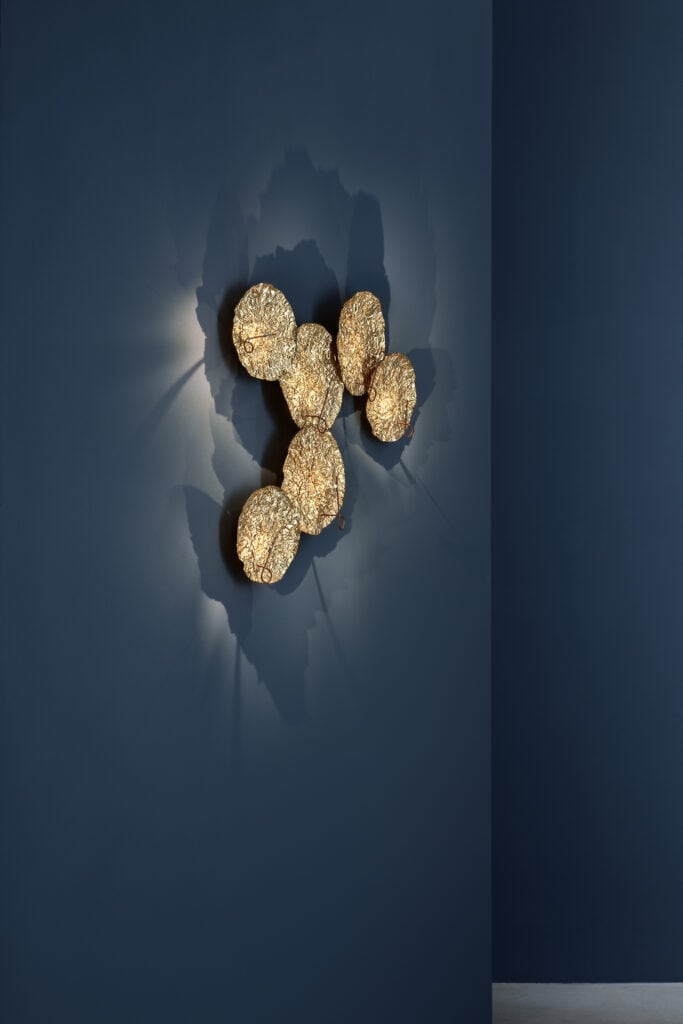
For Gold Moon, black discs are deliberately crafted with irregular surfaces. They capture the light, multiply its reflections and generate unexpected depths. The process of making gives rise to a living composition that rearranges itself with every shift in viewpoint.
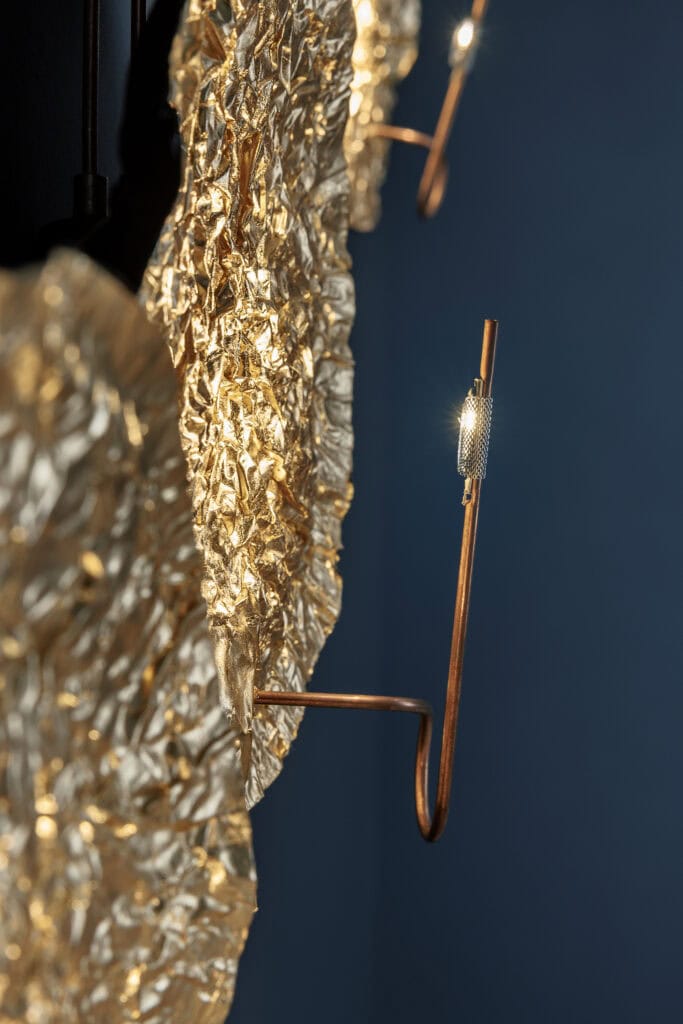
Each lamp carries the memory of the gesture that formed it. Catellani & Smith does not simply create objects that provide illumination. It creates bodies upon which light continues to work – gradually revealing new details, reflections and depths over time.