



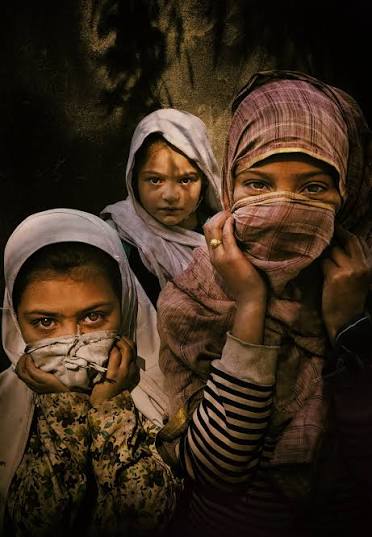
In Pakistan’s Bumburet Valley, director Bea Austin follows 20-year-old Alina. Her film portrays a young generation of Kalasha navigating a world shaped by centuries-old spiritual traditions, social change and an increasingly digital reality.
How do you preserve a culture without shutting out the present? In the Bumburet Valley, surrounded by the towering Hindu Kush mountains and close to the Afghan border, this question carries particular urgency.
This is home to the Kalasha, Pakistan’s smallest ethnic minority. Their polytheistic religion, rituals, festivals and traditions distinguish them from the country’s Muslim majority. Yet their way of life is coming under increasing pressure. Climate change, political instability, social transformation and pressure to convert are threatening a culture that has maintained its distinct identity for centuries.
At the same time, more young Kalasha are drawn towards the cities — while smartphones and social media have already brought the wider world directly into the valley.
A Young Woman Between Two Worlds
For her short film Alina, director Bea Austin travels to a village in the Bumburet Valley, where she meets 20-year-old Alina. Rather than constructing a simple opposition between tradition and modernity, the film explores something far more interesting: the possibility of carrying both within oneself.
Alina has grown up with the spiritual beliefs and customs of her community, while also belonging to a generation for whom social media and global pop culture are part of everyday life. Her identity therefore seems less connected to remaining in one particular place than to knowing where she comes from.
“Alina explained that her identity is rooted in her beliefs, and that she will carry her heritage wherever she goes. What struck me is how closely that mirrors the Kalash view of death, and the belief that their spirit and traditions live on through those left behind.”
— Bea Austin
Culture in Motion
This is where Alina becomes particularly compelling. The film does not portray cultural preservation as something static. Perhaps tradition today does not necessarily mean remaining in the place where previous generations lived.

As the world of the Kalasha changes and some of its inherited structures slowly disappear, Alina portrays a young woman who does not see her heritage as a boundary. Her path may one day take her elsewhere, but her story suggests that cultural identity can travel with us.
The portrait of one young Kalasha woman thus becomes a broader story about a generation searching for its own place somewhere between heritage and the future.
Film: Alina | Directed by Bea Austin | via NOWNESS