

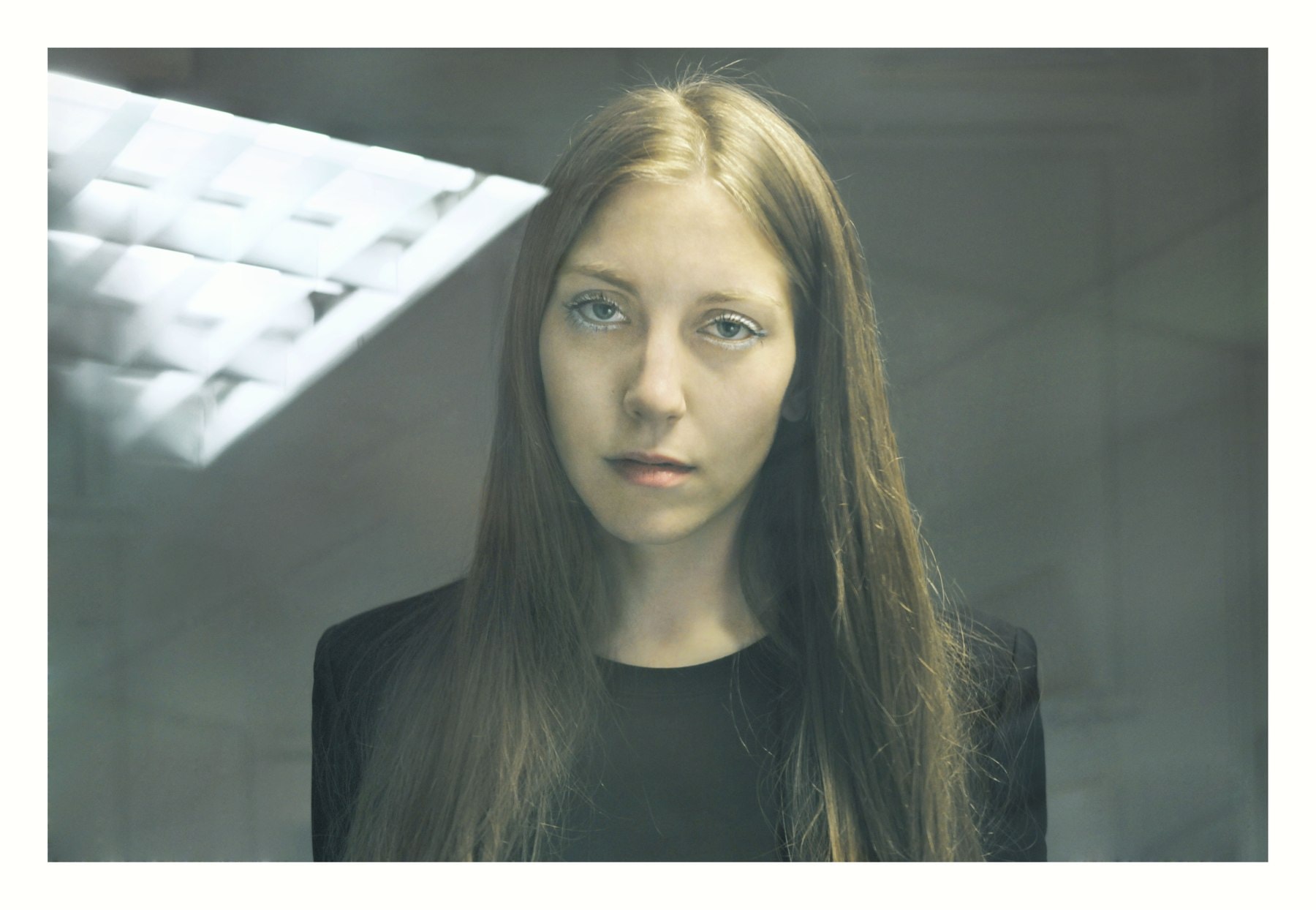
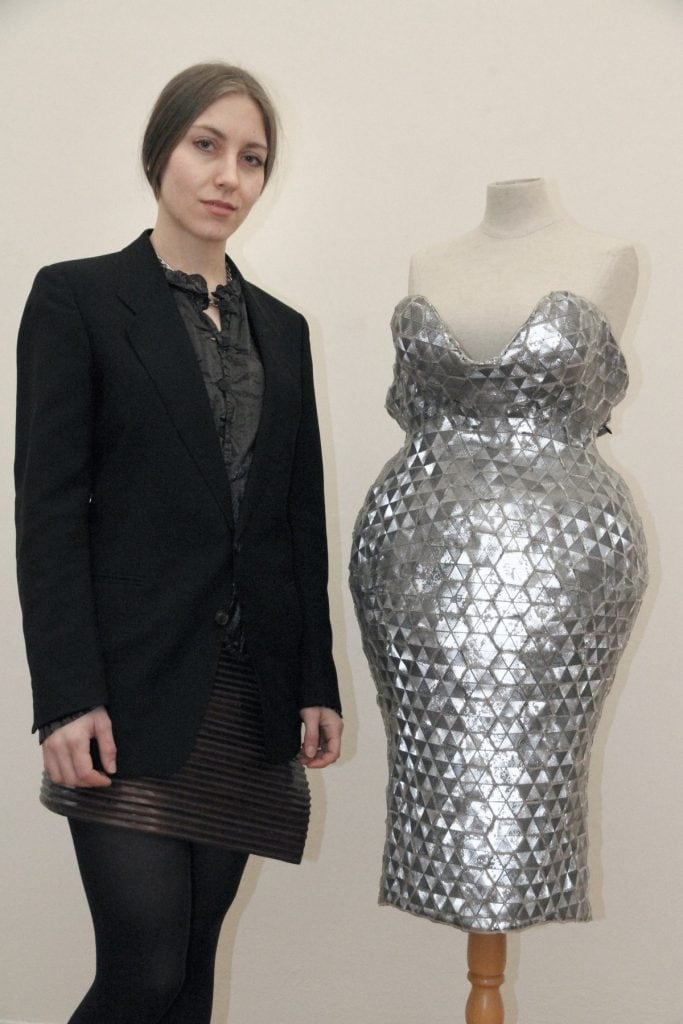
For ten years, Austrian designer and artist Flora Miranda has worked at the intersection of fashion, art and technology. Her work challenges conventional ideas of what clothing can be: a digital play of colour, a moving sculpture or an in-between space linking the body and architecture. To mark a decade of her artistic practice, she talks about the emotional power of colour, the interplay of material and movement, and the importance of trusting your own intuition.
Interview: Rene Schopf
Fashion between body and screen
Flora, your work brings together fashion, art and technology. To mark your tenth anniversary, you have developed an interactive piece in which a digital garment changes through touch. What interests you about this approach?
When we talk about a collection, we usually think of outfits, shoes and accessories. With this project, however, the focus is on a digital tool that allows a virtual garment to change through touch. Although I find it interesting in itself to call it a garment. It is really more like a blob of jelly or colour that you drape around a digital body. I like giving myself the freedom to look at things differently and question familiar categories. I am interested in what happens when you move away from conventional ideas and develop something that resists easy classification.
You often work digitally, while also emphasising the physical experience of fashion. How do these two dimensions relate to one another?
Fashion is always about sensory experience, about the interplay between textiles, skin and fabric. Digital tools and artificial intelligence expand these possibilities, but they do not replace the physical. We are physical beings, so our clothing is material, too. Although I work with digital technologies, a large part of my practice involves working by hand. I often start by developing a digital design and then translate it into a real material. At the same time, I ask myself how sensuality can be created in the digital realm, and how these two worlds can inspire each other. We live in a highly visual culture. With social media, it has sometimes become almost irrelevant whether something actually exists or is present only as an image. It still affects us, triggers associations and can inspire us. Fashion, too, is often about staging and representation.
I find it exciting to bring these different realities together rather than pit them against each other.
Colour, chance and association
Colour plays a central role in your anniversary project. How did this intense colour palette come about?
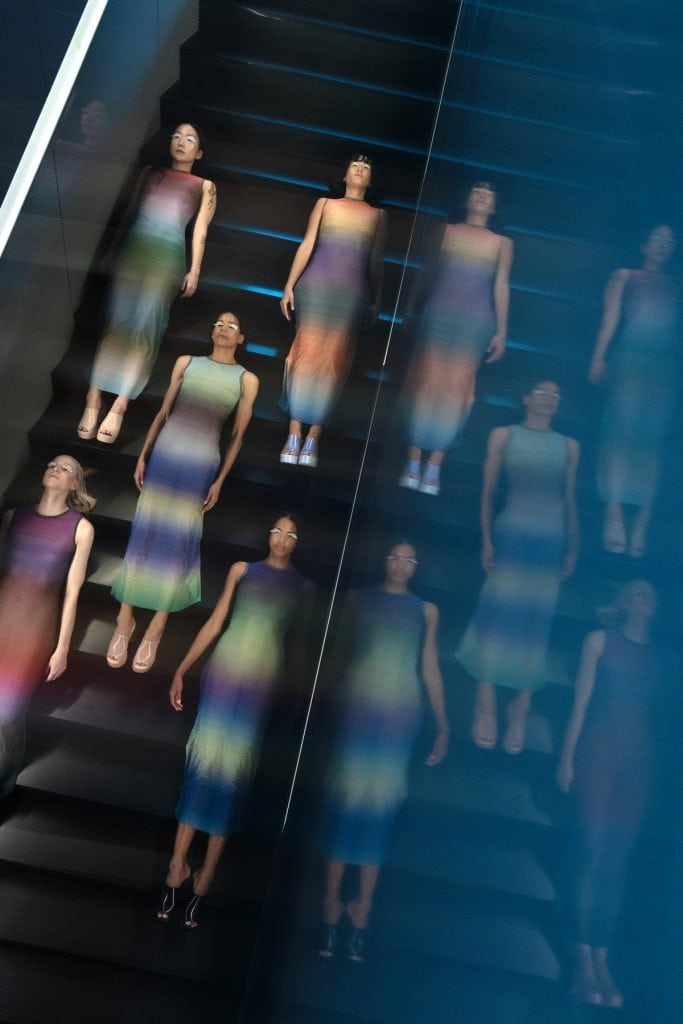
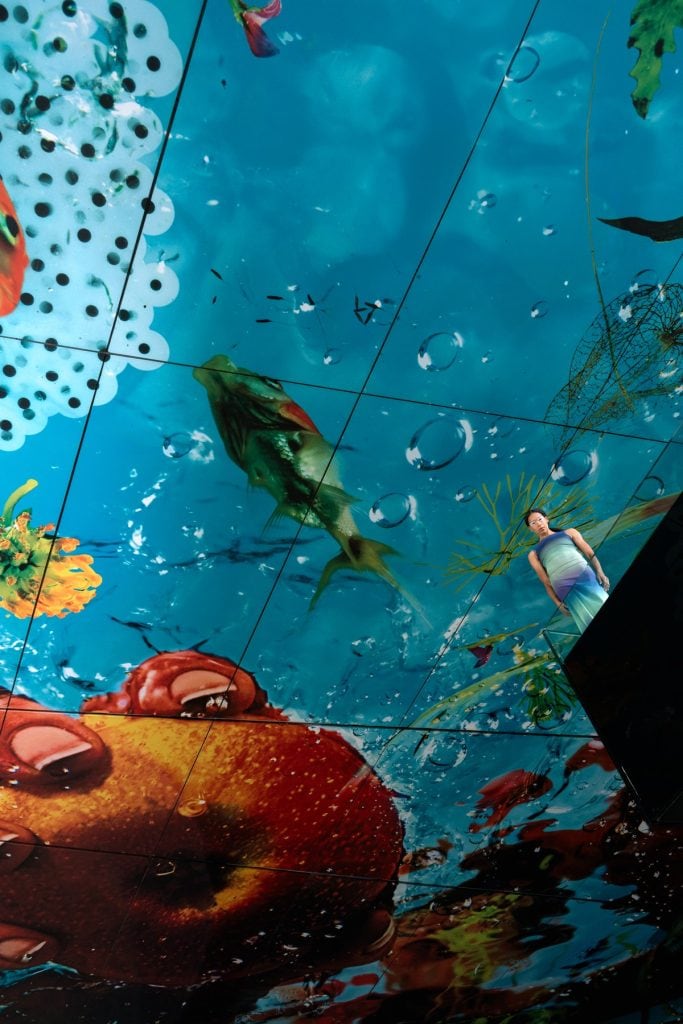
It began with a glitch. I was using a piece of software to work on something else when these colour gradients suddenly appeared. The program was very simple, consisting of just a few lines of code. And yet I couldn't stop looking at them. Every new combination of colours seemed beautiful in its own way and reminded me of something different. I was fascinated by the fact that something so simple could trigger such a wide range of associations. At the same time, I was thinking about scrolling through social media. We see so many images that our perception can sometimes be reduced to their most basic elements. In the end, perhaps all that remains is a colour gradient. For me, this accident became the starting point for a work exploring our digital image culture. Colour operates on a highly abstract level.
Together with form and texture, it evokes feelings before we are even consciously able to name them.
What role do personal and cultural associations play in this?
Certain colour combinations already carry strong cultural associations. Black and green, for example, immediately bring The Matrix to mind. If I want to create a digital aesthetic without invoking that association, black and blue can have a different effect. The colourful gradients, by contrast, feel sensual, pop-inspired and somehow tender to me. Their impact remains open-ended. A colour can evoke entirely different memories or moods in different people. I cannot always explain why a particular combination moves me. Sometimes it is enough simply to look at it and acknowledge the feeling it creates.
Movement as a design principle
These colours are particularly effective in motion. How do you design for a body that never stands still?
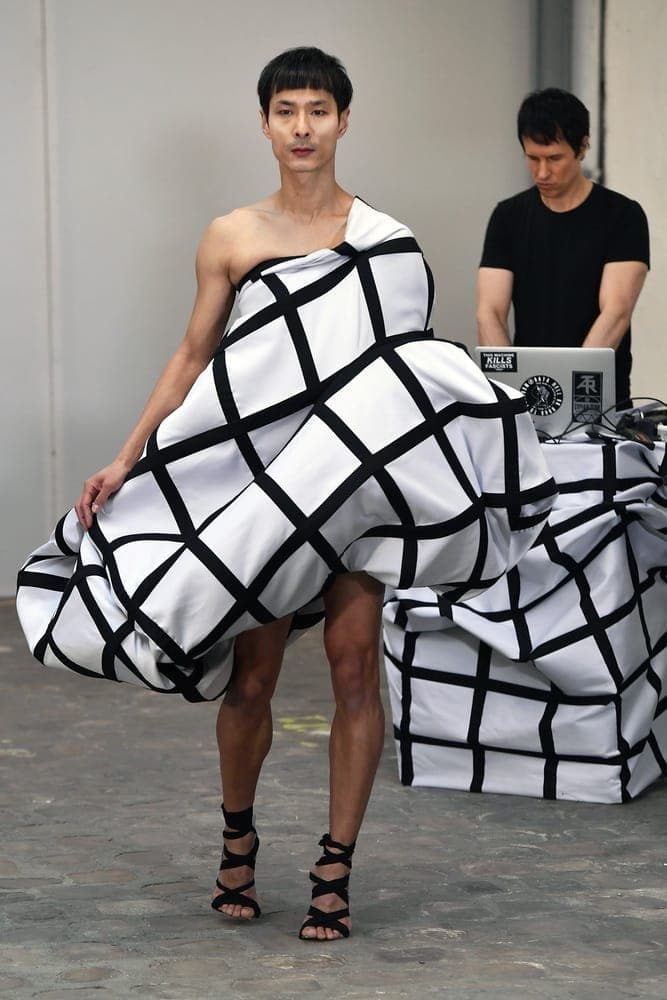
That is one of the greatest challenges in fashion. The body moves, and the material has to respond to it. With designs that are not conventional garments, in particular, you have to think carefully about how they behave in space. Sometimes something looks wonderful when it is still but simply does not work in motion. If the material does not follow the body, the design loses its elegance. Ideally, the body sets the material in motion in such a way that something independent emerges – something elegant, perhaps even intoxicating. Weight, scale and construction all play a part. If a material becomes too heavy, it falls differently; if you reinforce it, you change the way it moves. It is a constant process of balancing competing demands. When it works, the result can be magical. I do a lot of work for ballet.
A skin-tight bodysuit functions like a second skin because it does not restrict movement. What I find more exciting, though, is the challenge of creating volume that moves just as freely and feels alive rather than hanging rigidly from the body.
So you see movement not as an addition to the design, but as part of its creation.
Exactly. For me, a garment is not an isolated object. It is always in a relationship with the body and the space around it. I am interested in how that relationship can be made visible, and in the point at which movement gives a material a new quality.
You have also described the idea of clothing as a space between the body and architecture. What would you like to explore through this concept?
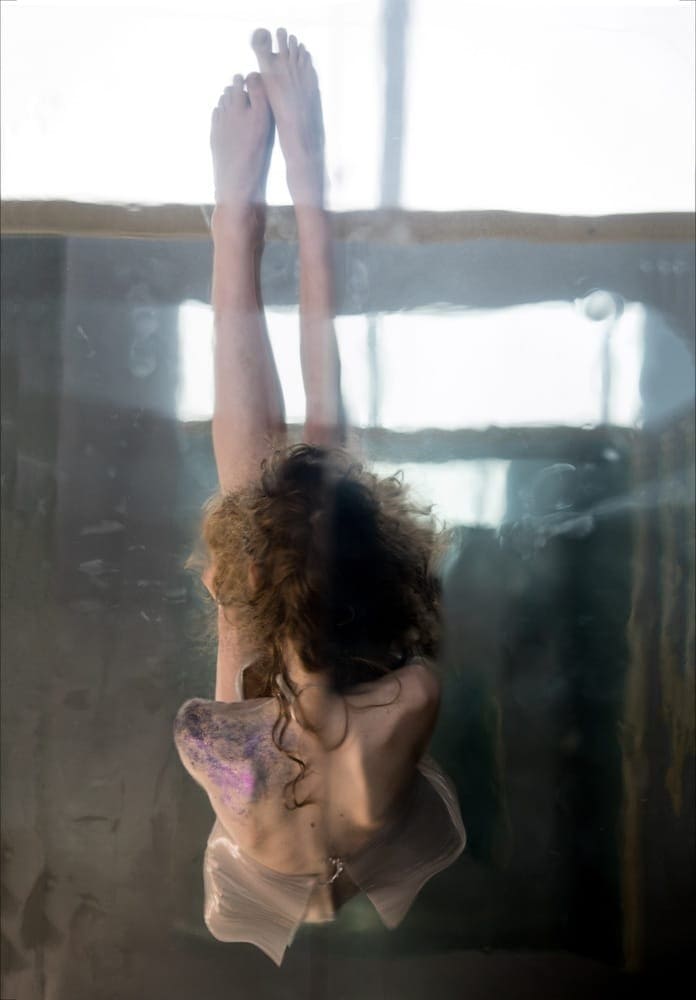
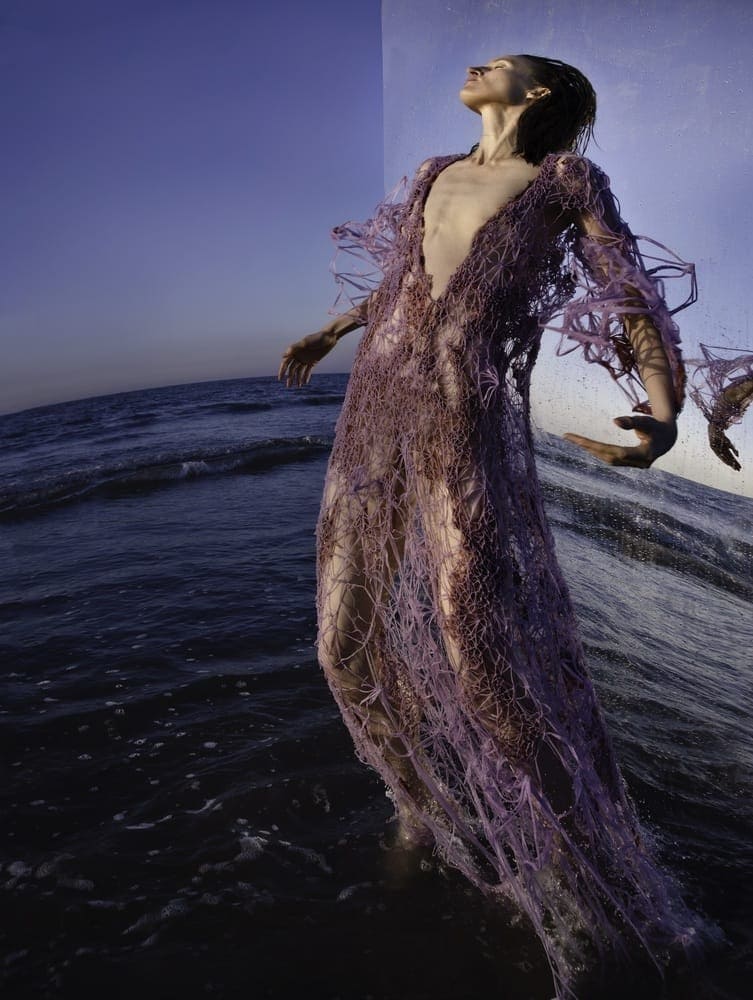
I see clothing as an in-between space: the point where our bodies end and architecture begins. I have not yet fully translated this idea into a garment, but I would love to create something that actually shapes the air around the body. I am inspired by installations in which, for example, threads are stretched across a space and woven together. Such works are not necessarily directly related to fashion, but they open up new perspectives for me. They make me think of the possibility of air itself becoming a garment. The idea is to shape not only the material, but also the space it occupies and creates. Of course, putting this into practice is difficult. As soon as an idea becomes physical, it has to contend with the properties and limitations of the material.
For me, that is precisely an essential part of the creative process.
Intuition and creative freedom
In an increasingly digitalised world, how important is it to trust our own perceptions again?
I think we need to learn to trust our own feelings. Today, we are constantly being given information about ourselves. There are, for example, watches that measure our sleep and then give us a score. Yet we could often perceive a great deal of this for ourselves. That does not mean such information is inherently unimportant. But our own feelings should not disappear behind it all. Knowing what I like, what I want to wear and what makes me feel comfortable is crucial to me, regardless of what trends or other people dictate.
How do you maintain that trust in your own creative process?
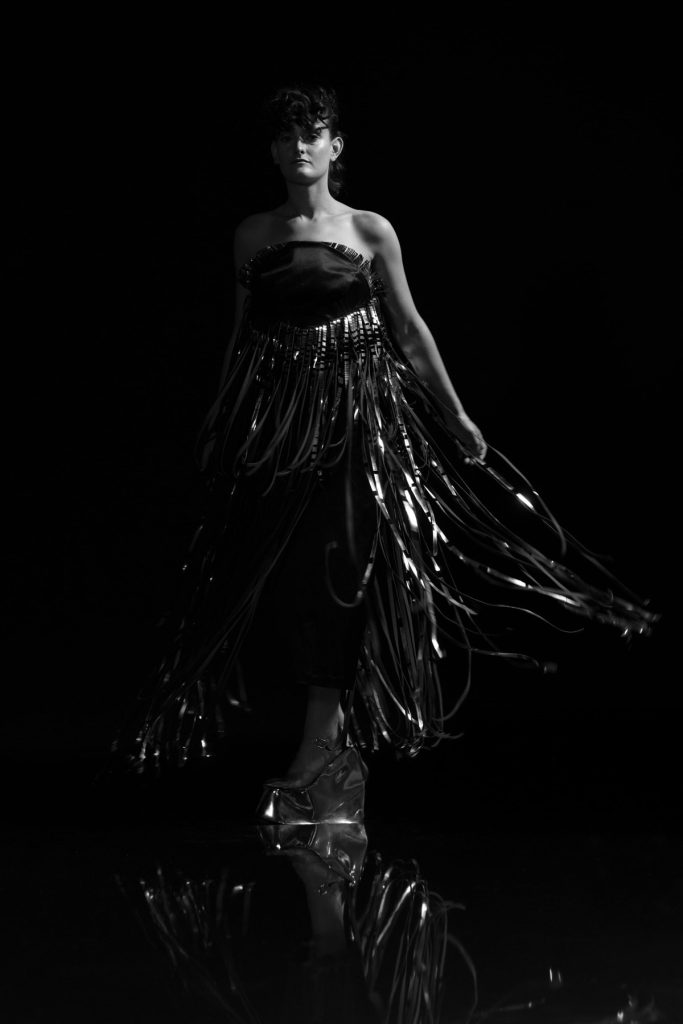
Creativity often comes with self-doubt. You sit in front of a blank sheet of paper and think that every idea has already been done. Suddenly, you spend more time thinking about what other people have created than about what you want to express yourself. I remember drawing exercises from school that helped us bypass this mechanism. You might close your eyes and draw your own face by feeling it with your hands. Or you look at something and then draw it from memory. This gets you making things without immediately judging every step. When I draw for ballet, I often create very free representations of the body. Sometimes the figures move in ways that would be physically impossible in reality. And yet dancers often recognise a particular expression in them immediately. It shows me that we already carry a great deal within ourselves.
We do not have to explain everything rationally; sometimes we simply need to find a way to make it visible. For me, creative work also means creating a space in which not every idea is immediately judged as good or bad. If you observe, gather experiences and develop your skills, you can trust that something will come of it.
Your work exists outside the conventional mechanisms of the fashion industry. How important is this independence to you?
Independent work is at the heart of my practice. It is also a form of research from which I develop ideas for commissioned projects. I have therefore made a point of building such projects, wherever possible, on approaches I have already explored in my independent work. At the same time, I am aware that I operate in a very small niche. This gives me freedom, but it can also create distance. I want to feel closer to people without giving up my artistic interests. For me, this is not just about sales figures, but also about collaboration and finding ways to make my work more accessible. That is why I deliberately developed a series of simple tube dresses for the anniversary. I was interested in what would happen if I reduced the complexity. Designing elaborate constructions is familiar territory for me.
This time, the challenge was to create something very simple and discover how I and other people would respond to it.
The stage and future spaces
Alongside your independent work, you also create projects for the stage and for dance. What are you working on at the moment?
I have been working with Richard Siegal and Ballet of Difference for eight years. For a while, it looked as though the company might have to close because its funding had been cut, but it has now found a new home in Nuremberg. We are developing another piece together for next year, for which I will design the costumes. I also had the opportunity to design the costumes for the New Year's Concert. Projects like these are particularly interesting to me because they bring together different forms of movement and expression. At the same time, they reveal how vulnerable artistic structures can be when funding disappears. I do not believe that every form of artistic work can be financed through commercial models. Some projects need other conditions in order to exist at all.
Looking to the future, what is one idea you are determined to realise?
I keep returning to the idea of clothing as a space between the body and architecture. I want to create something that does not simply envelop the body, but shapes the air around it. Much of this could probably be realised more easily in digital form. What interests me, however, is the physical experience, with all its resistance and unpredictability. A material does not always behave as you imagine it will. An idea that initially seems magical in your mind has to prove itself in reality. That is precisely what makes the process so compelling to me. I want to preserve the freedom to experiment without already knowing where it will lead. Sometimes an entire body of work begins with a small error in a piece of software. A chance colour gradient becomes an idea you cannot let go of.
You do not always have to know what it will become in the end. Sometimes it is enough to feel that you want to keep going.