


What remains of our ideas of identity and connection when the world around us keeps changing at an ever faster pace? In “Lightscape – Open House”, American artist Doug Aitken transforms a masterpiece of Californian modernism into a captivating and unsettling space for self-reflection.
A house made of glass. Light moves through its rooms, shadows shift, mirrors multiply bodies and perspectives. And among them are people who seem to be searching for something: meaning, connection, perhaps even themselves.
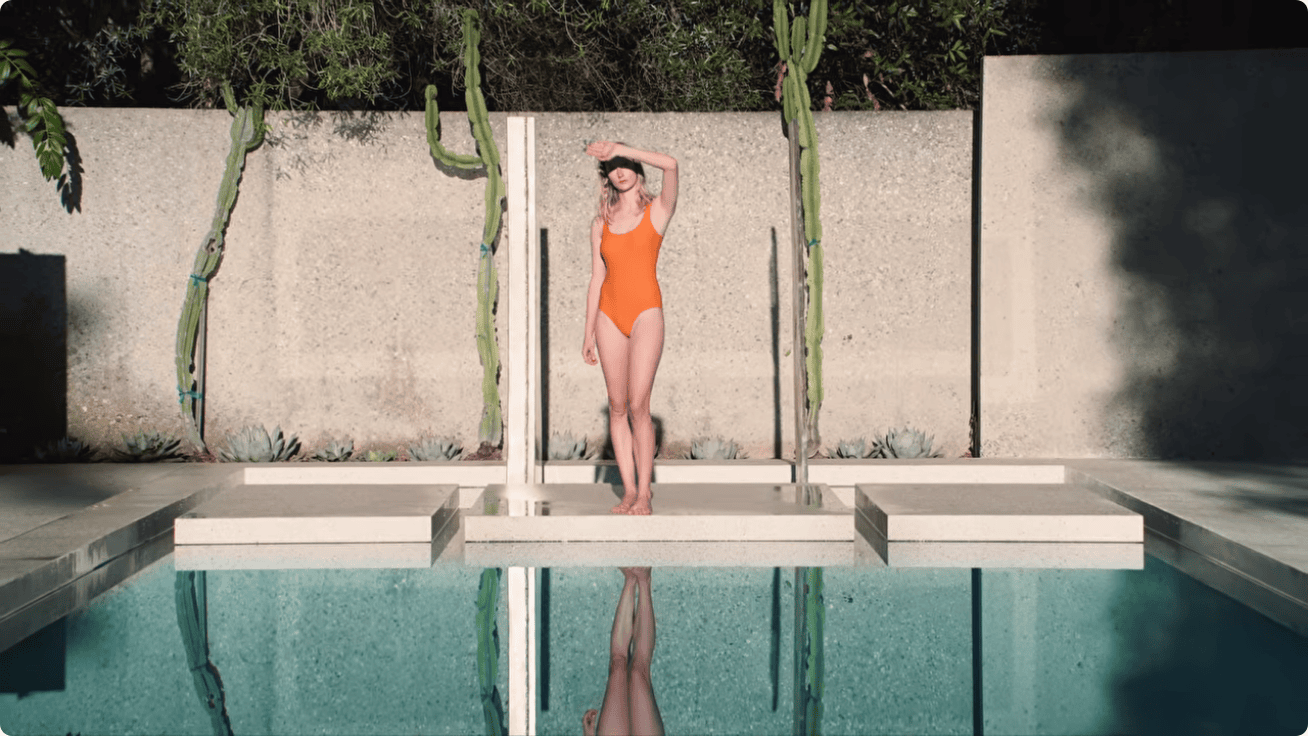
For “Lightscape – Open House”, American artist Doug Aitken chose an extraordinary setting: the Tremaine House in Montecito, California, designed by legendary modernist architect Richard Neutra. The private residence, never previously used as a filming location, becomes far more than a spectacular architectural backdrop. In Aitken’s hands, the house becomes a protagonist in its own right.
A House as a Mirror
The experimental short is drawn from Aitken’s hour-long work “Lightscape”, a film-based installation currently on view at The Shed in New York City. Youth and age, past and present move through its narrative as the characters gradually seem to merge with their surroundings.
Surreal imagery meets an immersive soundscape featuring the Los Angeles Master Chorale, the Los Angeles Philharmonic and Icelandic artist Bjarki. Image, architecture and music create a space in which reality and perception increasingly begin to overlap.
At its heart lies a question that reaches far beyond the film itself: How do we find meaning and identity in a world where familiar dreams and mythologies are beginning to fade?
The Beauty of Distance
Aitken makes striking use of Neutra’s signature glass architecture. Light and shadow travel across transparent surfaces, mirrors create kaleidoscopic perspectives, and people appear simultaneously close and unreachable.
This contradiction gives “Lightscape – Open House” much of its tension. The house promises openness and transparency, yet gradually becomes something resembling a glass prison. Its inhabitants can see, observe and reflect one another, while an invisible boundary between them remains.
An icon of West Coast modernism is transformed into an almost feverish dream of contemporary life: stories intersect, generations encounter one another and people search for connection. Yet there always seems to be a thin layer of glass separating the gaze from the world beyond.
Perhaps this is why Aitken’s film ultimately speaks less about architecture than about the way we live today: visible, connected and seemingly close to one another – while still searching for something more profoundly human.
Doug Aitken’s “Lightscape” is on view at The Shed in New York City until 13 September.
The original “Lightscape” soundtrack is being released on vinyl by The Vinyl Factory and is also available via streaming platforms.