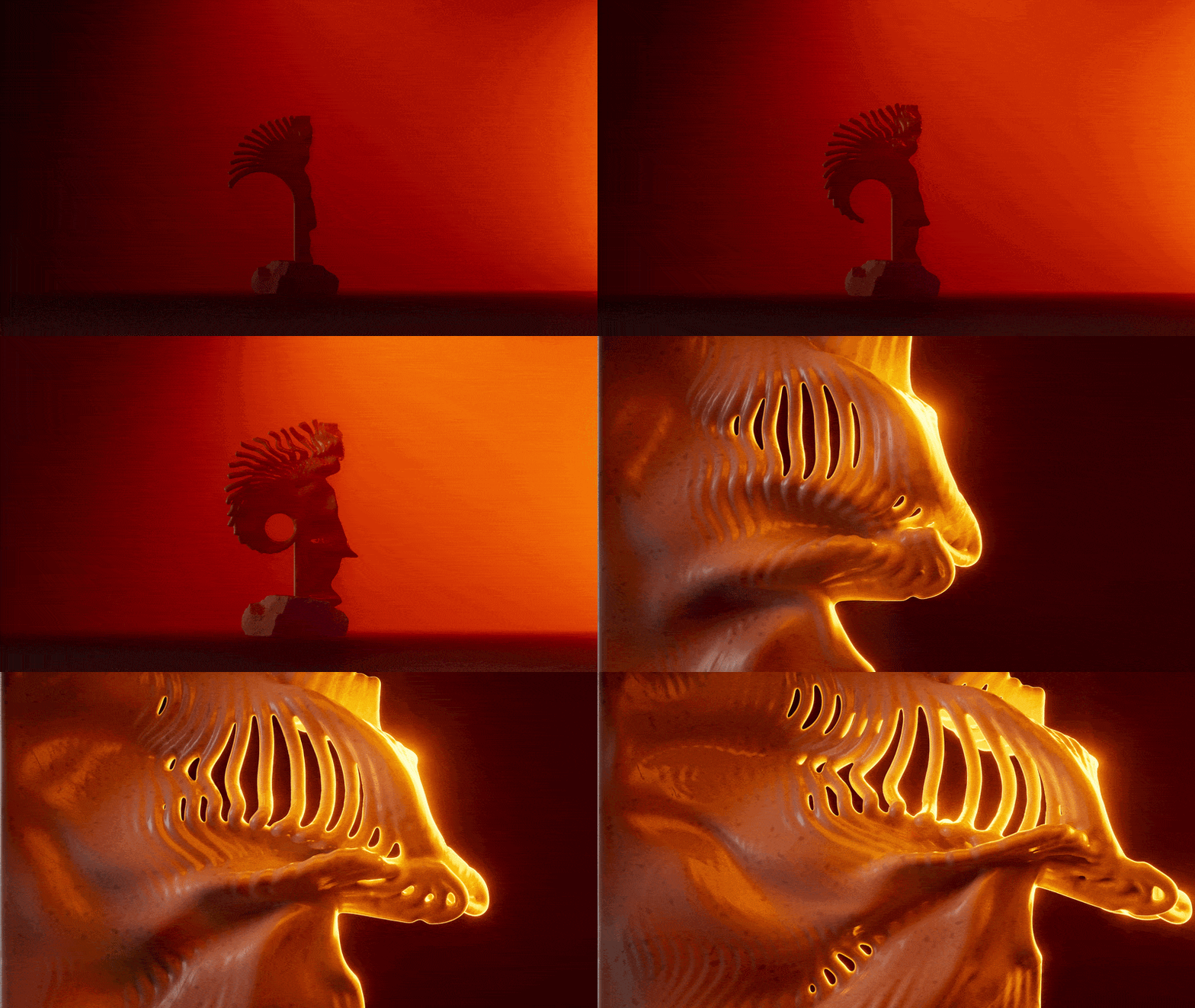
Between artificial intelligence, mycelium and craftsmanship, a new design language is emerging
For decades, modern design has largely followed one principle: form follows function. Ornament was dismissed as unnecessary, while reduction became synonymous with quality.Today, however, a new generation of designers is challenging that narrative.
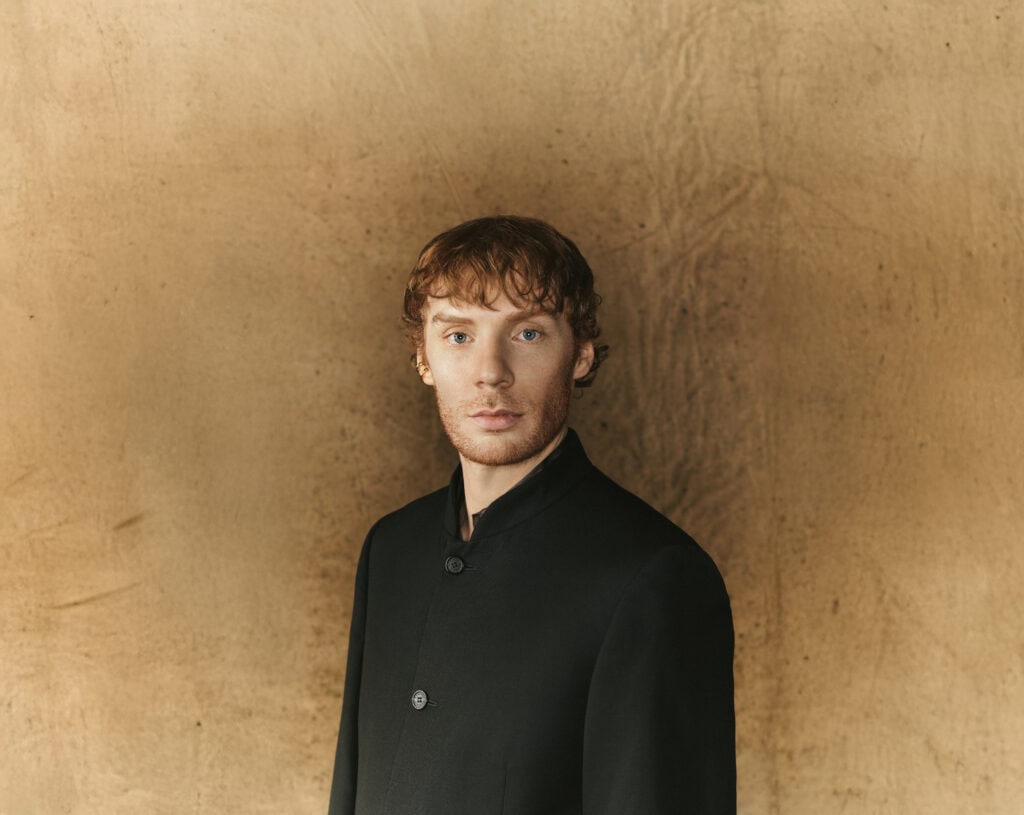
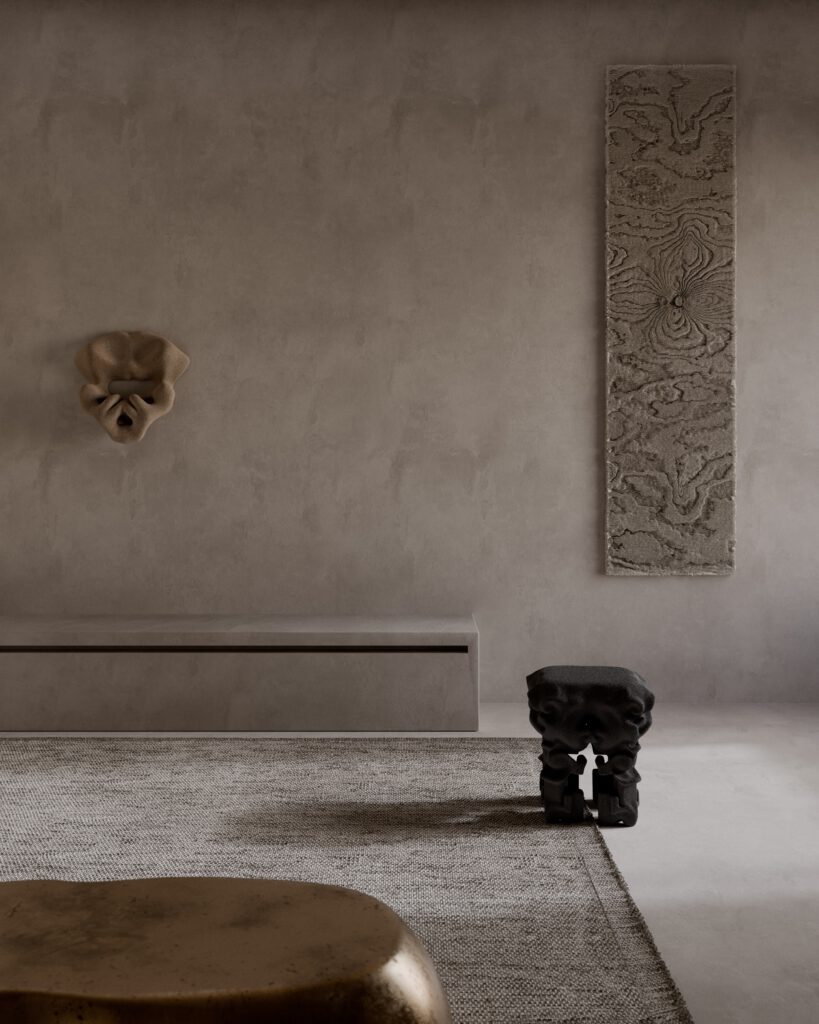
Among its most compelling voices is Belgian visual artist and designer Vito Boox. His work appears as though it has been discovered rather than designed — furniture, lighting and objects that resemble geological formations, fungi or living organisms shaped over centuries rather than manufactured by human hands.
Behind these sculptural forms lies a surprisingly coherent philosophy.
Boox calls it Neo-Ornamentalism.
Ornament no longer decorates the surface
Rather than treating ornament as something applied after an object has been designed, Boox integrates it into the structure itself.
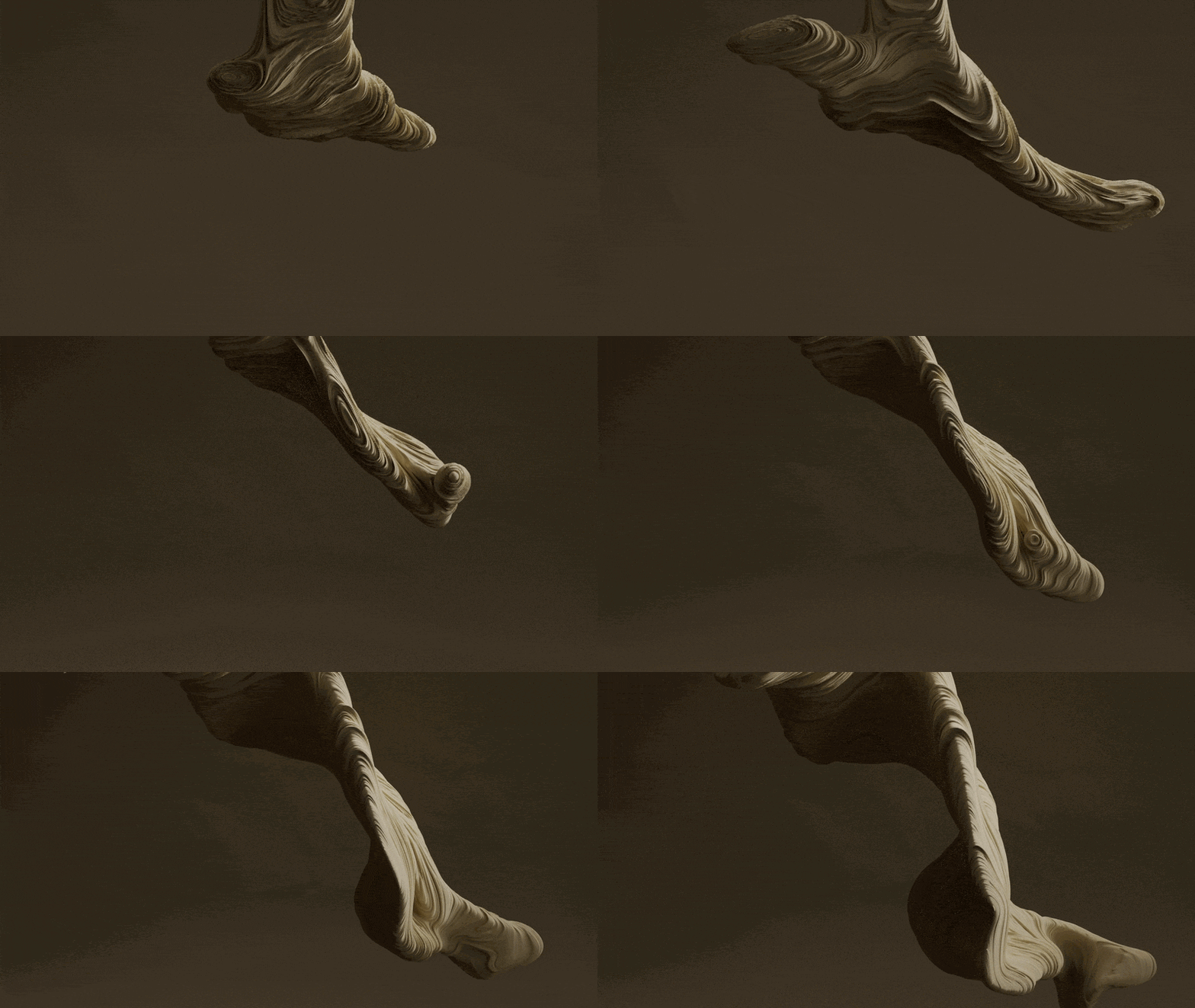
Using CGI, computational design and advanced 3D modelling, he recreates natural processes such as growth, erosion and biological transformation. Traditional craftsmanship then translates these digital narratives into physical objects.
The result is furniture and lighting that appear to have grown naturally instead of being manufactured.
Nature is no longer simply a source of inspiration.
It becomes a co-designer.
A remarkable international debut with Van Rossum
Boox attracted international attention through his collaboration with Dutch furniture maker Van Rossum, presented during Salone del Mobile in Milan.
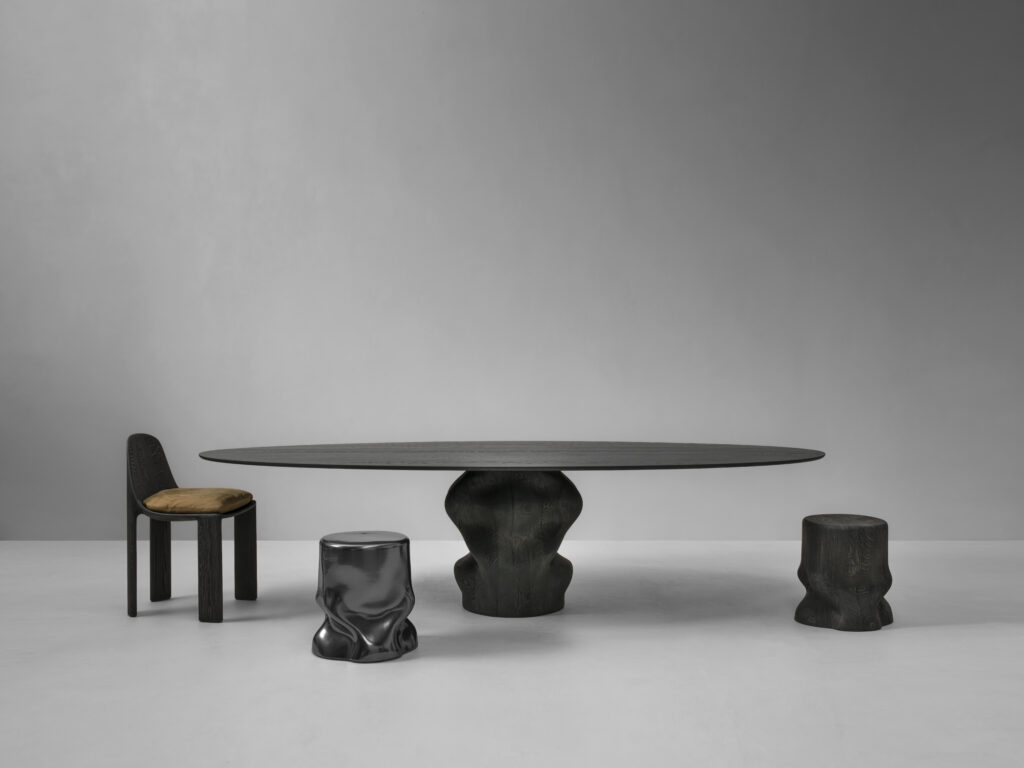
His DATSU Collection translates the logic of natural growth into sculptural dining tables and stools with soft, swelling volumes carved from solid wood.
The pieces blur the boundary between collectible sculpture and functional furniture, expressing a calm yet powerful material presence.
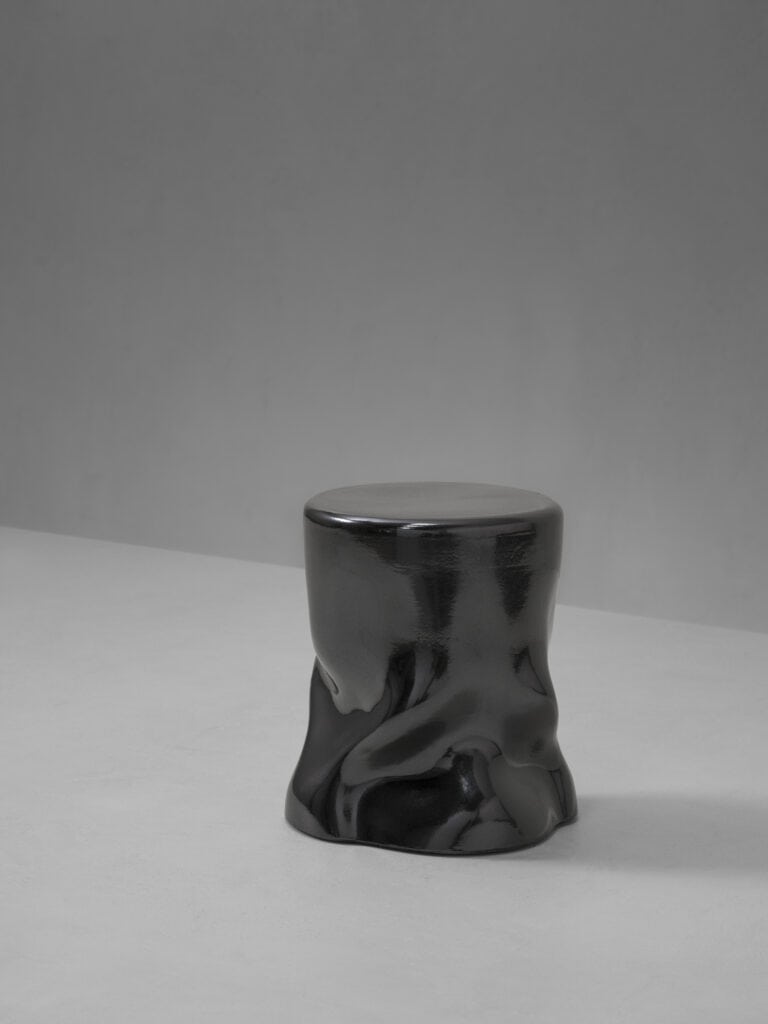
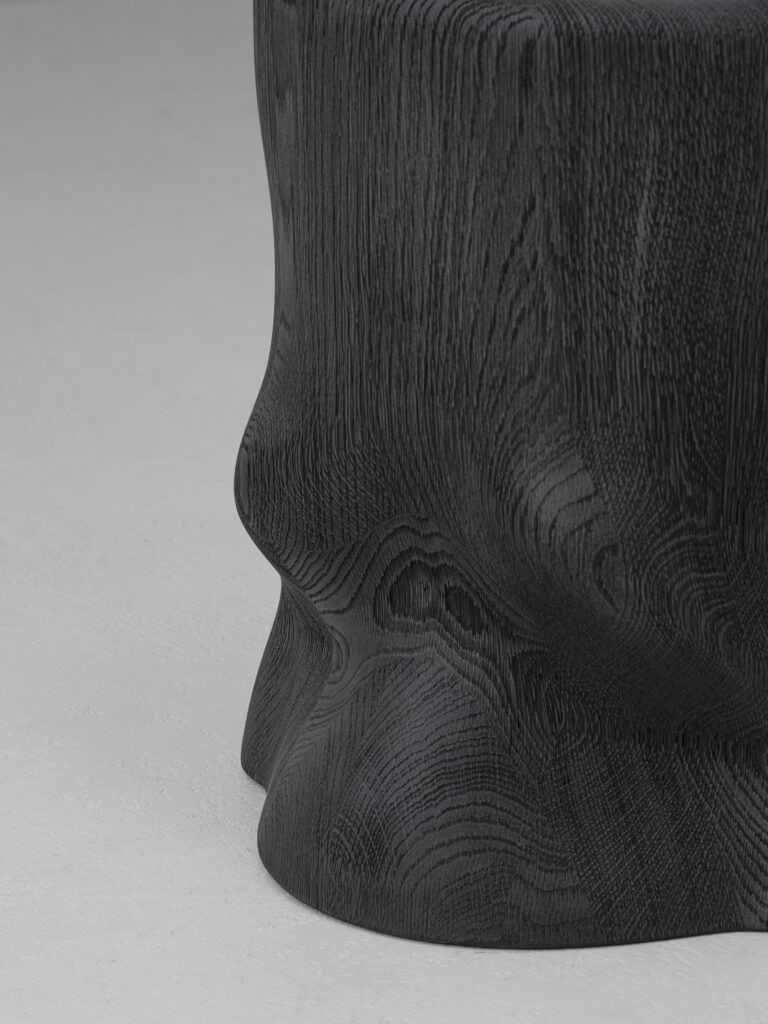
With new lighting, mirrors and accessories, Van Rossum simultaneously expands its vision beyond furniture towards a complete interior landscape shaped by atmosphere as much as utility.
Furniture inspired by fungi
Boox pushes this philosophy even further in his collaboration with Dutch brand Aifunghi.
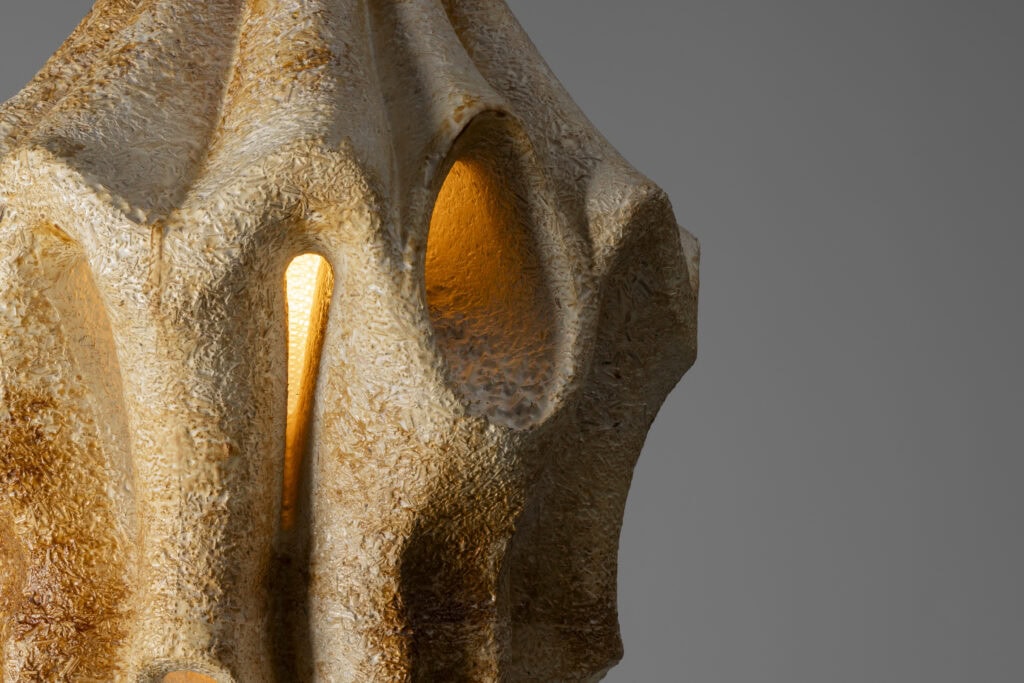
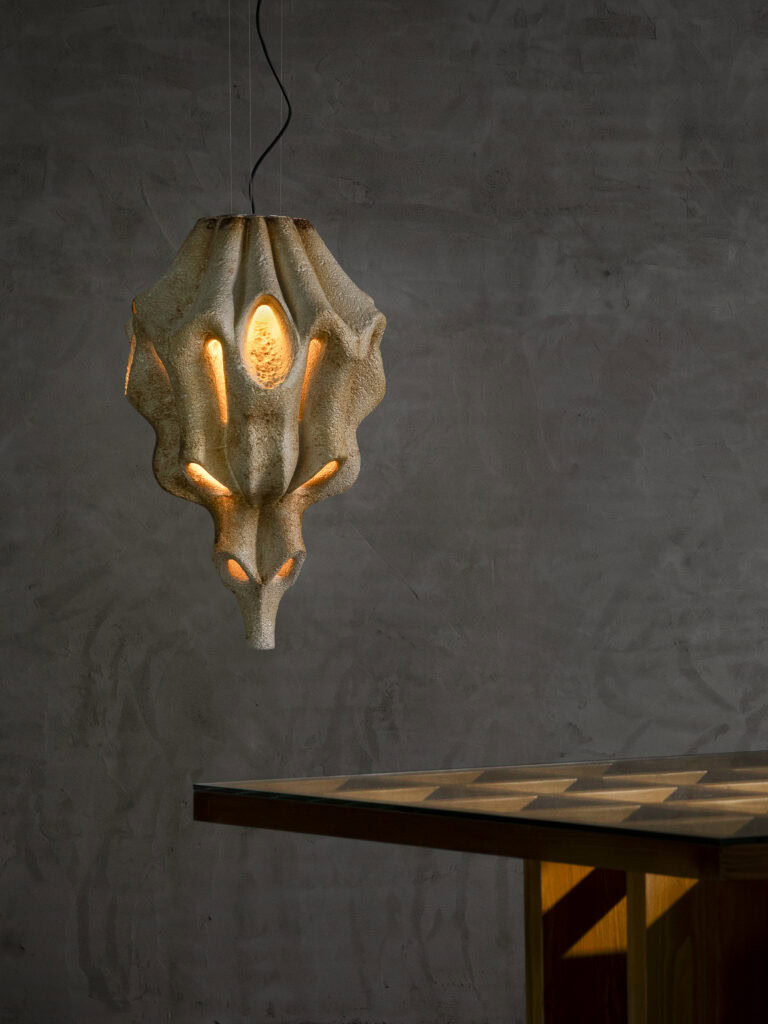
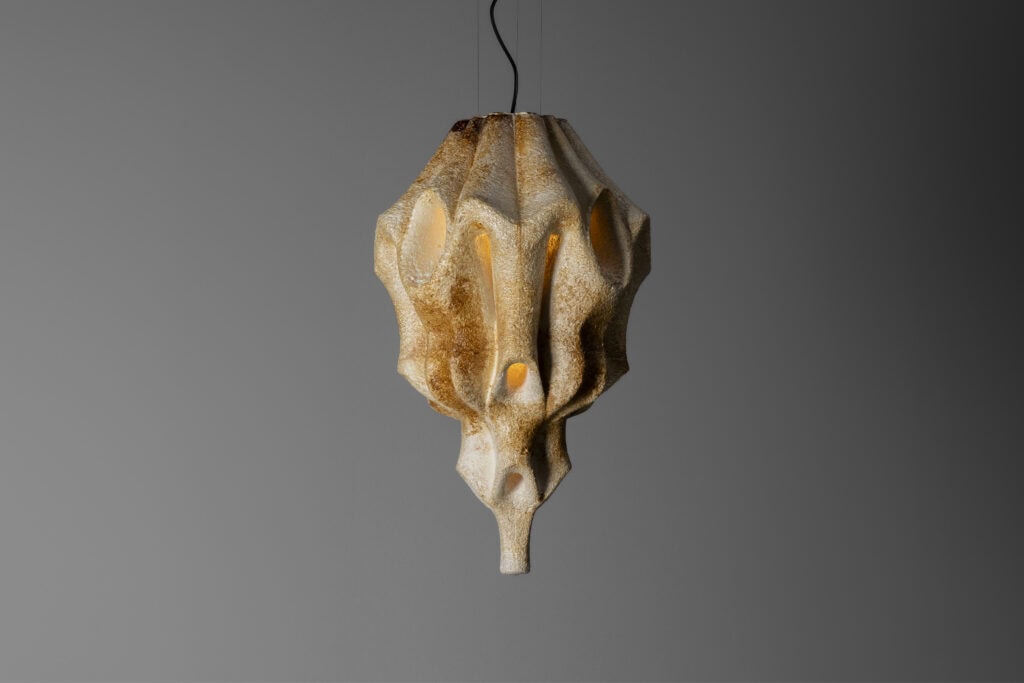
Here, lighting and mirrors are produced using Mycelium-Based Composite (MBC) — a fully recyclable material made from hemp fibres bonded together by mushroom mycelium.
The Morchella chandeliers echo the intricate textures of the prized morel mushroom while simultaneously evoking Art Nouveau, speculative architecture and organic life forms.
The Tremella Mirrors continue this dialogue between biology and design through sculptural frames that appear to flow naturally around reflective surfaces.
Instead of presenting sustainability as sacrifice, these objects transform renewable materials into expressions of contemporary luxury.
Towards a more organic future
Perhaps the most fascinating aspect of Boox’s work is not its visual language but its philosophy.
While much contemporary design prioritises simplification and industrial efficiency, Boox embraces complexity.
Digital technology is not used to erase the traces of nature.
It is used to reveal them.

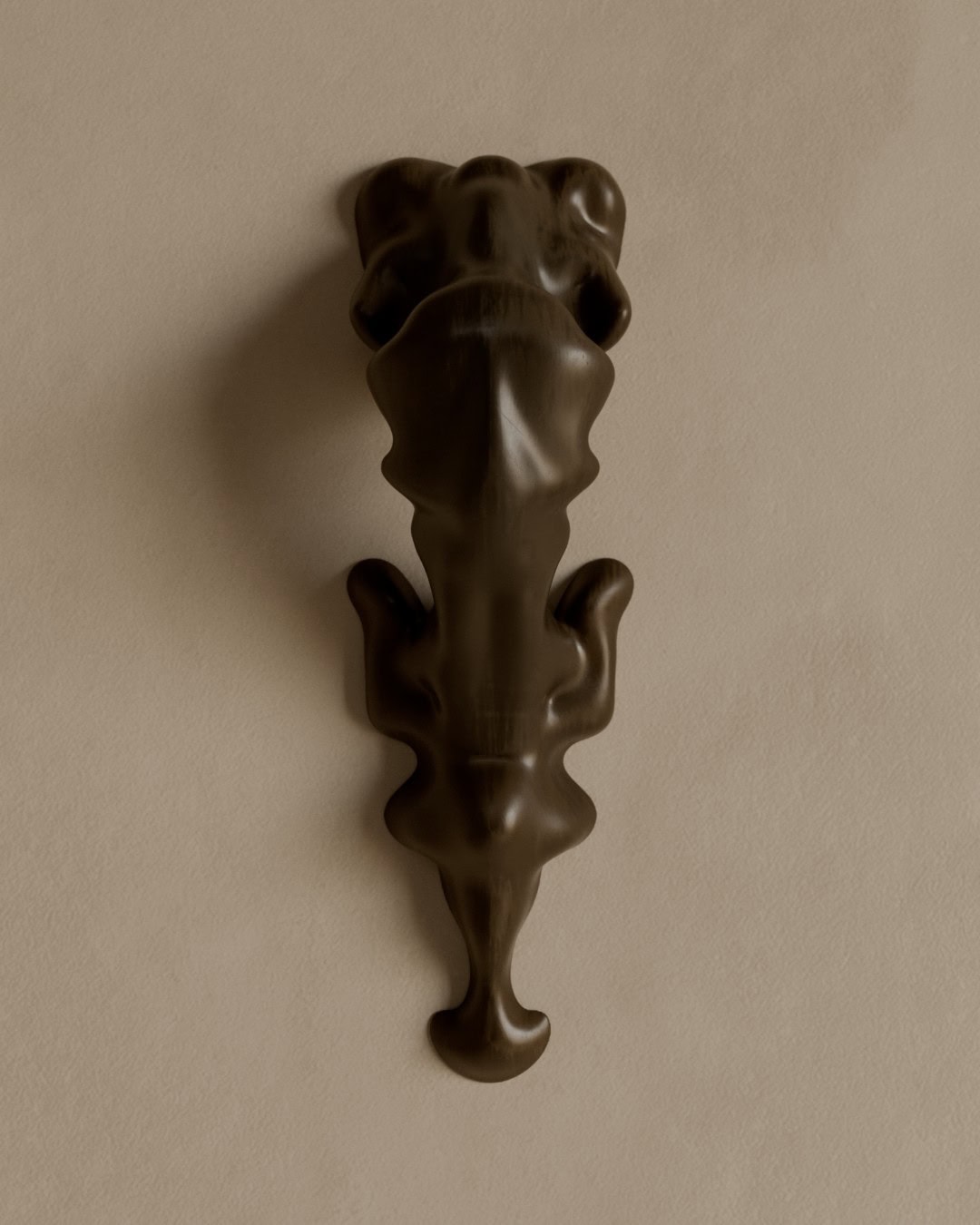
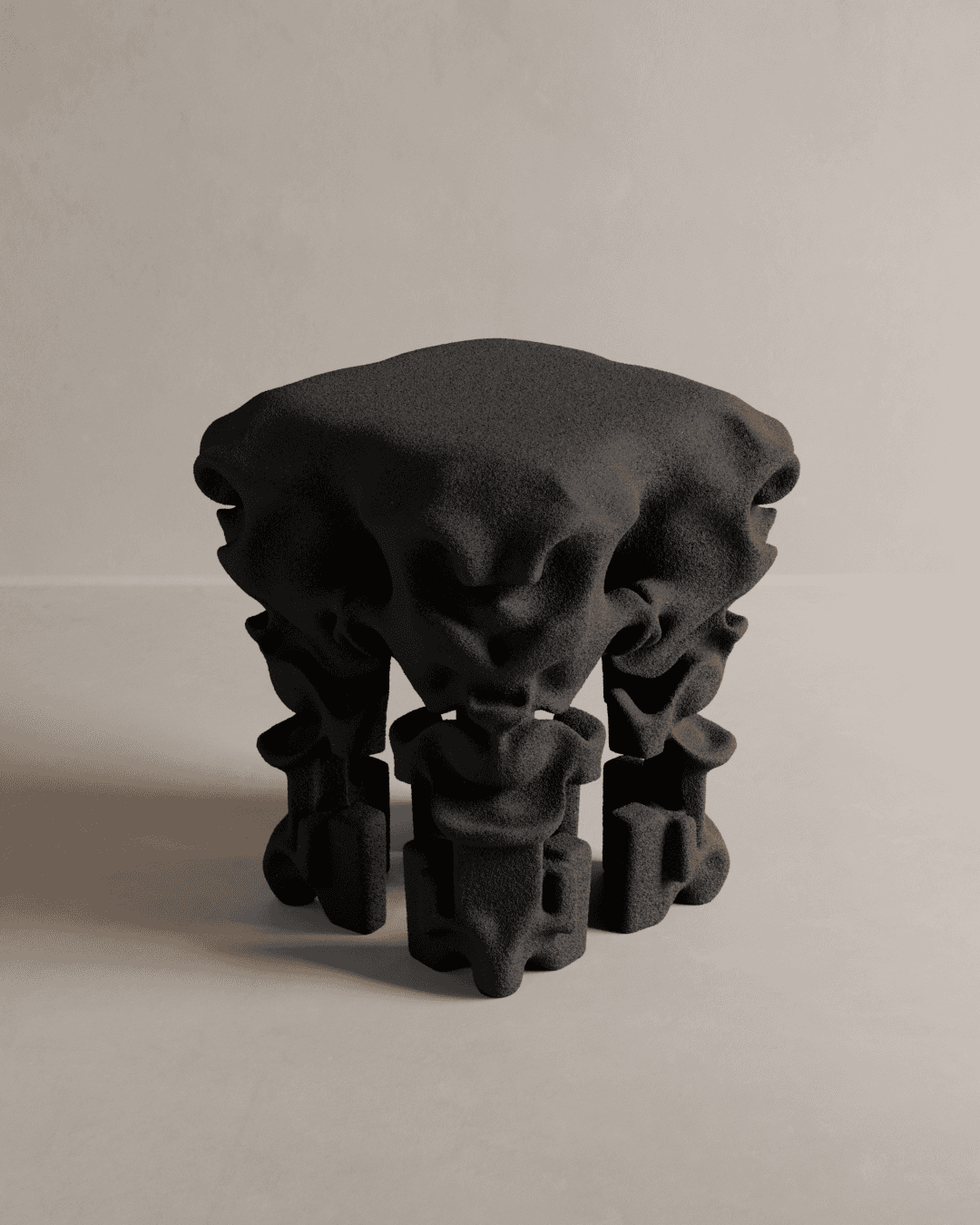
His work demonstrates that computational design can move beyond perfect geometry and instead generate emotionally resonant objects rooted in the intelligence of natural systems.
A new generation of design
Through his collaborations with Van Rossum and Aifunghi, alongside his independent practice, Vito Boox represents a generation redefining contemporary design.
Digital innovation meets traditional craftsmanship.
Sustainability meets sculptural beauty.
Artificial intelligence meets biological growth.
Perhaps this is what the next chapter of design looks like.
Not minimalism.
Not decoration.
But Neo-Ornamentalism — a design language in which nature once again becomes the author of form.