

Prix Versailles celebrates architecture as the new language of hospitality
Restaurants have become more than places to dine.
They are stages for atmosphere, architecture, memory and cultural identity.
With the release of the World’s Most Beautiful Restaurants List 2026, the Prix Versailles once again shifts the focus from pure gastronomy to the spaces in which hospitality unfolds. The selection gathers sixteen restaurants from across the globe that redefine how design, cuisine and emotional experience can interact.
From Dubai to Cape Town, from Helsinki to Hong Kong, this year’s laureates reveal a global movement towards immersive environments that feel deeply rooted in place while remaining unmistakably contemporary.
What is the Prix Versailles?
Founded in 2015 and supported by UNESCO, the Prix Versailles has become one of the world’s most influential awards dedicated to architecture and intelligent sustainability.
Unlike traditional hospitality rankings, the award does not solely celebrate luxury or culinary excellence. Instead, it honours projects that successfully merge cultural relevance, architectural vision and meaningful human experience. Hotels, restaurants, airports, museums and public spaces are evaluated for their ability to shape emotional connections through design.
In recent years, the Prix Versailles has evolved into an important global reference point for contemporary hospitality culture — highlighting projects where architecture becomes part of the narrative itself.
The World’s Most Beautiful Restaurants 2026
Nobu One Za’abeel — Dubai, United Arab Emirates
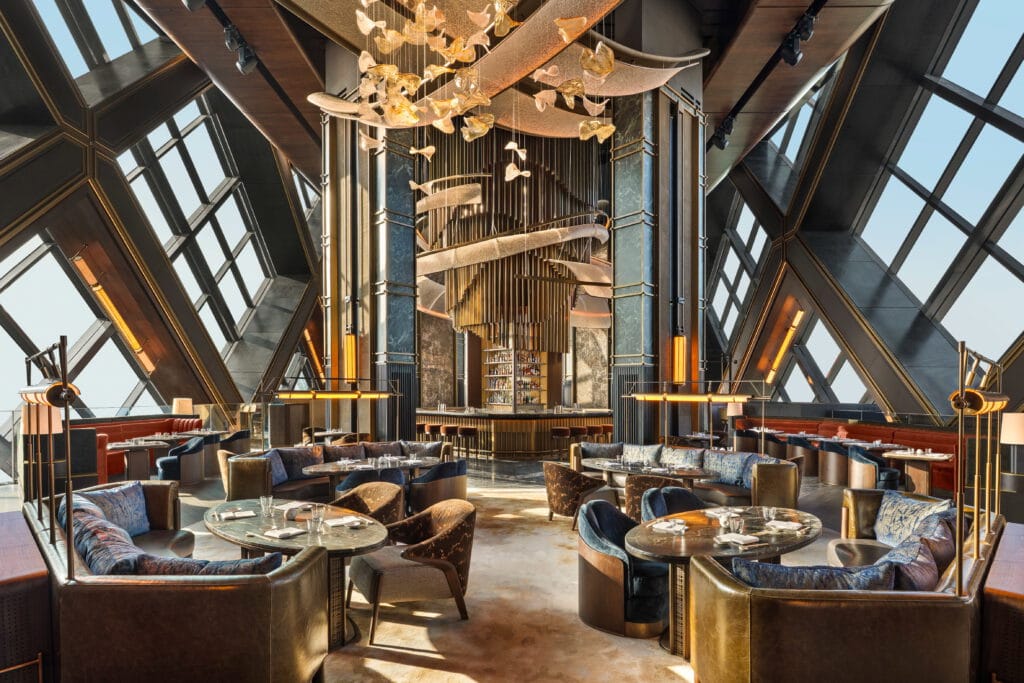
Floating 100 metres above Dubai inside the spectacular cantilevered sky concourse of One Za’abeel, Nobu transforms Chef Nobu Matsuhisa’s intercultural cuisine into architectural theatre.
Designed by Rockwell Group, the interiors combine monumental geometries, dramatic lighting and panoramic city views, creating a dining experience suspended between skyline and nightlife.
The restaurant feels like an architectural bridge — physically and culturally.
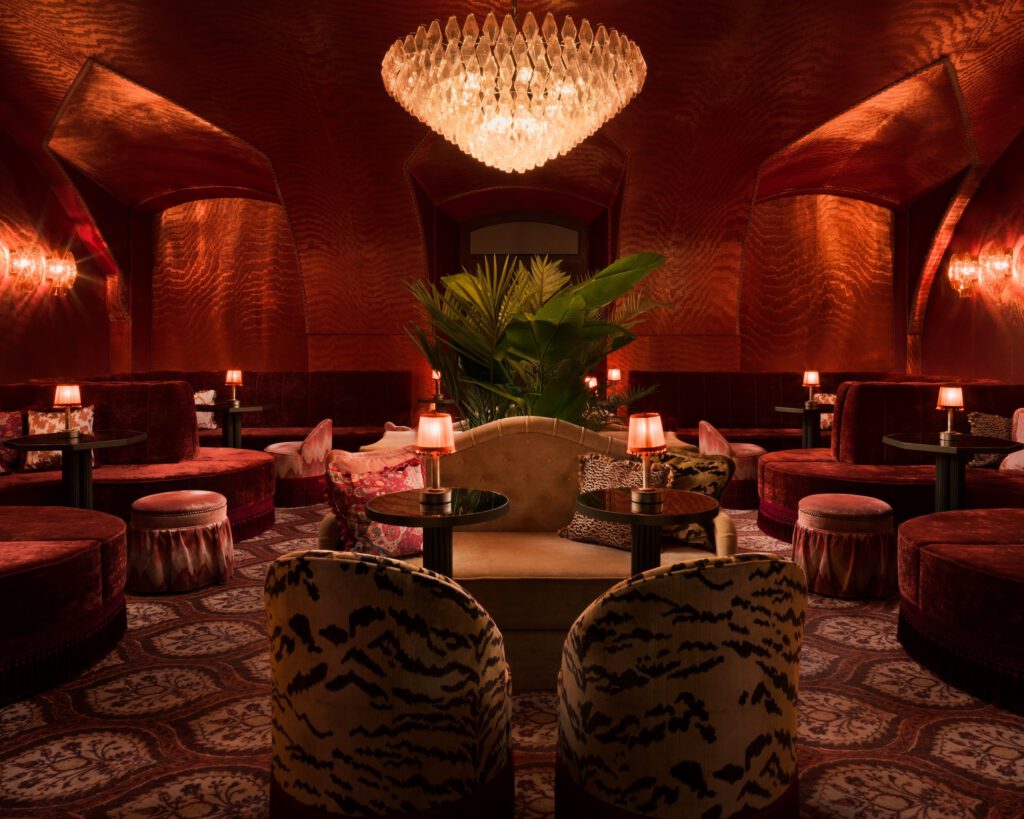
Le Fou — Vienna, Austria
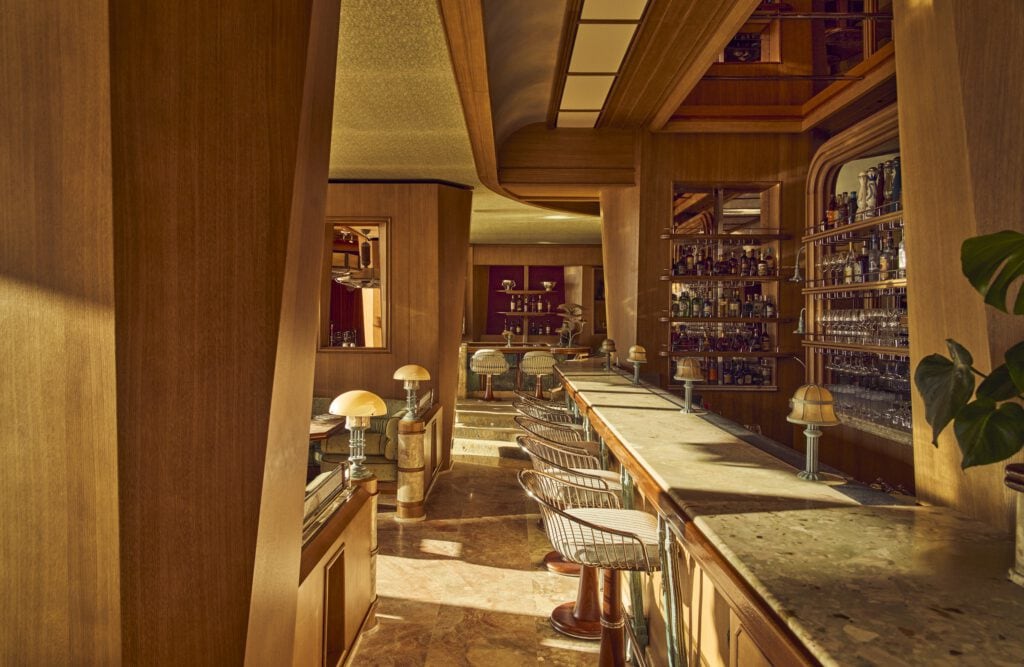
Le Fou channels the sensuality of Parisian nightlife into the heart of Vienna.
Silk, velvet, stone and patinated metals create layered interiors where every room unfolds like a cinematic sequence. Warm terracotta tones, low lighting and intimate corners transform the cocktail bar into a study of atmosphere rather than spectacle.
Luxury here is emotional, tactile and intentionally understated.
Monti — Gstaad, Switzerland
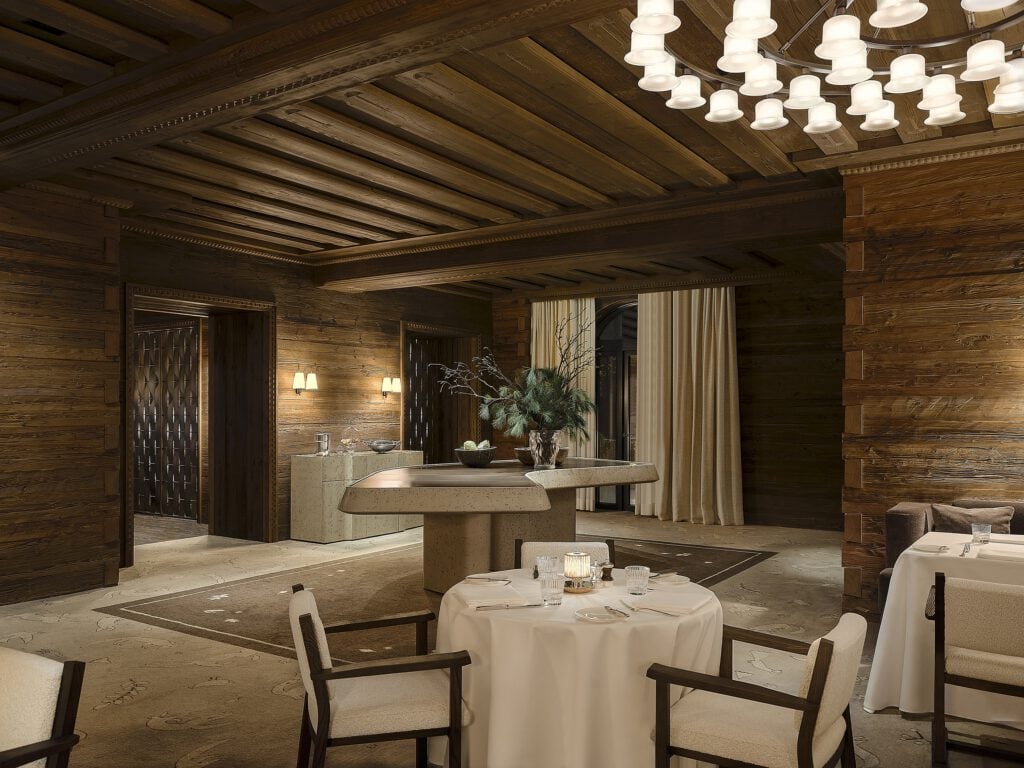
With views over the Alpine landscape, Monti reinterprets mountain hospitality through a contemporary lens.
Architect Jakob Sprenger and creative director Antonia Crespí balance warm woods, woven bronze details and refined Italian influences to create a space that feels both local and timeless.
The atmosphere is intimate without losing its architectural clarity.
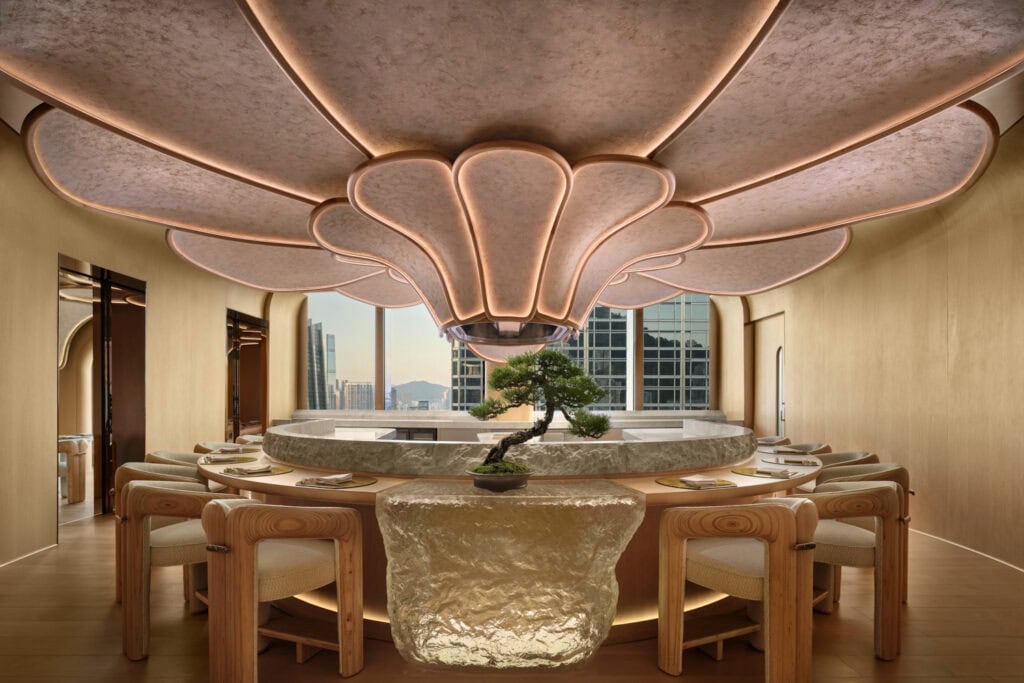
Akira Back — Hong Kong, China
Located inside Zaha Hadid Architects’ striking tower The Henderson, Akira Back blends Korean, Japanese and Western influences into a multisensory composition.
Rounded forms, sculptural ceilings and carefully staged lighting create interiors that feel fluid, immersive and unmistakably metropolitan.
The restaurant mirrors Hong Kong itself: energetic, layered and constantly in motion.
Hana no Kumo — Hong Kong, China
Minimalism becomes meditation at Hana no Kumo.
Designed as a contemporary Japanese mountain refuge, the intimate 24-seat restaurant embraces craftsmanship, silence and ritual through soft timber tones, washi paper accents and delicate sakura-inspired lighting.
Every detail invites stillness.
Monsieur Dior by Anne-Sophie Pic — Beijing, China
Inside Beijing’s House of Dior, architecture, couture and gastronomy merge into a poetic cultural dialogue.
Black-and-white photography, artworks by Hong Hao and references to Christian Dior’s legacy frame Anne-Sophie Pic’s cuisine within a space that feels both elegant and deeply narrative.
The restaurant treats dining like couture embroidery translated into space.
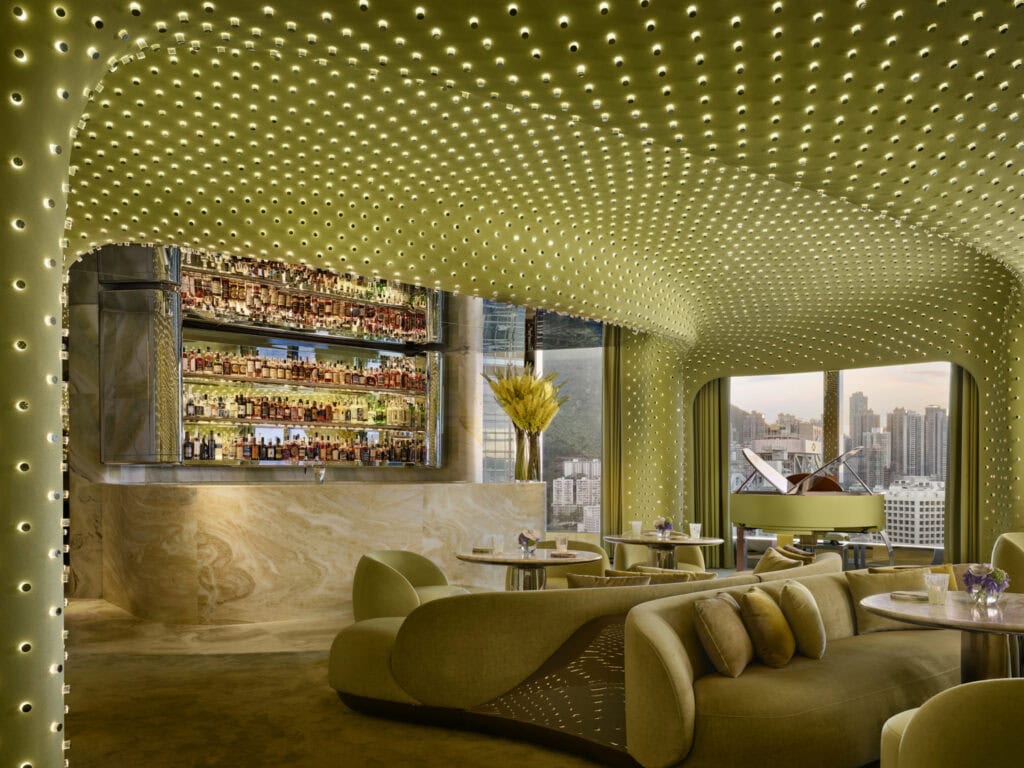
Peridot — Hong Kong, China
Peridot feels like stepping inside a futuristic dreamscape.
Studio Paolo Ferrari’s “Natural Futurism” transforms the cocktail lounge into a surreal environment defined by more than 20,000 handcrafted lights, glowing green tones and mirror-chrome surfaces.
The result oscillates between disco glamour and immersive art installation.
Escā Playa — Ras El Hekma, Egypt
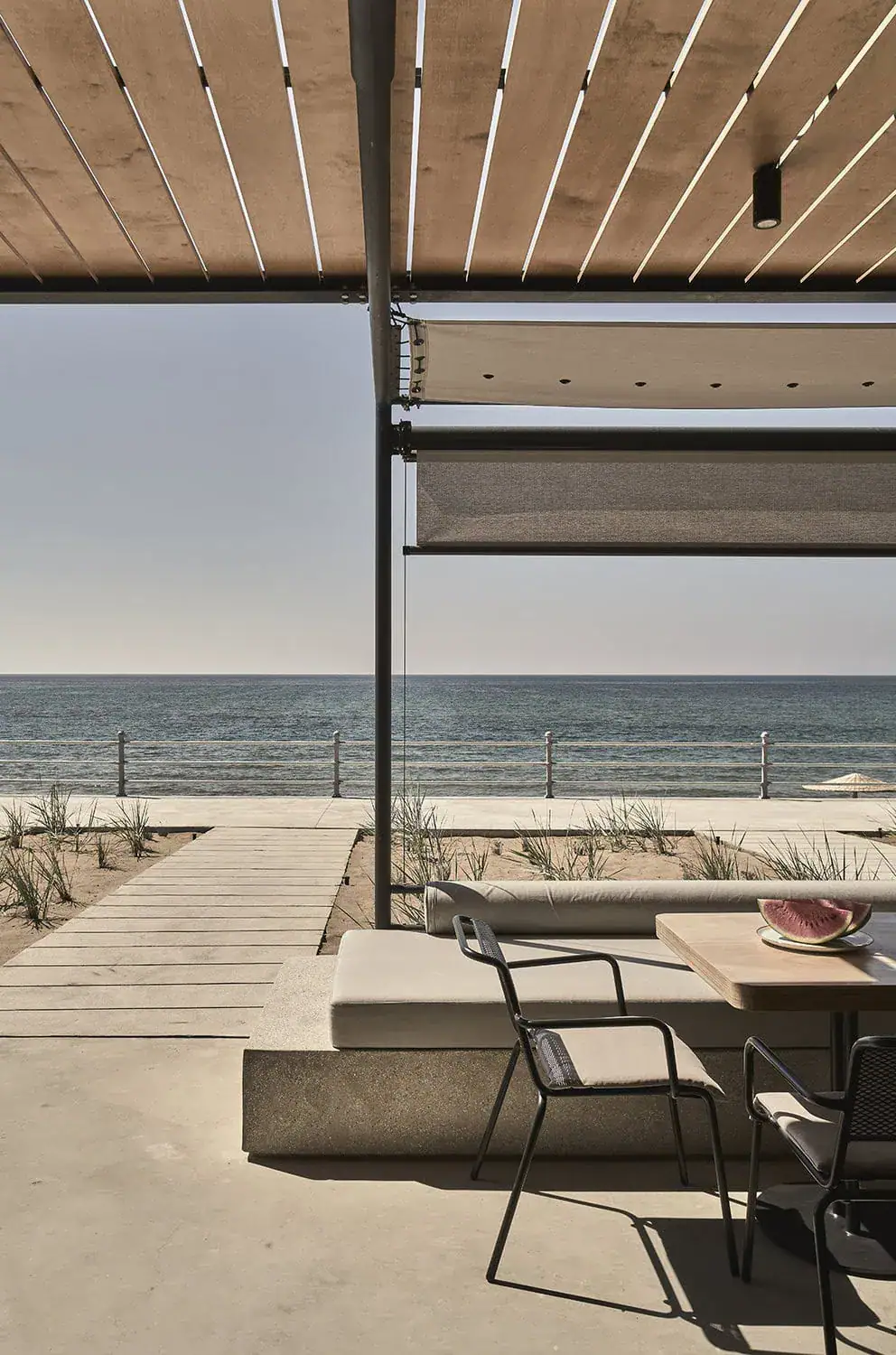
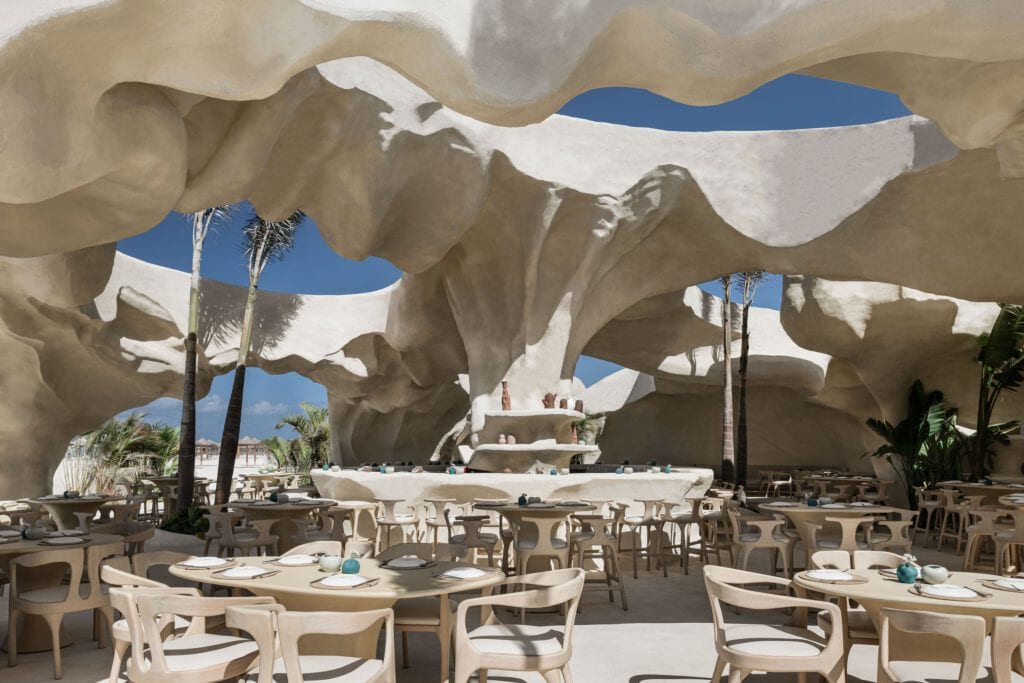
Escā Playa emerges from the Egyptian coastline like a naturally sculpted cave formation.
Architect Mohamed Badie dissolves boundaries between architecture and landscape through porous forms, mineral textures and dramatic transitions between light and shadow.
The restaurant feels less constructed than discovered.
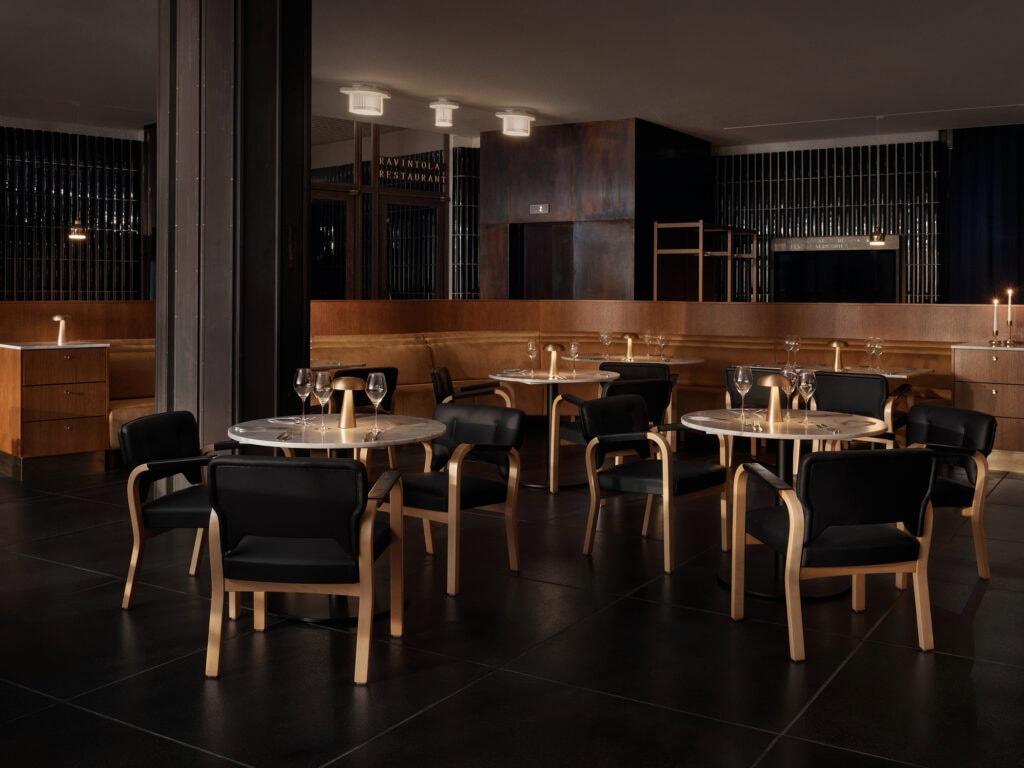
Finlandia Bistro — Helsinki, Finland
Originally designed by Alvar Aalto, Finlandia Hall remains one of Finland’s great architectural landmarks.
Its newly redesigned dining spaces by Fyra respectfully extend Aalto’s modernist vision through restrained materials, bespoke furniture and timeless elegance.
The renovation demonstrates how heritage can evolve quietly and beautifully.
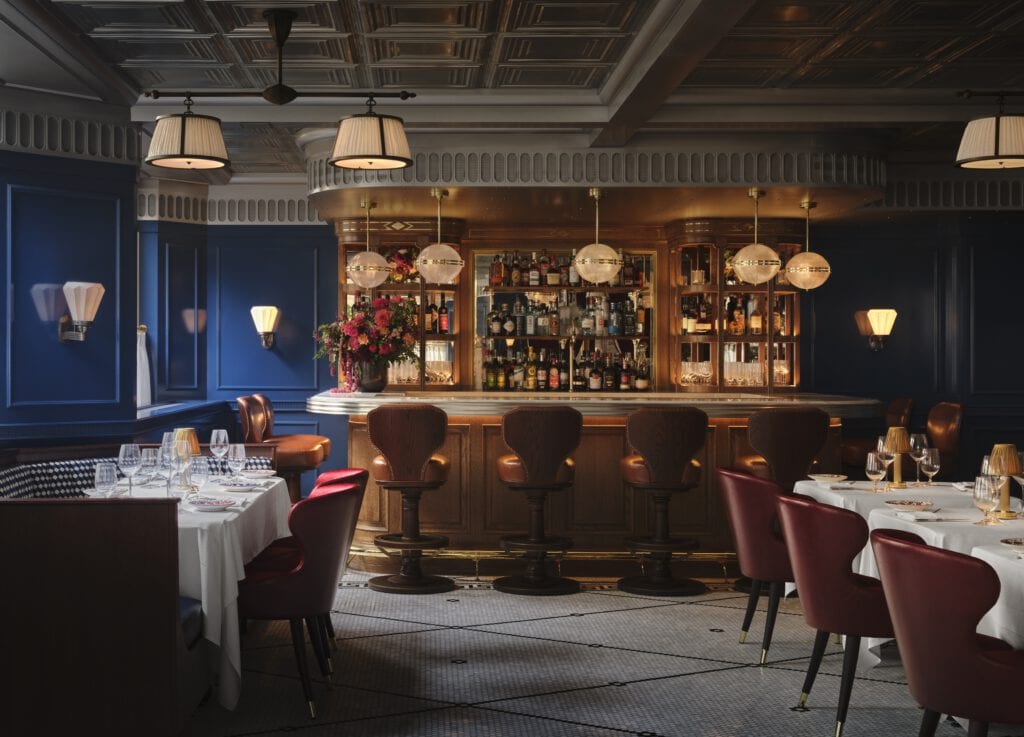
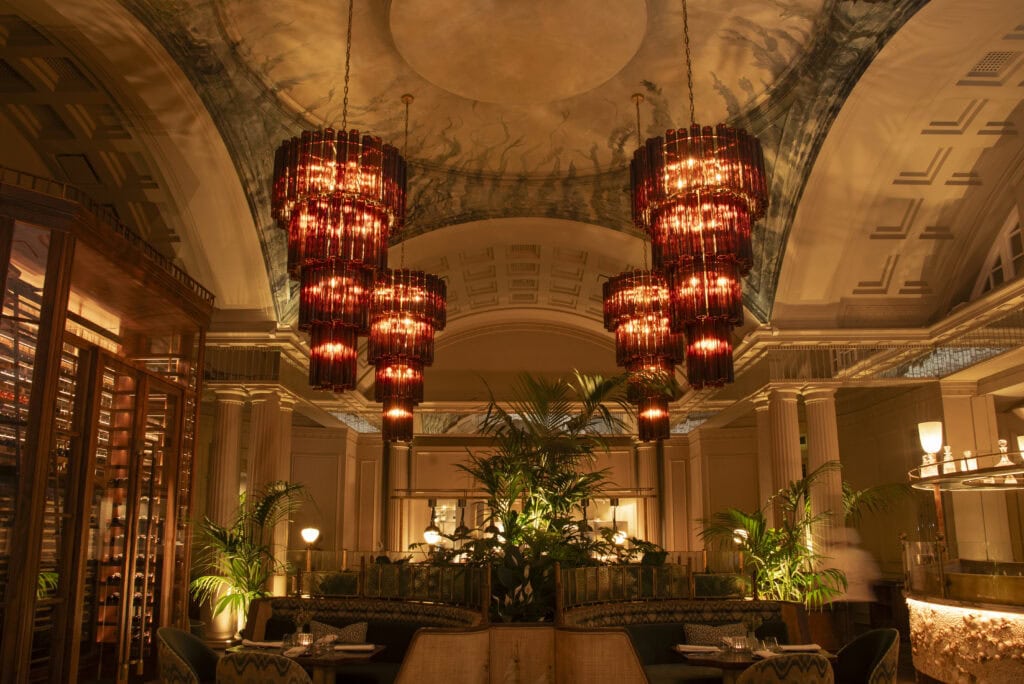
Carbone — London, United Kingdom
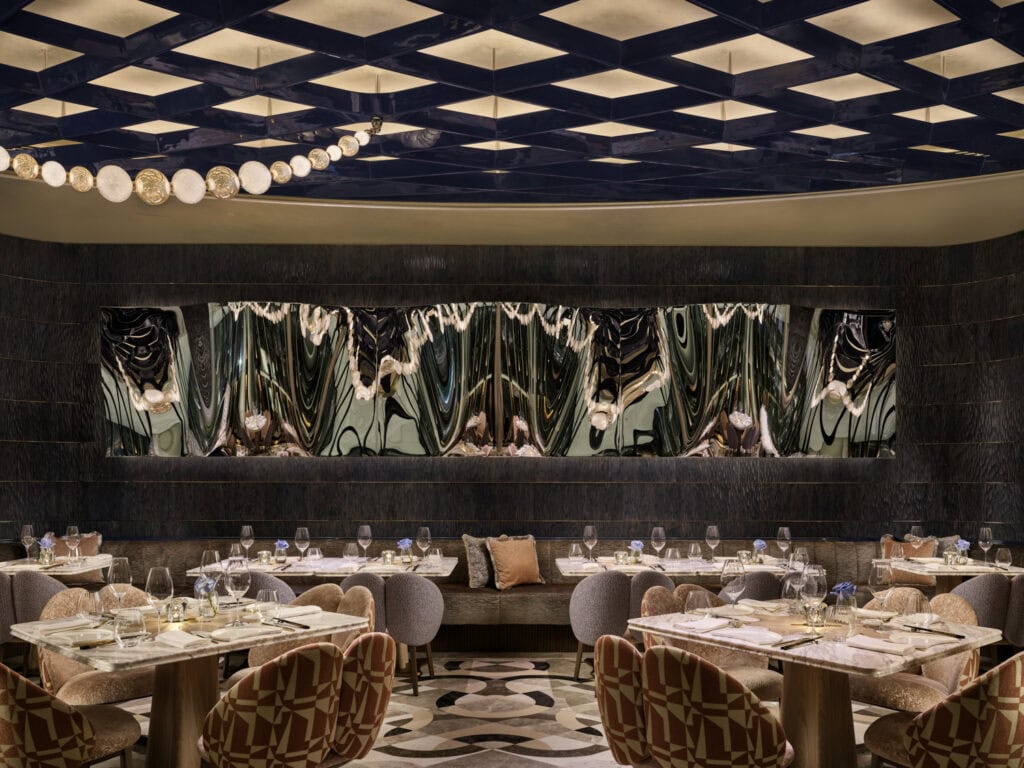
Carbone London reimagines the glamour of mid-century American supper clubs within the former American Embassy in Mayfair.
Velvet banquettes, mosaics and lacquered woodwork create an atmosphere of cinematic exclusivity, while artworks by Ai Weiwei and others introduce contemporary tension.
Everything here feels staged for a glamorous nocturnal narrative.
Rosso — Hinganigada, India
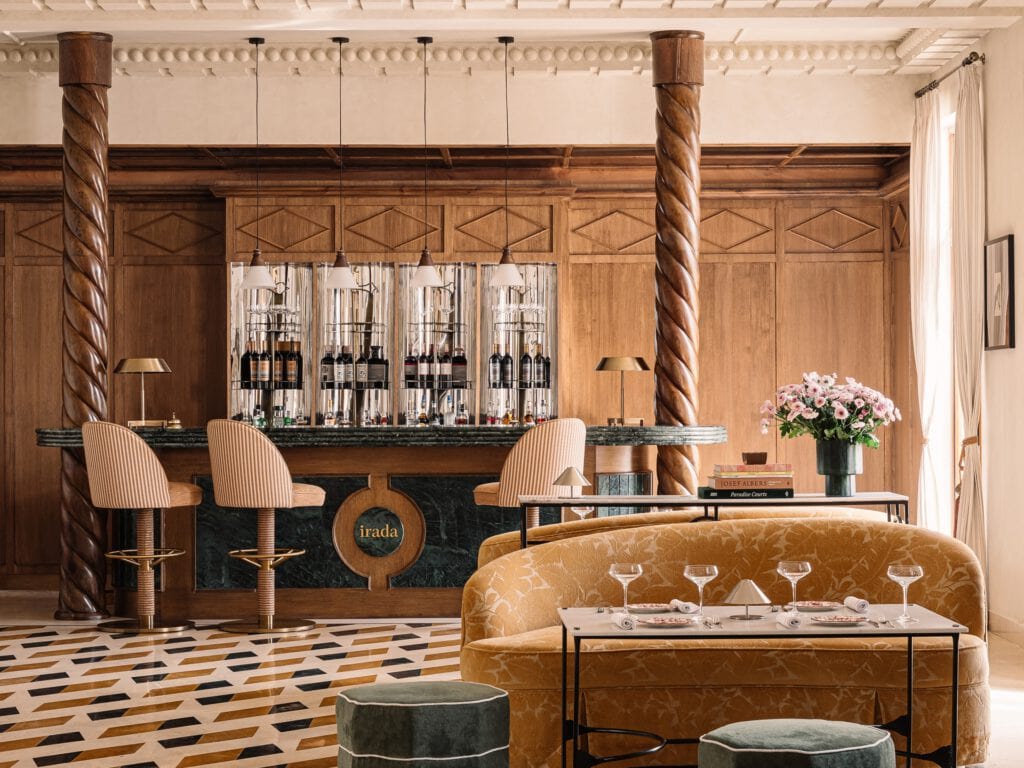
Set within a working winery surrounded by reserve forest, Rosso blends Mediterranean elegance with Indian context.
Designed by Humming Tree, the interiors reinterpret Italian Baroque references through polished woods, green marble and warm natural light.

The result is immersive yet deeply connected to its landscape.
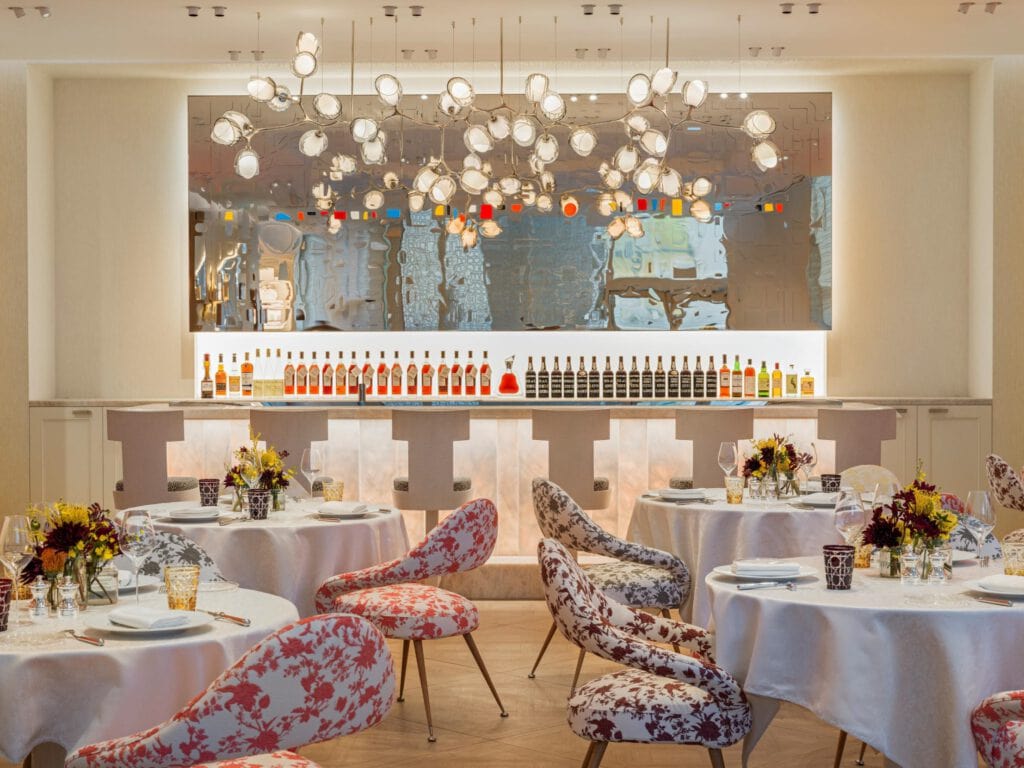
Marlow — Monaco
Marlow brings British eccentricity to Monaco’s new Mareterra district.
Artist and architect Hugo Toro creates layered interiors filled with custom furniture, warm woods and subtle Riviera nostalgia.
The space feels like a fictional members’ club suspended between centuries.
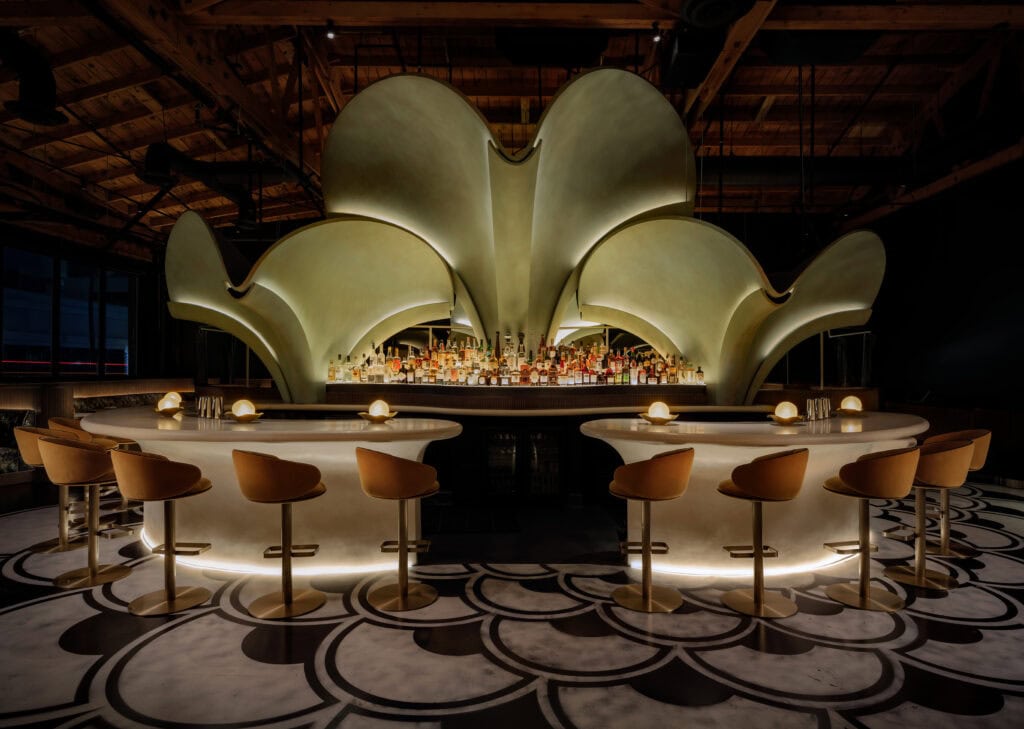
Lucia — Los Angeles, United States
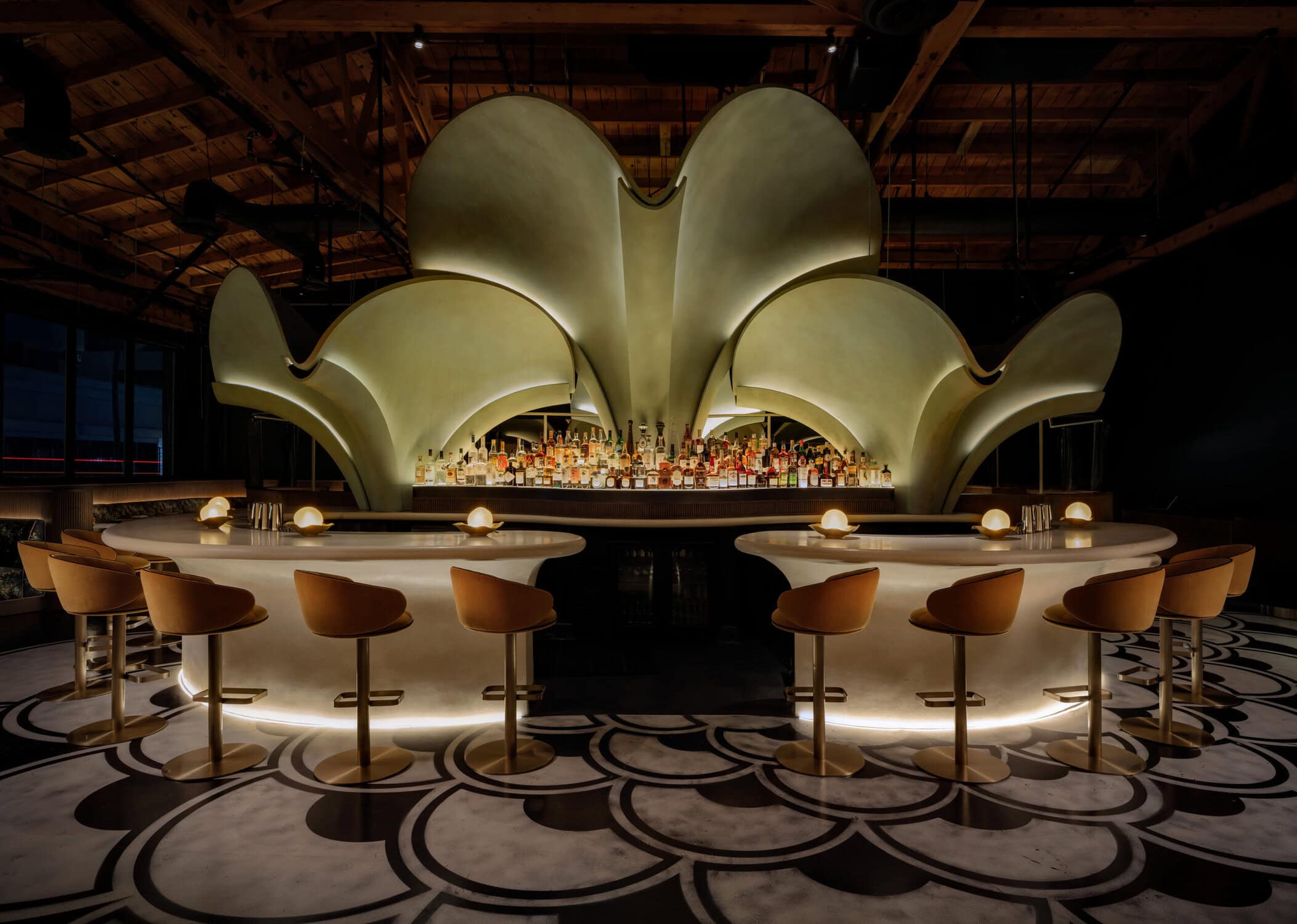
Lucia introduces Afro-Caribbean culture into Los Angeles nightlife through a youthful and highly atmospheric concept.
Designed by Preen, Inc., the interiors feature tropical motifs, sculptural shell forms and a soundtrack woven directly into the dining experience.
The energy is vibrant, playful and unmistakably contemporary.
Monsieur Dior by Dominique Crenn — Beverly Hills, United States
Inside Dior’s Beverly Hills House, Dominique Crenn’s restaurant becomes an ode to Californian light and Parisian refinement.
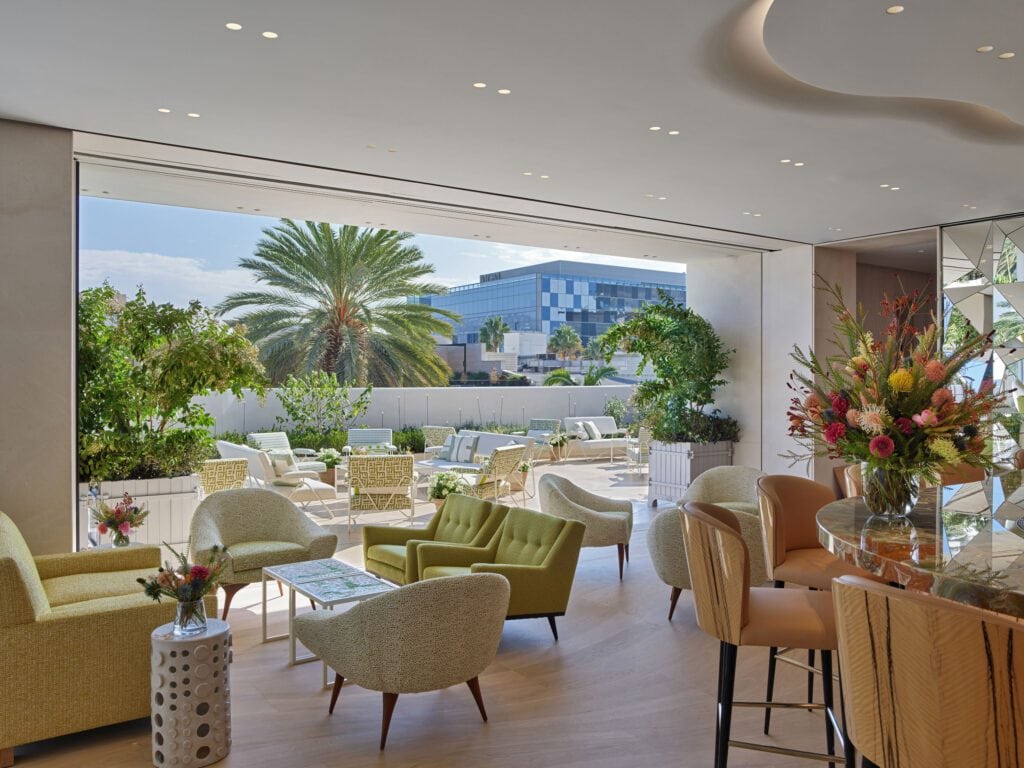
Peter Marino’s interiors combine gardens, couture references and sculptural floral elements with panoramic views over Rodeo Drive.
The boundaries between interior and exterior dissolve into sunlight and colour.
Mottai — Coral Gables, United States
At Mottai, Japanese precision meets contemporary softness.
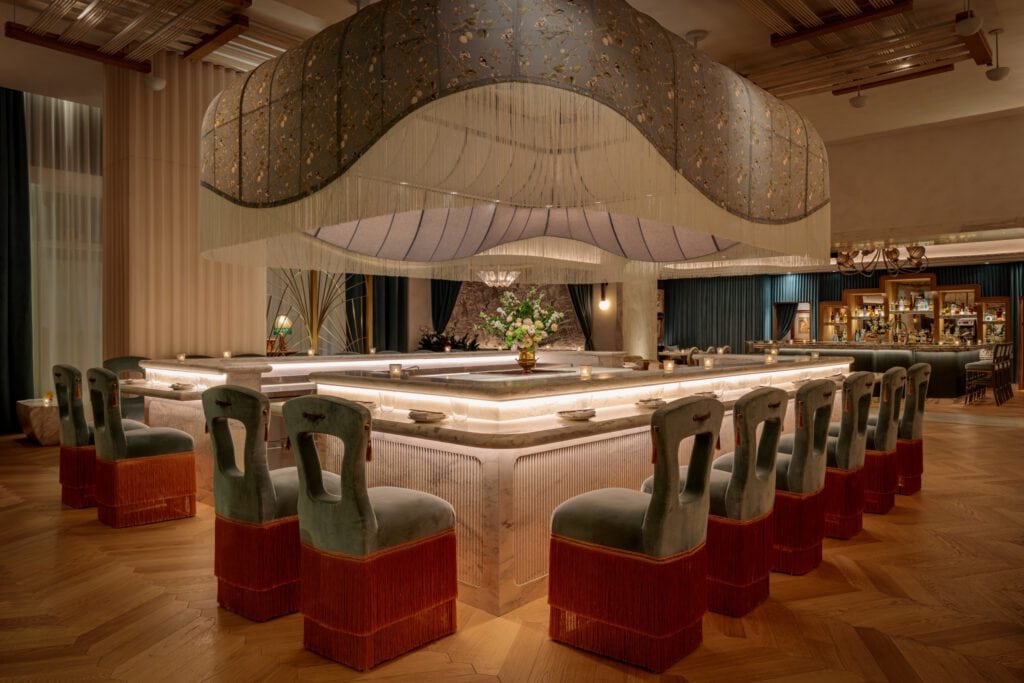
An open sushi bar beneath a delicate canopy forms the architectural centrepiece, while curved forms and tactile materials create intimacy and fluidity.
Dining becomes choreography.
Amura by Ángel León — Cape Town, South Africa
Inspired by marine ecosystems and oceanic exploration, Amura immerses guests in a world shaped by water, biodiversity and storytelling.
Deep green hues, bronze details and layered lighting create an atmosphere reminiscent of underwater forests, while Chef Ángel León’s cuisine celebrates the sea with poetic intensity.
The restaurant feels cinematic, immersive and deeply connected to nature.
Architecture as Emotional Experience
The Prix Versailles 2026 selection reveals a broader shift in contemporary hospitality.
Today’s most memorable restaurants are not defined solely by cuisine, but by the emotions their spaces evoke. They are immersive environments shaped by light, materiality, sound and cultural storytelling.
In this sense, architecture has become part of the menu itself.