

Where textiles become narrative and craftsmanship becomes philosophy
Positioned between art and design, poetry and materiality, Giulio Caponi’s work translates memories, thoughts, and emotions into a visual language—quiet, precise, and deeply personal.
Design as a poetic process
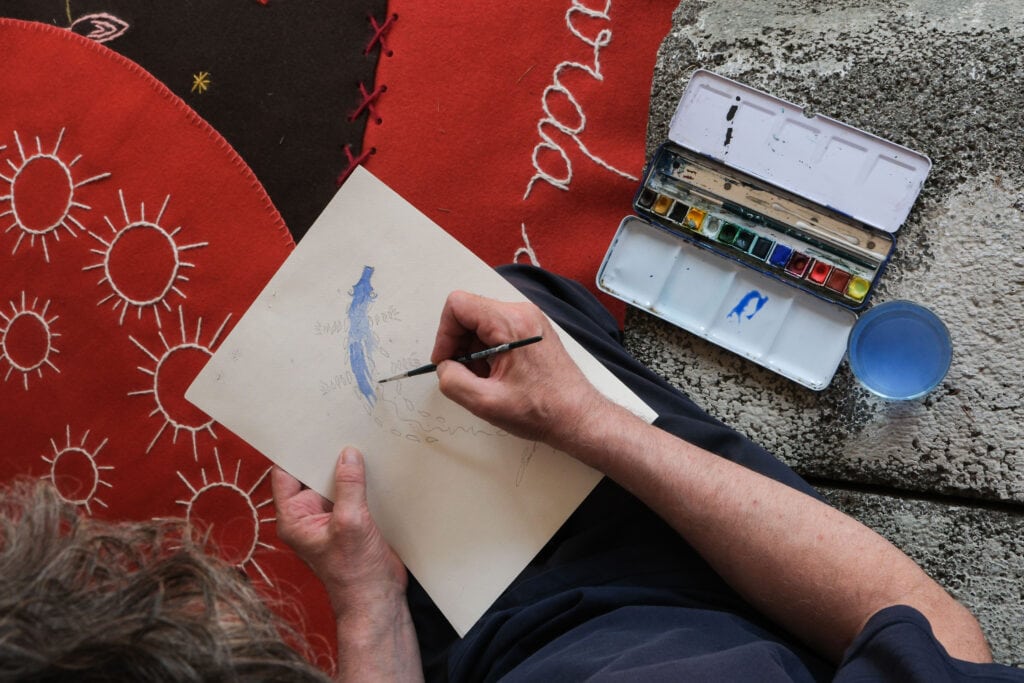
A former journalist, self-taught artist, and poet by vocation, Giulio Caponi pursues a creative path where word, image, and material merge. His works originate from fragments—memories, impressions, reflections—that first emerge as intuition, then take shape as drawings, and finally become embroidery.
The result: rugs and tapestries that transcend function. They are visual poems—objects balancing artistic expression and design.
The value of slowness
Caponi’s atelier is a space of deceleration. His process follows a meditative rhythm rather than industrial logic. Each piece begins with an intentional gesture—a sketch, a vision, a memory.
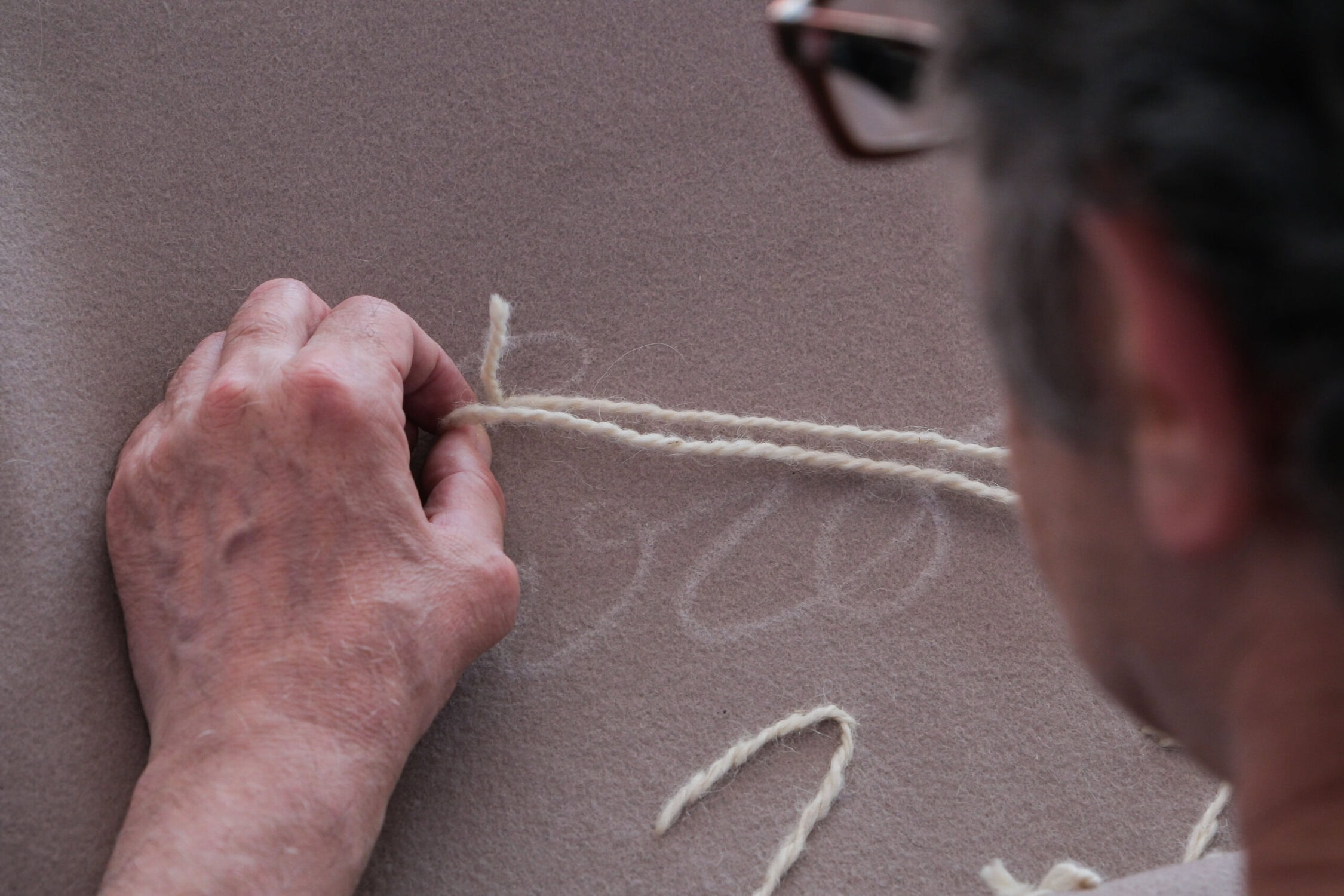
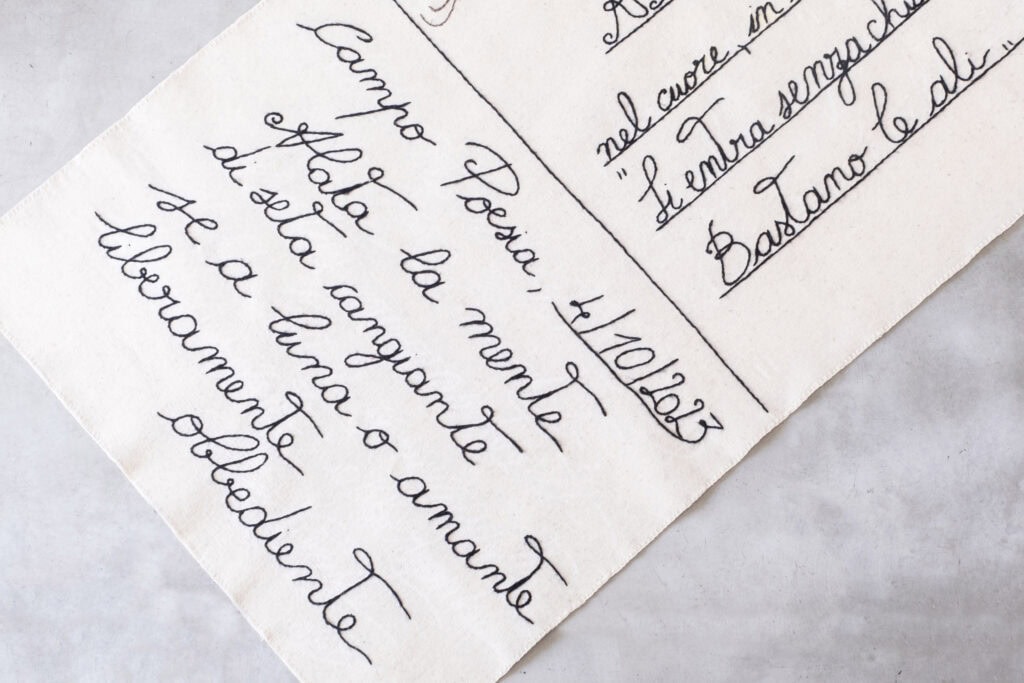
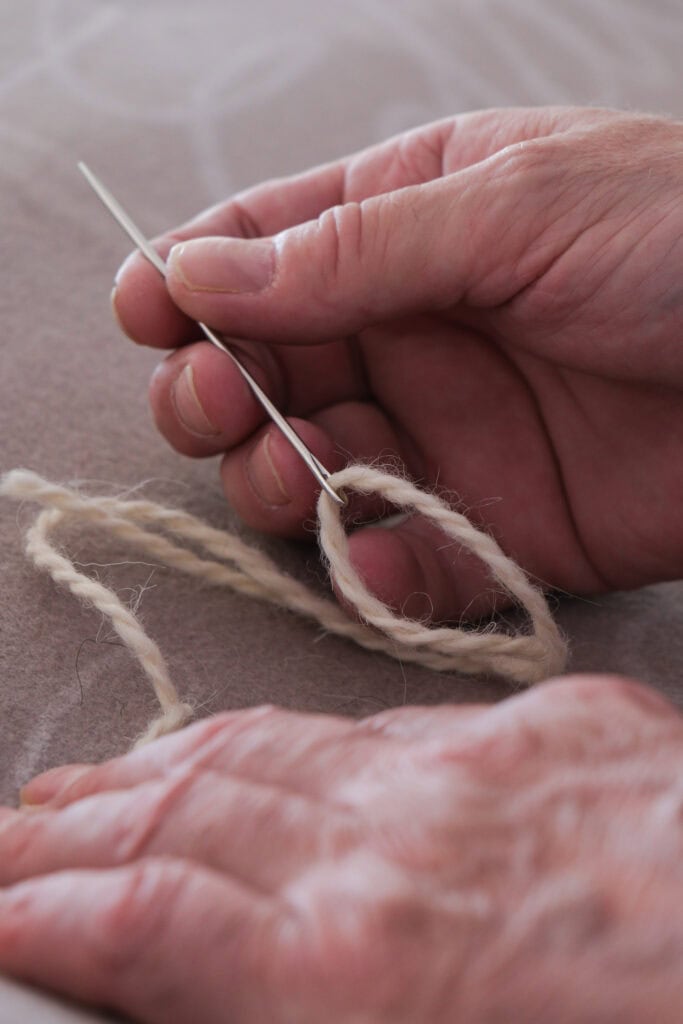
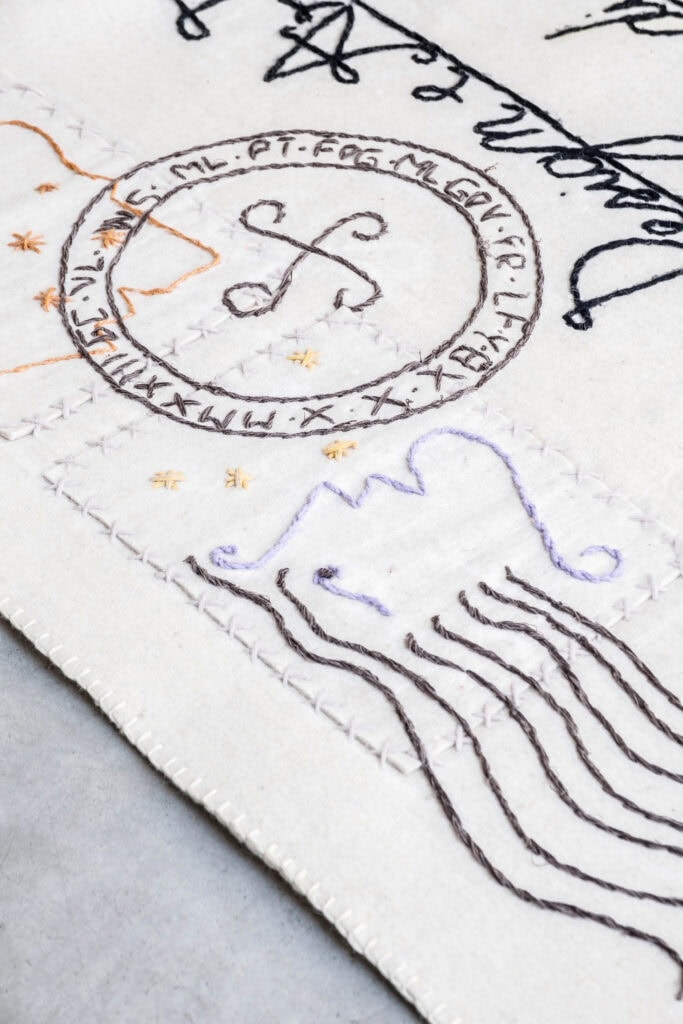
Through traditional embroidery techniques such as stem stitch and cross stitch, thread becomes a narrative tool. Lines transform into script, surfaces into landscapes of thought. Craftsmanship is not merely a technique but the essence of the work itself—time made tangible.
Authenticity and memory culture
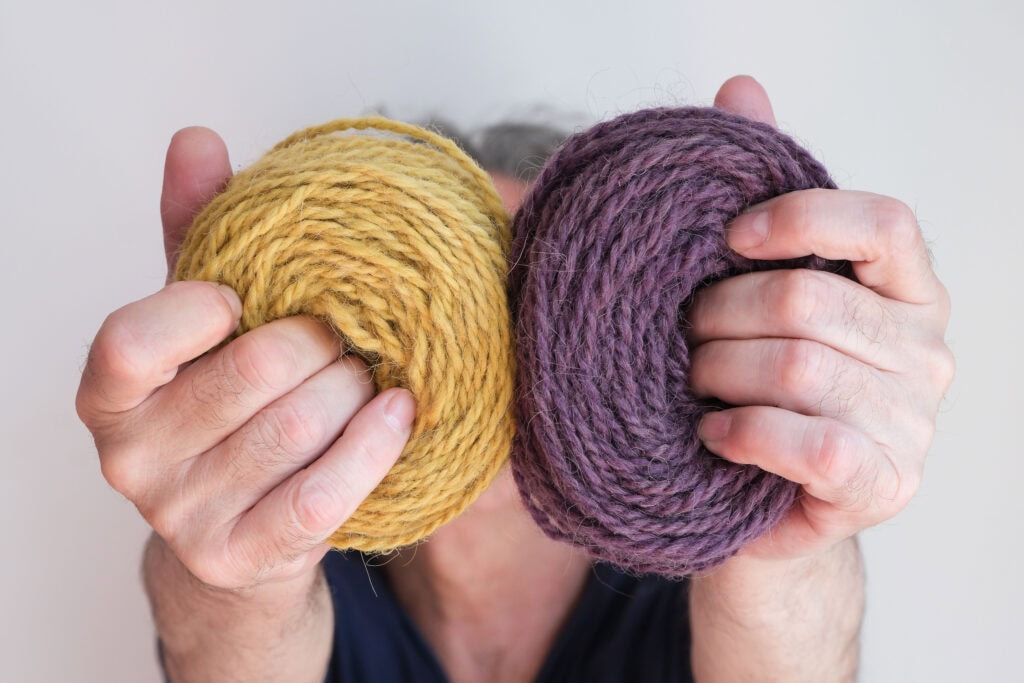
At the core of Caponi’s practice lies a commitment to authenticity. His creations preserve the value of manual craftsmanship while restoring poetic dignity to everyday objects and rituals.
Postcards, vinyl records, dedications, and imagined correspondences become narrative elements. Each piece is a unique original—unrepeatable and shaped by the intensity of its origin.
“Cartolina – A Design e Arte”: A textile homage
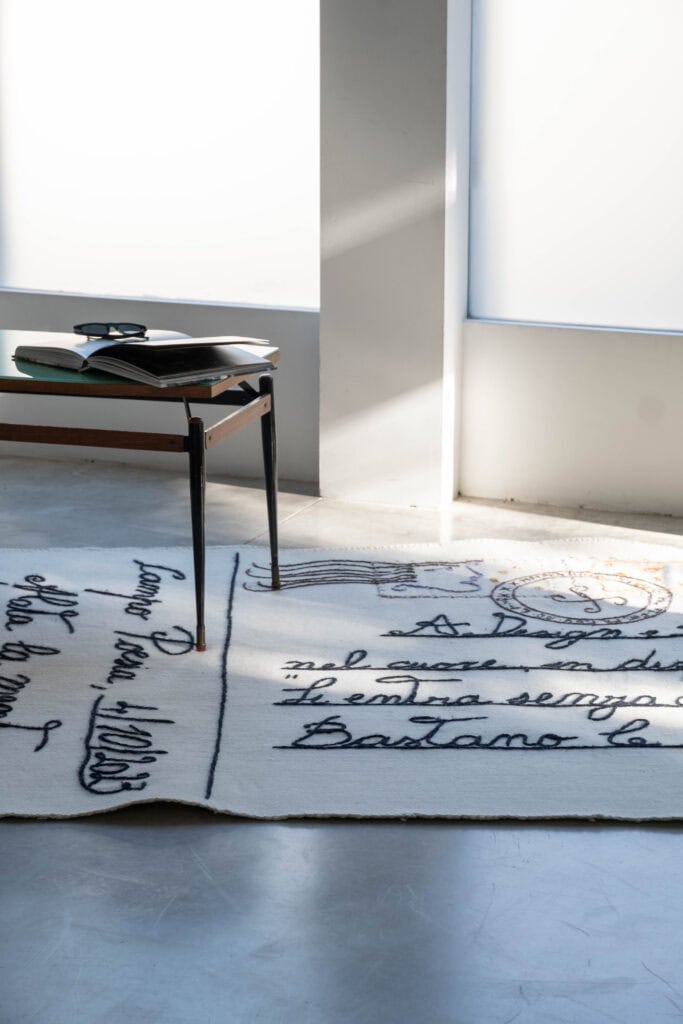
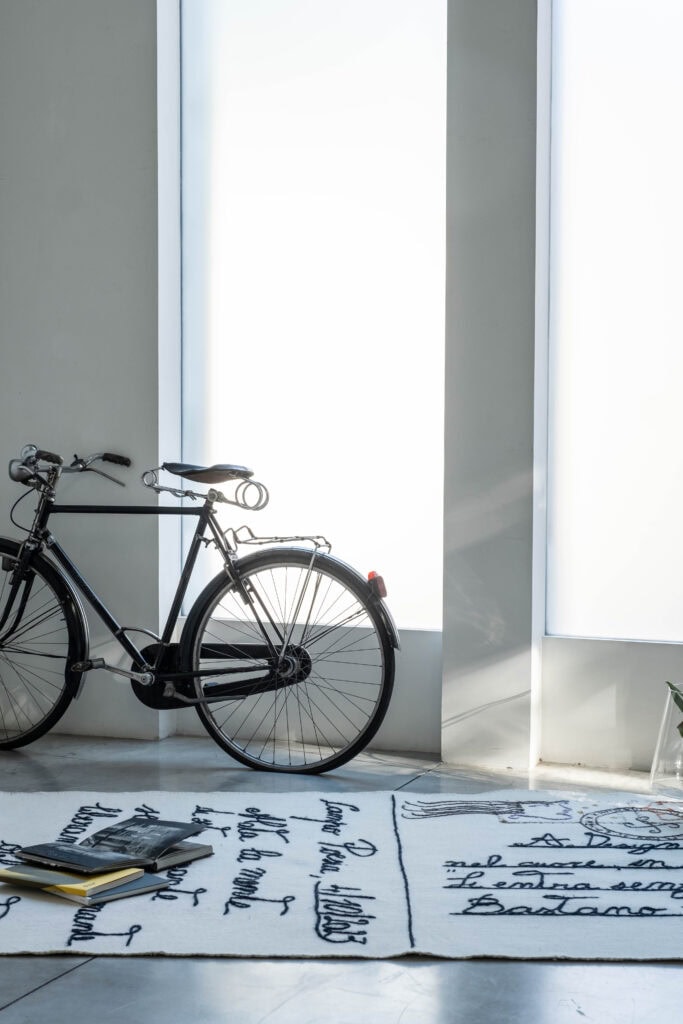
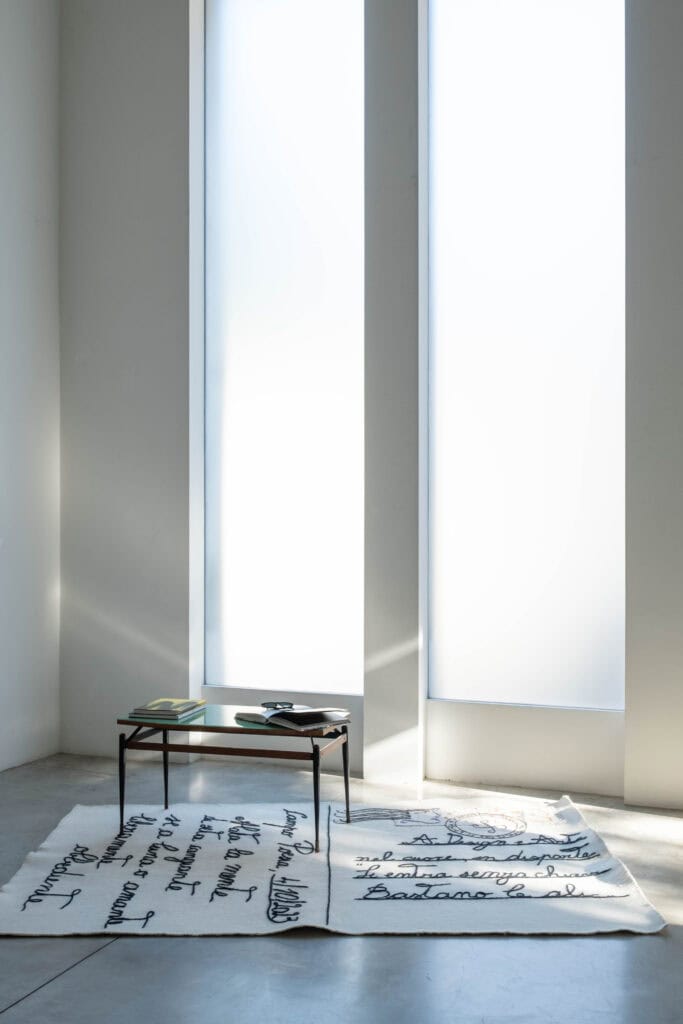
A key work from the CARTOLINE series, “Cartolina – A Design e Arte,” reflects on the nostalgic role of postcards as emotional connectors.
Crafted from natural Alpine wool felt from South Tyrol and entirely hand-embroidered using stem stitch, the piece (150 x 225 cm) becomes a spatial memory—a dialogue between past and present.
Caponi describes his method as that of a “literary DJ,” mixing quotes, thoughts, and fictional messages into layered narratives that exist between reality and imagination.
Between art and function
Caponi’s works exist in a constant tension: between artistic gesture and decorative function, personal narrative and universal resonance. His atelier becomes a place where imagination takes material form—and where design reveals its deeply human dimension.