


The Doshi Retreat at Vitra Campus – Architecture beyond the object
The Vitra Campus in Weil am Rhein has long been a place where architecture is not just built but articulated. Different positions of modernism coexist here—clearly defined yet in constant dialogue. With the Doshi Retreat, a new intervention emerges: one that quietly but decisively resists this order.
A Campus as Argument: Architecture as Discourse
What makes the Vitra Campus unique is not the presence of iconic architects, but the way their works interact. Deconstructivism, minimalism, high-tech, and spirituality coexist like voices in an intellectual conversation.
The campus reflects Rolf Fehlbaum’s vision: architecture as a cultural practice beyond function and form. Buildings are not isolated objects, but part of an ongoing discourse shaped over decades.
Walking through the campus becomes an act of reflection rather than mere movement.
The Doshi Retreat: A Path Instead of an Object
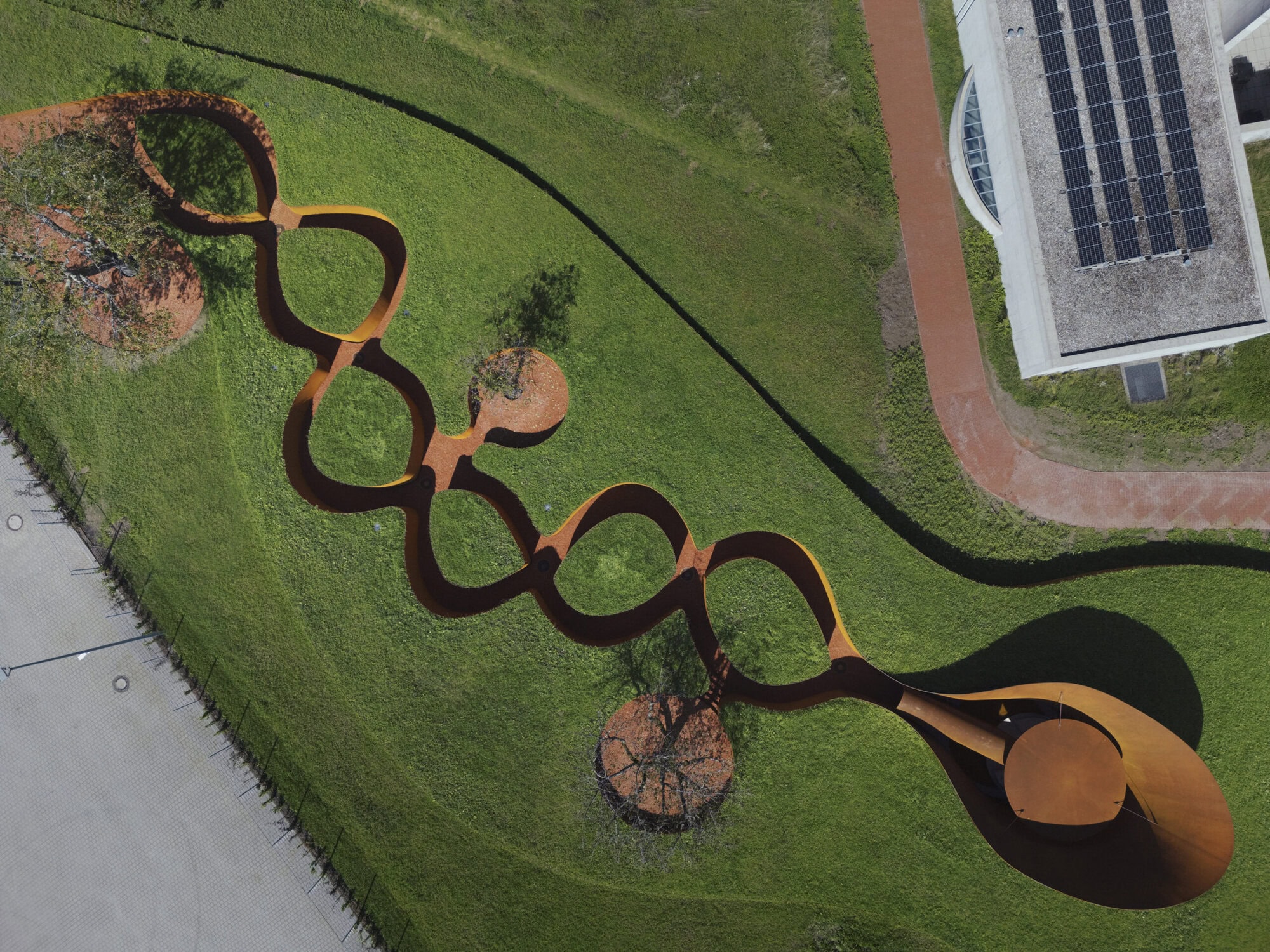
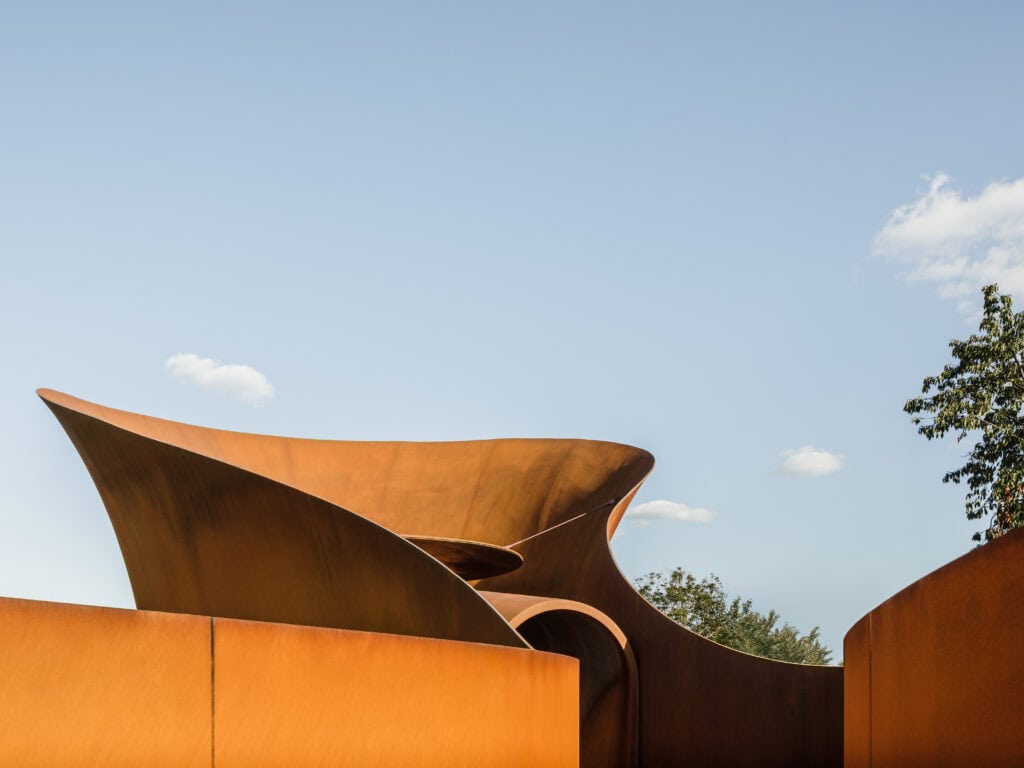
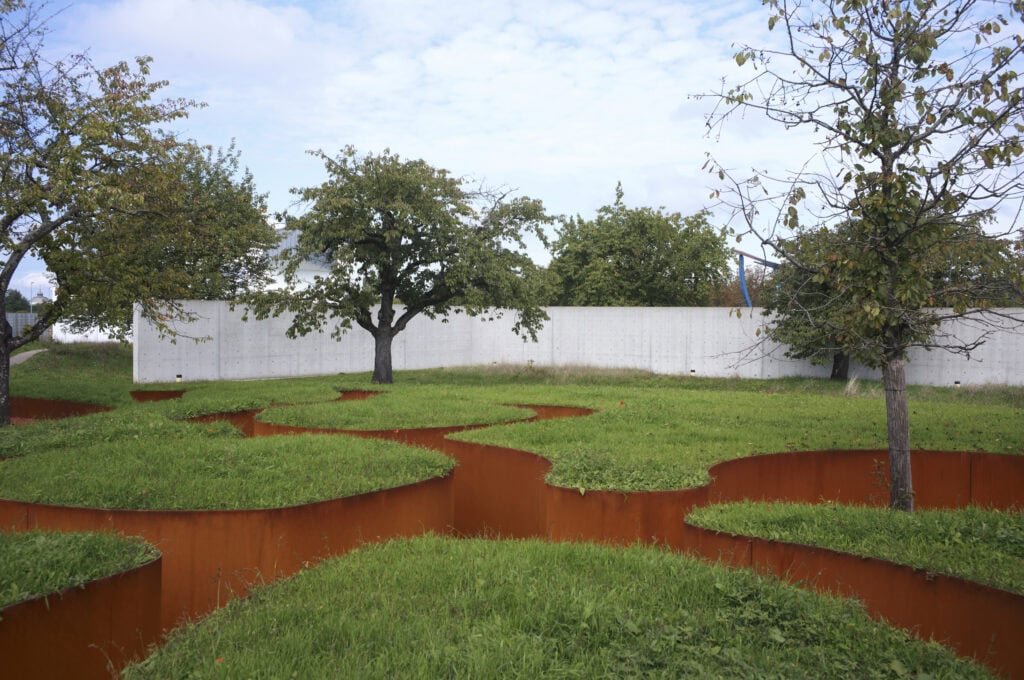
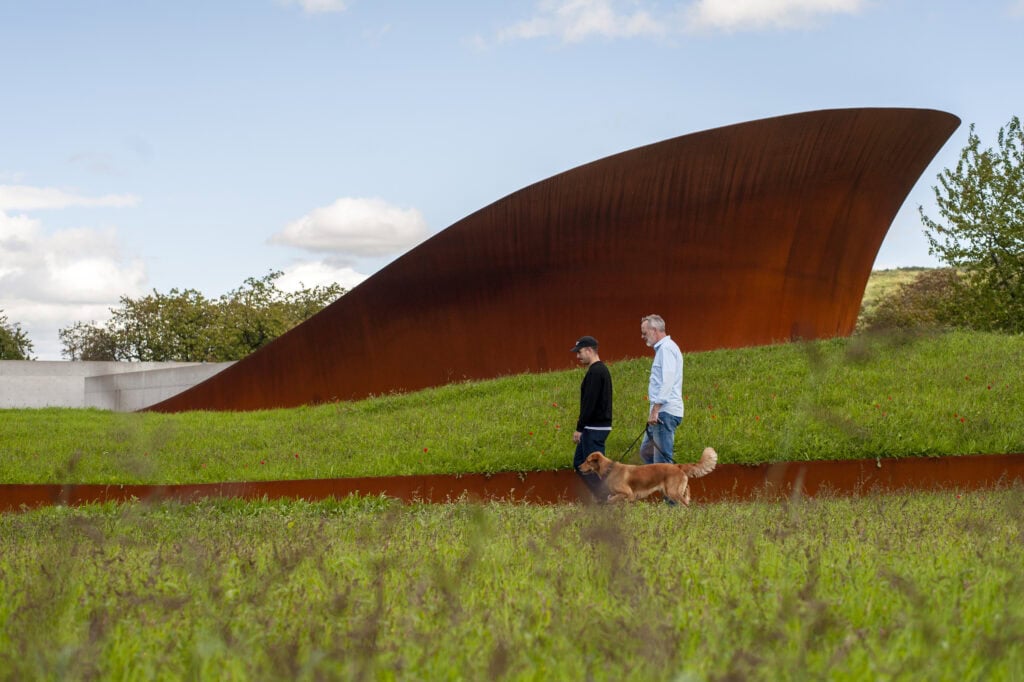
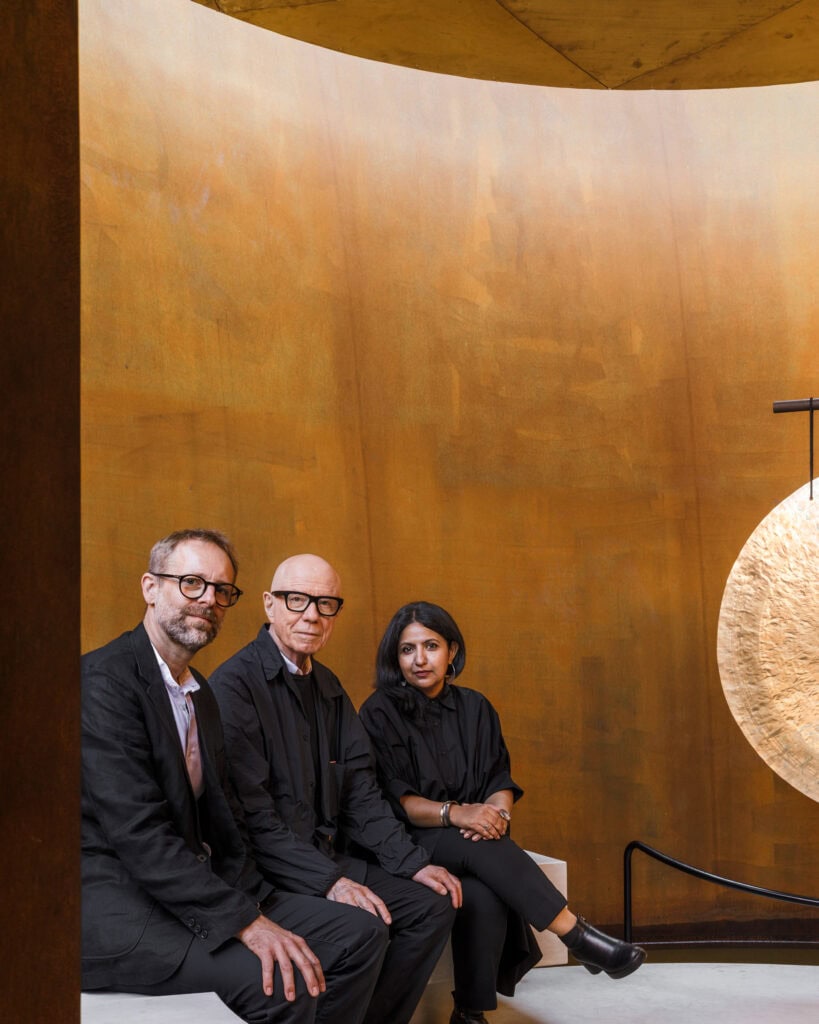
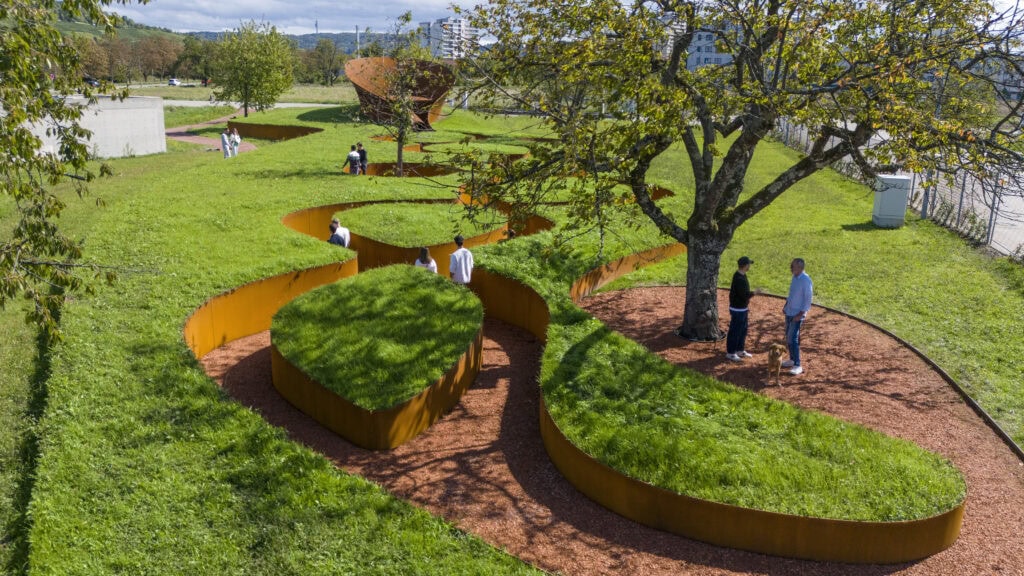
Within this context, the Doshi Retreat appears as a radical gesture. Originally conceived by Balkrishna Doshi and continued by Khushnu Panthaki Hoof and Sönke Hoof, it is not a pavilion or structure—but a process.
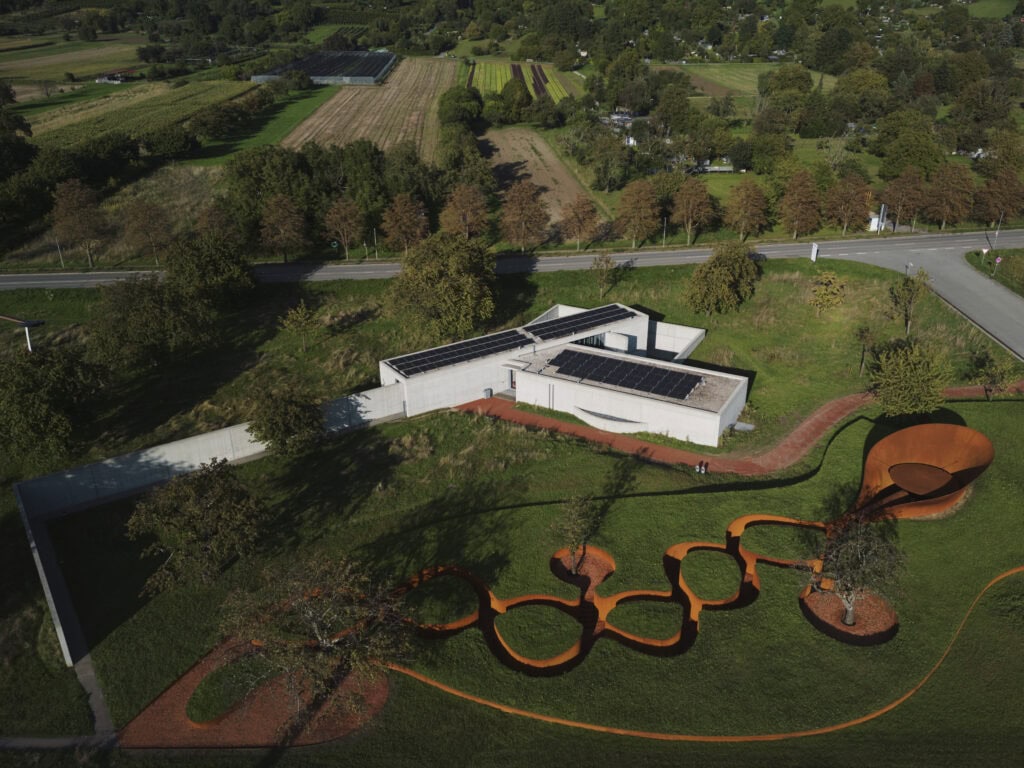
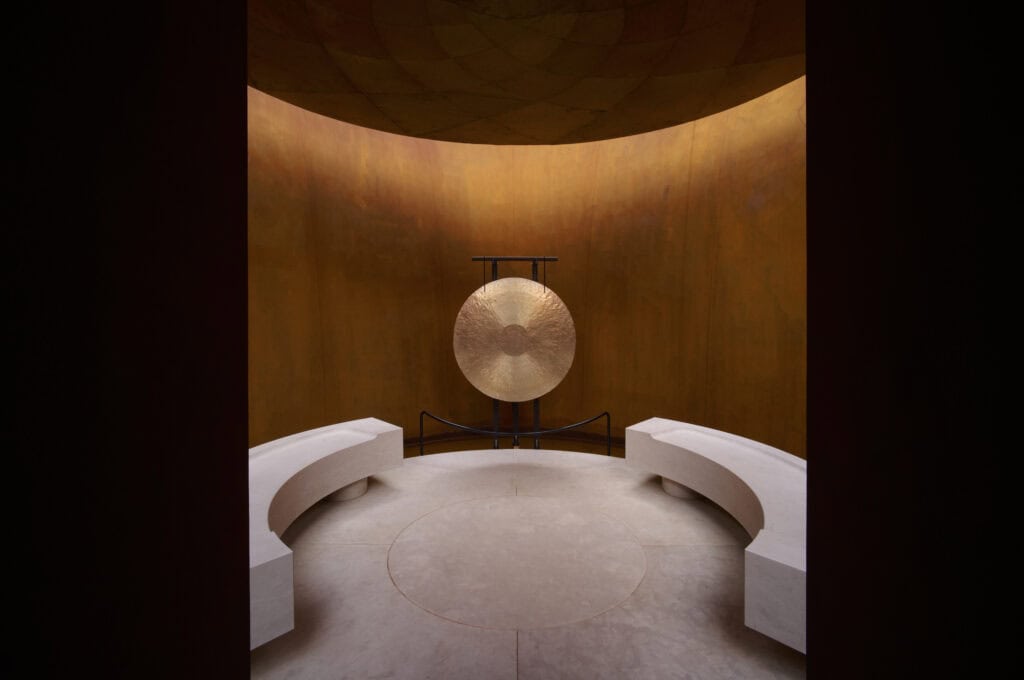
A winding path leads beneath the surface. Sound becomes spatial: gongs and flutes resonate through the body, transforming architecture into a sensory experience.
It is not an addition, but a shift—a subtle intervention that invites rather than asserts.
Spirituality as a Counterpoint to Acceleration
Unlike many contemporary interventions, the retreat is rooted in spirituality rather than technology. Inspired by the concept of Kundalini, space is understood as transformation.
Architecture is no longer something to use, but something to move through—like a state of being. The campus, often seen as a showcase of avant-garde architecture, reveals itself as a space for deceleration.
Fehlbaum’s Thesis: Expanding Perception
Rolf Fehlbaum describes the campus as a place where architecture, landscape, and perception merge. The Doshi Retreat intensifies this idea:
“It is the sound resonating through the visitor’s body that dissolves the boundary between self and structure.”
There is no final destination—only a contemplative space. The true experience lies in detaching from the outside world.

Disruption as an Aesthetic Principle
Here, disruption is redefined—not as acceleration, but as intentional slowing down.
Gehry disrupts form, Hadid geometry, Ando light. Doshi disrupts the very idea of the building.
Instead of an object, a situation emerges.
Instead of a program, a field of possibilities.
Instead of a view, a movement.
A Quiet Conclusion: The Architecture of Pause
In the end, a paradox remains: an architecture that withdraws to become more intense. A place not monumental, but intimate.
Perhaps this is the true modernity of the Doshi Retreat: its ability to remove us, even briefly, from the logic of constant motion.