
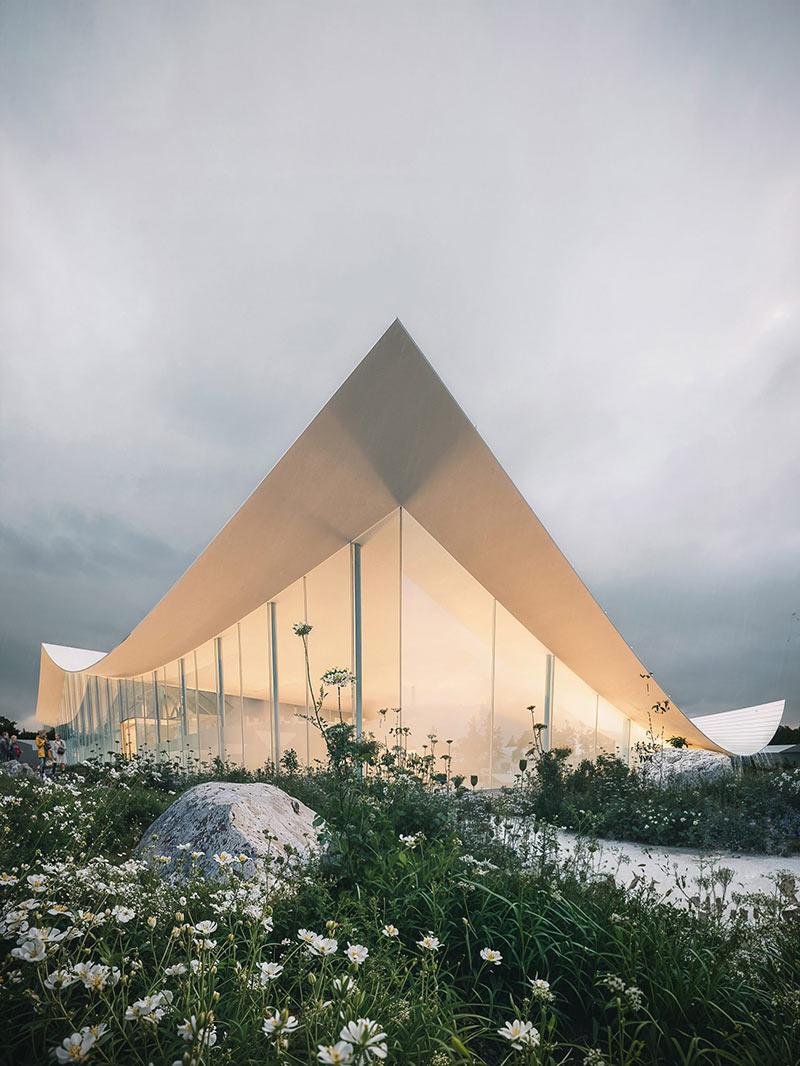
The Museum for Papirkunst on the North Sea coast of Denmark is expanding its site in a disused Aldi supermarket. This spectacular and sustainable new design by architectural firm Bjarke Ingels has a roof that looks like a folded sheet of paper.
When architect Peder Vilhelm Jensen-Klint embarked on his first attempt to make a lampshade out of folded paper around 1900, it was the beginning of a Danish success story. Born out of the necessity to generate a more diffuse light from the petroleum lamp, this developed into one of the most renowned companies for Danish design and craftsmanship. The iconic Le Klint lamps made from pleated and folded paper have been among the classics of Scandinavian design since the company was founded in 1943.
Paper art is deeply embedded in our cultural heritage.
Working creatively with paper is a traditional art in Denmark, evidenced by the imaginative paper cuttings made by author Hans Christian Andersen. He is said to have developed the tradition of Julehjerte – the pleated paper hearts that still decorate Danish Christmas trees even today. Therefore, it is no coincidence that the country is home to one of the most famous paper cut artists, Karen Bit Vejle.
Museum in repurposed supermarket
The Museum for Papirkunst was established by her in the resort of Blokhus on the North Sea coast of Denmark in 2018. Now aged 66, the psaligrapher – to use the technical term – is director of Scandinavia’s only museum that is specifically dedicated to paper artistry and design. And soon it will benefit from a much larger building.
“Paper art is deeply embedded in our cultural heritage,” explains Karen Bit Vejle. “Carrying this legacy into the future is something that this museum has at its heart. We are also proud of recycling an existing building.”
The museum has chosen to expand its current site in a building formerly used by the retail chain Aldi. As an adaptive re-use project, it will revitalize an originally disused 900 m² building, expanding it to create floor space of 3,200 m². Danish star architect Bjarke Ingels designed the project, which was developed in collaboration with the museum director.
Beneath a sheet of paper
In line with the theme of the museum, the building is topped with a lightweight roof that resembles a folded sheet of paper. The existing building and new space are united underneath the wooden roof structure and have various functions such as offices, workshops, seminar rooms and storage.
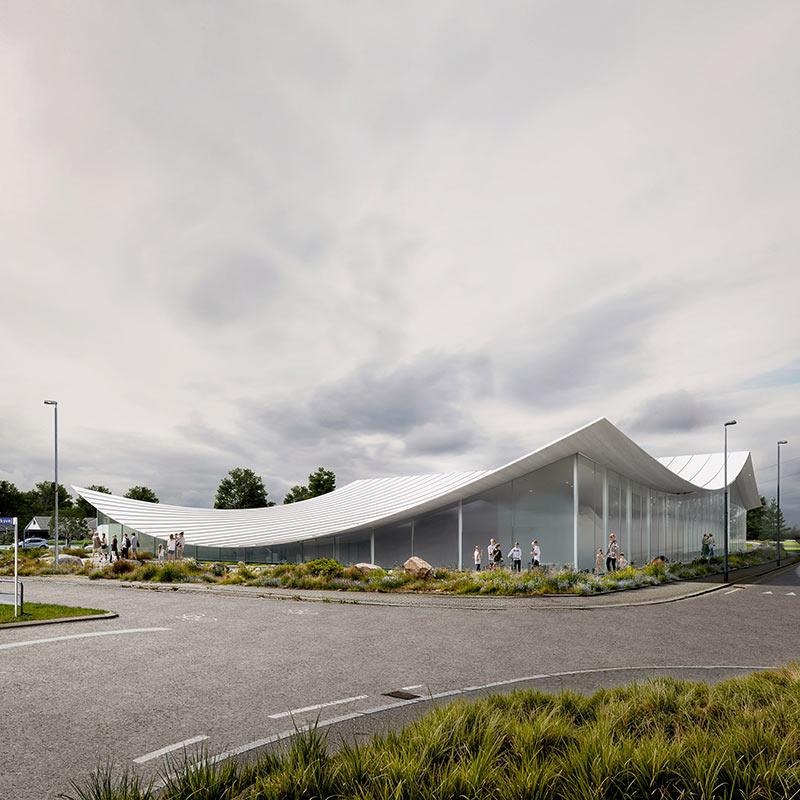
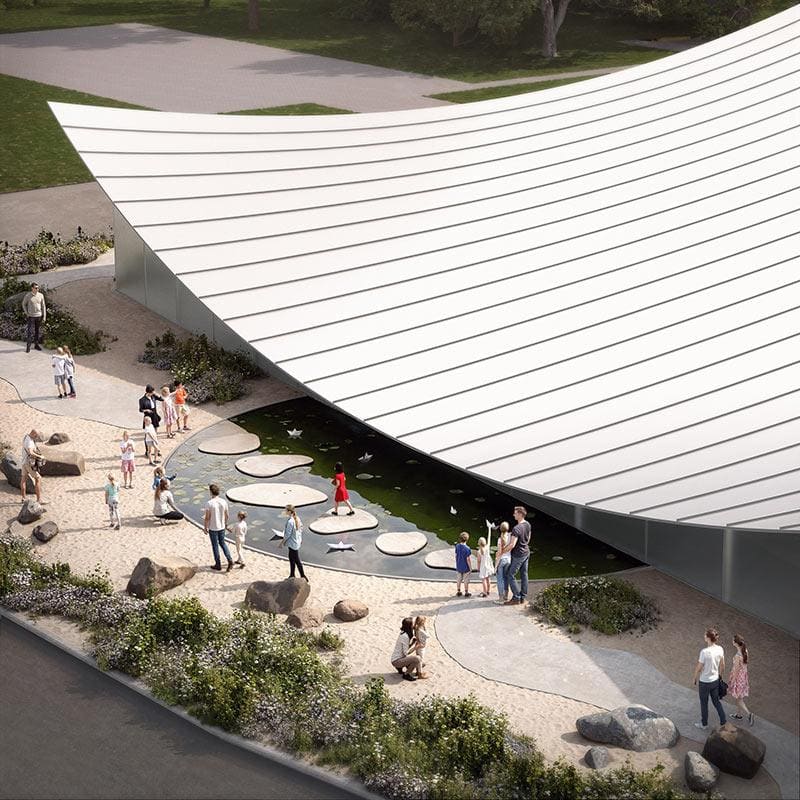
By treating the roof surface like a single sheet of folded paper, existing and new functions are brought together in one unifying gesture.
Bjarke Ingels, Architekt
“Paper art is about creating three-dimensional shapes and complex images from a monochromatic two-dimensional material – a sheet of paper. By treating the roof surface as such – a single sheet of folded paper – existing and new functions are brought together in one unifying gesture,” architect Bjarke Ingels explains in a description of the concept behind the design. “And an obsolete supermarket finds new life under the floating curved roof.”
Adapted to suit the climate
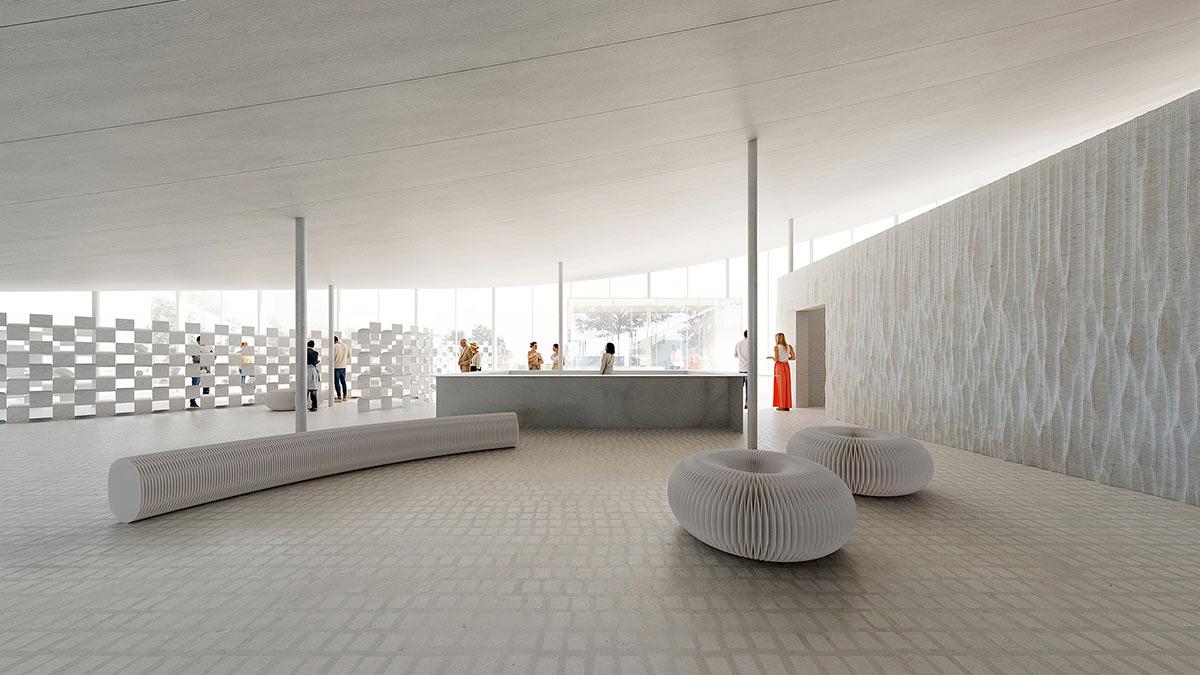
The existing walls of the former supermarket will feature a new acoustic-regulating outer layer that was inspired by origami and designed in partnership with several paper artists. Flooded with daylight inside, the rooms are white throughout. Only the different textures of the materials set themselves apart from one another.
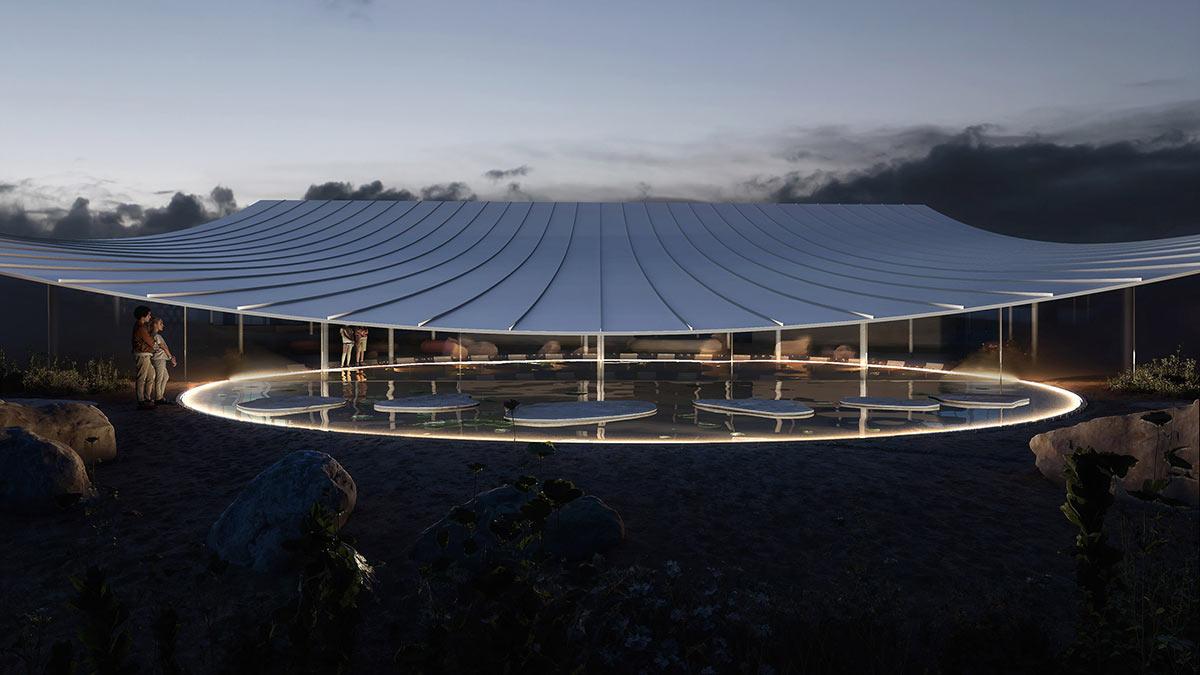
Besides the whitewashed wood for the timber roof framework, the construction also uses bricks. The furnishings are very spartan and simple, allowing the rooms and their exhibits to take full effect. “The expressive is accentuated by the clear, complexity arises from simplicity,” as Ingels explains.
An obsolete supermarket finds new life under the floating curved roof.
Bjarke Ingels, Architect
Outside the museum, a path winds its way through a naturalistic landscape. Rainwater runs off into a pond with stepping stones from the lowest point in the roof. Taking a similar approach to the recent design by Dorte Mandrup for the Crafts College in Jutland, this is another concept that allows for the effects of climate change.
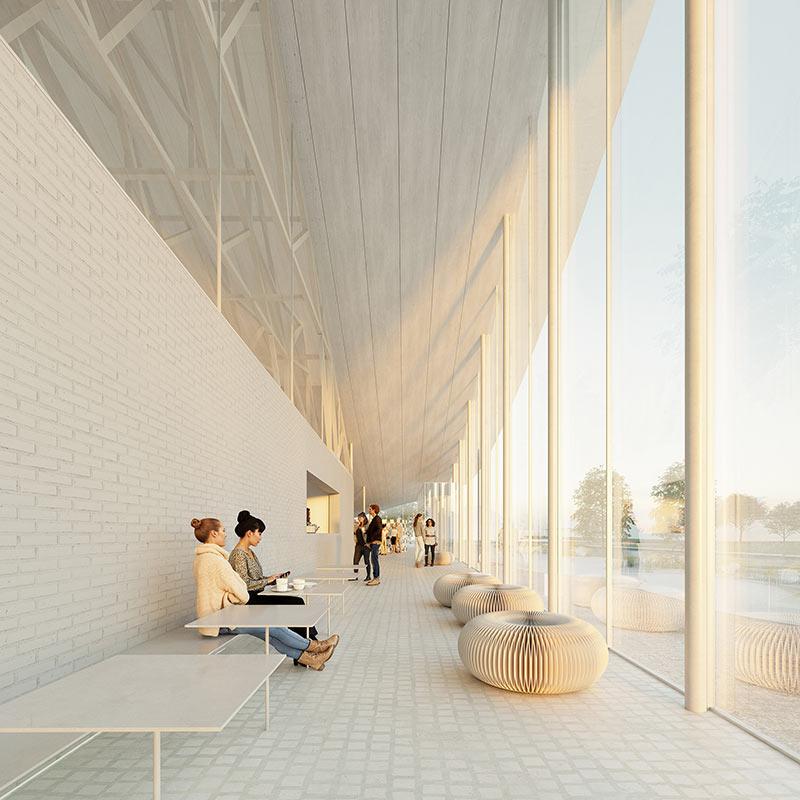
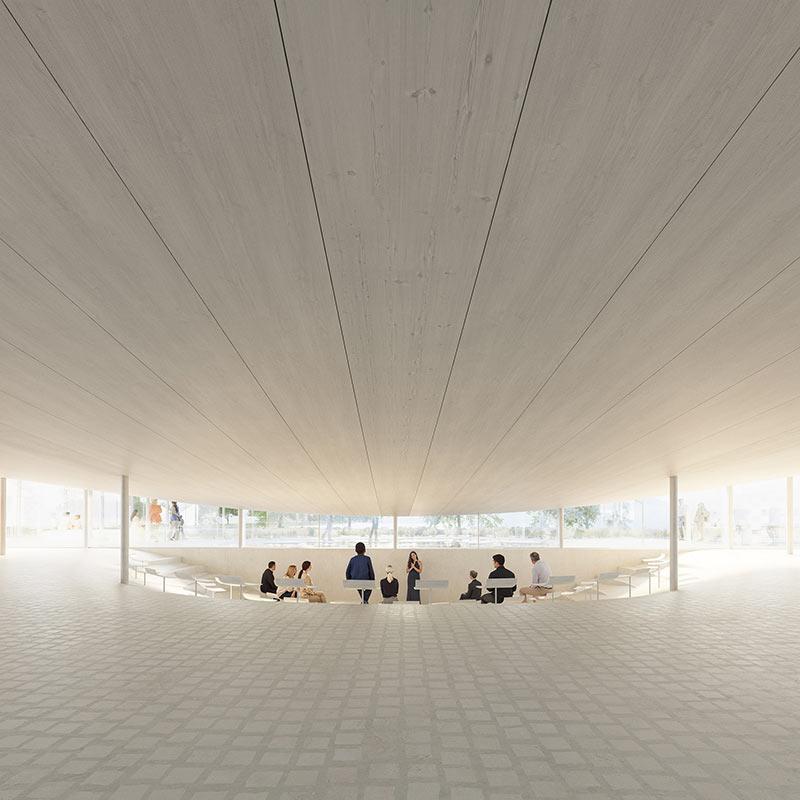
By transforming and extending the supermarket building, the designers are creating a fascinating museum complex that aims to double its annual visitor figures. And the existing building fabric can be given a new purpose in an adaptive re-use project.
In this way, the new Museum for Papirkunst avoids problems with new ground sealing and emissions from conventional building construction. The project is pursuing a DGNB Certificate in Gold or Platinum from the German Sustainable Building Council.
Text: Gertraud Gerst
Translation: Rosemary Bridger-Lippe
Visualizations: Bjarke Ingels Group