


The Aesthetics of Community – and Its Price
It is one of the defining promises of our time: a life in connection. With others, with ourselves, with something beyond the purely functional. Flow captures this desire and translates it into architecture, services, and language. Yet what appears to be a new way of living is also a precisely orchestrated business model.

More Than a Home – A Feeling to Move Into
Living used to be about location, size, and status. Today, it is about something else: meaning.
Flow stages the home as an experiential space – a place that not only shelters but shapes. Spaces become catalysts for interaction, design an invitation to connect. Everything feels intentional, soft, almost intuitive.
And that is exactly where the fascination lies:
This is not just a place to live – it is a curated state of being.
“Good People” – or the Desire for Belonging
Perhaps the most valuable currency of our time is no longer ownership, but belonging.
Flow understands this.
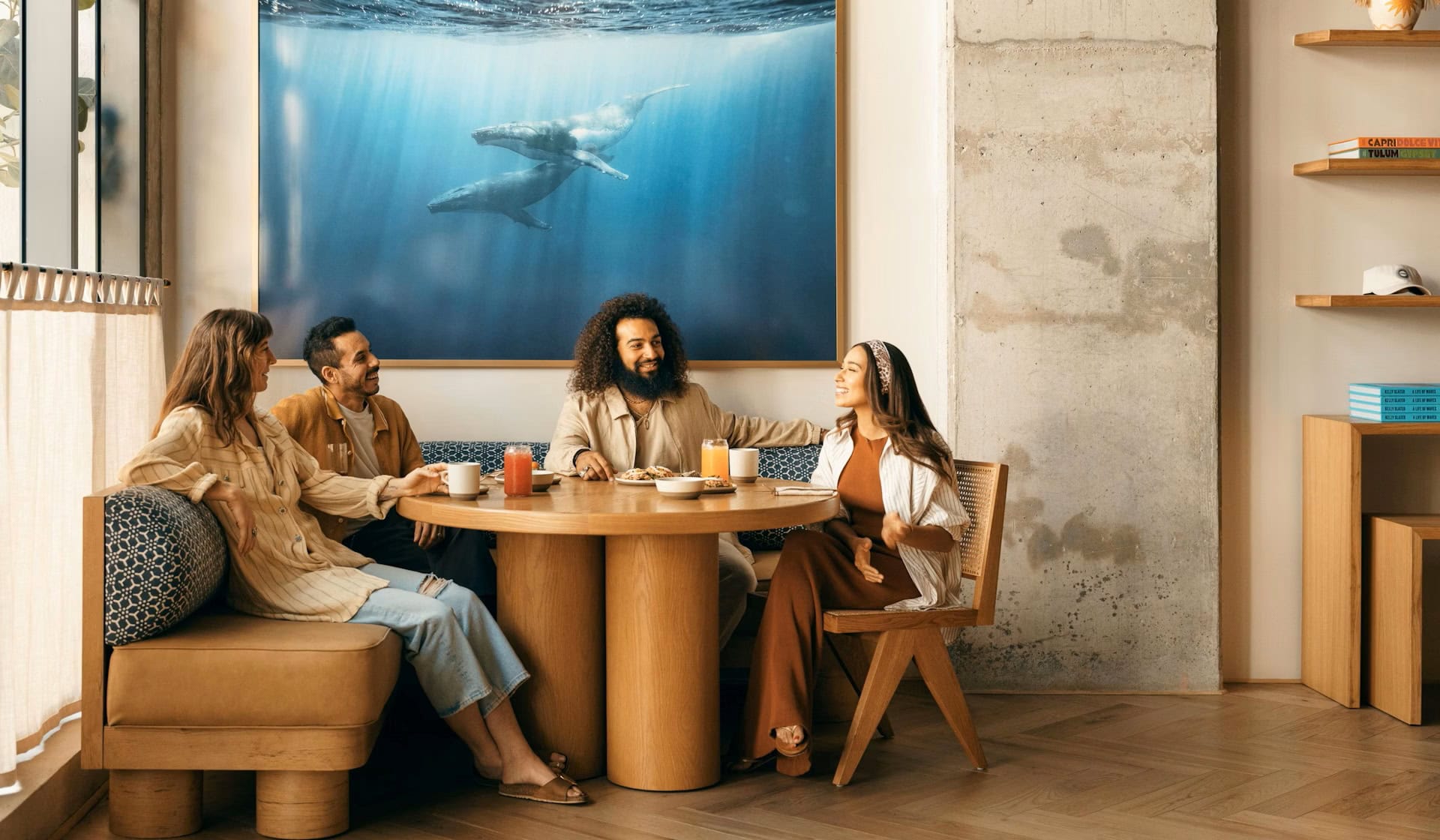
And builds an entire system around it: events, shared spaces, digital platforms – all designed to create connection.
“Good People” is more than a slogan. It is a promise of closeness in an increasingly fragmented world.
But who defines what “good” means?
And can community truly emerge when it is designed from the outset?
The Operating System for a Better Life
Through its app and integrated services, Flow approaches a near tech-utopian ideal:
living becomes a seamless, organized, curated experience.
A home that functions like an interface.
Daily life becomes easier – but also more structured.
Connection becomes accessible – but perhaps also preconfigured.
The Return of a Big Idea
The concept itself is not entirely new. Co-living, shared spaces, community-driven housing – these ideas already exist.
But Flow pushes them further:
not as an alternative way of living, but as a new default.
It is an attempt to design life itself as a product –
aesthetic, emotional, and scalable.
Adam Neumann and the Logic of “We”
Behind Flow stands Adam Neumann, a figure who embodies both visionary ambition and dramatic downfall.
With WeWork, the idea was always bigger than the product:
community as a business model, belonging as a brand.
Flow feels like the next iteration of this thinking – quieter, more refined, perhaps more strategic.
Yet the central question remains:
Is it more sustainable this time – or simply more subtly designed?
When Community Becomes a Commodity
Flow operates within a delicate tension.

On one side:
a genuine attempt to create new forms of living together – a response to isolation, anonymity, and urban disconnection.
On the other:
a heavily funded company that recognizes these very desires – and monetizes them.
The aesthetics are warm, the language soft.
But at its core, it remains a system designed to scale.
And perhaps that is the real innovation:
that capital today no longer feels cold – but like community.
Flow is not a contradiction – it is a reflection of our time.
A concept that reveals how deeply we long for connection.
And how skillfully this longing can be designed, packaged, and sold.
The question is not whether it works.
But how consciously we choose to live within it.